
Nobility and directory
House of Valais-Reade
Register entry for the House of Valais-Reade, centred on the 1823 hereditary comital grant to Charles-Emmanuel de Rivaz, the adopted regional dignity of Count of Valais, and present head James Allister Odd.
- Jurisdiction
- Switzerland
- Dynasty
- House of Valais-Reade
- Entry type
- House
- Series
- Higher Nobility of Europe
- Editorial status
- Reviewed - Verified

The House of Valais-Reade
The House of Valais-Reade is an Anglo-Valaisan house whose modern claim rests on the hereditary comital dignity granted to Charles-Emmanuel de Rivaz by the King of Sardinia in 1823. Within the house’s practice, the regional style Count of Valais reflects the de Rivaz family’s historic patrician roots in Valais. The house distinguishes the documentary de Rivaz–De Reade genealogy associated with the dignity founded in 1823 from its traditional Reade/Odd succession. The medieval Bishop-Counts belong to the regional historical background and are not presented as ancestors in the modern title line.
Notre sang a connu la mitre et l’étoile, l’épée et l’exil.
Traditional maxim of the House of Valais-Reade
| House | Valais-Reade |
|---|---|
| Country and historic seat | Switzerland; Sion in the canton of Valais |
| Modern comital foundation | Charles-Emmanuel de Rivaz; hereditary count, 1823 |
| Adopted house dignity | Count of Valais · Comte de Valais |
| Present head | James Allister Odd, present holder of the dignity of Count of Valais and 19th Lord of Hasley |
| Other recorded styles | Lord of Hasley; Baron of Reed; Baron of Carrighmain |
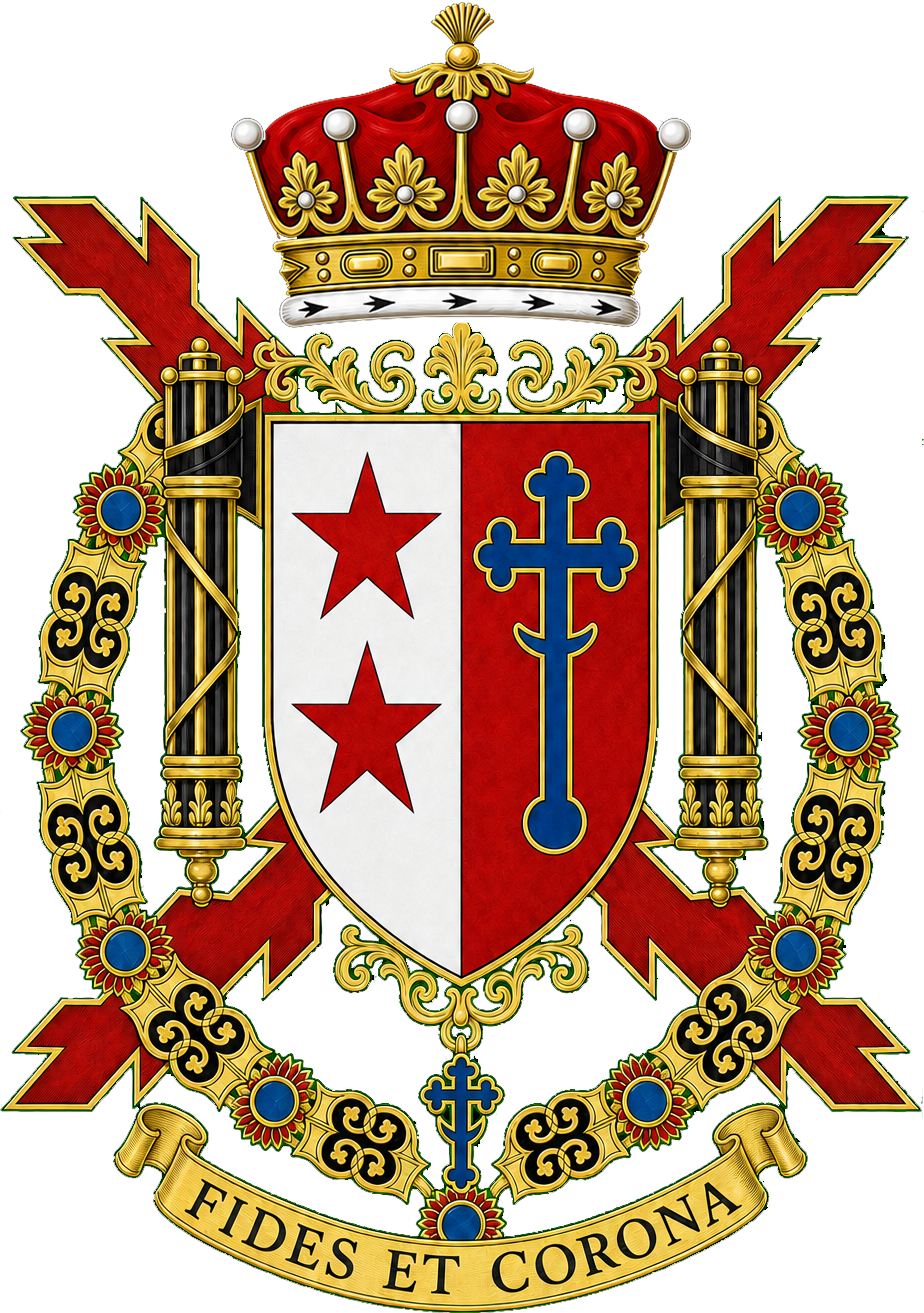
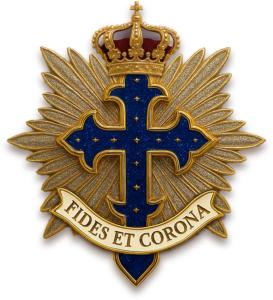
| Motto | Fides et Corona — Faith and Crown |
| Associated institutions | Guard of Valais; Order of Saint Sigismund |
Historical background — the Bishop-Counts of Valais
In 999 Rudolf III, King of Burgundy, granted the county of Valais to the Bishop of Sion. The grant joined ecclesiastical office with temporal authority and belongs to the history of the episcopal principality of Sion. Hugues of Sion and the later Bishop-Counts are retained here as historical background to the regional association between Valais and comital authority.
The 999 grant was made to the episcopal office. It is not the source of the house’s modern hereditary claim, and the medieval bishops are not included in the modern family succession.

The 1823 comital dignity
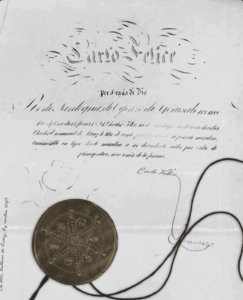
The modern claim of the house is founded on Charles-Emmanuel de Rivaz (1753–1830), whom the King of Sardinia elevated to the rank of hereditary count in 1823. The Historical Dictionary of Switzerland records both the de Rivaz family’s Valais patrician identity and this hereditary elevation.
Why “Count of Valais”?
Because the de Rivaz family is a historic patrician family of Valais, the house traditionally refers to the Rivaz comital dignity by the regional style Count of Valais. The style is therefore an adopted house designation for the dignity founded in 1823, rather than a hereditary family title descending from the Bishop-Counts of Sion.
Documentary succession of the 1823 dignity
The house records the following as the primary documentary genealogy associated with the dignity founded in 1823. Archival references are identified where available; modern civil records and DNA material remain held by the family.
- Charles-Emmanuel de Rivaz (1753–1830), elevated to hereditary count by the King of Sardinia in 1823.
- Charles-Louis-Marie de Rivaz, son of Charles-Emmanuel. Principal cited record: baptismal extract AEV P 177.
- Charles de Rivaz (born 1822), son of Charles-Louis-Marie. Principal cited record: civil-status extract AEV P 178.
- Paul-Marie-Alphonse de Rivaz (born 1853), son of Charles. Principal cited record: civil-status extract AEV P 179, which identifies the father as “comte Charles de Rivaz.”
- Pierre de Rivaz (born 1886), son of Paul-Marie-Alphonse. Cited records include a certified birth or baptismal record, his parents’ marriage record, and family papers held by the Archives de l’État du Valais.
- Paul de Rivaz / Paul de Rivas (born 1924), son of Pierre de Rivaz and Hélène de Riedmatten. The name bridge is supported in the family documentation by Swiss identity and birth records, corresponding dates and places, letters, and signatures.
- Antia Rosa De Reade (born 1956), daughter of Paul. Cited records include her original birth record, Paul’s correspondence, and family-held DNA evidence. She is the mother of James Allister Odd (born 1979).
Traditional Reade/Odd succession
Separate from the de Rivaz–De Reade documentary genealogy, the house maintains a traditional Reade/Odd succession encompassing its English and American family history. Under the house’s modern practice of succession through both male and female lines, this branch culminates in James Allister Odd as present holder of the adopted dignity of Count of Valais and head of the house.
Present head of the house

James Allister Odd
Present holder of the adopted dignity of Count of Valais · 19th Lord of Hasley · Baron of Carrighmain · Lord Regent of the Order of Saint Sigismund
James Allister Odd is the present holder of the adopted dignity of Count of Valais, which rests upon the hereditary comital title granted to Charles-Emmanuel de Rivaz by the King of Sardinia in 1823. In accordance with the house’s modern practice of succession through both male and female lines, he holds this dignity as head of the house.
His tenure has emphasized the preservation of the family archive, the restoration of its ceremonial institutions, and the maintenance of the house’s Swiss, English, and American historical record.
Heraldry, titles, and styles
The house badge displays a crowned blue cross charged and bordered in gold, accompanied by the motto Fides et Corona. Members are entered according to their position in the family register and the house’s modern succession practice.
- Count of Valais — the adopted house dignity whose modern foundation is the hereditary comital title granted to Charles-Emmanuel de Rivaz in 1823; the regional style reflects the de Rivaz family’s Valais patrician roots.
- Lord of Hasley — the principal English landed style of the head of the house.
- Baron of Reed — a dignity recorded in association with the traditional Reade line.
- Baron of Carrighmain — a dignity preserved in the continental and Anglo-Irish family tradition.
The Guard of Valais

The Guard of Valais is the ceremonial household guard associated with the house. Its institutional history is dated from 1816, when a small corps was organized to preserve the family standard, accompany the head of the house, and maintain ceremonial order. The active formation was dissolved in 1920, but the guard survives as a ceremonial and commemorative body.
Its traditional duties include custody of the colours, attendance at investitures and memorial observances, and support for the household’s protocol office. Its motto is Fidèles aux montagnes, loyaux au roi — Faithful to the mountains, loyal to the king.
The Order of Saint Sigismund

The Order of Saint Sigismund is the spiritual and chivalric institution of the house. Its devotional tradition looks to Saint Sigismund of Burgundy and to the Abbey of Saint-Maurice at Agaunum, founded in 515 and long central to the religious history of Valais. The order was restored in modern form as a house confraternity, drawing upon the region’s medieval traditions of pilgrimage, guardianship, and service.
The head of the house serves as Lord Regent. The order’s observances unite remembrance of Saint Sigismund, care for the house’s ecclesiastical heritage, and recognition of loyal service. Its insignia and ceremonies are administered through the regency and the household protocol office.
Sources and documentation
- David Rey, “Rivaz, de,” Historical Dictionary of Switzerland: the de Rivaz family’s Valais patrician history and Charles-Emmanuel’s elevation as hereditary count in 1823.
- Marco Jorio, “Ecclesiastical Lordships,” Historical Dictionary of Switzerland: the 999 Burgundian grant to the Bishop of Sion as regional historical background.
- Archives de l’État du Valais: civil-status and baptismal extracts AEV P 177, P 178, and P 179; correspondence N° 56; and family papers.
- Family documentary genealogy of Paul de Rivaz / Paul de Rivas and the line to Antia Rosa De Reade, First Digital Edition (Family of Antia Rosa De Reade, 2026). Modern civil records and DNA evidence remain family-held.
-
Archives de l’État du Valais (AEV), Charles Félix, King of Sardinia, grant to Charles-Emmanuel de Rivaz of the title and dignity of Count, CH AEV, Antoine de Rivaz, Rz carton 103/7. Digital reproduction supplied by the AEV. Catalogue record.
The Historical Dictionary independently documents the 1823 elevation. The later de Rivaz–De Reade chain is presented from the cited archival extracts and modern family documentation; the Reade/Odd succession records the house’s modern internal practice.