
Identity and context
Names, dates, styles, titles, houses, and jurisdictions are distinguished carefully so that similar people and changing entities are not collapsed together.
About the project
A continuously maintained reference work devoted to the dynastic, genealogical, heraldic, and institutional history of the world’s sovereign and noble houses brought into the modern age. The Almanach de Gotha’s rich heritage lives on through the Neue Gotha.
A modern reference tradition
Neue Gotha connects records that are too often scattered across family histories, archives, historic publications, and changing political jurisdictions.
How Neue Gotha is funded
Neue Gotha is funded through sales of its annual hardbound limited edition. Each year, only 500 copies are produced. Each copy is offered at €4,000, and distribution is deliberately restricted.
Demand exceeds the number of available volumes, and prospective purchasers must join a waiting list. Placement on the waiting list records an expression of interest; it does not guarantee that a copy will be available in a particular year.
Proceeds from the limited edition support the continuing work of research, editorial review, digitisation, preservation, technical maintenance, and public presentation. This model allows the online Register to develop without making editorial inclusion dependent on advertising or routine access fees.
Purchase of a hardbound volume does not confer a title, recognition, editorial preference, or guaranteed inclusion in the Register. The publication’s funding and its editorial judgments remain separate.
500 copies produced each year
€4,000 price per copy
Waiting list required before allocation
Limited international distribution
Availability is restricted. Joining the waiting list does not guarantee allocation.


Who the project serves
Who the project serves
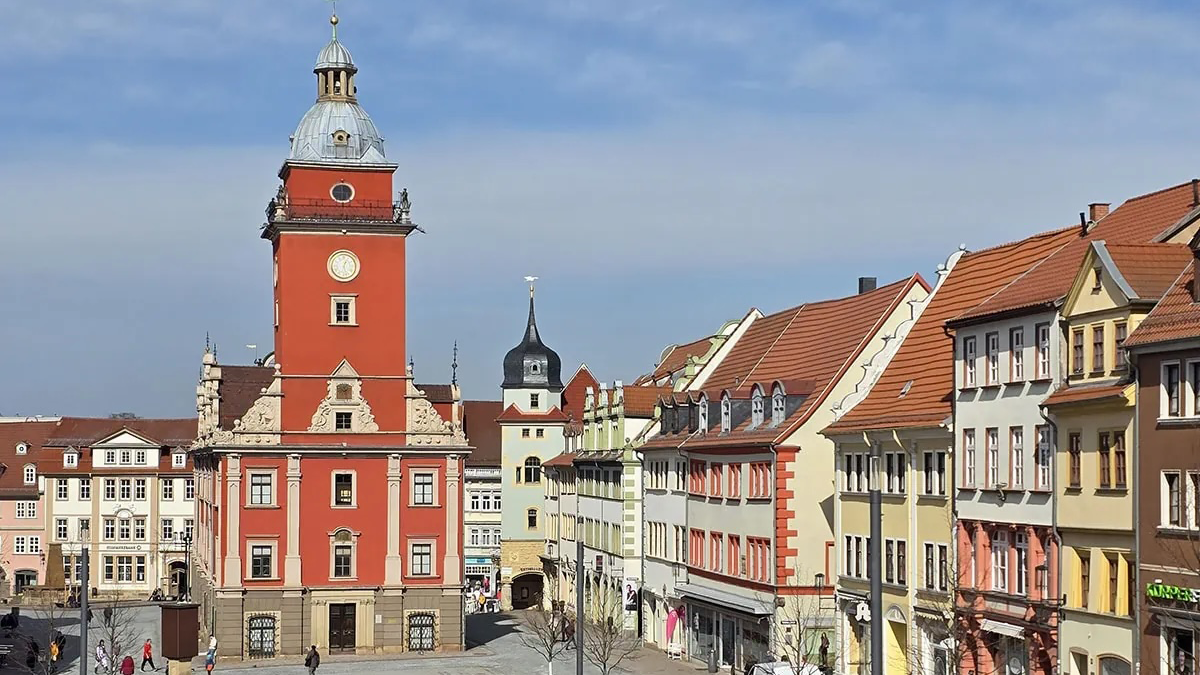
The Neue Gotha emblem draws upon one of the city’s most recognizable landmarks: the historic Town Hall and its striking clock tower overlooking the Hauptmarkt. Its distinctive silhouette places Neue Gotha firmly within the city where the original Almanach de Gotha first took shape.
More than a decorative symbol, the tower represents continuity between place, publication, and historical memory. By incorporating it into its identity, Neue Gotha honors the intellectual and publishing heritage of Gotha while carrying that tradition forward as a modern, accessible record of dynastic and genealogical history.
Our mission
Neue Gotha is a living historical register. It brings together houses, people, titles, jurisdictions, orders, institutions, and source material within a single interconnected reference system.
The project is inspired by the organising ambition of the original Almanach de Gotha: to present complex relationships with consistency and precision. Neue Gotha adapts that reference tradition to a digital environment in which records can be searched, linked, corrected, expanded, and preserved over time.
Our purpose is not to recreate the social world of an earlier age, but to document it responsibly. Dynastic history intersects with diplomacy, law, political geography, inheritance, religion, art, property, and the formation of modern states. Understanding those connections requires both genealogical detail and historical context.
A modern revival
Neue Gotha was established in 2016 as an independent digital reference project for a body of history that remains remarkably dispersed. Genealogies may survive in family publications, official notices, state archives, church registers, specialist handbooks, portrait collections, auction catalogues, and the footnotes of political history. Each source preserves a fragment; few make the relationships between those fragments visible.
In calling the project a modern revival, Neue Gotha revives a documentary ambition: to gather complex dynastic information, organise it consistently, and revise it as the evidence changes. It does not claim institutional or legal succession to the historic publisher, nor does it replace the authority of archives, civil records, courts, or scholarly editions.
The digital format changes what a Gotha-inspired reference work can be. A house can be connected to people, places, jurisdictions, titles, orders, objects, publications, and source images. A correction need not wait for the next printing. An uncertain statement can be marked as uncertain, and a familiar claim can be placed beside the evidence needed to evaluate it.
What the Register documents
01
Reigning, formerly reigning, mediatized, princely, ducal, and other historically significant houses, presented within their familial and political relationships.
02
Genealogies, marriages, descent, succession, disputed claims, cadet branches, and the individuals through whom institutions and inheritances changed.
03
Kingdoms, principalities, duchies, jurisdictions, courts, orders of knighthood, and the constitutional settings in which titles and houses existed.
04
Historic publications, archival references, images, heraldry, and editorial explanations that allow readers to understand both evidence and uncertainty.
The Gotha tradition
A modern analogue to a historic method of organising dynastic knowledge.
The historic Almanach de Gotha combined genealogy with diplomatic, governmental, and statistical information. Its annual structure made dynastic Europe readable across borders and generations. Its classifications also reflected the assumptions and hierarchies of the societies that produced it.
Neue Gotha draws from the Almanach’s disciplined reference method without treating any historical classification as beyond examination. Digital records allow broader coverage, clearer connections, fuller explanations, and visible editorial review.
Neue Gotha is an independent project. It should not be understood as a governmental authority, a court of nobiliary law, or an automatic grant of recognition. Inclusion records and contextualises evidence; it does not itself create a title, legal status, precedence, or right of succession.
A born-digital register
A modern reference work should do more than reproduce printed pages on a screen. Neue Gotha treats each record as part of a connected documentary environment.
Names, dates, styles, titles, houses, and jurisdictions are distinguished carefully so that similar people and changing entities are not collapsed together.
Sources, media credits, editorial status, and qualifying notes show how a record was assembled and where further verification is needed.
Relationships allow readers to move between people, dynasties, territories, institutions, and historical periods instead of encountering isolated entries.
One archive Many jurisdictions, languages, calendars, and documentary traditions.
The structure is intended to reveal connections without erasing meaningful differences.
Editorial method
Historical reference work is cumulative. A strong entry makes its evidence discoverable, distinguishes fact from interpretation, and remains open to responsible correction.
Relevant publications, archival references, genealogies, institutional records, historic images, and existing scholarly work are identified and preserved.
Names, dates, houses, jurisdictions, classifications, titles, and relationships are normalised so that related records can be connected and searched.
Entries are checked for internal consistency, source support, historical context, and formatting. Editorial statuses communicate the state of that review.
New evidence, corrections, and changes are incorporated without erasing the record’s historical development. The digital Register is treated as a maintained publication rather than a finished monument.
The publication tradition
A historic cover is shown here as a reference to the Almanach’s material heritage, not as a representation of the present annual edition.
Two expressions of one project
The online Register is the project’s working environment: searchable, interconnected, and capable of revision. It can preserve long source notes, display related images, distinguish editorial status, and lead readers from a single name to the wider historical system around it.
The annual hardbound edition serves a different purpose. It is a selective record of the project at a moment in time—an edited physical object designed for libraries, collections, and long-term retention. It is not a complete mirror of the website, and the website is not merely promotional material for the book.
Together, the two forms balance continuity and change. The digital archive remains responsive to new evidence; the annual edition creates a durable checkpoint that can be cited, collected, and compared with later years.
Editorial principles
Where evidence is incomplete or contested, the record should say so. Confidence should follow documentation rather than reputation or repetition.
Titles and classifications are presented within the legal, political, cultural, and historical systems that gave them meaning.
Corrections strengthen a reference work. Neue Gotha welcomes documented amendments and treats editorial review as an ongoing responsibility.
The work ahead
Neue Gotha is intentionally presented as a developing archive. Coverage will grow unevenly as sources become available and records are reviewed.
Extend coverage beyond the best-known European dynasties to the people, cadet branches, courts, institutions, and transnational relationships that made their histories possible.
Add fuller citations, edition-level references, image credits, archival locations, and transparent notes where claims remain disputed or incomplete.
Develop stable identifiers, responsible exports, multilingual presentation, accessibility improvements, and preservation copies that reduce dependence on any single platform.
Create practical routes for scholars, archivists, families, and readers to contribute sources without turning documented history into a competition of unsupported claims.
Contribute to the record
If you can document a correction, identify a missing source, or provide material that strengthens an existing entry, contact the editorial office.

© 2026 Neue Gotha. - The New Almanach De Gotha