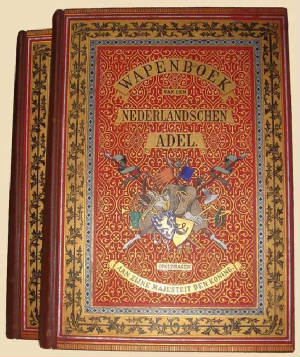
Nobility and directory

Nobility of Netherlands

History and Register of the Nobility of Netherlands

Jurisdiction
Netherlands
Entry type
Directory
Editorial status
Reviewed - Verified
Thumbnail for version as of 18:56, 13 May 2011

Nobility of the World

Volume VIII – Netherlands
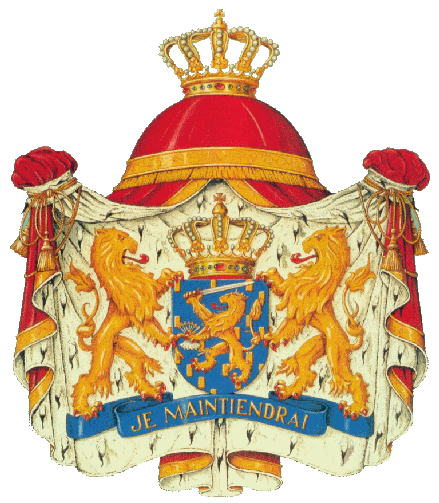
kingdomofnetherlands.gif

Before 1814, the history of nobility is separate for each of the eleven provinces that make up the Kingdom of the Netherlands. In each of these, there were in the early Middle Ages a number of feudal lords who often were just as powerful, and sometimes more so than the rulers themselves. In old times, no other title existed but that of knight. In the middle of the fourteenth century, quarrels between the feudal lords reduced many families and castles to ruins, which contributed to the Dukes of Burgundy’s acquisition by conquest or inheritance of many of the provinces forming the Kingdom of the Netherlands. In 1581, Philip II of Spain, heir of the Dukes of Burgundy was abjured by representatives of the Seven Provinces, which left a great part of the executive and legislative power to the Ridderschap of each province, which consisted of the representatives of those families of the old feudal nobility. In 1798, the revolution did away with their power, and it was not before 1814, when William of Orange became King of the Netherlands that they were again appointed in another form, but by the time of the constitution of 1848, they had no influence in government affairs. In 1814, if no higher title was recognised, the men only were to bear the hereditary predicate of Jonkheer. The old feudal families obtained the title of Baron or Baroness for all their descendants.

Princes of The Netherlands

  • Van Oranje-Nassau
  • De Bourbon de Parme
  • De Riquet de Caraman
  • Wellesley; the Duke of Wellington is the Prince of Waterloo

Dukes of The Netherlands

The title of Duke/Duchess is no longer in existence in noble families of the Kingdom of the Netherlands.

Marquesses of The Netherlands

  • Le Poer Trench; the Earl of Clancarty is the Marquess of Heusden
  • D’Auxy
  • Van Hoensbroeck (this family left the Netherlands in the 19th century. Known in Germany as Graf von und zu Hoensbroech, the head of this family bears the titles of Marquess and Graf von und zu Hoensbroech)

Counts of The Netherlands

  • Bentinck
  • Bentinck van Aldenburg
  • Blouw
  • Brederode, van Brederode
  • D’Auxy
  • De Borchgrave d’Altena
  • Brand van Lieshout
  • De Ficquelmont
  • De Geloes
  • De Hochepied
  • De Jonge
  • De Marchant et d’Ansembourg
  • De Norman et d’Audenhove
  • De Perponcher Sedlnitsky
  • De Riquet de Caraman
  • Dumonceau
  • Festetics de Tolna
  • Schimmelpenninck
  • Van Bylandt
  • Von Caddy-Retalic
  • Van den Bosch
  • Van der Duyn
  • Van der Goltz
  • Van Dinther
  • Van Heerdt
  • Van Heiden
  • Van Hoensbroeck
  • Van Hogendorp
  • Van Limburg Stirum
  • Van Lynden
  • Van Nederveen Meerkerk
  • Van Oijen
  • Von Oberndorff
  • Van Randwijck
  • Van Rechteren
  • Van Rechteren Limpurg
  • Van Rheenen
  • Van Wassenaer
  • Van Zuylen van Nijevelt
  • Velps
  • Velu
  • Von Chrismar
  • Von Oberndorff
  • Van Oranje-Nassau
  • Von Quadt
  • Von Ranzow
  • Wolff Metternich
  • Zu Stolberg-Stolberg

Viscounts of The Netherlands

  • De Preud’homme d’Hailly de Nieuport (Viscount of Nieuport)
  • Du Bus
  • Roest van Alkemade

Barons of The Netherlands

  • d’Ablaing van Giessenburg
  • d’Aulnis de Bourouill
  • Backer
  • Baud
  • Bentinck
  • Bentinck tot Buckhorst
  • Bentinck van Schoonheten
  • Brantsen
  • Calkoen
  • Collot d’Escury
  • Creutz
  • De Constant Rebecque
  • De Geer
  • De Girard de Mielet van Coehoorn
  • De Heusch
  • De Kock
  • De Loë (Barons of Terworm near Heerlen)
  • De Smeth
  • De Vos van Steenwijk
  • De Weichs de Wenne
  • De Wijkerslooth de Weerdesteyn
  • Des Tombe
  • Dibbets
  • D’Olne (extinct since ca. 1890)
  • Doudart de la Grée
  • Du Bus (extinct since 1976)
  • Gericke
  • Gevers
  • Gevers Deynoot
  • Groeninx van Zoelen
  • Huyssen van Kattendijke
  • De Keverberg (extinct since 1928)
  • Krayenhoff
  • Lewe van Aduard
  • Mackay of Ophemert and Zennewijnen (see Lord Reay, Baronet of Strathnaver, and Chief of Clan Mackay)
  • Melvill van Carnbee
  • Michiels
  • Mollerus
  • Munday
  • Nahuys
  • Prisse
  • Rengers, van Welderen
  • Ripperda
  • Rhoe van Obsinnich (extinct since ca. 1750)
  • Röell
  • Sandberg
  • Schimmelpenninck
  • Schimmelpenninck van der Oije
  • Sirtema van Grovestins
  • Six
  • Six van Hillegom
  • Sloet tot Everlo
  • Sloet van Oldruitenborgh
  • Snouckaert van Schauburg
  • Speyart van Woerden
  • Steengracht
  • Stratenus
  • Sweerts de Landas
  • Taets van Amerongen
  • Taets van Amerongen van Renswoude
  • Thoe Schwartzenberg en Hohenlansberg
  • Van Aerssen Beijeren van Voshol
  • Van Asbeck
  • Van Berger
  • Van Boetzelaer
  • Van Boetzelaer van Dubbeldam
  • Van Bommel
  • Van Breugel
  • Van der Capellen
  • Van Coeverden
  • Van Dedem
  • Van den Essen
  • Van der Borch tot Verwolde
  • Van der Borch tot Verwolde van Vorden
  • Van der Feltz (Barons of Larochette in Luxembourg)
  • Van Geen
  • Van der Heyden
  • Van der Heyden van Doornenburg
  • Van Doorn
  • Van Dorth tot Medler
  • Van Eck
  • Van Geen
  • Van Haersolte
  • Van Haersolte van Haerst
  • Van Hangest d’Yvoy
  • Van Hardenbroek
  • Van Harinxma thoe Slooten
  • Van Heeckeren
  • Van Heeckeren van Brandsenburg
  • Van Heeckeren van Kell
  • Van Heeckeren van Molecaten
  • Van Heemstra
  • Van Heerdt
  • Van Heerdt van Eversberg
  • Van Hemert tot Dingshof
  • Van Hogendorp
  • Van Hövell
  • Van Hövell tot Westerflier
  • Van Hövell van Wezeveld en Westerflier
  • Van Imhoff
  • Van Ittersum
  • Van Isselmuden
  • Van Knobelsdorff
  • Van Lamsweerde
  • Jason Van Lawick
  • Van Lawick van Pabst
  • Van Lynden
  • Van Nagell
  • Van Oldeneel tot Oldenzeel
  • Van Pallandt
  • Van Reede
  • Van Raders
  • Van Randwijck
  • Van Rijckevorsel van Kessel
  • Van Roosmalen
  • Van Slingelandt
  • Van Sytzama
  • Van Till
  • Van Tuyll van Serooskerken
  • Van Verschuer
  • Van Voorst tot Voorst
  • Van Vredenburch
  • Van Wey
  • Van Wassenaer
  • Van Wassenaer van Catwijck
  • Van Welderen Rengers
  • Van Wijnbergen
  • Van Zuylen van Nijevelt
  • Van der Marck
  • Wilbrenninck
  • Wittert
dutch-nobility.jpg

Knightly Families of The Netherlands

  • Alewijn
  • De Bye (also: Van der Does de Bye)
  • De Behr (extinct 1954)
  • De Maurissens
  • De Plevits
  • De Stuers
  • De Thier
  • De van der Schueren
  • De Warzée d’Hermalle (extinct 1933)
  • Du Bus (extinct 1976)
  • Huyssen van Kattendijke
  • Pauw
  • Van Citters
  • Van Cleef
  • Van Els (extinct 18th century)
  • Van der Heim (extinct 1898)
  • Van der Renne (extinct 1964)
  • Van den Hinterkop
  • Van Lockhorst (extinct 1921)
  • Van Rappard
  • Van Rij
  • Van Rosenthal
  • Van Scheintzbern
  • Van Westreenen van Tiellandt (extinct 1848)
  • Velu
  • Von Devivere

Untitled Noble Families

– Jonkheer / Jonkvrouw

  • Alberda van Ekenstein
  • Alting van Geusau
  • Alting von Geusau
  • Barnaart
  • Barnaart van Bergen
  • Beelaerts van Blokland
  • Bicker
  • Bloys van Treslong
  • Boddaert
  • Boissevain
  • Boreel
  • Bos van Rosenthal
  • Bosch van Drakestein
  • Bowier
  • Calkoen
  • Clifford Kocq van Breugel
  • Delger van Lambalgen
  • Doudart de la Grée
  • De Beaufort
  • De Blocq van Scheltinga
  • De Bosch Kemper
  • De Brauw
  • De Geer
  • De Geer van Jutphaas
  • De Geer van Oudegein
  • De Girard de Mielet van Coehoorn
  • De Graeff
  • Gülcher (noble branch extinct)
  • De Jong van Beek en Donk
  • De Jonge
  • De Jonge van Campens Nieuwland
  • De Jonge van Ellemeet
  • De Jonge van Zwijnsbergen
  • De Kock
  • De Kuyper
  • De la Court
  • De Lange
  • De Marees van Swinderen
  • De Muralt
  • De Pesters
  • De Ranitz
  • De Rotte
  • De Roy van Zuidewijn
  • De Savornin Lohman
  • De Serière
  • De Villeneuve
  • De Vries
  • De Wijkerslooth de Weerdesteijn
  • Dedel
  • Den Beer Poortugael
  • Des Tombe
  • Elias
  • Feith
  • Flugi van Aspermont
  • Gevaerts
  • Gevaerts van Nuland
  • Gevers
  • Gevers Deynoot
  • Gevers Leuven
  • Gevers van Endegeest
  • Gemlich
  • Godin de Beaufort
  • Goldman
  • Graafland
  • Graswinckel
  • Greven
  • Groeninx van Zoelen
  • Hooft
  • Hooft Graafland
  • Hooft Graafland van Schotervlieland
  • Hooft van Woudenberg
  • Huninga
  • Huydecoper
  • Huydecoper van Nigtevecht
  • Huygen van Dyck
  • Jankovich de Jeszenice
  • Just de la Paisières
  • Kennesey de Kenese
  • Kreutzwendedich von dem Borne
  • Laman Trip
  • Leijssius
  • Loudon
  • Lycklama à Nijeholt
  • Martens van Sevenhovensch
  • Martini Buys
  • Melgers
  • Merkes van Gendt
  • Meyer
  • Michiels van Kessenich
  • Mock
  • Mollerus
  • Nahuys
  • Oomkens
  • Op ten Noort
  • Ploos van Amstel
  • Pompe van Meerdervoort
  • Prins van Westdorpe
  • Prisse
  • Quarles van Ufford
  • Quintus
  • Reigersman
  • Rengers Hora Siccama
  • Repelaer
  • Repelaer van Driel
  • Rethaan Macaré
  • Reuchlin
  • Roessingh van Iterson
  • Röell
  • Rutgers van Rozenburg
  • Sandberg
  • Sandberg tot Essenburg
  • Sandberg van Boelens
  • Schimmelpenninck
  • Schorer
  • Serraris
  • Sicking(h)e
  • Six
  • Six van Hillegom
  • Smissaert
  • Smits van Oyen
  • Snoeck
  • Snouck Hurgronje
  • Spengler
  • Stoop
  • Stoop van Goudswaard
  • Storm van ‘s-Gravesande
  • Stratenus
  • Strick van Linschoten
  • Teding van Berkhout
  • Tiddinga
  • Testa
  • Tjarda van Starkenborgh Stachouwer
  • Tulleken
  • Twijsel
  • Valckenier von Geusau
  • Van Adrichem Boogaert
  • Van Aefferden
  • Van Amsberg
  • Van Andringa de Kempenaer
  • Van Asch van Wijck
  • Van Baerdt van Sminia
  • Van Beek en Donk
  • Van Beijma
  • Van Beijma thoe Kingma
  • Van Benthem van den Bergh
  • Van Beresteyn
  • Van Buttingha Wichers
  • Van Citters
  • Van Dalen
  • Van de Poll
  • Van den Berch van Heemstede
  • Van den Bergh
  • Van den Bosch
  • Van den Brandeler
  • Van der Does
  • Van der Does de Willebois
  • Van der Goes
  • Van der Goes van Naters
  • Van der Maessen de Sombreff
  • Van der Meer de Walcheren
  • Van der Mersch
  • Van der Mieden
  • Van der Mieden van Opmeer
  • Van der Stoop
  • Van der Wel
  • Van der Wyck
  • Van Doorn
  • Van Eys
  • Van Eysinga
  • Van Foreest
  • Van Geen
  • Van Grotenhuis van Onstein
  • Van Haeften
  • Van Haersma de With
  • Van Heemskerck van Beest
  • Van Heurn
  • Van Heutz
  • Van Holthe
  • Van Holthe tot Echten
  • Van Humalda van Eysinga
  • Van Iddekinge
  • Van Karnebeek
  • Van Kessenich
  • Van Kinschot
  • Van Lawick van Pabst van Nijevelt
  • Van Leeuwen
  • Van Lennep
  • Van Lidth de Jeude
  • Van Lidth de Jeude van de Souburgen
  • Van Lintelo de Geer
  • Van Litsenburg
  • Van Loon
  • Van Meeuwen
  • Van Meeuwen de Keverberg
  • Van Nispen
  • Van Nispen tot Pannerden
  • Van Nispen tot Sevenaer
  • Van Oijen
  • Van Oijen zu Furstenstein
  • Van Panhuys
  • Van Raab van Canstein
  • Van Riemsdijk
  • Van Rijckevorsel
  • Van Sasse van Ysselt
  • Van Sminia
  • Van Spengler
  • Van Steenis/van Steenhuys
  • Van Suchtelen
  • Van Suchtelen van de Haare
  • Van Tets
  • Van Vierssen Trip
  • Van Vliet
  • Van Vredenburch
  • Van Weede
  • Van Weede van Dijkveld
  • Van Zuylen
  • Vardink Huiskamp
  • Vegelin van Claerbergen
  • Verheyen
  • Versélewel de Witt Hamer
  • Von Balluseck
  • Von Bose
  • Von Geusau
  • Von Ghyczy
  • Von Mühlen
  • Von Schmidt auf Altenstad
  • Walraven de Beaufort
  • Wesselman van Helmond
  • Wichers
  • Wittert van Hoogland
  • Wladimiroff

Foreign Nobility of The Netherlands

  • Arrazola de Oñate
  • Barnaart
  • Barth von Barthenheim, de Bart(-Barthenheim)
  • Bayer Koch von Rothenburg
  • Beije
  • Bentinck
  • Berg
  • Boreel
  • Coates
  • Collot d’Escury
  • Creutz
  • De Bije, van der Does de Bije
  • De Bourbon de Parme
  • De Constant de Rebeque
  • De Geer
  • De Girard de Mielet van Coehoorn
  • De Heeckeren d’Anthes
  • De Hochepied
  • De Lange
  • De Liedekerke de Pailhe
  • De Loë
  • De Marchant et d’Ansembourg
  • De Mauregnault
  • De Muralt
  • De Pester
  • De Serière
  • De Smeth
  • De Villeneuve
  • De Villers de Grignoncourt
  • De Wijkerslooth de Weerdesteyn
  • Doudart de la Grée
  • Falck
  • Festetics de Tolna
  • Fischer von Weikersthal
  • Flugi von Aspermont
  • Hamilton of Silverton Hill
  • Herwarth von Bittenfeld
  • Holzschuher von Harrlach
  • Huydecoper
  • Huygen van Dyck
  • Huyssen van Kattendijke
  • Jacobovits de Szeged
  • Jankovich
  • Just de la Paisières
  • Köhne von Jaski
  • Le Grelle
  • Mackay
  • Mavrocordato
  • Michiels van Kessenich
  • Monod de Froideville
  • Nedermeyer von Rosenthal
  • Peregrini
  • Prisse
  • Raab van Canstein
  • Rappard
  • Reuchlin
  • Roëll
  • Serraris
  • Sloet van Oldruitenborgh
  • Snouckaert
  • Soeldjoeki
  • Steengracht van Moyland
  • Strick van Linschoten
  • Sweerts de Landas
  • Van Boetzelaer
  • Van Bylandt
  • Van den Borch
  • Van der Heyden van Doornenburg
  • Van der Merwede
  • Van Doorn
  • Van Dorth tot Medler
  • Van Hogendorp
  • Van Imhoff
  • Van Ittersum
  • Van Keppel
  • Van Knobelsdorff
  • Van Kretschmar
  • Van Lamsweerde
  • Van Lawick van Pabst
  • Van Lennep
  • Van Limburg Stirum
  • Van Nagell
  • Van Nahuys
  • Van Oijen
  • Van Oijen zu Furstenstein
  • Van Pallandt
  • Van Prehn
  • Van Raders
  • Van Randwijck
  • Van Ranzow
  • Van Rechteren-Limpurg
  • Van Styrum
  • Vardink Huiskamp
  • Van Verschuer
  • Van Zuylen van Nijevelt
  • Versélewel de Witt hamer
  • Von (van) Pelser Berenberg
  • Von Behr
  • Von Bernstorff
  • Von Bernuth
  • Von Blanckenstein
  • Von Blomberg
  • Von Blücher
  • Von Bönninghausen
  • Von Bormann
  • Von Bose
  • Von Brüning
  • Von Chrismar
  • Von de Vivere
  • Von dem Borne
  • Von der Oelsnitz
  • Von Dewall
  • Von Dincklage
  • Von Eckstaedt (Vitztum)
  • Von Faber
  • Von Fisenne
  • Von Geusau
  • Von Graevenitz
  • Von Hertzberg
  • Von Heydebreck
  • Von Heyden
  • Von Hol zu Holstein
  • Von Koczian
  • Von Maltzahn
  • Von Martels
  • Von Mengden
  • Von Metzsch
  • Von Michaelis
  • Von Ortenburg
  • Von Ranzow, rijksgraaf
  • Von Scheibler
  • Von Schmidt auf Altenstadt
  • Von Schwarzenberg
  • Von Seydlitz Kurzbach
  • Von Stockhausen
  • Von Ungern – Sternberg
  • Von Wallenberg
  • Von Weiler
  • Von Winning
  • von Wolzogen
  • Von Zeppelin
  • Weichs de Wenne
  • Wellesley
  • Wichers
  • Wittert van Hoogland
  • Wladimiroff
  • Zu Sayn-Wittgenstein
  • Zu Schwartzenberg und Hohenlansberg
  • Zu Stolberg-Stolberg

Sources

  • Melville de Massue, Marquis de Ruvigny, The Nobilities of Europe, Adamant Media Corporation, 2000.

We use cookies to personalise content and ads, to provide social media features and to analyse our traffic. We also share information about your use of our site with our social media, advertising and analytics partners. View more
Cookies settings
Accept
Decline
Privacy & Cookie policy
Privacy & Cookies policy
Cookie name Active

Privacy and Cookie Policy Last updated: 11 August 2026

Neue Gotha respects your privacy and is committed to handling personal data lawfully, fairly, and transparently. This Privacy and Cookie Policy explains who is responsible for personal data, what information we process, why we process it, how long we retain it, who may receive it, and the rights available to individuals under the General Data Protection Regulation (EU) 2016/679 (“GDPR”) and applicable national data-protection and electronic-communications law.

1. Who is responsible for your personal data?

The controller responsible for the processing described in this policy is:

  • Legal name: Neue Gotha Historical Register gUG
  • Trading or project name: Neue Gotha
  • Postal address: Musterstraße 12, 10115 Berlin, Germany
  • Email: editor@neuegotha.de
  • EU/EEA representative: Not applicable (the controller is established in Germany).
  • Data Protection Officer: No Data Protection Officer has been appointed. Privacy enquiries are handled through editor@neuegotha.de.

Questions about this policy or requests concerning personal data may be sent to the email or postal address above.

2. Scope of this policy

This policy applies to personal data processed through https://neuegotha.com, correspondence with the Neue Gotha editorial office, material submitted for editorial consideration, and editorial or archival records concerning identifiable living individuals.

It does not govern independent third-party websites or services linked from this website. Those providers are responsible for their own privacy practices.

3. Personal data we process and why

Processing activity Personal data Purpose Legal basis Retention
Website delivery, logging, and security IP address; date and time of access; requested page or file; referring page; browser, operating-system, and device information; error and security-event data Deliver the website, maintain availability, diagnose faults, prevent abuse, and protect the website and its users Article 6(1)(f) GDPR — our legitimate interests in operating a secure and reliable website. Where processing is required by law, Article 6(1)(c) GDPR may also apply. Routine access and error logs are retained for 14 days. Records isolated for investigation of a suspected security incident may be retained for up to 90 days after the incident is resolved, or longer where required for legal claims.
Editorial correspondence and enquiries Name, contact details, message content, correspondence history, and any documents or other information voluntarily provided Respond to enquiries, assess corrections or submissions, maintain editorial records, and protect legal rights Article 6(1)(f) GDPR — our legitimate interests in conducting editorial work and responding to correspondence; Article 6(1)(b) GDPR where processing is necessary to take steps at an individual’s request before entering into a contract; Article 6(1)(c) GDPR where retention or disclosure is legally required Correspondence is ordinarily retained for 24 months after the matter closes. Material required to document an editorial decision, resolve a dispute, meet a legal obligation, or establish, exercise, or defend a legal claim may be retained for the applicable limitation period.
Editorial, genealogical, and archival records Names; titles and styles; dates and places associated with public or genealogical events; family relationships; jurisdictions, offices, and public roles; images; biographical information; source and citation information; and correspondence relating to accuracy or provenance Research, document, preserve, verify, correct, and publish material concerning dynastic, genealogical, heraldic, and institutional history Article 6(1)(f) GDPR — our legitimate interests and those of readers, researchers, and institutions in maintaining an accurate historical and genealogical reference work, subject to a documented necessity and balancing assessment. Applicable national rules implementing Article 85 GDPR concerning freedom of expression and information may also apply. For as long as the information remains relevant to the legitimate editorial or archival purpose, subject to accuracy review, correction, restriction, erasure, and applicable archiving or legal requirements
Cookie-consent and language preferences Consent choice, language preference, cookie identifiers, and related technical information Remember privacy choices, demonstrate consent where required, and provide the language selected by the visitor Article 6(1)(f) GDPR for strictly necessary preference and consent-management functions; Article 6(1)(a) GDPR for optional storage, access, or associated processing based on consent As stated in the cookie table below
Optional external services IP address, page URL, device and browser information, language choice, and service-interaction data, depending on the provider Provide optional translation, embedded content, analytics, or similar features actually enabled on the website Article 6(1)(a) GDPR — consent. Non-essential services remain disabled until consent is given. As described for each service and by the relevant provider

We do not use personal data for solely automated decisions that produce legal effects or similarly significant effects concerning individuals.

4. Editorial and archival information obtained from other sources

Neue Gotha is an editorial and historical reference project. Some information in the register may concern identifiable living individuals and may not have been collected directly from those individuals.

Depending on the record, information may be obtained from official gazettes and public registers; archives and libraries; published books and scholarly works; institutional publications; reputable news sources; publicly accessible websites; submissions from the individual concerned or their authorised representative; family representatives; and other documented sources.

The categories of information may include the categories listed under “Editorial, genealogical, and archival records” above. The material may be made available to website visitors and may be indexed by search engines. Neue Gotha seeks to use relevant, proportionate, and appropriately sourced information and to distinguish documented fact from uncertainty or editorial interpretation.

Individuals may contact the editorial office to request access, correction, contextualisation, restriction, or erasure. Requests are assessed under the GDPR and applicable national law, taking into account accuracy, source integrity, the public interest, freedom of expression and information, archival considerations, and the rights and freedoms of other people. No provision of this policy removes a right granted by applicable law.

Neue Gotha does not intentionally publish special-category personal data or information concerning criminal convictions about living individuals unless a specific lawful basis and any additional legal condition have been identified and documented.

5. Cookies and similar technologies

Cookies are small text files stored on, or read from, a visitor’s device. Similar technologies may perform comparable functions. Some are strictly necessary for a website or a service expressly requested by the visitor. Others, including many analytics, advertising, social-media, translation, or embedded-content technologies, require prior consent under applicable EU electronic-communications rules.

Neue Gotha does not place or access non-essential cookies, or activate non-essential external services, before valid consent has been given. Visitors may accept or reject optional purposes separately and may withdraw consent at any time by selecting the permanently available “Cookie settings” control. Withdrawing consent does not affect processing that was lawful before withdrawal. Strictly necessary technologies cannot be disabled through the consent tool, but they may be controlled through browser settings where technically possible.

The following table reflects the technologies currently deployed on the website. It is updated whenever a plugin, host, analytics tool, embedded service, or cookie configuration changes.

Name Provider Purpose Category Duration Third-party access
_scc_session Neue Gotha / managed hosting and site-control provider Maintains a short-lived session for website security and site-control functions Strictly necessary Browser session The contracted hosting or site-control provider may access the identifier when providing technical support
_tccl_visit Neue Gotha / managed website-analytics provider Distinguishes a single website visit and reduces duplicate counting within the same session Analytics — disabled until consent 30 minutes Yes; the contracted analytics provider processes the identifier on Neue Gotha’s behalf
_tccl_visitor Neue Gotha / managed website-analytics provider Assigns a pseudonymous visitor identifier used to produce aggregated website-usage statistics Analytics — disabled until consent 12 months Yes; the contracted analytics provider processes the identifier on Neue Gotha’s behalf
googtrans Neue Gotha / Google Translate Stores or applies the visitor’s language selection for the translation feature Functional — disabled until consent 12 months Google may receive technical and service-interaction data when Google Translate is activated
ng_gt_default_applied Neue Gotha / website translation plugin Records whether the website’s default translation setting has been applied Functional — disabled until consent 24 hours No direct vendor access is assumed; Google may receive data if activation causes Google Translate to load
eu_cookies_bar_consent Neue Gotha / locally hosted EU Cookies Bar plugin Stores the visitor’s cookie choices and prevents the banner from being shown unnecessarily Strictly necessary 6 months No, provided the consent plugin remains locally hosted and does not transmit consent records to its developer
wordpress_test_cookie Neue Gotha / WordPress Checks whether the browser supports cookies when an authorised user visits the sign-in page Strictly necessary Browser session No; the cookie is processed by Neue Gotha and its contracted host

Authorised editorial users may receive WordPress authentication, security, or preference cookies when they sign in. wordpress_logged_in_[hash] maintains an authenticated session for up to two weeks when “Remember Me” is selected; wordpress_sec_[hash] protects administrative access for the session; and wp-settings-[user_id] stores an editor’s interface preferences for up to one year. These internal cookies are processed solely for editorial access and site administration.

6. Google Translate, web fonts, and other external content

Where enabled with the visitor’s consent, Neue Gotha may use Google Translate to provide machine-generated translations. Activating the service may cause the visitor’s browser to connect to Google and disclose technical information such as the IP address, requested page URL, browser or device information, and language or service-interaction data. Machine translations may contain errors and do not replace the original editorial text.

Website fonts are hosted locally by Neue Gotha and do not require a connection to Google. Google Translate remains an optional external service that is activated only after the visitor provides consent.

Information about Google’s processing is available in the Google Privacy Policy and Google’s explanation of how it uses information from sites and applications that use its services.

Embedded material from another website may allow that provider to process personal data as if the visitor had visited the provider directly. Non-essential embeds remain blocked until consent is obtained. Each enabled provider is identified in this policy and in the consent interface.

7. Recipients of personal data

Personal data may be disclosed only where necessary to:

  • hosting, content-delivery, backup, website-maintenance, email, security, and consent-management providers acting under contract;
  • translation, analytics, media, or other external-service providers selected by the visitor through the consent interface;
  • professional advisers, insurers, auditors, or other specialists where necessary to protect legal or operational interests;
  • courts, regulators, law-enforcement bodies, or public authorities where disclosure is required or permitted by law; and
  • the public and search engines where personal data form part of a lawfully published editorial or archival record.

8. International data transfers

Some service providers may process personal data outside the European Economic Area. Where the GDPR restricts such a transfer, Neue Gotha relies on an applicable European Commission adequacy decision or appropriate safeguards under Article 46 GDPR, such as the European Commission’s Standard Contractual Clauses, together with supplementary measures where required.

Cloudflare and Google may transfer limited technical information to recipients in the United States. Where the recipient is validly certified, the transfer is based on the European Commission’s adequacy decision for the EU–US Data Privacy Framework. Where that mechanism is unavailable or does not cover a transfer, the relevant provider’s European Commission Standard Contractual Clauses and supplementary technical and organisational measures are used. Information about the applicable safeguards, including how to obtain a copy, may be requested from editor@neuegotha.de.

9. How long we retain personal data

We retain personal data only for as long as necessary for the purposes described in this policy, including security, editorial integrity, source verification, dispute resolution, and compliance with legal obligations. The specific periods or criteria are stated in the processing and cookie tables above.

When a retention period ends, information is deleted or anonymised unless continued retention is required by law, is necessary for legal claims, or is justified by a documented editorial or archival purpose. Encrypted rolling backups are retained for 35 days and are then overwritten automatically, unless a backup has been isolated for incident recovery or a legal hold.

10. Security

Neue Gotha uses appropriate technical and organisational measures designed to protect personal data against accidental or unlawful destruction, loss, alteration, unauthorised disclosure, or access. No method of internet transmission or electronic storage is completely secure, and absolute security cannot be guaranteed.

11. Your data-protection rights

Subject to the conditions and limitations in the GDPR and applicable national law, an individual may have the right to:

  • obtain confirmation as to whether personal data concerning them are processed and request access to those data;
  • request correction of inaccurate or incomplete personal data;
  • request erasure of personal data;
  • request restriction of processing;
  • object, on grounds relating to their particular situation, to processing based on legitimate interests;
  • receive personal data they provided in a structured, commonly used, machine-readable format and transmit those data to another controller where the right to portability applies;
  • withdraw consent at any time, without affecting the lawfulness of processing carried out before withdrawal; and
  • lodge a complaint with a competent data-protection supervisory authority.

To exercise a right, contact editor@neuegotha.de. Please identify the information or record concerned and the nature of the request. We may request information reasonably necessary to verify identity and protect personal data from unauthorised disclosure. Requests are normally answered within one month, subject to any extension permitted by law.

Where a request concerns published editorial or archival content, applicable rights may be limited where necessary and proportionate to reconcile data protection with freedom of expression and information or other rights recognised by law. Each request will be assessed individually.

12. Complaints

We encourage individuals to contact us first so that we can try to resolve a concern. Individuals also have the right to complain to the supervisory authority in the EU or EEA country of their habitual residence, place of work, or the place of the alleged infringement.

For this Berlin-based controller the supervisory authority is the Berliner Beauftragte für Datenschutz und Informationsfreiheit, Alt-Moabit 59–61, 10555 Berlin, Germany; telephone +49 30 13889-0; email mailbox@datenschutz-berlin.de; website https://www.datenschutz-berlin.de/.

13. Children

The website is intended as a general historical and reference resource and is not directed specifically at children. We do not knowingly request personal data directly from children for an online service requiring parental consent. If you believe a child has provided personal data inappropriately, please contact us.

14. Changes to this policy

We may update this policy when our processing activities, service providers, technologies, or legal obligations change. The current version will be published on this page with a revised “Last updated” date. Where required, we will provide additional notice or request renewed consent before introducing a new processing purpose.

Decline All
Save settings Accept All
Cookies settings