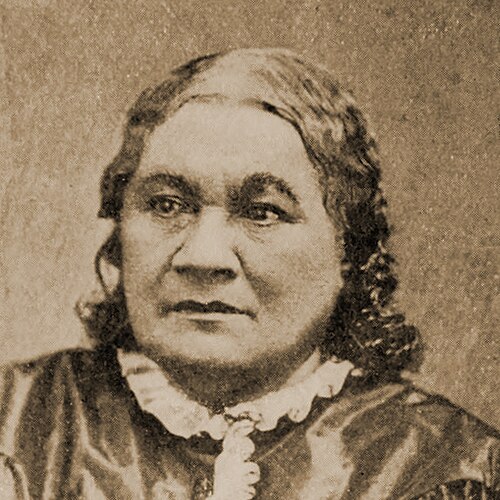
Formerly Sovereign House

Kingdom of Tahiti – House of Pomare

Kingdom of Tahiti – House of Pomare

Jurisdiction
Tahiti
Dynasty
House of Pomare
Entry type
House
Editorial status
Reviewed - Verified
Coat of arms of Tahiti

The Kingdom of Tahiti was founded by paramount chief Pōmare I, who, with the aid of English missionaries and traders, and European weaponry, unified the islands of Tahiti, Moʻorea, Tetiaroa, Mehetia and at its peak included the other Society Islands of eastern Polynesia. Their leaders were Christian following the baptism of Pomare II. Their progressive rise and recognition by Europeans allowed Tahiti to remain free from a planned Spanish colonization, as well as English and earlier French claims to the islands. The Kingdom was one of a number of independent Polynesian states in Oceania, alongside Raiatea, Huahine, Bora Bora, Hawaii, Samoa, Tonga, Rarotonga, and Niue in the 19th century. They are known for bringing a period of peace and cultural and economic prosperity to the islands over the reign of the five Tahitian monarchs.

Tahiti and its dependencies were made a French protectorate in 1842, and largely annexed as a colony of France in 1880. The monarchy was abolished by France shortly thereafter, though there are still pretenders and many Tahitians still wish for a return of the monarchy, some of whom claim that the act of abolishing the monarchy was either outright illegal, or outside of certain jurisdictions.

Monarchs of Tahiti

Picture Name Born-Died Reign Start Reign End Notes
1
Pomare 1er Roi de Tahiti.png
Vai ra’a toa Taina Pōmare I 1743-1803 13 February 1791 3 September 1803 De facto paramount ruler from 1768, first as ari’i, then from 1774 as regent for Pōmare II
2
Pomarre, Kö nig von Otaheite.png
Pōmare II 1774-1821 3 September 1803 22 December 1808 First reign, succeeded Pōmare I at birth in 1774 as ari’i, exiled to Moorea in 1808
Vacant (22 December 1808 – 15 November 1815)
(2)
Pomarre, Kö nig von Otaheite.png
Pōmare II 1774-1821 15 November 1815 7 December 1821 Second reign, reclaimed throne after the Battle of Te Feipi
3 Teri’i tari’aPōmare III 1820-1827 7 December 1821 8 January 1827 Son of Pōmare II
Council of Regency 7 December 1821 8 January 1827 Regents for Pōmare III per Pōmare II’s request, consisting of Queen Teriitooterai Teremoemoe, Queen Teriitaria Ariipaeavahine, and five of the principal chiefs of Tahiti including Manaonao Ariipaea??? and Tati???
4
Pomare IV Queen of Tahiti.jpg
‘AimataPōmare IVVahine 1813-1877 11 January 1827 17 September 1877 Female; Daughter of Pōmare II. Longest reigning ruler of Tahiti, ruled under French protectorate from 9 September 1842
5 Ari’i auePōmare V 1839-1891 17 September 1877 30 December 1880 Son of Pōmare IV. Last King of Tahiti, France annexed Tahiti and its dependencies on 29 June 1880

History of the Kingdom of Tahiti

Pōmare I was born at Pare, ca. 1743, second son of Teu Tunuieaiteatua by his wife, Tetupaia-i-Hauiri. He initially reigned under the regency of his father. He succeeded on the death of his father as Ariʻi-rahi of Porionuʻu 23 November 1802. In terms of European encroachment in the period immediately encompassing the period of Pomare I, in 1774, there was a Spanish attempt at colonizing the islands, followed by a 1797 settlement by 30 persons on missionary ships: “The attempt at colonization by the Spaniards in 1774 was followed by the settlement of thirty persons brought in 1797 by the missionary ships “Duff.” Though befriended by Pomare I. (who lived till 1805), they had many difficulties, especially from the constant wars, and at length they fled with Pomare II. to Eimeo and ultimately to New South Wales, returning in 1812, when Pomare renounced heathenism.”

The Tahitian chieftain most friendly with the British was Pomare. The additional British captains arriving at Tahiti accepted his claim to hegemony. They gave him guns in trade and helped him in his battles. Captain Cook gave him the advantage in a number of battles with rival forces during his last stay in Tahiti, circa 1779. British missionaries arrived, sent by a non-denominational Protestant group called the London Missionary Society. Pomare befriended the missionaries, and the missionaries favored both peace and Pomare, but, with the British unwilling to apply force to create order among the islands, the missionaries were unable to stop the warring.

As king, Pōmare I succeeded in uniting the different chiefdoms of Tahiti into a single kingdom, composed of the islands of Tahiti itself, Moʻorea, Mehetiʻa, and the Tetiʻaroa group. His service as the first king of unified Tahiti ended when he abdicated in 1791, but he remained the regent of Tahiti from 1791 until 1803. He married 4 times and had two sons and three daughters.

By now, islanders were passing to each other diseases that had arrived with the Europeans-diseases for which they had undeveloped immunities. Many islanders were dying. And, in 1803, Pomare died. His son, Otu, became head of the family, with the title Pomare II. Tū Tūnuiʻēʻaiteatua Pōmare II reigned 1803-1821. The missionaries remained allied with the Pomare family. Despite their pacifism, they wanted to see Pomare II successful in uniting the islanders under his rule.

King Pomare II

Historical source image

Pōmare II, King of Tahiti (1774 – December 7, 1821) was the second king of Tahiti between 1782 and 1821. He was installed by his father Pōmare I at Tarahoi, 13 February 1791. He ruled under regency from 1782 to 1803. Initially recognised as supreme sovereign and Ariʻi-maro-ʻura by the ruler of Huahine, he was subsequently forced to take refuge in Moʻorea 22 December 1808, but returned and defeated his enemies at the Battle of Te Feipī. He was thereafter recognized as undisputed King of Tahiti, Moʻorea and its dependencies.

Society Islands

Other chieftains on Tahiti became fed up with what they saw as Pomare’s pretensions of power, and in 1808 they drove him from Tahiti to the nearby island of Eimeo (Moorea). These other chieftains hostile towards the missionaries, which caused the missionaries to leave Tahiti for other islands.

Pomare organized military support from his kinsmen on the islands of Raiatea, Bora Bora and Huahine. Warring resumed, with Pomare winning the decisive Battle of Feii, on November 12, 1815. His victory was a victory also for the Christians. And, in victory Pomare surprised the Tahitians. He pardoned all who laid down their weapons. When defeated warriors returned from the hills, they found their homes had not been set afire and that their wives and children had not be slaughtered. The warfare culture of the islanders had been changed by the influence that the missionaries had on Pomare II. Centralized authority among chiefs was not traditional in Tahiti, but the missionaries welcomed Pomare’s new power. Distress from disease, civil war and death won for them serious attention to their teachings. They launched a campaign to teach the islanders to read, so they could read scripture. There were mass conversions in hope of the supernatural protections that Christianity offered. The missionaries told the islanders how to dress. The climate was suitable to exposing the skin to the greater cool of open air, but for the missionaries cool was no consideration. Little clothing for them was indecent exposure.

Another lifestyle promoted by the missionaries was manufacturing, the missionaries setting up a sugar refinery and a textile factory. In 1817, Tahiti acquired it first printing press, and, in 1819, cotton, sugar and coffee crops were planted. Pomare II asked the missionaries for advice on laws, and the missionaries, being monarchists and wanting Pomare to be a proper monarch, advised him that the laws would have to be his, not theirs. They did make suggestions, however, and in September 1819, Pomare produced Tahiti’s first written law. There was protection of life and property, observance of the Sabbath, a sanctification of marriage and a judiciary to maintain the laws.

Pōmare was married to Queen Tetua-nui Taro-vahine. He was baptised 16 May 1819 at the Royal Chapel, Papeʻete. Three London Missionary Society missionaries, Henry Bicknell, William Henry, and Charles Wilson preached at the baptism of King Pomare II. Pomare died of drink-related causes at Motu Uta, Moʻorea, 7 December 1821. Pomare II died in 1824 at the age of forty-two, leaving behind an eight-year-old daughter and a five-year-old son. The son, Teriʻi-ta-ria and Pōmare III, ruled in name from 1821 to 1827 while being educated by the missionaries. He died in 1827 of an unknown disease, and the daughter, then eleven, became Queen Pomare IV.

King Pomare III

Pōmare III was the king of Tahiti between 1821 and 1827. He was the second son of Pōmare II. He was born at Papaʻoa, ʻArue, 25 June 1820 as Teri’i-ta-ria, and was baptised on 10 September 1820. He succeeded to the throne on the death of his father. He was crowned at Papaʻoa, ʻArue, 21 April 1824.

Pomare III’s education took place at the South Sea Academy, Papetoai, Moʻorea. He reigned under a council of Regency until his death 8 January 1827. During his reign, the Kingdom’s first flag was adopted. He was succeeded by his sister, ʻAimata Pōmare IV Vahine-o-Punuateraʻitua, who reigned 1827-1877.

The Reign of Queen Pōmare IV

Pōmare IV, Queen of Tahiti (28 February 1813 – 17 September 1877), more properly ʻAimata Pōmare IV Vahine-o-Punuateraʻitua (otherwise known as ʻAimata {meaning: eye-eater, after an old custom of the ruler to eat the eye of the defeated foe} or simply as Pōmare IV), was the queen of Tahiti between 1827 and 1877. She was the daughter of Pōmare II. She succeeded as ruler of Tahiti after the death of her brother Pōmare III when she was only 14 years old. She succeeded in reuniting Raʻiatea and Porapora (Borabora) with the kingdom of Tahiti. She hosted numerous Britons, including a Charles Darwin.

The return of the Pitcairn Islanders

By 1829, of those who had arrived at Pitcairn on the Bounty only seven remained, but with their offspring they numbered 86. The supply of timber on Pitcairn was decreasing, and the availability of water was erratic. Since the end of the Napoleonic wars, the Pitcairn islanders had been discovered by and had friendly contact with the British Navy and British authorities. In 1830, Tahiti’s Queen Pomare IV invited the Pitcairners to return to Tahiti, and in March 1831, a British ship transported them there. The Tahitians welcomed the Pitcairners and offered them land. (But having been isolated and not having developed any immunity to the diseases now on Tahiti, the Pitcairners suffered from disease in alarming number. Fourteen of them died. The Tahitians took up a collection for the surviving Pitcairners, and for $500 a whaling captain took them back to Pitcairn.)

French Protectorate

In 1842, a European crisis involving Morocco escalated between France and Great Britain when Admiral Dupetit Thouars, acting independently of the French government, convinced Tahiti’s Queen Pomare IV to accept a French protectorate. George Pritchard, a Birmingham-born missionary and acting British Consul, had been away at the time. However he returned to work towards indoctrinating the locals against the Roman Catholic French. In November 1843, Dupetit-Thouars (again on his own initiative) landed sailors on the island, annexing it to France. He then threw Pritchard into prison, subsequently sending him back to Britain.

During this time Thouars managed to convince Pomare IV to sign to putting her country under the protection of France, although he was not empowered to do so, nor was he ever sanctioned in this regard. News of Tahiti reached Europe in early 1844. The French statesman François Guizot, supported by King Louis-Philippe of France, had denounced annexation of the island, and the treaty was never ratified by France.

However, the French did have an interest in the region, and the treaty was enforced from its signing by various factions. A war between the Tahitians and French went from 1843 to 1847. Pomare IV ruled under French administration from 1843 until 1877. While the Dynasty retained their title for some time they lost, quite permanently, outright control of their country.

Death of Pomare IV

Pomare IV died from natural causes in 1877. She is buried in the Royal Mausoleum, Papaʻoa, ʻArue. She was succeeded byPōmare V, who reigned 1877-1880.

Pomare V and Forced Abdication

Pōmare V, King of Tahiti (3 November 1839 – 12 June 1891) was the last king of Tahiti, reigning from 1877 until his forced abdication in 1880. He was the son of Queen Pōmare IV. He was born as Teri’i Tari’a Te-rā-tane and became Heir Apparent and Crown Prince (Ari’i-aue) upon the death of his elder brother on 13 May 1855. He became king of Tahiti on the death of his mother on 17 September 1877. His coronation was on 24 September 1877 at Pape’ete.

He married twice, first on 11 November 1857 to Te-mā-ri’i-Ma’i-hara Te-uhe-a-Te-uru-ra’i, princess of Huahine. He divorced her on 5 August 1861. His second marriage was to Joanna Mara’u-Ta’aroa Te-pa’u SALMON (thereafter known as Her Majesty The Queen Marau of Tahiti), at Pape’ete on 28 January 1875. He divorced her on 25 January 1888.

The island of Tahiti and most of its satellites remained a French protectorate until the late 19th century, when King Pomare V (1842-1891) was forced to cede the sovereignty of Tahiti and its dependencies to France. On 29 June 1880, he gave Tahiti and its dependencies to France, whereupon he was given a pension by French government and the titular position of Officer of the Orders of the Legion of Honour and Agricultural Merit of France. He died from alcoholism at the Royal Palace, Pape’ete, and is buried at the Tomb of the King, Utu’ai’ai in ‘Arue.

We use cookies to personalise content and ads, to provide social media features and to analyse our traffic. We also share information about your use of our site with our social media, advertising and analytics partners. View more
Cookies settings
Accept
Decline
Privacy & Cookie policy
Privacy & Cookies policy
Cookie name Active

Privacy and Cookie Policy Last updated: 11 August 2026

Neue Gotha respects your privacy and is committed to handling personal data lawfully, fairly, and transparently. This Privacy and Cookie Policy explains who is responsible for personal data, what information we process, why we process it, how long we retain it, who may receive it, and the rights available to individuals under the General Data Protection Regulation (EU) 2016/679 (“GDPR”) and applicable national data-protection and electronic-communications law.

1. Who is responsible for your personal data?

The controller responsible for the processing described in this policy is:

  • Legal name: Neue Gotha Historical Register gUG
  • Trading or project name: Neue Gotha
  • Postal address: Musterstraße 12, 10115 Berlin, Germany
  • Email: editor@neuegotha.de
  • EU/EEA representative: Not applicable (the controller is established in Germany).
  • Data Protection Officer: No Data Protection Officer has been appointed. Privacy enquiries are handled through editor@neuegotha.de.

Questions about this policy or requests concerning personal data may be sent to the email or postal address above.

2. Scope of this policy

This policy applies to personal data processed through https://neuegotha.com, correspondence with the Neue Gotha editorial office, material submitted for editorial consideration, and editorial or archival records concerning identifiable living individuals.

It does not govern independent third-party websites or services linked from this website. Those providers are responsible for their own privacy practices.

3. Personal data we process and why

Processing activity Personal data Purpose Legal basis Retention
Website delivery, logging, and security IP address; date and time of access; requested page or file; referring page; browser, operating-system, and device information; error and security-event data Deliver the website, maintain availability, diagnose faults, prevent abuse, and protect the website and its users Article 6(1)(f) GDPR — our legitimate interests in operating a secure and reliable website. Where processing is required by law, Article 6(1)(c) GDPR may also apply. Routine access and error logs are retained for 14 days. Records isolated for investigation of a suspected security incident may be retained for up to 90 days after the incident is resolved, or longer where required for legal claims.
Editorial correspondence and enquiries Name, contact details, message content, correspondence history, and any documents or other information voluntarily provided Respond to enquiries, assess corrections or submissions, maintain editorial records, and protect legal rights Article 6(1)(f) GDPR — our legitimate interests in conducting editorial work and responding to correspondence; Article 6(1)(b) GDPR where processing is necessary to take steps at an individual’s request before entering into a contract; Article 6(1)(c) GDPR where retention or disclosure is legally required Correspondence is ordinarily retained for 24 months after the matter closes. Material required to document an editorial decision, resolve a dispute, meet a legal obligation, or establish, exercise, or defend a legal claim may be retained for the applicable limitation period.
Editorial, genealogical, and archival records Names; titles and styles; dates and places associated with public or genealogical events; family relationships; jurisdictions, offices, and public roles; images; biographical information; source and citation information; and correspondence relating to accuracy or provenance Research, document, preserve, verify, correct, and publish material concerning dynastic, genealogical, heraldic, and institutional history Article 6(1)(f) GDPR — our legitimate interests and those of readers, researchers, and institutions in maintaining an accurate historical and genealogical reference work, subject to a documented necessity and balancing assessment. Applicable national rules implementing Article 85 GDPR concerning freedom of expression and information may also apply. For as long as the information remains relevant to the legitimate editorial or archival purpose, subject to accuracy review, correction, restriction, erasure, and applicable archiving or legal requirements
Cookie-consent and language preferences Consent choice, language preference, cookie identifiers, and related technical information Remember privacy choices, demonstrate consent where required, and provide the language selected by the visitor Article 6(1)(f) GDPR for strictly necessary preference and consent-management functions; Article 6(1)(a) GDPR for optional storage, access, or associated processing based on consent As stated in the cookie table below
Optional external services IP address, page URL, device and browser information, language choice, and service-interaction data, depending on the provider Provide optional translation, embedded content, analytics, or similar features actually enabled on the website Article 6(1)(a) GDPR — consent. Non-essential services remain disabled until consent is given. As described for each service and by the relevant provider

We do not use personal data for solely automated decisions that produce legal effects or similarly significant effects concerning individuals.

4. Editorial and archival information obtained from other sources

Neue Gotha is an editorial and historical reference project. Some information in the register may concern identifiable living individuals and may not have been collected directly from those individuals.

Depending on the record, information may be obtained from official gazettes and public registers; archives and libraries; published books and scholarly works; institutional publications; reputable news sources; publicly accessible websites; submissions from the individual concerned or their authorised representative; family representatives; and other documented sources.

The categories of information may include the categories listed under “Editorial, genealogical, and archival records” above. The material may be made available to website visitors and may be indexed by search engines. Neue Gotha seeks to use relevant, proportionate, and appropriately sourced information and to distinguish documented fact from uncertainty or editorial interpretation.

Individuals may contact the editorial office to request access, correction, contextualisation, restriction, or erasure. Requests are assessed under the GDPR and applicable national law, taking into account accuracy, source integrity, the public interest, freedom of expression and information, archival considerations, and the rights and freedoms of other people. No provision of this policy removes a right granted by applicable law.

Neue Gotha does not intentionally publish special-category personal data or information concerning criminal convictions about living individuals unless a specific lawful basis and any additional legal condition have been identified and documented.

5. Cookies and similar technologies

Cookies are small text files stored on, or read from, a visitor’s device. Similar technologies may perform comparable functions. Some are strictly necessary for a website or a service expressly requested by the visitor. Others, including many analytics, advertising, social-media, translation, or embedded-content technologies, require prior consent under applicable EU electronic-communications rules.

Neue Gotha does not place or access non-essential cookies, or activate non-essential external services, before valid consent has been given. Visitors may accept or reject optional purposes separately and may withdraw consent at any time by selecting the permanently available “Cookie settings” control. Withdrawing consent does not affect processing that was lawful before withdrawal. Strictly necessary technologies cannot be disabled through the consent tool, but they may be controlled through browser settings where technically possible.

The following table reflects the technologies currently deployed on the website. It is updated whenever a plugin, host, analytics tool, embedded service, or cookie configuration changes.

Name Provider Purpose Category Duration Third-party access
_scc_session Neue Gotha / managed hosting and site-control provider Maintains a short-lived session for website security and site-control functions Strictly necessary Browser session The contracted hosting or site-control provider may access the identifier when providing technical support
_tccl_visit Neue Gotha / managed website-analytics provider Distinguishes a single website visit and reduces duplicate counting within the same session Analytics — disabled until consent 30 minutes Yes; the contracted analytics provider processes the identifier on Neue Gotha’s behalf
_tccl_visitor Neue Gotha / managed website-analytics provider Assigns a pseudonymous visitor identifier used to produce aggregated website-usage statistics Analytics — disabled until consent 12 months Yes; the contracted analytics provider processes the identifier on Neue Gotha’s behalf
googtrans Neue Gotha / Google Translate Stores or applies the visitor’s language selection for the translation feature Functional — disabled until consent 12 months Google may receive technical and service-interaction data when Google Translate is activated
ng_gt_default_applied Neue Gotha / website translation plugin Records whether the website’s default translation setting has been applied Functional — disabled until consent 24 hours No direct vendor access is assumed; Google may receive data if activation causes Google Translate to load
eu_cookies_bar_consent Neue Gotha / locally hosted EU Cookies Bar plugin Stores the visitor’s cookie choices and prevents the banner from being shown unnecessarily Strictly necessary 6 months No, provided the consent plugin remains locally hosted and does not transmit consent records to its developer
wordpress_test_cookie Neue Gotha / WordPress Checks whether the browser supports cookies when an authorised user visits the sign-in page Strictly necessary Browser session No; the cookie is processed by Neue Gotha and its contracted host

Authorised editorial users may receive WordPress authentication, security, or preference cookies when they sign in. wordpress_logged_in_[hash] maintains an authenticated session for up to two weeks when “Remember Me” is selected; wordpress_sec_[hash] protects administrative access for the session; and wp-settings-[user_id] stores an editor’s interface preferences for up to one year. These internal cookies are processed solely for editorial access and site administration.

6. Google Translate, web fonts, and other external content

Where enabled with the visitor’s consent, Neue Gotha may use Google Translate to provide machine-generated translations. Activating the service may cause the visitor’s browser to connect to Google and disclose technical information such as the IP address, requested page URL, browser or device information, and language or service-interaction data. Machine translations may contain errors and do not replace the original editorial text.

Website fonts are hosted locally by Neue Gotha and do not require a connection to Google. Google Translate remains an optional external service that is activated only after the visitor provides consent.

Information about Google’s processing is available in the Google Privacy Policy and Google’s explanation of how it uses information from sites and applications that use its services.

Embedded material from another website may allow that provider to process personal data as if the visitor had visited the provider directly. Non-essential embeds remain blocked until consent is obtained. Each enabled provider is identified in this policy and in the consent interface.

7. Recipients of personal data

Personal data may be disclosed only where necessary to:

  • hosting, content-delivery, backup, website-maintenance, email, security, and consent-management providers acting under contract;
  • translation, analytics, media, or other external-service providers selected by the visitor through the consent interface;
  • professional advisers, insurers, auditors, or other specialists where necessary to protect legal or operational interests;
  • courts, regulators, law-enforcement bodies, or public authorities where disclosure is required or permitted by law; and
  • the public and search engines where personal data form part of a lawfully published editorial or archival record.

8. International data transfers

Some service providers may process personal data outside the European Economic Area. Where the GDPR restricts such a transfer, Neue Gotha relies on an applicable European Commission adequacy decision or appropriate safeguards under Article 46 GDPR, such as the European Commission’s Standard Contractual Clauses, together with supplementary measures where required.

Cloudflare and Google may transfer limited technical information to recipients in the United States. Where the recipient is validly certified, the transfer is based on the European Commission’s adequacy decision for the EU–US Data Privacy Framework. Where that mechanism is unavailable or does not cover a transfer, the relevant provider’s European Commission Standard Contractual Clauses and supplementary technical and organisational measures are used. Information about the applicable safeguards, including how to obtain a copy, may be requested from editor@neuegotha.de.

9. How long we retain personal data

We retain personal data only for as long as necessary for the purposes described in this policy, including security, editorial integrity, source verification, dispute resolution, and compliance with legal obligations. The specific periods or criteria are stated in the processing and cookie tables above.

When a retention period ends, information is deleted or anonymised unless continued retention is required by law, is necessary for legal claims, or is justified by a documented editorial or archival purpose. Encrypted rolling backups are retained for 35 days and are then overwritten automatically, unless a backup has been isolated for incident recovery or a legal hold.

10. Security

Neue Gotha uses appropriate technical and organisational measures designed to protect personal data against accidental or unlawful destruction, loss, alteration, unauthorised disclosure, or access. No method of internet transmission or electronic storage is completely secure, and absolute security cannot be guaranteed.

11. Your data-protection rights

Subject to the conditions and limitations in the GDPR and applicable national law, an individual may have the right to:

  • obtain confirmation as to whether personal data concerning them are processed and request access to those data;
  • request correction of inaccurate or incomplete personal data;
  • request erasure of personal data;
  • request restriction of processing;
  • object, on grounds relating to their particular situation, to processing based on legitimate interests;
  • receive personal data they provided in a structured, commonly used, machine-readable format and transmit those data to another controller where the right to portability applies;
  • withdraw consent at any time, without affecting the lawfulness of processing carried out before withdrawal; and
  • lodge a complaint with a competent data-protection supervisory authority.

To exercise a right, contact editor@neuegotha.de. Please identify the information or record concerned and the nature of the request. We may request information reasonably necessary to verify identity and protect personal data from unauthorised disclosure. Requests are normally answered within one month, subject to any extension permitted by law.

Where a request concerns published editorial or archival content, applicable rights may be limited where necessary and proportionate to reconcile data protection with freedom of expression and information or other rights recognised by law. Each request will be assessed individually.

12. Complaints

We encourage individuals to contact us first so that we can try to resolve a concern. Individuals also have the right to complain to the supervisory authority in the EU or EEA country of their habitual residence, place of work, or the place of the alleged infringement.

For this Berlin-based controller the supervisory authority is the Berliner Beauftragte für Datenschutz und Informationsfreiheit, Alt-Moabit 59–61, 10555 Berlin, Germany; telephone +49 30 13889-0; email mailbox@datenschutz-berlin.de; website https://www.datenschutz-berlin.de/.

13. Children

The website is intended as a general historical and reference resource and is not directed specifically at children. We do not knowingly request personal data directly from children for an online service requiring parental consent. If you believe a child has provided personal data inappropriately, please contact us.

14. Changes to this policy

We may update this policy when our processing activities, service providers, technologies, or legal obligations change. The current version will be published on this page with a revised “Last updated” date. Where required, we will provide additional notice or request renewed consent before introducing a new processing purpose.

Decline All
Save settings Accept All
Cookies settings