
Reigning House
Kingdom of Morocco – House of Alaouite
Kingdom of Morocco – House of Alaouite
- Jurisdiction
- Morocco
- Dynasty
- House of Alaouite
- Entry type
- House
- Editorial status
- Reviewed - Verified
المملكة المغربية –
al-Mamlaka al-Maġribiyya
Morocco (Arabic: المغرب al-Maghrib ; Berber: Elmeɣrib / Amerruk), officially the Kingdom of Morocco, is a country located in North Africa. It has a population of about 35 million and an area of 710,850 km², the Kingdom of Morocco is part of the Maghreb region, in addition to Tunisia, Algeria, Mauritania, and Libya, with which it shares cultural, historical and linguistic ties.
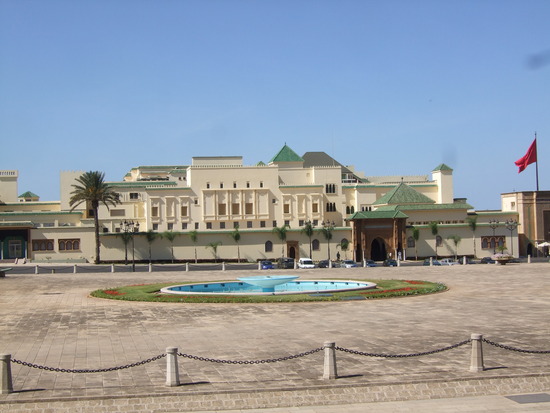
Morocco is a constitutional monarchy with an elected parliament. The King of Morocco holds vast executive powers, including the power to dissolve the parliament. Executive power is exercised by the government but more importantly by the king himself. Legislative power is vested in both the government and the two chambers of parliament, the Assembly of Representatives and the Assembly of Councillors. The king can also issue decrees called dahirs which have the force of law. The political capital is Rabat, but the largest city is Casablanca; other main cities include Marrakesh, Tetouan, Tangiers, Salé, Fez, Agadir, Meknes, Oujda, and Nador. Most Moroccans natively speak either Moroccan Arabic or Berber as a mother tongue. Both languages have regional dialects and accents. Hassaniya Arabic is also spoken natively in the southern parts of the country by a small population.
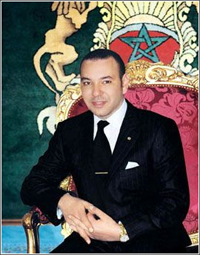
The Royal House of Alaouite
The Alaouite Dynasty is the name of the current Moroccan royal family. The name Alaouite comes from the ‘Alī of its founder Moulay Ali Cherif who became Prince of Tafilalt in 1631. His son Mulay r-Rshid (1664-1672) was able to unite and pacify the country. The Alaouite family claim descent from Muhammad through the line of Fāṭimah az-Zahrah, Muhammad’s daughter, and her husband, the Fourth Caliph ‘Alī ibn Abī Ṭālib.
According to some legends the Alaouites entered Morocco at the end of the 13th century when Al Hassan Addakhil, who lived then in the town of Yanbu in the Hejaz, was brought to Morocco by the inhabitants of Tafilalet to be their imām. They were hoping that, as he was a descendant of Muhammad, his presence would help to improve their date palm crops thanks to his barakah “blessing”, an Arabic term meaning a sense of divine presence or charisma. His descendants began to increase their power in southern Morocco after the death of the Saʻdī ruler Ahmad al-Mansur (1578-1603). In 1669, the last Saʻdī sultan was overthrown in the conquest of Marrakesh by Mulay r-Rshid (1664-1672). After the victory over the zāwiya of Dila, who controlled northern Morocco, he was able to unite and pacify the country.
The organization of the sultanate developed under Ismail Ibn Sharif (1672-1727), who, against the opposition of local tribes began to create a unified state. {{Reference necessary|Because the Alaouites had difficult relations with many of the country’s Berber and Bedouin-Arab tribes, Isma’īl formed a new army of black slaves, the Black Guard. However, the unity of Morocco did not survive his death-in the ensuing power struggles the tribes became a political and military force once again.
Only with Muhammad III (1757-1790) could the kingdom be pacified again and the administration reorganized. A renewed attempt at centralization was abandoned and the tribes allowed to preserve their autonomy. Under Abderrahmane (1822-1859) Morocco fell under the influence of the European powers. When Morocco supported the Algerian independence movement of the Emir Abd al-Qadir, it was heavily defeated by the French in 1844 at the Battle of Isly and made to abandon its support.
From Muhammad IV (1859-1873) and Hassan I (1873-1894) the Alaouites tried to foster trading links, above all with European countries and the United States. The army and administration were also modernised, to improve control over the Berber and Bedouin tribes. With the war against Spain (1859-1860) came direct involvement in European affairs-although the independence of Morocco was guaranteed in the Conference of Madrid (1880), the French gained ever greater influence. German attempts to counter this growing influence led to the First Moroccan Crisis of 1905-1906 and the Second Moroccan Crisis (1911). Eventually the Moroccans were forced to recognise the French Protectorate through the Treaty of Fez, signed on December 3, 1912. At the same time the Rif area of northern Morocco submitted to Spain.
Under the protectorate (1912-1956) the infrastructure was invested in heavily in order to link the cities of the Atlantic coast to the hinterland, thus creating a single economic area for Morocco. However the regime faced the opposition of the tribes-when the Berbers were required to come under the jurisdiction of French courts in 1930 it marked the beginning of the independence movement. In 1944, the independence party Istiqlāl was founded, supported by the Sultan Muhammad V (1927-1961). France was obliged to grant Morocco independence on March 2, 1956, leaving behind both a legacy of urbanisation and industrial economy in some cities, and destruction and isolation in the areas that hosted the Berber resistance against France and Spain between 1912 and 1933.
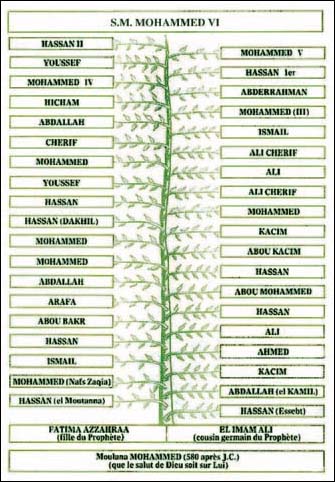
The List of Alaouite rulers of Morocco
From 1631 to 1666 as princes of Tafilalt.
- Muhammad I (1631-1635)
- Muhammad II (1635-1664)
Sultan Mulay Muhammad al-Rashid bin Sharif, 1st Sultan of Morocco, etc., b. at Sijilmasa (Rissani), Tafilalt, 1631, second son of Sultan Abul Amlak Sidi Muhammad I as-Sharif bin ‘Ali, Sultan of Tafilalt, educ. privately. Proclaimed at Toza, on the death of his elder half-brother as Sultan of Tafilalt, 2 August 1664. Proclaimed as Sultan of Morocco, etc. at Fez, 22 October 1664.
- Al-Rashid (1666-1672)
- Mawlay Ismail Ibn Sharif (1672-1727)
- Abu’l Abbas Ahmad II (1727-1728) (first time)
- Abdalmalik (1728)
- Abu’l Abbas Ahmad II (1728-1729) (second time)
- Abdallah (1729-1734) (first time)
- Ali (1734-1736)
- Abdallah (1736) (second time)
- Mohammed II (1736-1738)
- Al-Mostadi (1738-1740) (first time)
- Abdallah (1740-1741) (third time)
- Zin al-Abidin (1741)
- Abdallah (1741-1742) (fourth time)
- Al-Mostadi (1742-1743) (second time)
- Abdallah (1743-1747) (fifth time)
- Al-Mostadi (1747-1748) (third time)
- Abdallah (1748-1757) (sixth time)
- Mohammed III (1757-1790)
- Yazid (1790-1792)
- Slimane of Morocco (1792-1822)
- Abderrahmane (1822-1859)
- Mohammed IV (1859-1873)
- Hassan I (1873-1894)
- Abdelaziz (1894-1908)
- Abdelhafid (1908-1912)
Under French Protectorate (1912-1956):
- Yusef (1912-1927)
- King Mohammed V (1927-1961), changed title of ruler from Sultan to King in 1957. Deposed and exiled to Corsica and Madagascar (1953-1955)
- Mohammed Ben Aarafa, French Puppet (1953-1955)
Restored Independence (1956 onwards):
- King Mohammed V (1955-1961)
- King Hassan II (1961-1999)
- King Mohammed VI (1999-Present)
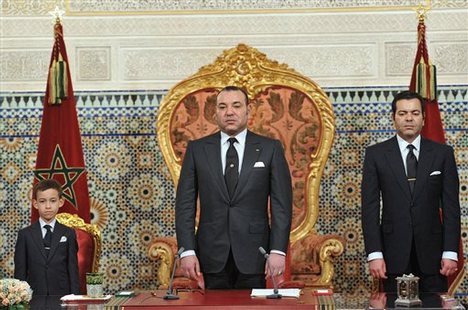
The Royal Familiy Titles and Styles
The members of the Royal Family bear the Title of Prince or Princess of Morocco together with the formal appellation of His or Her Royal Highness.
The Genealogy of The Royal House
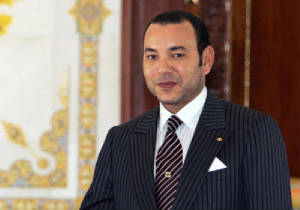
Head of The Royal Family
HM Mohammed VI, King of Morocco since 23/7/1999, Crown Pce 21/8/1963, Gen Royal Army 12/7/1994, Coordinator of the Offices and Services of the Royal Armed Forces, Docteur en Droit Univ of Nice Sophia Antipolis 10/1993, dipl Law Univ of Rabat,°Rabat 21/8/1963
Brothers and Sisters of The King
1. (by Lella Latifa Hammou) HRH Pcess Lella Mariam, °Rome 26/8/1962, X 9/1984 Fouad ibn Abdellatif Filali, Pres of Omnium Nord-Africain (ONA), son of HE Dr Abdellatif Filali, fmr Prime Min, Min of State for Foreign Affairs and Cooperation
2. (by Lella Latifa Hammou) HRH Pcess Lella Asma, °29/8/1965 or 12/1965, +…, X Marrakech 6-8/6/1987 Khalid Bouchentouf
3. (by Lella Latifa Hammou) HRH Pcess Lella Hasna, °19/11/1967, X 13/12/1991or 8/9/1994 Khalid Benharbit, MD, °1959
4. (by Lella Latifa Hammou) HRH Pce Moulay Rachid, Col in the Royal Navy 1994, dipl Université Mohamed V at Rabat, Law at Université de Bordeaux, Fce, °20/6 or 7/1970
Grandchildren of His Majesty King Hassan II of Morocco
- 1. Moulay Yazid
- 2. Lella Nauhaila
- 3. Lella Soukaina
- 4. Moulay Idris
- 5. Lella Asmaa
Children of His Majesty King Mohammed V of Morocco
- 1. (by Lella Abla) HRH Pcess Lella Aicha, Hon Pres of the Union Nationale des Femmes Marocaines 6/5/1969, Amb to Italy and to Greece 1969-1973, Amb to London 1965-1969, Pres of the Entraide Nationale, Pres of the Moroccan Red Crescent before 1967, GrCordon O.Trône, registered as the eldest daughter of HM King Mohammed V in the Who’s Who in the Arab World, °Rabat 1928 or 17/6/1930, X 1 Rabat 16/8/1961 (div) Hassan el Yacoubi, 2 8/1972 Pce Moulay el Hassan
- 2. (by 2nd wife of HM King Mohammed V) HRH Pcess Lella Fatima Zohra, ° 29/6/1929 or 1930, X Rabat 16/8/1961 HRH Pce Moulay Ali, Amb of Morocco to Paris 1964-1966, Pres of Cosumar (Nat Sugar Co) since 1966, fmr Pres of the Société de Banque et de Crédit, GrOff Légion d’honneur, educ Lycée Lyautey, Casablanca, °Marrakech 1924 (Casablanca)
- 3. (by Lella Abla) HRH Pcess Lella Malika, Pres of the Morocco Red Crescent, °Rabat 1932 or 14/3/1933, X Rabat 16/8/1961 HE Mohammed ben Abdullah Cherqawi, Pres of the Afro-Asian Economic Cooperation, Min of Nat Defense 1967, Min of Foreign Affairs 1966-1967, Min of Development 1965-1966, Min of Nat Economy and Finance 1964-1965, Pres of the Permanent Consultative Cttee of the Maghreb 1964, Amb of Morocco to Paris 1961-1964, son of Abdallah el Cherkaoui (Rabat)
- 4. (by Lella Abla) HRH Pce Moulay Abdallah, °Rabat 30/7/1935, X 9/11/1961 Lamia el Solh, °1937, daughter of HE Riad el Solh (fmr Prime Min of Lebanon). Parents of:
- 4.1. HRH Pce Moulay Hicham, endowed 10/5/1994 from Middle East Institute at Princeton Univ, Mohammed V Institute for the Trans-Regional Study of Contemporary Middle East, North Africa and Central Asia (USA)
- 4.2. HRH Pce Moulay …
- 5. HRH Pcess Lella Nuzha, °Rabat 1940, +Tetouan 2/9/1977, X Rabat 29/10/1964 HE Ahmed Osman, Prime Min 1972-1979
- 6. HRH Pcess Lella Amina, °Madagascar 4/1954, X 30/3/1973 Moulay Idris el Ouazzani
Children of His Sharifian Majesty Sultan Mohammed ben Arafa
1. Moulay Ahmed, °1918 or 1921, X … ,daughter of HIH Pce Moulay el Hassan ben el Mehdi ben Ismaël, Caliphe of Tetouan (see below, Sons and descendants of Sultan Mohammed IV)
2. Moulay Abd el Hamid, °1918 or 1921, X … , daughter of HIH Pce Moulay el Hassan ben el Mehdi ben Ismaël, Caliphe of Tetouan (see below, Sons and descendants of Sultan Mohammed IV)
Children and Descendants of His Sharifian Majesty Sultan Youssef
- 1. Lella Zaynab
- 2. Lella Amina, °Rabat
- 3. Moulay Idris, Pacha of Marrakech 1912-1930, and again after independance before his death in 1962, Caliphe of Marrakech and Heir Presumptive c1912, °1908, +1962, X Marrakech 27 or 28/10/1926 …, daughter of Moulay Mustapha, Qadi of Marrakech, by Lella … (see below, Children and descendants of Sultan Hassan I)
- 4. Moulay Hassan, Caliphe of Tiznit and Tindouf after 1912, Caliphe of Tiznit 1912, an later of Tindouf, °1909 or 1911 or 1912, +Fès 4/1/1969, X Marrakech 27/12/1926 Lella Amina (see below, Children of His Sharifian Majesty Sultan Abd el Hafid). Father of:
- 4.1. Lella Zubaida
- 5. HM King Mohammed V (see below, Predecessors)
- 6. Moulay Abd el Salem, imprisoned by the French for nationalist activities 7/1954, °1914
Children of His Sharifian Majesty Sultan Abd el Aziz
1. Moulay el Hassan, °Marrakech 7/1899, +1919?
2. HRH Pcess Lella Fatima Zohra, Pres of the Union Nationale des Femmes Marocaines, Rabat 6/5/1969, °…, Morocco 13/6/1927, X Tetouan 1949 HIH Pce Moulay el Hassan ben el Mehdi ben Ismaël, Caliphe of Tetouan (see below, Sons and descendants of Sultan Mohammed IV)
Children and Descendants of His Sharifian Majesty Sultan Abd el Hafid
- 1. Moulay Idris, °1905. Father of:
- 1.1. Moulay Ahmed
- 1.2. Moulay Idris
- 2. (by Lella Rabiaa el Glaoui) Lella Amina, X 1 Moulay Idris el Fichar 2 Marrakech 27/10/1926 Moulay Hassan, Caliphe of Tiznit (see above, Children and descendants of His Sharifian Majesty Sultan Youssef), 3 Moulay Idris el Fichar
- 3. Sidi Mohammed, °1917, +Marrakech 15/1/1938
- 4. Moulay Abdallah, Delegate of the Seal of Imperial Authority (Regent) 1-28/10/1955, °1910
Sons and Descendants of His Sharifian Majesty Sultan Hassan I
- 1. Moulay Abd el Rahman el Kabir, Head of Mahalla to Hayaina 10/1902-…., +Rabat 1939
- 2. Sidi Mohammed, Caliphe of Fès, proclaimed Sultan in Zair 1908, proclaimed Sultan in Haouz of Marrakech 1895, Pacha of Marrakech 1893, in charge of Mahalla in Taroudannt, Caliphe of Marrakech 1888, +Rabat 15/9/1946
- 3. His Sharifian Majesty (Sa Majesté Chérifienne) Sultan Abd el Hafid (see below, Predecessors)
- 4. (7th son) Moulay Zayn el Abidin, Caliphe of Tiznit in Sous after 1912, proclaimed Sultan by tribes of Zair, Zayan and Chararda 1911 and in Meknès 4/1911, +Tiznit before 1936
- 5. Sidi Mohammed el Awar
- 6. Moulay Abou Bekr, Pacha of Marrakech 1907-1912, Caliphe of Marrakech in Haouz and Sous 16/8/1907
- 7. Moulay Bil-Ghayth, cTafilalt 1893
- 8. Lella …, c1927, X Moulay Mustapha, Qadi of Marrakech, c1927
- 9. Moulay el Tahar. Father of:
- 9.1. Lella Abla, +1992, X after 1927 HM King Mohammed V (see below, Predecessors)
- 10. Moulay Abdallah, resistance leader against the French in Tafilalt 1916
- 11. Moulay el Amin, c27/2/1961
- 12. Moulay Mamoun, Caliphe of Fès
- 13. Moulay el Mimoun
- 14. Moulay el Jafar
- 15. Sidi Mohammed el Saguir
- 16. Moulay el Taleb
- 17. Moulay Osman, Caliphe of Fès …- dismissed 9/1953, reappointed 1954, 1961, +27/2/1961
- 18. His Sharifian Majesty (Sa Majesté Chérifienne) Sultan Abd el Aziz (see below, Predecessors)
- 19. His Sharifian Majesty (Sa Majesté Chérifienne) Sultan Youssef (see below, Predecessors)
- 20. Moulay el Mehdi, Caliphe of Tafilalt before 1916
Sons and Descendants of Sultan Mohammed IV
- 1. Moulay al Emin, Cdr of Mahalla to Guelaya 1880, Casablanca Gov of Shawiya (Casablanca region) 1908
- 2. Moulay Omar, Caliphe of Fez before 1894
- 3. Moulay el Rachid, Gov of Tafilalt before 1896-3/1911, Head of Mahalla in West Kart Region 1862, +Tafilalt? 3/1911. Father of:
- 3.1. Moulay Abdallah, c9/1907
- 3.2. Sidi Mohammed, cTafilalt 1907, Marrakech 16/8/1908
- 4. Moulay … Father of:
- 4.1. Sidi Mohammed el Amrani, cTafilalt 1898
- 5. Moulay Idris, cChenguit 1905
- 6. Moulay Ismaël, Caliphe of Fès before 4/1874. Father of:
- 6.1. HIH Moulay el Mehdi ben Ismaël ben Mohammed, Caliphe in the Spanish Zone 1913-1923, Caliphe of Tetouan 1913, +Tetouan 1923, X Khnaya bent Mohammed Soussi. Father of:
- 6.1.1. Pce Sidi Mohammed ben el Mehdi,
- 6.1.2. Pce Moulay Ahmed ben el Mehdi,
- 6.1.4. HIH Pce Moulay el Hassan ben el Mehdi ben Ismael, Caliphe of Tetouan 19/6 or 9/11/1925, Gov Banque du Maroc 1969-…., mbr of the Personal Economic Council of HM The King 1967, Pres of Banque Nat pour le Développement Economique 1967-1969, Amb to Italy 1964-1967, and to London 1957-1964, Ouissam Alaoui, °Fès 1/8/1912, X 1…, 2 HRH Pcess Lella Fatima Zohra (see above, Children of His Sharifian Majesty Sultan Abd el Aziz). (3 Rue Afghani, Rabat) Father of:
- 6.1.4.1. (by 1st wife) Moulay el Mehdi, Hon Pres of the Casa del Magreb in Egypt before 1939
- 6.1.4.2. (by 1st wife) Lella…, X Sharif Moulay Ahmed ben Mohammed (see above, Children of His Sharifian Majesty Sultan Mohammed ben Arafa)
- 6.1.4.3. (by 1st wife) Lella…, X Sharif Moulay Abd el Hamid ben Mohammed (see above, Children of His Sharifian Majesty Sultan Mohammed ben Arafa)
- 6.1.4.4. (by HRH Pcess Lella Fatima Zohra) Lella Oum Koulthoum, °Tétouan 4/1950
- 7. Moulay Ali, Head of Mahalla to Bani Snassan 1875
- 8. Moulay Arafa, Head of Mahalla to Bani Snassan 1876, Caliphe of Fès 1894
- 9. His Sharifian Majesty (Sa Majesté Chérifienne) Sultan Mohammed ben Arafa (see below, Predecessors)
- 10. Moulay Osman, Pacha and Caliphe of Marrakech c11/1893, Caliphe of Fès, Cdr of Mahalla to Tadla 1888, Caliphe of Marrakech before 1877
- 11. Moulay el Hassan el Saguir, c1877
- 12. Lella …, X Mohammed el Marani
- 13. Moulay Abd el Malek, Head of Mahalla to Shawiya 1903
- 14. His Sharifian Majesty (Sa Majesté Chérifienne) Sultan Hassan I (see below, Predecessors)
6.1.3. Pcess Lella … bent el Mehdi,
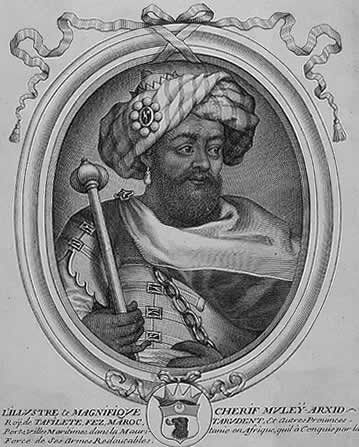
The Sultans and Kings of Morocco
Mohammed I ibn es Chérif, Sultan 1631-1635. Father of:
Mohammed II, Sultan 1635-1664. Brother of:
Moulay er Rachid, Sultan 1664-9/4/1672. Brother of:
Moulay Ismaël es Samin, Sultan 9/4/1672-22/3/1727 (proclaimed 14/4/1672), styled Emperor of Morocco by Europeans, Caliphe of Fès before 1672, °Marrakech c1646, +(bur) Meknes 22/3/1727, X (among other wives) 1 Zidana, styled Empress of Morocco by Europeans, 2 Hnata mint Bakkar al Gul wedoud Ali wedoud Abd Alla, of the Awlad Abdalla clan (see Brakna, Mauritania). Father (by Zidana) of:
Moulay Ahmed ed Dhahabi, Sultan 22/3/1727-deposed 1728, restored 1728-1729, Heir Apparent 1718, °c1677, +1729. Half-brother of:
Moulay Abd el Melik, Sultan 1728 (deposed). Half-brother of:
Moulay Abdallah, Sultan 1729-deposed 1735, restored and again deposed 1736, 1740-1745 and finally restored 1745-1757, +1757. Half-brother of:
Moulay Ali el Araj, Sultan 1735-deposed 1736. Half-brother of:
Sidi Mohammed, Sultan 1736-deposed 1738. Half-brother of:
Moulay el Moustadi, Sultan 1738-deposed 1740, +1759. Half-brother of:
Moulay Zein el Abdin, Sultan 1745 (deposed),
Sidi Mohammed III, Sultan 1757-11/4/1790, Gov of Marrakech 1750, +Rabat 11/4/1790 (bur Palace, Rabat 12/4/1790). Son of Sultan Abdallah and father of:
Moulay el Yazid, Sultan 1790-1792, +(killed) 1792. Half-brother of:
Moulay Hicham, Sultan (proclaimed)10/12/1790-renounced 1/1795, (proclaimed again) 10/1795-renounced 3/1797, +1799 or 1800. Brother of:
Moulay Sulaiman, Sultan 1796-1822, +28/11/1892,
Moulay Abd el Rahman, Sultan 28/11/1822-28/8/1859, styled Emperor of Morocco in the Almanach de Bruxelles, Gov of Essaouira c1821/2, °1778, +Meknès 28/8/1859, X 1 Lella Fatima, daughter of Sulaiman, 2 before 1830 …, daughter of Bahloul, 3 c1839 …, daughter of … el Khlouti . Son of Sultan Hisham and father of:
Sidi Mohammed IV, Sultan 28/8/1859-25/9/1873, °1803, +Palace in el Nil Park, Marrakech 21/9/1873 (bur Tomb of Mawkla Ali el Sharif, next to Qadi Ayyad Mosque, Marrakech c21/9/1873), X 1…, daughter of el Arabi el Jamaai, 2 Lella Ahniya el Arusiya, daughter of el Haji Abd el Kabir . Father of:
His Sharifian Majesty (Sa Majesté Chérifienne) Moulay Hassan I, Sultan of Fès, Tafilalt, Marrakech and Sous, Emir al Moumenin (Commander of the Faithful) 20 or 25/9/1873-7/6/1894, °c1836, +Marrakech 7/6/1894 (bur Tomb of Sidi Mohammed bin Abdallah, Rabat), X 1 Zaynab, 2 Khaduja, daughter of el Arbi, 3 Lella Zuhra, daughter of el Haji Maathi, 4 Lella Raquia, from Constantinople, 5 before 1876 Aliya Sittatiya. Father (by Lella Raquia) of:
His Sharifian Majesty (Sa Majesté Chérifienne) Moulay Abd el Aziz, Sultan of Fès, Tafilalt, Marrakech and Sous, Emir al Moumenin (Commander of the Faithful) 7/6/1894-abdicated 5/1 or 21/8/1908, °Marrakech 24/2/1878 or 1881, +Tangier 9 or 10/6/1943 (bur Mosquée of Sidi Abdallah, Fès), X 1 …, 2 …, . Half-brother of:
His Sharifian Majesty (Sa Majesté Chérifienne) Moulay Abd el Hafid, Sultan of Morocco, Sultan of Fès, Tafilalt, Marrakech (16/8/1907) and Sous, Emir al Moumenin (Commander of the Faithful) 28/8/1907 or 5/1/1908-abdicated 12/8/1912, recognised by the French Government 5/1/1909, moved to Barcelona, Spain 1914, Caliphe of Marrakech 1901, Caliphe of Tiznit 1897, °1876, +Enghien les Bains, Fce 4/4/1937 (bur Mosquée of Sidi Abdallah, Fès), X (among other wives) 1 c12/1907 or 1910 Lella Rabiaa el Glaoui, daughter of el Madani el Glaoui, Grand Vizir and Min of War, by Lella Ijja Ahmad, 2 Marrakech c12/1907 Lella Rabaha el Zayyani, daughter of Muha ou Hammou.el Zayyani, 3 c7/1910 … el Muqri, daughter of el Haji Mohammed el Muqri, Half-brother of:
His Sharifian Majesty (Sa Majesté Chérifienne) Moulay Youssef, Sultan of Morocco, Sultan of Fès, Tafilalt, Marrakech and Sous, Emir al Moumenin (Commander of the Faithful) 13 or 17/8/1912-17/11/1927, °Meknes c1881 or 1882, +Fès 17/11/1927 (bur Mosquée of Sidi Abdallah, Fès), X before 1912 Lella Yaaqout, +Fès 17/11/1927. Father (by Lella Yaaqout) of:
His Sharifian Majesty (Sa Majesté Chérifienne) (18/11/1927-18/8/1957) then HM (18/8/1957-26/2/1961) Moulay Mohammed V, King of Morocco 20/3/1956-26/2/1961, Sultan of Morocco, Sultan of Fès, Tafilalt, Marrakech and Sous, Emir al Moumenin (Commander of the Faithful) 18/11/1927-deposed 20/8/1953, exiled to Madagascar 20/8/1953-1955, restored 6 or 16/11/1955-20/3/1956, Prime Min 1960-1961, °Fès 10/8/1909 or 1910 or 1911, +Rabat 26/2/1961 (bur Tour Hassan, Rabat 28/2/1961), X 1 …, 2 before 1927 …, daughter of Mamoun, 3 Marrakech 27/10/1926 or after 1927 Lella Abla, +1/3/1992, daughter of Moulay al Tahar (son of Sultan Hassan I).
His Sharifian Majesty (Sa Majesté Chérifienne) Sidi Mohammed ben Arafa, Sultan of Morocco, Sultan of Fès, Tafilalt, Marrakech and Sous, Emir al Moumenin (Commander of the Faithful) (proclaimed) 15/8/1953-abdicated 30/10/1955, not considered as a legitimate successor, proclaimed Imam at Marrakech 15/8/1953, °Fès 1889, +Nice, Fce 17/7/1976, X Lella Hania, daughter of Moulay al Tahar (son of Sultan Hasan I). Son of Moulay Arafa, himself son of Sultan Mohammed IV.
HM Hassan II, King of Morocco 3/3/1961-23/7/1999, Chm of the Arab League ….-26/7/1986, Pres of the el Qods Cttee of Islamic Conference 1979, Chm Organisation of African Unity (OAU) 1972, Prime Min 2/1961-11/1964 and 6/1965-1967, Min of Defence 5/1960-6/1961, Vice Prime Min 5/1959-2/1961, Crown Prince 9/7/1957, Chef d’Etat Major des Forces Armées Royales (Cdr in Chief of the Royal Army) 4/1956, exiled to Madagascar 20/8/1953-1956, Hon Pres of the Rabat Scout troop (renamed Hassani Scouts) 12/1933, educ Imperial College in Rabat 1942-1948 and dipl Institut de Droit in Rabat (depending on the Univ of Bordeaux, Fce 1951), dipl Hautes études de droit civil at Univ of Bordeaux, Fce 1952, °Rabat 9/7/1929, +Avicenne Hospital, Rabat 23/7/1999 (bur Mohammed V Mausoleum), X 1 1961 Lella Latifa Hammou, from the Zaiane tribe, 2 Famita Amhourok, daughter of el Qaid Amhourok. Son of HM King Mohammed V by his 3rd wife Lella Abla and father of (by Lella Latifa Hammou).
HM Mohammed VI, King of Morocco since 23/7/1999 (Head of the Sovereign Family)
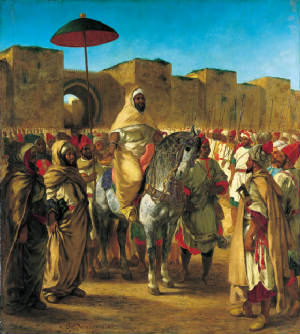
Sources for the Kingdom of Morocco
- Nouvel Almanach de Poche de Bruxelles, by M.E. Rampelbergh, Imprimeur-Libraire in Brussels 1818-1900
- Almanach de Gotha 1763-1944
- A.M.H.J. Stokvis, Manuel d’histoire, de généalogie et de chronologie de tous les Etats du globe…, Boekhandel & Antiquariaat B.M. Israël, Leiden 1888-1893, 1966
- Dominique et Michèle Frémy, Quid, Paris, since 1963
- Who’s Who in the Arab World, Publitec Publications, München-New Providence-London-Paris since 1966
- Burke’s Royal Families of the World II Africa & The Middle East, London 1980
- R.F.Tapsell, Monarch Rulers Dynasties and Kingdoms of the World, Thames and Hudson, London 1983
- Point de Vue et Images du Monde n° 2200, 27 septembre 1990
- Point de Vue n° 2362, 9 novembre 1993
- Paris-Match, 9 mai 1996
- Arabies, juin 1996
- Ali Benhaddou, Maroc: les élites du royaume, L’Harmattan, Paris et Montréal 1997
- Jeune Afrique n°1917, 1er au 7 octobre 1997
- Arabies n°130, octobre 1997
- Jeune Afrique n°1928-1929, 16 décembre 1997 au 5 janvier 1998
- La Libre Belgique, 24 & 25 juillet 1999
- Point de Vue n° 2662, 28 juillet au 3 août 1999