
Formerly Sovereign House
Kingdom of Bavaria – House of Wittelsbach
Kingdom of Bavaria – House of Wittelsbach
- Jurisdiction
- Bavaria
- Dynasty
- House of Wittelsbach
- Entry type
- House
- Editorial status
- Reviewed - Verified
Königreich Bayern
The Kingdom of Bavaria (German: Königreich Bayern) was a German state that existed from 1806 to 1918. The Bavarian Elector Maximilian IV Joseph of the House of Wittelsbach became the first King of Bavaria in 1806 as Maximilian I Joseph. The monarchy would remain held by the Wittelsbachs until the kingdom’s dissolution in 1918. Most of Bavaria’s modern-day borders were established after 1814 with the Treaty of Paris, in which Bavaria ceded Tyrol and Vorarlberg to the Austrian Empire while receiving Aschaffenburg and parts of Hesse-Darmstadt. As a state within the German Empire, the kingdom was second in size only to the Kingdom of Prussia. Since the unification of Germany in 1871, Bavaria has remained part of Germany.

History of Bavaria
On 30 December 1777, the Bavarian line of the Wittelsbachs became extinct, and the succession on the Electorate of Bavariapassed to Charles Theodore, the elector palatine. After a separation of four and a half centuries, the Palatinate, to which the duchies of Jülich and Berg had been added, was thus reunited with Bavaria. In 1792 French revolutionary armies overran the Palatinate; in 1795 the French, under Moreau, invaded Bavaria itself, advanced to Munich – where they were received with joy by the long-suppressed Liberals – and laid siege to Ingolstadt. Charles Theodore, who had done nothing to prevent wars or to resist the invasion, fled to Saxony, leaving a regency, the members of which signed a convention with Moreau, by which he granted an armistice in return for a heavy contribution (7 September 1796). Between the French and the Austrians, Bavaria was now in a bad situation. Before the death of Charles Theodore (16 February 1799) the Austrians had again occupied the country, in preparation for renewing the war with France.
Maximilian IV Joseph (of Zweibrücken), the new elector, succeeded to a difficult inheritance. Though his own sympathies, and those of his all-powerful minister, Maximilian von Montgelas, were, if anything, French rather than Austrian, the state of the Bavarian finances, and the fact that the Bavarian troops were scattered and disorganized, placed him helpless in the hands of Austria; on 2 December 1800 the Bavarian arms were involved in the Austrian defeat at Hohenlinden, and Moreau once more occupied Munich. By the Treaty of Lunéville (9 February 1801) Bavaria lost the Palatinate and the duchies of Zweibrücken and Jülich. In view of the scarcely disguised ambitions and intrigues of the Austrian court, Montgelas now believed that the interests of Bavaria lay in a frank alliance with the French Republic; he succeeded in overcoming the reluctance of Maximilian Joseph; and, on 24 August, a separate treaty of peace and alliance with France was signed at Paris.
The 1805 Peace of Pressburg recognized Maximilian I’s claim to be King of Bavaria. The elector declared himself to be king on 1 January 1806, officially changing the Electorate of Bavaria to being the Kingdom of Bavaria. The King still served as an Elector until Bavaria left the Holy Roman Empire (1 August 1806). The duchy of Berg was ceded to Napoleon only in 1806. The new kingdom faced challenges from the outset of its creation, relying on the support of Napoleonic France and having to change its constitution in accordance with France’s wishes. The kingdom faced war with Austria in 1808 and from 1810 to 1814, lost territory to Württemberg, Italy, and then Austria.
However with the defeat of Napoleon’s France in 1814, Bavaria was compensated for some of its losses, and received new territories such as the Grand Duchy of Würzburg, the Archbishopric of Mainz (Aschaffenburg), parts of the Grand Duchy of Hesse, and in 1816, the Rhenish Palatinate from France. Between 1799 and 1817 the leading minister Count Montgelas followed a strict policy of modernisation and laid the foundations of administrative structures that survived even the monarchy and are (in their core) valid until today. On 1 February 1817, Montgelas had been dismissed; and Bavaria had entered on a new era of constitutional reform.
Bavarian Constitution
On 26 May 1818, the constitution of the Kingdom of Bavaria was proclaimed. The Landtag would have two houses, an upper house (Herrenhaus) comprising the aristocracy and noblemen, including the high-class hereditary landowners, government officials and nominees of the crown. The second house, a lower house (Abgeordnetenhaus), would include representatives of small landowners, the towns and the peasants. The rights of Protestants were safeguarded in the constitution with articles supporting the equality of all religions, despite opposition by supporters of the Roman Catholic Church. The initial constitution almost proved disastrous for the monarchy, with controversies such as the army having to swear allegiance to the new constitution. The monarchy appealed to the Kingdom of Prussia and the Austrian Empire for advice, the two refused to take action on Bavaria’s behalf, but the debacles lessened and the state stabilized with the accession of Ludwig I to the throne following the death of Maximilian in 1825.
Ludwig I – Maximilian II and the Revolutions
In 1825, Ludwig I ascended to the throne of Bavaria. Under Ludwig, the arts flourished in Bavaria, and Ludwig personally ordered and financially assisted the creation of many neoclassical buildings and architecture across Bavaria. Ludwig also increased Bavaria’s pace towards industrialization under his reign. In foreign affairs under Ludwig’s rule, Bavaria supported the Greeks during the Greek War of Independence with his second son, Otto being elected King of Greece in 1832. As for politics, initial reforms advocated by Ludwig were both liberal and reform-oriented. However, after the Revolutions of 1830, Ludwig turned to conservative reaction. In 1837, the Roman Catholic-supported clerical movement, the Ultramontanes, came to power in the Bavarian parliament and began a campaign of reform to the constitution, which removed civil rights that had earlier been granted to Protestants, as well as enforcing censorship and forbidding the free discussion of internal politics. This regime was short-lived due to the demand by the Ultramontanes of the naturalization of Ludwig I’s Irish mistress, which was resented by Ludwig, and the Ultramontanes were pushed out.
Following the Revolutions of 1848 and Ludwig’s low popularity, Ludwig I abdicated the throne to avoid a potential coup, and allowed his son, Maximilian II, to become the King of Bavaria. Maximilian II responded to the demands of the people for a united German state by attending the Frankfurt Assembly, which intended to create such a state. Maximilian II stood alongside Bavaria’s ally, the Austrian Empire, in opposition to Austria’s enemy, the Kingdom of Prussia, which was to receive the imperial crown of a united Germany. This opposition was resented by many Bavarian citizens, who wanted a united Germany, but in the end Prussia declined accepting the crown and the constitution of a German state they perceived to be too liberal and not in Prussia’s interests.
In the aftermath of the failure of the Frankfurt Assembly, Prussia and Austria continued to debate over which monarchy had the inherent right to rule Germany. A dispute between Austria and the Electoral Prince of Hesse-Kassel (or Hesse-Cassel) was used by Austria and its allies (including Bavaria) to promote the isolation of Prussia in German political affairs. This diplomatic insult almost led to war when Austria, Bavaria and other allies moved troops through Bavaria towards Hesse-Kassel in 1850. However the Prussian army backed down to Austria and caved in to the acceptance of dual leadership. This event was known as the Punctation of Olmütz but also known as the “Humiliation of Olmütz” by Prussia. This event solidified the Bavarian kingdom’s alliance with Austria against Prussia. Attempts by Prussia to reorganize the loose and un-led German Confederation were opposed by Bavaria and Austria, with Bavaria taking part in its own discussions with Austria and other allies in 1863, in Frankfurt, without Prussia and its allies attending.
Austro-Prussian War
In 1864, Maximilian II died early, and his eighteen year-old son, Ludwig II, arguably the most famous of the Bavarian kings, became King of Bavaria as escalating tensions between Austria and Prussia grew steadily. Prussia’s Minister-President Otto von Bismarck, recognizing the immediate likelihood of war, attempted to sway Bavaria towards neutrality in the conflict. Ludwig II refused Bismarck’s offers and continued Bavaria’s alliance with Austria. In 1866, violence erupted between Austria and Prussia and the Austro-Prussian War began. Bavaria and most of the south German states, with the exception of Austria and Saxony, contributed far less to the war effort against Prussia. Austria quickly faltered after its defeat at the Battle of Königgrätz and was totally defeated shortly afterward. Austria was humiliated by defeat and was forced to concede control, and its sphere of influence, over the south German states. Bavaria was spared harsh terms in the peace settlement, however from this point on it and the other south German states steadily progressed into Prussia’s sphere of influence.
Ludwig II and the German Empire
With Austria’s defeat in the Austro-Prussian War, the northern German states quickly unified into the North German Confederation, with Prussia’s King leading the state. Bavaria’s previous inhibitions towards Prussia changed, along with those of many of the south German states, after French emperor Napoleon III began speaking of France’s need for “compensation” from its loss in 1814 and included Bavarian-held Palatinate as part of its territorial claims. Ludwig II joined an alliance with Prussia, in 1870, against France, which was seen by Germans as the greatest enemy to a united Germany. At the same time, Bavaria increased its political, legal, and trade ties with the North German Confederation. In 1870, war erupted between France and Prussia in the Franco-Prussian War. The Bavarian Army was sent under the command of the Prussian crown prince against the French army.
With France’s defeat and humiliation against the combined German forces, it was Ludwig II who proposed that Prussian King Wilhelm I be proclaimed German Emperor or “Kaiser” of the German Empire (“Deutsches Reich“), which occurred in 1871 in German occupied Versailles, France. The territories of the German Empire were declared, which included the states of the North German Confederation and all of the south German states, with the major exception of Austria. The Empire also annexed the formerly French territory of Alsace-Lorraine, due in large part to Ludwig’s desire to move the French frontier away from the Palatinate.
Bavaria’s entry into the German Empire changed, from jubilation over France’s defeat, to dismay shortly afterward, over the direction of Germany under the new German Chancellor and Prussian Prime Minister, Otto von Bismarck. The Bavarian delegation under Count Otto von Bray-Steinburg had secured a privileged status of the Kingdom of Bavaria within the German Empire (Reservatrechte). Within the Empire the Kingdom of Bavaria was even able to retain its own diplomatic body and its own army, which would fall under Prussian command only in times of war.
In the years following German unification, Bismarck initiated a persecution of the Catholic Church in the so-called Kulturkampf. Although this persecution was limited to Prussia and never extended to Bavaria or the other predominantly Catholic southern German states, it caused considerable estrangement between Bavaria and Prussia. Due in part to co-operation between the Bavarian Patriotic Party and German Centre Party in the Reichstag, Bismarck was eventually compelled to moderate his anti-Catholic policies.
After Bavaria’s unification into Germany, Ludwig II became increasingly detached from Bavaria’s political affairs and spent vast amounts of money on personal projects, such as the construction of a number of fairytale-like castles and palaces, the most famous being the Wagnerian-style Castle Neuschwanstein. Although Ludwig used his personal wealth to finance these projects instead of state funds, the construction projects landed him deeply in debt. These debts caused much concern among Bavaria’s political elite, who sought to persuade Ludwig to cease his building; he refused, and relations between the government’s ministers and the crown deteriorated.
At last, in 1886, the crisis came to a head: the Bavarian ministers deposed the king, organizing a medical commission to declare him insane, and therefore incapable of executing his governmental powers. A day after Ludwig’s deposition, the king died mysteriously after asking the commission’s chief psychiatrist to go on a walk with him along Lake Starnberg (then called Lake Würm). Ludwig and the psychiatrist were found dead, floating in the lake. An autopsy listed cause of death as suicide by drowning, but some sources claim that no water was found in Ludwig’s lungs. While these facts could be explained by dry drowning, they have also led to some conspiracy theories of political assassination.
Bavarian Regency
The crown passed to Ludwig’s brother Otto I, but since Otto had a clear history of mental illness, the duties of the throne actually rested in the hands of the brothers’ uncle, Prince Luitpold, serving as regent. During the regency of Prince-Regent Luitpold, from 1886 to 1912, relations between Bavarians and Prussians remained cold, with Bavarians remembering the anti-Catholic agenda of Bismarck’s Kulturkampf, as well as Prussia’s strategic dominance over the empire. Bavaria protested Prussian dominance over Germany and snubbed the Prussian-born German Emperor, Wilhelm II, in 1900, by forbidding the flying of any other flag other than the Bavarian flag on public buildings for the Emperor’s Birthday, but this was swiftly modified afterwards, allowing the German imperial flag to be hung side by side with the Bavarian flag. In 1912, Luitpold died, and his son, Prince-Regent Ludwig, took over as regent of Bavaria. A year later, the regency ended when Ludwig declared himself King of Bavaria and from that point on was known as Ludwig III.
World War I and the end of the Kingdom
In 1914, a clash of alliances occurred over Austria-Hungary’s invasion of Serbia following the assassination of Austrian Archduke Franz Ferdinand by a Bosnian Serb militant. Germany went to the side of its former rival-turned-ally, Austria-Hungary, while France, Russia, and the United Kingdom declared war on Austria-Hungary and Germany. Initially, in Bavaria and all across Germany, recruits flocked enthusiastically to the German Army. At the outbreak of World War I King Ludwig III sent an official dispatch to Berlin to express Bavaria’s solidarity. Later Ludwig even claimed annexations for Bavaria (Alsace and the city of Antwerp in Belgium, to receive an access to the sea). His hidden agenda was to maintain the balance of power between Prussia and Bavaria within the German Empire after a victory. Over time, with a stalemated and bloody war on the western front, Bavarians, like many Germans, grew weary of a continuing war.
In 1917, when Germany’s situation had gradually worsened due to World War I, the Bavarian Prime Minister Georg von Hertling became German Chancellor and Prime Minister of Prussia and Otto Ritter von Dandl was made new Prime Minister of Bavaria. Accused of showing blind loyalty to Prussia, Ludwig III became increasingly unpopular during the war. In 1918, the kingdom attempted to negotiate a separate peace with the allies but failed. By 1918, civil unrest was spreading across Bavaria and Germany; Bavarian defiance to Prussian hegemony and Bavarian separatism being key motivators. In November 1918, William II abdicated the throne of Germany, and Ludwig III, along with the other German monarchs, issuing the Anif declaration, followed in abdication shortly afterwards. With this, the Wittelsbach dynasty came to an end, and the former Kingdom of Bavaria became the Free State of Bavaria, which it is still named today.
The Family Titles and Styles
The members of this family bear the title Prince or Princess of Bavaria together with the formal appellation of His or Her Royal Highness.
The Genealogy of the Royal House
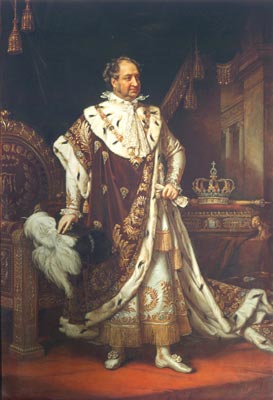
Maximilian Joseph, Pfalzgraf von Zweibrücken, was b. Mannheim 27 May 1756; he succeeded his brother as Herzog von Zweibrücken 1795, and his distant cousin as Elector of Bavaria in 1799; he assumed the title MAXIMILIAN I, King of Bavaria 26 Dec 1805, and d.at Schloß Nymphenburg 23 Oct 1825; he m.1st Darmstadt 30 Sep 1785 Auguste Landgravine of Hesse-Darmstadt (Darmstadt 14 Apr 1765-Rohrbach-am-Neckar 30 Mar 1796); m.2d Karlsruhe 9 Mar 1797 Karoline Pss of Baden (Karlsruhe 13 Jul 1776-Munich 13 Nov 1841)
1a) LUDWIG I August, King of Bavaria 1825-1848 (Strassburg 25 Aug 1786-Nice 29 Feb 1868); m. Munich 12 Oct 1810 Therese Pss of Saxe-Hildburghausen (Hildburghausen 8 Jul 1792-Munich 26 Oct 1854)
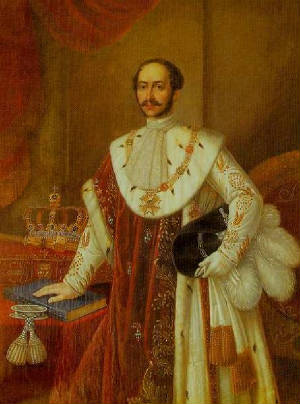
1b) MAXIMILIAN II Joseph, King of Bavaria (Munich 28 Nov 1811-Munich 10 Mar 1864); m.by proxy at Berlin 5 Oct 1842 and in person at Munich 12 Oct 1842 Marie Pss of Prussia (Berlin 15 Oct 1825-Schloß Hohenschwangau 17 May 1889)
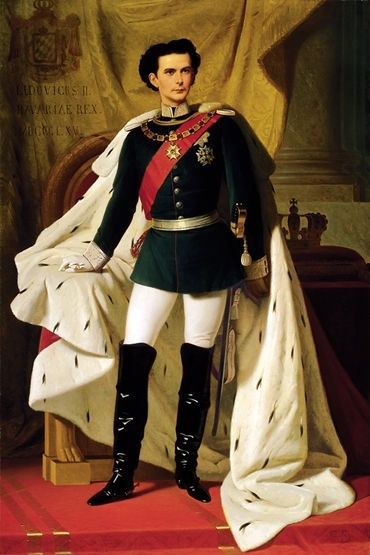
1c) LUDWIG II Otto Friedrich Wilhelm, King of Bavaria (Nymphenburg 25 Aug 1845-drowned in Starnbergersee 13 Jun 1886)
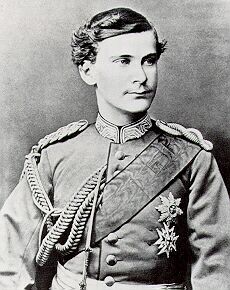
- 2c) OTTO Wilhelm Luitpold Adalbert Waldemar, King of Bavaria until he was deposed by his cousin, Ludwig III, on 5 Nov 1913 (Munich 27 Apr 1848-Schloß Fürstenried 11 Oct 1916)
- 2b) Mathilde Caroline Friederike Wilhelmine Charlotte (Augsburg 30 Aug 1813-Darmstadt 25 May 1862); m. Munich 26 Dec 1833 Ludwig III, Grand Duke of Hesse and the Rhine (Darmstadt 9 Jun 1806-Seeheim 13 Jun 1877)
- 3b) Otto Friedrich Ludwig, b. Salzburg 1 Jan 1815, accepted the Crown of Greece 27 May 1832 and became Otto, King of Greece; he fled the country after an insurrection 24 Oct 1862, and d.at Bamberg 26 Jul 1867; he m. Oldenburg 22 Nov 1836 Amalie Dss of Oldenburg (Oldenburg 21 Dec 1818-Bamberg 20 May 1875)
- 4b) Theodelinde Charlotte Luise (Würzburg 7 Oct 1816-Würzburg 9 Apr 1817)
- 5b) Luitpold Karl Joseph Wilhelm Ludwig, Prince Regent of Bavaria 1886-1912 (Würzburg 12 Mar 1821-Munich 12 Dec 1912); m. Florence 15 Apr 1844 Auguste Archdss of Austria Pss of Tuscany (Florence 1 Apr 1825-Munich 26 Apr 1864)
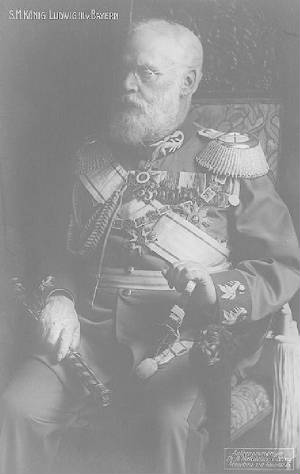
1c) LUDWIG III Leopold Joseph Maria Aloys Alfred, King of Bavaria 5 Nov 1913 until the revolution in Nov 1918 (Munich 7 Jan 1845-Sárvár, Hungary 18 Oct 1921); m. Vienna 20 Feb 1868 Marie Therese Archdss of Austria Pss of Modena (Brünn 2 Jul 1849-Wildenwart 3 Feb 1919)
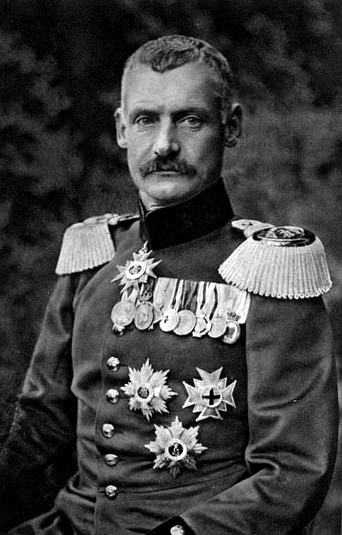
1d) RUPPRECHT Maria Luitpold Ferdinand, Crown Prince of Bavaria (Munich 18 May 1869-Leutstetten 2 Aug 1955); m.1st Munich 10 Jul 1900 Marie Gabriele Dss in Bavaria (Tegernsee 9 Oct 1878-Sorrento 24 Oct 1912); m.2d Hohenburg bei Lenggries 7 Apr 1921 Antonia Pss of Luxemburg Pss von Nassau (Hohenburg 7 Oct 1899-Lenzerheide, Switzerland 31 Jul 1954)
1e) Luitpold Maximilian Ludwig Karl (Bamberg 8 May 1901-Berchtesgaden 27 Aug 1914)
2e) Irmingard Maria Therese José Cäcilia Adelheid Michaela Antonia Adelgunde (Bad Kreuth 21 Sep 1902-Tegernsee 21 Apr 1903)
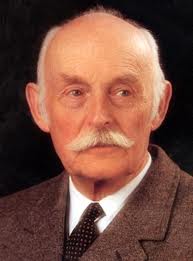
3e) ALBRECHT Luitpold Ferdinand Michael, Duke of Bavaria (Munich 3 May 1905-Schloß Berg 8 Jul 1996); m.1st Berchtesgaden 3 Sep 1930 Maria (Marita) Gfn Draskovich von Trakostjan (Vienna 8 Mar 1904-Wildbad Kreuth 10 Jun 1969); m.2d Munich (civ) 21 Apr 1971 (rel) 22 Apr 1971 Marie-Jenke (Eugenie) Gfn Keglevich von Buzin (Budapest 23 Apr 1921-Weichselboden bei Mariazell, Styria 5 Oct 1983)
1f) Marie Gabrielle Antonia José, b. Munich 30 May 1931; m.(civ) Reichenhofen 31 Aug 1957 (rel) Nymphenburg 23 Oct 1957 Georg Fst von Waldburg zu Zeil u. Trauchburg (b. Würzburg 5 Jun 1928)
2f) Marie Charlotte Juliana, b. Munich 30 May 1931; m.(civ) Berg am Starnberger See 1 Sep 1955 (rel) Nymphenburg 3 Sep 1955 Paul Fst von Quadt zu Wykradt u. Isny (Isny 28 Nov 1930-16 Mar 2011)
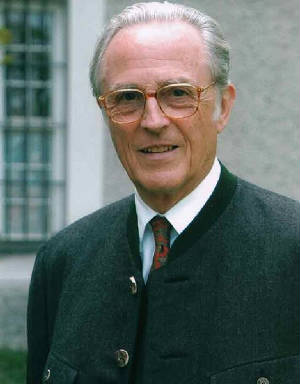
3f) FRANZ Bonaventura Adalbert Maria, Duke of Bavaria, Franken and in Swabia, Pfalzgraf bei Rhein, b. Munich 14 Jul 1933
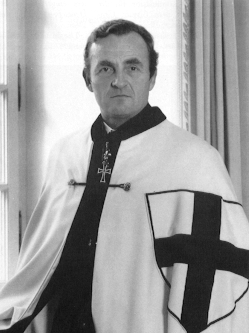
- 4f) Max Emanuel Ludwig Maria, Duke in Bavaria [by adoption by Duke Ludwig Wilhelm in Bavaria], b. Munich 21 Jan 1937; m.(civ) Kreuth 10 Jan 1967 (rel) Munich 24 Jan 1967 Elizabeth Gfn Douglas (b. Stockholm 31 Dec 1940)
- 1g) Sophie Elizabeth Marie Gabrielle, b. Munich 28 Oct 1967; m. Vaduz 3 Jul 1993 Alois Erbprinz von und zu Liechtenstein (b. Zürich 11 Jun 1968)
- 2g) Marie Caroline Hedwig Eleonore, b. Munich 23 Jun 1969; m. Altshausen 28 Jun 1991 (rel) Tegernsee 27 Jul 1991 Philipp, Duke of Württemberg (b. Friedrichshafen 1 Nov 1964)
- 3g) Helene Eugenie Maria Donatha Mechthild, b. Munich 6 May 1972
- 4g) Elisabeth Marie Christine Franziska, b. Munich 4 Oct 1973; m. Wildenwart 30 Dec 2003 (rel) Tegernsee 25 Sep 2004 Daniel Terberger (b. Bielefeld 11 Jun 1967)
- 5g) Maria Anna Henriette Gabrielle Julie, b. Munich 7 May 1975; m. Kreuth 5 Sep 2007 (rel) Tegernsee 8 Sep 2007 Klaus Runow (b. Duisburg 3 Jul 1964)
- 4e) Rudolf Friedrich Rupprecht (Munich 30 May 1909-Munich 26 Jun 1912)
- 5e) Heinrich Franz Wilhelm (Hohenburg bei Lenggries 28 Mar 1922-San Carlos de Bariloche, Argentina 14 Feb 1958); m. St. Jean de Luz 31 Jul 1951 Anne de Lustrac (Neuilly-sur-Seine 27 Sep 1927-k.in car accident at Milan 16 Aug 1999)
- 6e) Irmingard Marie Josefa (Berchtesgaden 29 May 1923-23 Oct 2010); m.(civ) Leutstetten 19 Jul 1950 (rel) Nymphenburg 20 Jul 1950 Ludwig Pr of Bavaria (below)
- 7e) Editha Marie Gabrielle Anna, b. Hohenburg 16 Sep 1924; m.1st Milan 12 Nov 1946 Tito Brunetti (Florence 18 Dec 1905-d.nr Piacenza 13 Jul 1954); m.2d Tegernsee 29 Dec 1959 Gustav Schimert (Budapest 28 Nov 1910-Munich 16 May 1990)
- 8e) Hilda Hildegard Marie Gabriele (Berchtesgaden 24 Mar 1926-Munich 5 May 2002); m. Lima, Peru 12 Feb 1949 Juan Bradstock Edgart Lockett de Loayza (Lima 30 Mar 1912-Bad Reichenhall 8 Dec 1987)
- 9e) Gabriele Adelgunde Marie Theresia Antonia, b. Berchtesgaden 10 May 1927; m.(civ) Leutstetten 17 Jun 1953 (rel) Nymphenburg 18 Jun 1953 Carl, Duke von Croy (Düsseldorf 11 Oct 1914-14 Jun 2011)
- 10e) Sophie Marie Therese, b. Starnberg 20 Jun 1935; m. Berchtesgaden (civ) 18 Jan 1955 (rel) 20 Jan 1955 Jean Pr & Duke von Arenberg (The Hague 14 Jul 1921-Lausanne 15 Aug 2011)
- 2d) Adelgunde Marie Auguste Therese (Munich 17 Oct 1870-Sigmaringen 4 Jan 1958); m. Munich 20 Jan 1915 Wilhelm Fst von Hohenzollern (Benrath 7 Mar 1864-Sigmaringen 22 Oct 1927)
- 3d) Maria Ludwiga Theresia (Villa Amsee 6 Jul 1872-Villa Amsee 10 Jun 1954); m. Munich 31 May 1897 Ferdinando Pr of Bourbon-Two Sicilies, Duke of Calabria (Rome 25 Jul 1869-Lindau 7 Jan 1960)
- 4d) Karl Maria Luitpold (Villa Amsee 1 Apr 1874-Munich 9 May 1927)
- 5d) Franz Maria Luitpold (Leutstetten 10 Oct 1875-Leutstetten 25 Jan 1957); m. Weilburg, Baden bei Wien 8 Jul 1912 Isabella Pss von Croy (L’Hermitage 7 Oct 1890-Leutstetten 30 Mar 1982)
- 1e) Ludwig Karl Maria Anton Joseph (Nymphenburg 22 Jun 1913-Leutstetten 17 Oct 2008); m.(civ) Leutstetten 19 Jul 1950 (rel) 20 Jul 1950 Irmingard Pss of Bavaria (above)
- 1f) Luitpold Rupprecht Heinrich, b. Leutstetten 14 Apr 1951; m.(civ) Starnberg 25 Jun 1979 (rel) Erling-Andechs 26 Sep 1979 Beatrix Wiegand (b. Munich 19 Sep 1951)
- 1g) Auguste Marie Philippa, b. Landsberg am Lech 11 Oct 1979; m. Mourail, New Caledonia 26 Dec 2009 (rel) Kloster Andechs 5 Jun 2010 Ferdinand Pr zur Lippe-Weißenfeld (b. Detmold 5 Sep 1976)
- 2g) Alice Isabelle Marie, b. Landsberg am Lech 25 Jun 1981; m. Karlstetten 20 Jun 2009 (rel) Andechs 29 Aug 2009 Lukas Pr von Auersperg (b. St. Pölten 27 Aug 1981)
- 3g) Ludwig Heinrich, b. Landsberg am Lech 14 Jun 1982
- 4g) Heinrich Rudolf, b. Landsberg am Lech 23 Jan 1986
- 5g) Karl Rupprecht, b. Munich 10 Mar 1987
- 2e) Maria Elisabeth Franziska Josepha Therese (Nymphenburg 9 Sep 1914-Rio de Janeiro 13 May 2011); m. Nymphenburg 19 Aug 1937 Pedro Henrique Pr of Orléans-Braganza (Boulogne-sur-Seine 13 Sep 1909-Vassouras, Brazil 5 Jul 1981)
- 3e) Adelgunde Maria Antonia Elisabeth Josefa (Nymphenburg 9 Jun 1917-Starnberg 20 Sep 2004); m. Leutstetten (civ) 23 May 1948 (rel) 2 Jun 1948 Zdenko Frhr von Hoenning-O’Carroll (Sünching 6 Aug 1906-Sünching 8 May 1996)
- 4e) Eleonore Therese Marie Josepha Gabriele (Nymphenburg 11 Sep 1918-19 Aug 2009); m.(civ) Leutstetten 2 Aug 1951 (rel) Nymphenburg 14 Aug 1951 Konstantin Gf von Waldburg zu Zeil u. Trauchburg (Zeil 15 Mar 1909-Feldafing 27 Feb 1972)
- 5e) Dorothea Theresa Marie Franziska, b. Leutstetten 25 May 1920; m. Sárvár (civ) 2 Aug 1938 (rel) 3 Aug 1938 Gottfried Archduke of Austria (Linz 14 Mar 1902-Bad Ischl 21 Jan 1984)
- 6e) Rasso Maximilian Rupprecht (Leutstetten 24 May 1926-Tutzing 12 Sep 2011); m. Wallsee 17 Oct 1955 Theresa Archdss of Austria (b. Wallsee 9 Jan 1931)
- 1f) Maria-Theresia Anna Walburga Irmingard, b. Hohenschwangau 10 Sep 1956; m. Starnberg 21 Jun 1977 (rel) Andechs bei Starnberg 23 Jul 1977 Thomas Gf Kornis von Göncz-Ruszka (b. Budapest 4 Oct 1949)
- 2f) Franz-Josef Michael Maria Ignatius, b. Leutstetten 21 Sep 1957
- 3f) Elisabeth Maria Immaculata Anastasia, b. Leutstetten 22 Jan 1959; m.(civ) Horn, Lower Austria 9 May 1986 (rel) Eberau 24 May 1986 Andreas Gf von Kuefstein (b. Vienna 9 Aug 1954)
- 4f) Wolfgang Rupprecht Maria Theodor, b. Leutstetten 28 Jan 1960; m.(civ) Starnberg 16 Nov 1990 (rel) Stift Vorau, Styria 6 Apr 1991 Beatrice Gfn zu Lodron-Laterano u. Castelromano (b. Vienna 29 May 1964)
- 1g) Tassilo Maria Georg Eugen Heinrich Rasso, b. Ravensburg 19 Jun 1992
- 2g) Richard Maria Philipp Stephan Maximilian, b. Munich 19 Nov 1993
- 3g) Philipp Maria Max Emanuel Rupprecht Zeno, b. Munich 25 May 1996
- 5f) Benedikta Maria Gabrielle, b. Starnberg 13 Mar 1961; m.(civ) Schloß Haldenwang 4 Jun 1989 (rel) Wettenhausen 11 Jun 1989 Rudolf Frhr von Freyberg-Eisenberg-Allmendingen (b. Munich 7 Feb 1958)
- 6f) Christoph Ludwig Maria, b. Leutstetten 5 May 1962; m.(civ) Munich 18 Aug 1994 (rel) Lenhausen 20 Aug 1994 Gudila Gfn von Plettenberg (b. Lenhausen 14 Oct 1962)
- 1g) Corbinian Maria Hunold Rasso Nikolaus, b. Starnberg 9 Jan 1996
- 2g) Stanislaus Maria Hermann Theodor Philipp, b. Starnberg 24 May 1997
- 3g) Marcello Maria Aloysius Franz Hubertus, b. Starnberg 20 Oct 1998
- 4g) Odilia Maria Theresia Franziska, b. Starnberg 25 Mar 2002
- 7f) Gisela Maria Karolina Adelgunde, b. Leutstetten 10 Sep 1964; m. Mexico City 3 Apr 1987 (rel) Andechs 29 Aug 1987 Alexander Pr von Sachsen-Gessaph (b. Munich 12 Feb 1954)
- 6d) Mathilde Marie Theresia Henriette Christine Luitpolda (Villa Amsee 17 Aug 1877-Davos 6 Aug 1906); m. Munich 1 May 1900 Ludwig Pr of Saxe-Coburg-Gotha (Ebenthal 15 Sep 1870-Innsbruck 23 Jan 1942)
- 7d) Wolfgang Maria Leopold (Villa Amsee 2 Jul 1879-Munich 31 Jan 1895)
- 8d) Hildegarde Maria Christina Therese (Munich 5 Mar 1881-Schloß Wildenwart 2 Feb 1948)
- 9d) Notburga Karolina Maria (Villa Amsee 19 Mar 1883-Munich 24 Mar 1883)
- 10d) Wiltrud Marie Alix (Munich 10 Nov 1884-Oberstdorf 28 Mar 1975); m. Munich (civ) 25 Nov 1924 (rel) 26 Nov 1924 Wilhelm, Duke von Urach (Monaco 3 Mar 1864-Rapallo 27 Mar 1928)
- 11d) Helmtrud Marie Amalie (Munich 22 Mar 1886-Wildenwart 23 Jun 1977)
- 12d) Dietlinde Maria Theresia Josepha Adelgunde (Munich 2 Jan 1888-Munich 14 Feb 1889)
- 13d) Gundelinde Maria Josepha (Munich 26 Aug 1891-Moos 16 Aug 1983); m. Schloß Wildenwart 23 Feb 1919 Johann Georg Gf von Preysing-Lichtenegg-Moos (Moos 17 Dec 1887-Munich 17 Mar 1924)
- 2c) Leopold Maximilian Joseph Maria Arnulf (Munich 9 Feb 1846-Munich 28 Sep 1930); m. Vienna 20 Apr 1873 Gisela Archdss of Austria (Laxenburg 12 Jul 1856-Munich 27 Jul 1932)
- 1d) Elisabeth Maria Auguste (Munich 8 Jan 1874-Schloß Gresten 4 Mar 1957); m.(civ) Milan 19 Nov 1893 (rel) Genoa 2 Dec 1893 Otto Gf von Seefried auf Buttenheim (Bamberg 26 Sep 1870-Schloß Steibar 5 Sep 1951)
- 2d) Augusta Maria Luise (Munich 28 Apr 1875-Regensburg 25 Jun 1964); m. Munich 15 Nov 1893 Joseph, Archduke of Austria (Alcsút 9 Aug 1872-Rain bei Straubing 6 Jul 1962)
- 3d) Georg Franz Josef Leopold Maria (Munich 2 Apr 1880-Rome 31 May 1943); m. Schönbrunn 10 Feb 1912 (annulled 1913) Isabella Archdss of Austria (Preßburg 17 Nov 1883-La Tour de Peilz 6 Dec 1973)
- 4d) Konrad Luitpold Franz Joseph Maria (Munich 22 Nov 1883-Hinterstein 6 Sep 1969); m. Château d’Aglié, Piedmont 8 Jan 1921 Bona Margherita Pss of Savoy (Château d’Aglié 1 Aug 1896-Rome 2 Feb 1971)
- 1e) Amalie Isabella Marie Gisela Margarete (Munich 15 Dec 1921-Milan 28 Mar 1985); m. Lugano 25 Aug 1949 Umberto Poletti (Milan 21 Jun 1921-Milan 18 Feb 1995)
- 2e) Eugen Leopold Adelaide Thomas Maria (Munich 16 Jul 1925-Grasse 1 Jan 1997); m.(civ) Munich 16 Nov 1970 (rel) Innsbruck 21 Nov 1970 Helene Gfn von Khevenhüller-Metsch (b. Vienna 4 Apr 1921)
- 3c) Therese Charlotte Marianne Auguste (Munich 12 Nov 1850-Lindau 19 Sep 1925)
- 4c) Franz Joseph Arnulf Adalbert Maria (Munich 6 Jul 1852-Venice 12 Nov 1907); m. Vienna 12 Apr 1882 Therese Pss von und zu Liechtenstein (Schloß Liechtenstein 28 Jul 1850-Munich 13 Mar 1938)
- 1d) Heinrich Luitpold (Munich 24 Jun 1884-k.a. Monte Sule, Transylvania 8 Nov 1916)
- 6b) Adelgunde Auguste Charlotte Caroline Elisabeth Amalie Marie Sophie Luise (Würzburg 19 Mar 1823-Munich 28 Oct 1914); m. Munich 30 Mar 1842 Francesco V, Duke of Modena, Archduke of Austria (Modena 1 Jun 1819-Vienna 20 Nov 1875)
- 7b) Hildegard Luise Charlotte Theresia Friederike (Würzburg 10 Jun 1825-Vienna 2 Apr 1864); m. Munich 1 May 1844 Albrecht, Archduke of Austria (Vienna 3 Aug 1817-Arco 18 Feb 1895)
- 8b) Alexandra Amalie (Aschaffenburg 26 Aug 1826-Munich 8 May 1875)
- 9b) Adalbert Wilhelm Georg Ludwig (Munich 19 Jul 1828-Nymphenburg 21 Sep 1875); m. Madrid 25 Aug 1856 Amalia Infanta of Spain (Madrid 12 Oct 1834-Nymphenburg 27 Aug 1905)
- 1c) Ludwig Ferdinand Maria Karl Heinrich Adalbert Franz Philipp Andreas Konstantin (Madrid 22 Oct 1859-Nymphenburg 23 Nov 1949); m. Madrid 2 Apr 1883 Maria de la Paz Infanta of Spain (Madrid 23 Jun 1862-Nymphenburg 4 Dec 1946)
- 1d) Ferdinand Maria Ludwig Franz von Assisi Isabellus Adalbert Ildefons Martin Bonifaz Joseph Isidro; he was naturalized in Spain in 1905; in 1914 he renounced his Bavarian titles and rights to the Bavarian throne; he was given the title “Infant of Spain”; b. Madrid 10 May 1884, d. Madrid 5 Apr 1958; m.1st Madrid 12 Jan 1906 Maria Theresia Infanta of Spain (Madrid 12 Nov 1882-Madrid 23 Sep 1912); m.2d Fuenterrabia 1 Oct 1914 Maria Luisa de Silva y Fernández de Henestrosa Duquesa de Talavera de la Reina, cr Infanta of Spain 1927 (Madrid 3 Dec 1870-Madrid 2 Apr 1955); for his issue see the article Spain
- 2d) Adalbert Alfons Maria Ascension Antonius Hubertus Joseph omnes sancti (Nymphenburg 3 Jun 1886-Munich 29 Dec 1970); m. Salzburg 12 Jun 1919 Augusta Gfn von Seefried auf Buttenheim (Znaim 20 Jun 1899-Munich 21 Jan 1978)
- 1e) Konstantin Leopold Ludwig Adalbert Georg Thadeus Josef Petrus Johannes Antonius Franz von Assisi Assumption et omnes sancti (Munich 15 Aug 1920-d.in air accident at Hechingen 30 Jul 1969); m.1st Sigmaringen 31 Aug 1942 (div 1948, annulled 1950) Maria Adelgunde Pss von Hohenzollern (Sigmaringen 19 Feb 1921-Frauenfeld 23 May 2006); m.2d St. Georg am Lingsee 14 Aug 1953 (rel) Hochosterwitz 15 Aug 1953 Helene Gfn von Khevenhüller-Metsch (b. Vienna 4 Apr 1921)
- 1f) Leopold Rupprecht Ludwig Ferdinand Adalbert Friedrich Maria et omnes sancti, b. Umkirch bei Freiburg im Breisgau 21 Jun 1943; m.(civ) Berg bei Starnberg 21 Oct 1977 (rel) Aufkirchen bei Starnberg 19 Nov 1977 Ursula Möhlenkamp (b. Velbert, Rheinland 20 Sep 1947)
- 1g) Manuel Maria Alexander Leopold Jerg, b. Starnberg 27 Dec 1972; m. Nyköping, Sweden 6 Aug 2005 Anna Pss zu Sayn-Wittgenstein-Berleburg (b. Munich 15 Mar 1978)
- 1h) Leopold Maria Bengt Karl Manuel, b.13 Jun 2007
- 2h) Alva Manuelle Maria Petra Yvonne (b.5 Jan 2010)
- 2g) Maria del Pilar Birgitta Adelgunde Charlotte, b. Starnberg 3 May 1978
- 3g) Maria Philippa Karin Marion Gabriele, b. Starnberg 1 Feb 1981
- 4g) Konstantin Eugen Alexander Max-Emanuel Maria Ludwig Ferdinand Leopold, b. Munich 8 Nov 1986
- 2f) Adalbert Friedrich Johannes Maria et omnes sancti, b. Krauchenwies 27 Dec 1944; m.1st (civ) Munich 9 May 1978 (div 1983) Marion Malkowsky (b. Celle 14 Oct 1945); m.2d Munich (civ) 21 Feb 1986 (rel) 1 Mar 1986 Sandra Burckhardt (b. Munich 19 Jun 1966)
- 1g) Bernadette Desirée (b. Munich 27 Jun 1986)
- 2g) Hubertus Florian Konstantin Clemens (b. Munich 29 Aug 1989)
- 3f) Ysabel Helene Anna Augusta Maria de la Paz Ludovica-Fernanda, b. Munich 20 Jul 1954; m.(civ) Canberra 12 Feb 1976 (rel) Munich 30 May 1976 Alfred Gf Hoyos, Frhr zu Stichsenstein (b. Salzburg 17 Jul 1951)
- 2e) Alexander Alfons Eugen Viktor Ludwig Adalbert Michael Antonius et omnes sancti (Munich 12 Jun 1923-Munich 6 May 2001)
- 3d) Maria del Pilar Eulalia Antonia Isabella Ludovika Franziska Josepha Rita Euphrasia (Nymphenburg 13 Mar 1891-Nymphenburg 29 Jan 1987)
- 2c) Alfons Maria Franz von Assisi Klemens Max Emanuel (Munich 24 Jan 1862-Munich 8 Jan 1933); m. Nymphenburg 15 Apr 1891 Louise Pss d’Orléans (Bushy House, Surrey 9 Jul 1869-Munich 4 Feb 1952)
- 1d) Joseph Clemens Maria Ferdinand Ludwig Anton Augustin Alphons Alta Franz von Sales Philipp Nerius (Munich 25 May 1902-Munich 8 Jan 1990)
- 2d) Elisabeth Maria Anna Henriette Josepha Sophie Amalia Ferdinanda Ludovika Antonia Theresia Kreszentia Ala Ghislaine (Munich 10 Oct 1913-3 Mar 2005); m.1st Nymphenburg 6 May 1939 Franz Joseph Gf von Kageneck (Berlin 8 Jan 1915-k.a. Staritza 29 Dec 1941); m.2d (civ) Frankfurt an der Oder 9 May 1944 (rel) Garmisch-Partenkirchen 6 Jun 1944 (div 1953) Ernst Küstner (b. Hanau am Main 18 Jun 1920)
- 3c) Marie Isabella Luise Amalie Elvira Blanche Eleonore (Nymphenburg 31 Aug 1863-Rome 26 Feb 1924); m. Nymphenburg 14 Apr 1885 Tomasso Pr of Savoy, Duke of Genoa (Turin 6 Feb 1854-Turin 15 Apr 1931)
- 4c) Elvira Alexandrina Marie Cäcilia Klara Eugenie (Munich 22 Nov 1868-Vienna 1 Apr 1943); m. Nymphenburg 28 Dec 1891 Rudolf Gf von Wrbna-Kaunitz-Rietberg-Questenberg u. Freudenthal (Nemes-Kér 4 Jun 1864-Brünn 24 Dec 1927)
- 5c) Clara Eugenie Christina Gabriele Alexandrina Marie Theresia Euphemia Zenaide (Nymphenburg 11 Oct 1874-Munich 29 May 1941)
- 2a) Augusta Amalia Ludovika Georgia (Strassburg 21 Jun 1788-Munich 13 May 1851); m. Munich 14 Jan 1806 Eugène de Beauharnais, Duke von Leuchtenberg, Fst von Eichstädt, Prince Français (Paris 3 Sep 1781-Munich 21 Feb 1824)
- 3a) Amalie (Mannheim 9 Oct 1790-Darmstadt 24 Jan 1794)
- 4a) Charlotte (Karoline) Auguste (Mannheim 8 Feb 1792-Vienna 9 Feb 1873); m.1st Munich 8 Jun 1808 (div 1814) Wilhelm, Crown Pr [later, King] of Württemberg (Lübben 27 Sep 1781-Schloß Rosenstein 25 Jun 1864); m.2d by proxy at Munich 29 Oct 1816 and in person at Vienna 10 Nov 1816 Emperor Franz I of Austria (Florence 12 Feb 1768-Vienna 2 Mar 1835)
- 5a) Karl Theodor Maximilian August (Munich 7 Jul 1795-Tegernsee 16 Aug 1875); m.1st (morganatically) 1 Oct 1823 Sophie Petin, cr 1823 Freifrau von Bayrstorff (Neuburg 27 Jul 1796-Tegernsee 22 Feb 1838); m.2d (morganatically) 7 May 1859 Henriette Schoeller, cr 1859 Frau von Frankenburg (Munich 27 Dec 1815-Munich 20 Apr 1866)
- 1b) Caroline Sophie Gfn von Bayrstorff (Munich 17 Oct 1816-Munich 25 May 1889); m. Munich 1 May 1834 Adolf Frhr v. Gumppenberg (Munich 24 Feb 1804-Munich 16 Dec 1877)
- 2b) Maximiliane Theodore Gfn von Bayrstorff (Munich 30 Sep 1823-Munich 19 Mar 1885); m. Munich 7 Jul 1841 August Gf von Drechsel zu Deufstetten (Munich 28 Mar 1810-Munich 20 May 1880)
- 3b) Franziska Sophie Gfn von Bayrstorff (Munich 10 Oct 1827-Starnberg 2 Mar 1912); m. Tegernsee 7 Jul 1845 Paulo Martins Visconde d’Almeida (Rio de Janeiro 18 Jun 1806-Munich 5 Apr 1874)
- 6a) Maximilian Joseph (Amberg 28 Oct 1800-Munich 12 Feb 1803)
- 7a) Elisabeth Luise (Munich 13 Nov 1801-Dresden 14 Dec 1873); m. Berlin 29 Nov 1823 King Friedrich Wilhelm IV of Prussia (Berlin 15 Oct 1795-Sans Souci 2 Jan 1861)
- 8a) Amalie Auguste (Munich 13 Nov 1801-Dresden 8 Nov 1877); m.by proxy at Munich 10 Nov 1822 and in person at Dresden 21 Nov 1822 King Johann of Saxony (Dresden 12 Dec 1801-Pillnitz 29 Oct 1873)
- 9a) Friederike Sophie Dorothea Wilhelmine (Munich 27 Jan 1805-Vienna 28 May 1872); m. Vienna 4 Nov 1824 Franz Karl, Archduke of Austria (Vienna 7 Dec 1802-Vienna 8 Mar 1878)
- 10a) Marie Anne Leopoldine Elisabeth Wilhelmine (Munich 27 Jan 1805-Wachwitz 13 Sep 1877); m. Dresden 24 Apr 1833 King Friedrich August II of Saxony (Dresden 18 May 1797-Brennbuchel 9 Aug 1854)
- 11a) Ludovika Wilhelmine (Munich 30 Aug 1808-Munich 25 Jan 1892); m. Tegernsee 9 Sep 1828 Maximilian, Duke in Bavaria (1808-1888; below)
- 12a) Maximiliane Josepha Karoline (Munich 21 Jul 1810-Munich 4 Feb 1821)
Line 2
The members of this line bore the title Duke or Duchess in Bavaria together with the formal appellation of His or Her Royal Highness.
MAXIMILIAN Joseph, Duke in Bavaria (Bamberg 4 Oct 1808-Munich 15 Nov 1888); m. Tegernsee 9 Sep 1828 Ludovika Pss of Bavaria (1808-1892; above)
- 1a) Ludwig Wilhelm (Munich 21 Jun 1831-Munich 6 Nov 1920); m.1st (morganatically) Augsburg 28 May 1857 Henriette Mendel, cr 1859 Freifrau von Wallersee (Darmstadt 31 Jul 1833-Munich 12 Nov 1891); m.2d (morganatically) Munich 19 Nov 1892 (div 1913) Barbara Antonie Barth, cr 1892 Frau von Bartolf (Munich 25 Oct 1871-Garmisch-Partenkirchen 23 May 1956); Frau von Bartolf bore a daughter while married to Ludwig Wilhelm, but the daughter was apparently fathered by her next husband, Maximilian Mayr; this daughter was named Helena Mayr von Bartolf, and married Friedrich Christian Pr zu Schaumburg-Lippe
- 1b) Karl Emanuel Frhr von Wallersee (Augsburg 9 May 1859-Augsburg 1 Aug 1859)
- 2b) Marie Frn von Wallersee (Augsburg 24 Feb 1858-Augsburg 4 Jul 1940); m.1st Schloß Gödöllo 20 Oct 1877 (div 1896) Georg Gf Larisch von Moennich (27 Mar 1855-Solza 7 Jan 1928); m.2d Munich 15 May 1897 Otto Brucks (Brandenburg 1854-Metz 16 Jan 1914); m.3d Elizabeth, New Jersey 2 Sep 1924 (div 1928) William Meyers (b.in Nebraska 1859)
- 2a) Wilhelm Karl (Munich 24 Dec 1832-Munich 13 Feb 1833)
- 3a) Caroline Therese Helene (Munich 4 Apr 1834-Regensburg 16 May 1890); m. Possenhofen 24 Aug 1858 Maximilian Erbpr von Thurn u. Taxis (Regensburg 28 Sep 1831-Regensburg 26 Jun 1867)
- 4a) Elisabeth Amalie Eugenie (Munich 24 Dec 1837-assassinated at Geneva 10 Sep 1898); m. Vienna 24 Apr 1854 Emperor Franz Joseph of Austria (Schönbrunn 18 Aug 1830-Schönbrunn 21 Nov 1916)
- 5a) KARL THEODOR (Possenhofen 9 Aug 1839-Kreuth 29 Nov 1909); m.1st Dresden 11 Feb 1865 Sophie Pss of Saxony (Dresden 15 Mar 1845-Munich 9 Mar 1867); m.2d Kleinheubach 29 Apr 1874 Maria Josefa Infanta of Portugal (Bronnbach 19 Mar 1857-Vienna 11 Mar 1943)
- 1b) Amalie Maria (Munich 24 Dec 1865-Stuttgart 26 May 1912); m. Tegernsee 4 Jul 1892 Wilhelm, Duke von Urach (Monaco 3 Mar 1864-Rapallo 24 Mar 1928)
- 2b) Sophie Adelheid Ludovika Maria (Possenhofen 22 Feb 1875-Schloß Seefeld 4 Sep 1957); m. Munich 26 Jul 1898 Hans Veit Gf zu Toerring-Jettenbach (Augsburg 7 Apr 1862-Munich 29 Oct 1929)
- 3b) Elisabeth Gabriele Valerie Maria (Possenhofen 25 Jul 1876-Brussels 23 Nov 1965); m. Munich 2 Oct 1900 King Albert I of the Belgians (Brussels 8 Apr 1875-Marche-les-Dames 17 Feb 1934)
- 4b) Marie Gabriele Mathilde Isabella Therese Antoinette Sophie (Tegernsee 9 Oct 1878-Sorrento 24 Oct 1912); m. Munich 10 Jul 1900 Rupprecht, Crown Pr of Bavaria (1869-1955; above)
- 5b) LUDWIG WILHELM Karl Norbert Theodor Johann (Tegernsee 17 Jan 1884-Wildbad Kreuth 5 Nov 1968); m. Wildbad Kreuth 19 Mar 1917 Eleonore Pss zu Sayn-Wittgenstein-Berleburg (Munich 13 Apr 1880-Wildbad Kreuth 20 Feb 1965); Ludwig Wilhelm adopted Pr Max Emanuel of Bavaria (above) who assumed the title Duke in Bavaria
- 6b) Franz Joseph Michael Karl Maria Evarist Quirinus Ottokar (Tegernsee 23 Mar 1888-Munich 23 Sep 1912)
- 6a) Marie Sophie Amalie (Possenhofen 4 Oct 1841-Munich 19 Jan 1925); m.by proxy at Munich 8 Jan 1859 and in person at Bari 3 Feb 1859 King Francesco II of the Two Sicilies (Naples 16 Jan 1836-Schloß Arco 27 Dec 1894)
- 7a) Mathilde Ludovika (Possenhofen 30 Sep 1843-Munich 18 Jun 1925); m. Munich 5 Jun 1861 Lodovico Pr of Bourbon-Two Sicilies, Cte di Trani (Naples 1 Aug 1838-Paris 8 Jun 1886)
- 8a) Sophie Charlotte Augustine (Possenhofen 22 Feb 1847-Paris 4 May 1897); m. Possenhofen 28 Sep 1868 Ferdinand Pr d’Orléans Duc d’Alençon (Neuilly 12 Jul 1844-Belmont, nr Wimbledon 29 Jun 1910)
- 9a) Maximilian Emanuel (Munich 7 Dec 1849-Feldafing 12 Jun 1893); m. Ebenthal 20 Sep 1875 Amalie Pss of Saxe-Coburg-Gotha (Coburg 23 Oct 1848-Schloß Biederstein 6 May 1894)
- 1b) Siegfried August Maximilian Maria (Bamberg 10 Jul 1876-Munich 12 Mar 1952)
- 2b) Christoph Joseph Clemens Maria (Schloß Biederstein 22 Apr 1879-Munich 10 Jul 1963); m. Munich 14 May 1924 Anna Sibig (Ascholtzhausen 18 Jul 1874-Munich 1 Jan 1958)
- 3b) LUITPOLD Emanuel Ludwig Maria (Schloß Biederstein 30 Jun 1890-Kreuth 16 Jan 1973)