Nobility and directory
Nobility of Ireland
History and Register of the Nobility of Ireland
- Jurisdiction
- Ireland
- Entry type
- Directory
- Editorial status
- Reviewed - Verified
Nobility of the World
Volume VIII – Ireland
The History and Register of the Nobility of Ireland
Ireland has had nobles or peers for millennia. They fall into a number of categories which are listed below:
- Ancient Irish Gaelic nobles (pre-English rule, extant before 1171)
- Queens and noblewomen
- Peers of the Lordship of Ireland and the Kingdom of Ireland (created between 1171 and 1799)
- Peers of the United Kingdom of Great Britain and Ireland (from 1801)
This list covers peerages possessed by Irish people from any of the three categories. The title is listed first, followed by famous figures associated with the family beneath. It does not include non-Irish people awarded Irish titles; for example, the Duke of Connaught, son of Queen Victoria. Another category would include Irish people bearing foreign noble titles, or having been ennobled through investiture into the nobiliary Sovereign Military and Hospitaller Order of St. John of Jerusalem, of Rhodes, and of Malta (see Knights of Malta). Historical titles have no special legal status in Ireland, unlike the United Kingdom. The modern state of Ireland does not confer titles of nobility, as under the Irish constitution, all citizens are considered equal.
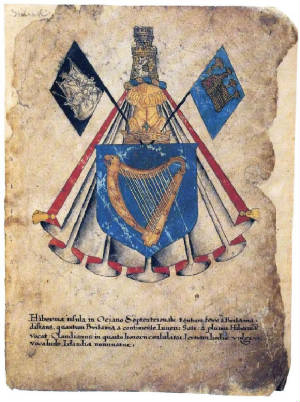
The Gaelic Nobles of Ireland
From 1943 until 2003 some of the modern representatives of the Gaelic nobility obtained a courtesy recognition as Chiefs of the Name from the Irish government. The practice ended in 2003 following certain problems and under concerns that it was unconstitutional. Disputed titles, as well as those for whom recognition is still pending, are not listed. The Gaelic families are divided by race and sept, and by geography.
- Connachta
- The O’Conor Don, Prince of Connacht
- Family Seat: Clonalis House
- The MacDermot of Moylurg
- The O’Rourke of Breifne (restored)
- The O’Conor Don, Prince of Connacht
- Uí Néill
- The O’Neill of Clanaboy, Prince of Ulster
- Family Seat: Tullyhogue Fort
- The O’Donnell, Prince of Tyrconnell
- Family Seat: Donegal Castle
- The O’Dogherty of Inishowen (restored)
- The O’Neill of Clanaboy, Prince of Ulster
- Uí Maine
- The O’Kelly of Gallagh and Tycooly, Prince of Hy Many
- The Fox of Tethbae (O’Kearney)
- Laigin
- The MacMorrough Kavanagh, Prince of Leinster
- The O’Morchoe
- The O’Toole of Fer Tire (currently dormant)
- Dál gCais
- The O’Brien, Prince of Thomond
- Family Seat: Dromoland Castle
- The O’Grady of Kilballyowen
- The O’Brien, Prince of Thomond
- Uí Fidgenti
- The O’Donovan of Clancahill
- Family Seat: Hollybrook House
- The O’Donovan of Clancahill
- Eóganachta
- The O’Donoghue of the Glens
- Family Seat: Ross Castle
- The MacGillycuddy of the Reeks
- The O’Callaghan of Duhallow
- The O’Donoghue of the Glens
- Clan Donald
- The MacDonnell of the Glens (restored)
- The King of Dublin (currently dormant, occasional claimants)
To this list may be added modern representatives of the Gaelic nobility who did not apply for recognition. The most notable of these is O’Neill of the Fews, Prince of Ulster, Don Carlos O’Neill, 12th Marquis of Granja. There is currently a dispute between him, O’Neill of Clanaboy (above), and the O’Neills of Puerto Rico, over who is the senior, with the matter appearing unresolvable. Not contesting is the newly restored Count of Tyrone (Jacobum de Tyrone, Comes – Vatican 2006).
There remain other Gaelic nobles who are not the senior descendants.
- The Count O’Donnell of Austria (O’Donell von Tyrconnell)
- The Count O’Rourke of Russia
Some confusion persists in the case of the O’Rourkes, but the recognized heir apparent of the Prince of Tyrconnell, Fr. Hugh O’Donel, O.F.M., is Don Hugo O’Donnell, Duke of Tetuan.
The O’Neills (of the Fews) are further represented by the Johnson Baronets (see Sir William Johnson, 1st Baronet), and the Uí Fidgenti by the O’Connell Baronets.
All individuals listed have surnames of noble origins and are notable people, the only requirements for inclusion.
Laigin
The Laigin are arguably the most senior of the Irish races with currently recognized representatives. In historical times their lands were among the smaller, but evidence exists for their domination of half the island in the proto-historical period. As the province of Leinster was the most isolated, it became the frequent target of the expanding Uí Néill, which resulted in incredible antagonism between the dynasties. In the end the Laigin resisted successfully and the ancient core of their lands remained untaken until the Norman invasion of Ireland, when much of the province was granted to the Normans by Dermot MacMurrough, King of Leinster, in his attempt to take the high kingship. But this was not the end of the powerful Laigin families.
- Uí Dúnlainge
- Mor O’Toole
- St Laurence O’Toole
- Fiach MacHugh O’Byrne
- Uí Cheinnselaig
- Diarmait mac Maíl na mBó
- Art mac Art MacMurrough-Kavanagh
Dál gCais
The origins of the Dál gCais are obscure, but they have established themselves as one of the most powerful and enigmatic Irish kindreds of the last eleven centuries.
- O’Brien
- Donnchad mac Briain
- Toirdelbach Ua Briain
- Muirchertach Ua Briain
- Domnall Mor O’Brien
- Murrough O’Brien, 1st Earl of Thomond
- Terence Albert O’Brien
- Murrough O’Brien, 1st Earl of Inchiquin
- William O’Brien, 4th Earl of Inchiquin
- Murrough O’Brien, 1st Marquess of Thomond
- Jeremiah O’Brien
- James O’Brien, 3rd Marquess of Thomond
- Lucius O’Brien, 13th Baron Inchiquin
- William Smith O’Brien
- George O’Brien (painter)
- Dermod O’Brien
- MacMahon family
- Patrice de Mac-Mahon, duc de Magenta
- Kennedy (Ireland)
- Kennedy family
- Joseph Patrick Kennedy, Sr. (Knight of Malta)
- Joseph Patrick Kennedy, Jr.
- John Fitzgerald Kennedy
- Kathleen Cavendish, Marchioness of Hartington
- Robert Francis Kennedy
- Edward Moore Kennedy
- Kennedy family
Éile
Like the Dál gCais, the Éile were once thought to be related to the Eóganachta. However, they appear to have originated among the Laigin.
- O’Carroll of Éile
- Carroll family of Maryland
- Family seat: Doughoregan Manor
- Charles Carroll the Settler
- Charles Carroll of Annapolis
- Charles Carroll of Carrollton
- John Carroll (bishop)
- Daniel Carroll
- Charles Carroll (barrister)
- Thomas King Carroll
- Anna Ella Carroll
- John Lee Carroll
- Family seat: Doughoregan Manor
- Carroll family of Maryland
Corcu Loígde
The Corcu Loígde are the most widely known descendants of the proto-historical Dáirine. They were a famous power until defeated by an alliance of the Eóganachta and Uí Néill in the mid 1st millennium AD.
- O’Leary of Rosscarbery
- Art Ó Laoghaire
- Máire Bhuí Ní Laoghaire
- Hennessy of Cork
- Richard Hennessy
- Jean Hennessy
Uí Fidgenti
The Uí Fidgenti are sometimes counted among the Eóganachta but they appear to descend primarily from theDáirine, like the Corcu Loígde.
- Uí Chonaill Gabra
- O’Connell of Derrynane
- Eibhlín Dubh Ní Chonaill
- Daniel Charles, Count O’Connell
- Daniel O’Connell, The Liberator
- Morgan O’Connell
- John O’Connell (MP)
- O’Connell Baronets
- Ó Coileáin of Carbery
- Michael Collins (Irish leader)
- O’Connell of Derrynane
- Uí Chairpri Áebda
- O’Donovan
- Daniel O’Donovan (MP Baltimore)
- John O’Donovan (scholar)
- William Joseph Donovan (Knight of Malta)
- O’Donovan
Eóganachta
The ancestors of the Eóganachta were known as the Deirgtine, who may have arrived relatively recently from Gaul. They came to power in Munster around the 7th century AD.
- Eóganacht Chaisil
- MacCarthy
- MacCarthy Reagh
- Florence MacCarthy
- Counts of Toulouse
- Nicholas Tuite MacCarthy
- Charles MacCarthy (governor)
- MacCarthy of Muskerry
- Donagh MacCarthy, Viscount Muskerry
- Charles MacCarthy (Irish soldier)
- Earl of Clancarty
- Donough MacCarthy, 4th Earl of Clancarty
- Robert MacCarty, Viscount Muskerry
- MacCarthy Reagh
- O’Sullivan
- Dónall Cam Ó Súilleabháin Béirre
- Philip O’Sullivan Beare
- Eoghan Rua Ó Súilleabháin
- Sir Edward Sullivan, 1st Baronet
- Jeremiah C. Sullivan
- O’Callaghan
- Daniel Judson Callaghan
- William M. Callaghan
- James Callaghan
- MacCarthy
- Eóganacht Raithlind
- O’Mahony
- Pierce Charles de Lacy O’Mahony
- O’Donoghue
- Juan O’Donojú
- O’Mahony
Uí Maine and Airgialla
The Airgialla and Uí Maine are sometimes counted among the Connachta and Uí Néill. The question of their origins is spectacularly complex.
- Airgíalla
- Maguire
- Hugh Maguire
- Connor Maguire, 2nd Baron of Enniskillen
- Maguire
Connachta
The Connachta, or more specifically the Three Connachta of Connacht, are considered to be close cousins to the Uí Néill.
- Uí Briúin
- O’Connor
- Ruaidrí na Saide Buide
- Toirdelbach Ua Conchobair
- Ruaidri Ua Conchobair
- Conchobar Máenmaige Ua Conchobhair
- Cathal Crobdearg Ua Conchobair
- Aedh mac Cathal Crobdearg Ua Conchobair
- Aedh mac Ruaidri Ua Conchobair
- Charles O’Conor Don (historian)
- Arthur O’Connor (United Irishman)
- Francisco Burdett O’Connor
- Feargus O’Connor
- O’Rourke
- Brian O’Rourke
- Joseph Cornelius O’Rourke
- Patrick O’Rorke
- Edward O’Rourke
- O’Reilly
- Alejandro O’Reilly
- O’Flaherty
- Flaithbertaigh Ua Flaithbertaigh
- Roderic O’Flaherty
- Hugh O’Flaherty
- O’Malley
- Grace O’Malley
- O’Connor
- Uí Fiachrach
- Uí Fiachrach Aidhne
- O’Shaughnessy
- Sir Roger O’Shaughnessy of Kinelea
- Roger O’Shaughnessy
- William O’Shaughnessy
- O’Shaughnessy
- Uí Fiachrach Muaidhe
- O’Dowd
- Uí Fiachrach Aidhne
Uí Néill
The famous Uí Néill are thought to belong to the ancient Connachta and to be close cousins to the Three Connachtaof Connacht.
- Cenél nEógain
- Conn Ó Neill, 1st Earl of Tyrone
- Shane Ó Neill
- Turlough Luineach Ó Neill
- Hugh Ó Neill, 2nd Earl of Tyrone
- Count of Tyrone
- Owen Roe O’Neill
- Felim O’Neill of Kinard
- Hugh Dubh O’Neill
- Hugh McShane Ó Neill
- Tirlough Brassileagh Ó Neill
- Phelim Caoch Ó Neill
- Patrick O’Neill (Irish soldier)
- Henrique O’Neill, 1st Viscount of Santa Mónica
- MacShane
- Sir William Johnson, 1st Baronet
- Sir John Johnson, 2nd Baronet
- Cenél Conaill
- Manus O’Donnell
- Calvagh O’Donnell
- Hugh Roe Ó Donnell
- Niall Garve O’Donnell
- Rory Ó Donnell, 1st Earl of Tyrconnell
- Leopoldo O’Donnell, 1st Duke of Tetuan
- O’Doherty
- Cahir O’Doherty
- Cenél Fiachach
- Ambrosio O’Higgins, Marquis of Osorno
- Bernardo O’Higgins
Uí Néill of Scotland
Not all of these have been proven to be Uí Néill, but they do all claim to descend from Ánrothán, son of Áed, son of Flaithbertach Ua Néill, King of Ailech and Cenél nEógain, died 1036. The MacSweeneys later appear in Ireland and one has recently petitioned the Irish government for recognition, investigation still pending as a result of the MacCarthy Mor. The MacEwens, though an armigerous clan under Scots law, are listed because they appear to belong to the Scottish Uí Néill kindred in some way. It should be noted that Scottish clans are a great deal more heterogeneous than Irish septs and so the majority of these Uí Néill will be so through marriages and other arrangements.
- Clan Maclachlan
- Family Seat: Castle Lachlan
- Clan MacNeil
- Family Seat: Kisimul Castle
- Clan Lamont
- Clan Sweeney
- Family Seats: Castle Sween and Doe Castle
- Clan MacEwen
Clan Donald and Clan MacDougall
Based in Scotland, these large and powerful clans, closely related, are composed of Airgialla, Dál Riata, and Norwegian elements. The Norwegian contribution is substantial, approximately 25%.
- Clan MacDonald of Dunnyveg and MacDonnell of Antrim
- Sorley Boy MacDonnell
- Col Ciotach
- Alasdair Mac Colla
- Randal MacDonnell, 1st Earl of Antrim
- Randal MacDonnell, 1st Marquess of Antrim (1645 creation)
Hiberno-Normans
- FitzGerald
- James FitzMaurice FitzGerald
- Gerald FitzGerald, 15th Earl of Desmond
- James FitzGerald, 1st Earl of Desmond
- Edmund FitzGibbon
- Lord Edward FitzGerald
- De Burgh
- Ulick na gCeann Burke, Earl of Clanricarde
- De Lacy
- Peter Lacy
- Pope-Hennessy
- Sir John Pope Hennessy
- Sir John Wyndham Pope-Hennessy
Ulaid and Dál Riata
These powerful Iron Age peoples, related to the Dáirine (above), were slowly replaced in Ireland by the Uí Néill and later by the Normans, but they continued to play major roles for some centuries, notably in the founding of Scotland. It is possible they had British origins and were not in Ireland for very long before the rise of the other kindreds, but they are also among the earliest documented speakers of Gaelic and may have been among the original speakers. This is hotly debated and a major source of contention. The Dál Riata are represented among the Scottish nobility to this day, by the Macleans (below) with the most self-confidence, and probably by others. The Scottish genealogical tradition is poor and so in most cases origins are determined by family traditions and location. A number of families clearly derive from a Dál Riata milieu. Formerly Clan Campbell and the Duke of Argyll were included but they now appear to be of Strathclyde British or Pictish origins and not Dál Riata. Clan Mackenzie and the Earl of Cromartie, Clan Mackay and the Lord Reay, Clan MacLaren, Clan Mackinnon, Clan MacLea, Clan Mackintosh with Clan MacDuff and the Earls of Fife, Clan Malcolm, Clan Matheson and the Baronet of Lochalsh, Clan Robertson, Clan Ross and the early Earls of Ross, Clan Scott and the Duke of Buccleuch and Queensberry, Clan Scrymgeour and the Earl of Dundee, Clan Shaw of Tordarroch, Clan Skene, Clan Spens and the Baron Spens, and Clan Wemyss and the Earl of Wemyss and March, may all share a partial Dál Riata background.
- Ulaid
- Dál Fiatach
- Báetán mac Cairill
- Niall mac Eochada
- Dál nAraidi
- Cáelbad
- Uí Echach Cobo
- Aitíth mac Laigni
- Congal Cáech
- Dál Riata
- Fergus Mór
- Gabrán mac Domangairt a quo Cenél nGabraín
- Áedán mac Gabráin
- House of Dunkeld
- Malcolm III of Scotland
- David I of Scotland
- Alexander II of Scotland
- Alexander III of Scotland
- Margaret of Scotland, Queen of Norway
- Alexander, Prince of Scotland
- Margaret, Maid of Norway
- House of Dunkeld
- Loarn mac Eirc a quo Cenél Loairn
- House of Moray
- Mormaers of Moray
- Findláech of Moray
- Macbeth of Scotland
- Óengus of Moray
- Mormaers of Moray
- Cenél Báetáin of Morvern
- Clan Maclean
- The Baronet of Duart and Morvern
- Family Seat: Duart Castle
- The Baronet of Strachur and Glensluain
- The Baronet of Duart and Morvern
- Clan Maclaine of Lochbuie
- Clan Maclean
- House of Moray
- Cenél nÓengusa
- Clan MacInnes
- Dál Fiatach
Irish Queens and Noblewomen
Some of the earlier may derive from historical women, and others may be entirely mythological, but many are considered ancestors by living noble families.
- Ériu
- Ethniu
- Tailtiu
- Macha
- Étaín
- Medb
- Deirdre
- Gráinne
- Medb Lethderg
- Áine
- Mongfind
- Cairenn
- Aimend
- Mór Muman
- Clídna
- Aíbell
- Melkorka
- Gormflaith ingen Murchada
The following are completely Historical
- Derbforgaill
- Eva MacMurrough, known as Aoife of Leinster
- Isabel de Clare, 4th Countess of Pembroke
- Elizabeth de Veele
- Ineen Dubh
- Elizabeth Plunkett, Countess of Fingall
- Rose Fitzgerald Kennedy
For further study
- Kingdoms of Ireland
- Irish kings
- Petty kingdom
- Immemorial nobility
- Incorporeal hereditament
- Hereditary title
- Tanistry
- Sept (social)
- Sippe
- Norse clans
- Mediatization
- Italo-Celtic
- Italian people
- Celtiberians
- Spanish people
- Portuguese people
- Swiss people
- Austrian people
- German people
- Danish people (see also Cimbri)
- Belgium
- List of Celtic tribes
- O’Rahilly’s historical model
- Iverni
- Kingdom of Osraige
- Cerball mac Dúnlainge
- Mac Amhlaoibh and Mac Amhalghaidh (Irish septs)
- Túathal Techtmar
Peerages created by Kings of England
Great Britain – United Kingdom
- The Duke of Leinster, (formerly known as the Earl of Kildare), Ireland’s premier peer.
- Garret (Mór) FitzGerald – viceroy under King Henry VIII
- Garret (Óg) FitzGerald – son of the above and also a viceroy
- Silken Thomas – son of the above, rebelled against Henry VIII and was executed.
- Lord Edward FitzGerald – 18th century rebel associated with 1798 rebellion
-
-
- Family seats: Carton House, Co. Kildare (until early 20th century) Leinster House, Dublin City (until beginning of the 19th century – now seat of Dáil Éireann)
-
- The Duke of Abercorn – title created in 1868 for heir male of the Hamilton family
- The Marquess Conyngham
- Henry Conyngham, 8th Marquess Conyngham, rock impressario and unsuccessful Dáil candidate for Fine Gael in the 1992 Irish general election.
-
-
- Family Seat: Slane Castle, Co. Meath.
-
- The Marquess of Londonderry
- Robert Stewart, Viscount Castlereagh, later 2nd Marquess – politician involved with the passage of the Irish Act of Union 1799-1801.
- Lord Londonderry – Ulster Unionist Party Minister for Education in Northern Ireland
- Lady Londonderry – society host, friend of Winston Churchill and Michael Collins, Irish republican leader
- The Marquess of Sligo
-
-
- Family Seat: Westport House, Westport, County Mayo
-
- The Earl of Fingall (Plunkett)
- The first Countess of Fingall was Elizabeth O’Donnell of Tyrconnell
- The last Countess of Fingall – author of Seventy Years Young(title extinct 1984…distant kin to the Lords Dunsany)
-
-
- Family Seat: Killeen Castle, Co. Meath (until mid 20th century. Castle burned by the Provisional IRAin 1981)
-
- The Earls of Tyrone
- Conn O’Neill, 1st Earl of Tyrone
- Shane O’Neill Shane the Proud, The O’Neill Mór
- Hugh O’Neill, 2nd Earl of Tyrone of the Flight of the Earls fame.
-
-
- Family Seat: Dungannon and Blackwater Castle, County Tyrone.
-
- Earl of Longford
- Edward Pakenham, 6th Earl of Longford – theatre manager in the Gate Theatre in Dublin.
- Frank Pakenham, 7th Earl of Longford, (brother of the 6th earl) – British politician, author and campaigner.
- Lady Antonia Fraser, (daughter of Frank Pakenham) historian and author
- Thomas Pakenham, 8th Earl of Longford – author
-
-
- Family Seat: Tullynally Castle (formerly called Pakenham Hall), Co. Westmeath.
-
- Viscount Powerscourt
-
-
- Family seats: Powerscourt House, Co. Wicklow (until mid 20th century – house subsequently partially destroyed by fire, but restored and since 1961 owned by the Slazenger family, by marriage related to the present and 10th Viscount Powerscourt); Powerscourt House, Dublin (until 19th century – now a famous shopping arcade)
-
- Baron of Dunsany
- Edward John Moreton Drax Plunkett, 18th Baron – author and dramatist
- St. Oliver Plunkett – martyred Roman Catholic Archbishop of Armagh, canonised by Pope Paul VI in 1976
-
-
- Family Seat: Dunsany Castle, Co. Meath
-
- Baron Killanin
- Lord Killanin – head of the International Olympic Committee
- Michael (Mouse) Morris – successful Irish jockey and horse-trainer.
Notes
- ^ The Irish Constitution
References
– Irish Chiefs and Peers
- Burke, Bernard and Hugh Montgomery-Massingberd, Burke’s Irish Family Records, or Burke’s Landed Gentry of Ireland. London: Burke’s Peerage Ltd. 5th edition, 1976.
- Chambers, Anne, At Arm’s Length: Aristocrats in the Republic of Ireland. New Island Books. 2nd revised edition, 2005. (interviews with selected families)
- Curley, Walter J.P., Vanishing Kingdoms: The Irish Chiefs and their Families. Dublin: Lilliput Press. 2004. (includes several disputed and spurious)
- Ellis, Peter Berresford, Erin’s Blood Royal: The Gaelic Noble Dynasties of Ireland. Palgrave. Revised edition, 2002. (popular, uninformed; ranks the families foolishly)
- Murphy, Sean J., Twilight of the Chiefs: The Mac Carthy Mór Hoax. Bethesda, Maryland: Academica Press. 2004.
Irish Genealogical and Historical
- Cronnelly, Richard F., Irish Family History. Dublin. 1864. (to be compared with O’Hart below)
- D’Alton, John, Illustrations, Historical and Genealogical, of King James’s Irish Army List, 1689 2 vols. London: J.R. Smith. 2nd edition, 1861.
- Keating, Geoffrey, with David Comyn and Patrick S. Dinneen (trans.), The History of Ireland by Geoffrey Keating. 4 Vols. London: David Nutt for the Irish Texts Society. 1902-14.
- Meyer, Kuno (ed.), “The Laud Genealogies and Tribal Histories”, in Zeitschrift für Celtische Philologie 8. Halle/Saale, Max Niemeyer. 1912. Pages 291-338.
- O’Connor, Roderic, A Historical and Genealogical Memoir of the O’Connors, Kings of Connaught, and their Descendants. Dublin: McGlashan & Gill. 1861.
- Ó Corráin, Donnchadh (ed.), Genealogies from Rawlinson B 502 University College, Cork: Corpus of Electronic Texts. 1997.
- O’Donoghue, John, Historical Memoir of the O’Briens. Dublin: Hodges, Smith, & Co. 1860.
- O’Donovan, John (ed. and tr.), Annala Rioghachta Eireann. Annals of the Kingdom of Ireland by the Four Masters, from the Earliest Period to the Year 1616. 7 vols. Royal Irish Academy. Dublin. 1848-51. 2nd edition, 1856.
- O’Donovan, John and the Rt. Hon. Charles Owen O’Conor Don, The O’Conors of Connaught: An Historical Memoir. Dublin: Hodges, Figgis, and Co. 1891.
- O’Hart, John, Irish Pedigrees. Dublin. 5th edition, 1892.
Irish Kingship
- Bhreathnach, Edel (ed.), The Kingship and Landscape of Tara. Four Courts Press for The Discovery Programme. 2005.
- Byrne, Francis J., Irish Kings and High-Kings. Four Courts Press. 2nd edition, 2001.
- Charles-Edwards, T.M., Early Christian Ireland. Cambridge. 2000.
- Dillon, Myles, The Cycles of the Kings. Oxford. 1946.
- FitzPatrick, Elizabeth, Royal Inauguration in Gaelic Ireland c. 1100-1600: A Cultural Landscape Study. Boydell Press. 2004.
- Jaski, Bart, Early Irish Kingship and Succession. Four Courts Press. 2000.
Other Information
- Coogan, Tim Pat, Michael Collins: The Man Who Made Ireland. Palgrave Macmillan. 2002. pp. 5-6.
- Cusack, Sister Mary Francis, Life of Daniel O’Connell, the Liberator : His Times – Political, Social, and Religious. New York: D. & J. Sadlier & Co. 1872.
- Duffy, Seán (ed.), Medieval Ireland: An Encyclopedia. Routledge. 2005.
- Koch, John T. (ed.), Celtic Culture: A Historical Encyclopedia. 5 volumes or single ebook. ABC-CLIO. 2006.
- Kortlandt, Frederik H. H., Italo-Celtic Origins and Prehistoric Development of the Irish Language. Rodopi. 2007.
- Legrand, Caroline, Du tourisme généalogique dans l’Irlande contemporaine Revue de Synthèse. Volume 123, Number 1 / December, 2002. Pages 131-47.
- Legrand, Caroline, La quête de parenté. Pratiques et enjeux de la généalogie en Irlande. Québec: Presses Université Laval. 2006. (documents the cult phenomenon)
- MacLysaght, Edward, Irish Families: Their Names, Arms and Origins. Irish Academic Press. 4th edition, 1998.
- Mac Niocaill, Gearóid, Ireland before the Vikings. Dublin: Gill and Macmillan. 1972.
- Ó Corráin, Donnchadh, Ireland before the Normans. Dublin: Gill and Macmillan. 1972.
- O’Rahilly, Thomas F., Early Irish History and Mythology. Dublin Institute for Advanced Studies. 1946.
- Rynne, Etienne (ed.), North Munster Studies: Essays in Commemoration of Monsignor Michael Moloney. Limerick. 1967.