Nobility and directory

Nobility of Spain

History and Register of the Nobility of Spain

Jurisdiction
Spain
Entry type
Directory
Editorial status
Reviewed - Verified
Thumbnail for version as of 18:56, 13 May 2011

Nobility of the World

Volume VIII – Spain

Coat of Arms of Spain.svg
Source: Wikimedia Commons

The Spanish nobility are the persons who possess the legal status of nobility, and the system of titles and honours of Spain and of the former kingdoms that constitute it. Some nobles possess various titles that may be inherited, but the inheritance and creation of titles is entirely at the grace of the King of Spain. Other nobles have transmitted that status since time immemorial. Some aristocratic families use the nobiliary particle de before their family name. During the rule of General Francisco Franco, some new hereditary titles were conceded to individuals, and the titles granted by the Carlist pretenders were officially recognized. Upon the accession to Spain’s throne in the person of Juan Carlos of Spain in 1975, the court of nobles holding offices attached to the royal household was not restored. Noble titleholders are subjected to taxation, whereas under Spain’s ancien régime they were exempt.
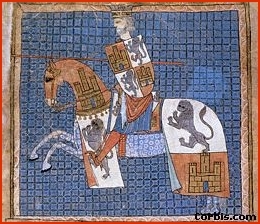
spain-arms.JPG

King Juan Carlos has also created new titles to recognize the merits of politicians and artists. Some of these have been hereditary. For example, the daughter of longtime dictator Francisco Franco, Carmen Franco y Polo became Duchess of Franco, Adolfo Suárez became Duke of Suárez, the author Camilo José Cela became Marquis of Iria Flavia (the Roman name of his birth city) and the classical guitarist Andres Segovia became Marquis of Salobreña. Both Cela and Segovia’s titles are now borne by their sons. He also exceptionally confirmed the title of Count of Barcelona, a title historically attached to the Crown, but used as a title of pretence by his father Juan de Borbón during the dynasty’s Twentieth Century exile and the subsequent reign of his son.
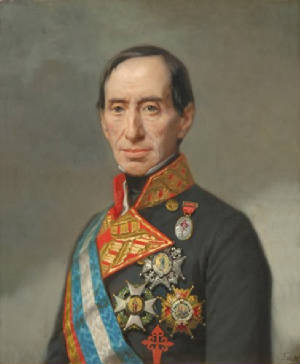
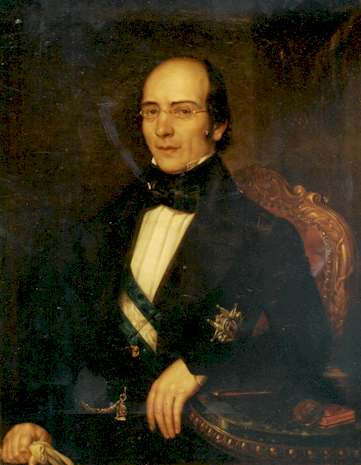
Teniente_General_Jose_Manuel_de_Goyeneche.jpg

The Grandes de España

Spanish nobles are classified either as Grandes de España (also called in English grandees), or as titled nobles. Formerly, grandees were divided into the first, second and third classes, but now, all grandees enjoy the same privileges. An individual may hold a grandeeship, whether in possession of a title of nobility or not. Normally, however, each grandeeship is attached to a title, though this was not always the case. Furthermore, a grandeeship is always awarded along with every ducal title, just as most dukes in France gradually obtained a peerage under its ancien régime. A grandee of any rank outranks a non-grandee, even if that non-grandee’s title is of a higher degree. Thus, a baron-grandee enjoys higher precedence than a marquis who is not a grandee. Except for dukes and some very ancient titles of marquesses and counts, most Spanish titles of nobility are not attached to grandeeships.

Grandees are entitled to the style of Most Excellent Lord / Lady or His / Her Excellency. In the days of the old monarchy, Grandees had the privilege of keeping their hats on in the presence of the sovereign, and of addressing him as “cousin”. Titled nobles who are of the rank of marquis or count use the style Most Illustrious Lord / Lady, while those of the rank of viscount, baron or lord use simply Lord / Lady.
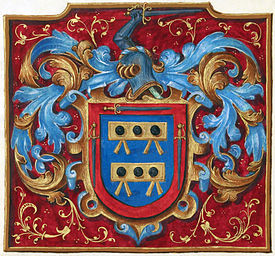
Grant_of_arms.jpg

The Ranks of Spanish Nobility

The titles of Prince of the Asturias, Prince of Gerona and Prince of Viana are held by the heir apparent of the Spanish crown. The Spanish nobility is divided into six ranks (both the masculine and feminine forms, as well as some extant titles, are given). Some of the titles are the following:
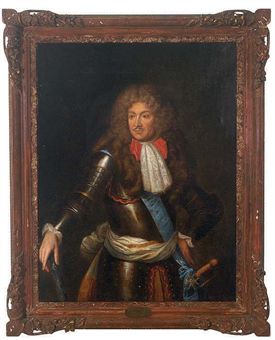
duke-of-berwick.jpg

Duke – Duchess – Duque – Duquesa

All the Dukedoms have attached the title of Grande de España

  • Dukedom of Alba
  • Duke of Berducido
  • Duke of Cadiz
  • Duke of Ciudad Rodrigo, held by the British Duke of Wellington
  • Duke of Hernani
  • Duke of Fernández-Miranda
  • Duke of Lugo
  • Dukedom of Medinaceli
  • Dukedom of Medina Sidonia
  • Duke of Moctezuma, held by the descendants of Aztec Emperor Moctezuma II in Spain.
  • Duke of Montblanch
  • Duke of Najera, est. 1482, currently held by Don Juan Traverso y Colon de Carvajal
  • succeeded on 12.4.2000, his heir apparent is Ignacio Travesedo Julia, Conde de Trevino.
  • Duke of Segovia
  • Duke of Seville
  • Duke of Sotomayor
  • Dukedom of Suárez
  • Dukedom of Palma de Mallorca
  • Duke of Vigo
  • Duke of Victory
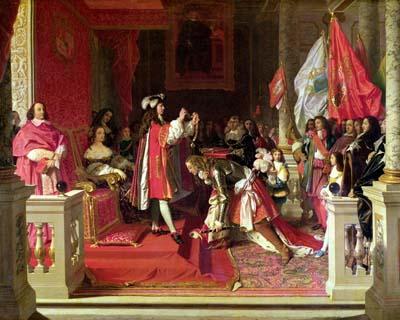
Philip-V-Making-1st-Duke-of-Berwick.jpg

The Full List of Spanish Dukedoms

Aguiar
Ahumada
Alagón
Alba de Tormes
Albuquerque
Alcalá de los Gazules
Alcudia
Algete
Aliaga
Algeciras
Almodóvar del Río
Almodóvar del Valle
Almenara Alta
Almodóvar del Campo
Andria
Ansola
Arco
Arcos
Arévalo del Rey
Arión
Arjona
Atrisco
Baena
Banos (I)
Banos (II)
Béjar
Benavente
Berwick
Benavente
Berwick
Bivona
Camina
Canovas del Castillo
Cardona
Caylus
Ciudad Real
Denia y Tarifa
Durcal
Escalona
Estremera
Feria
Fernán Núñez
Francavilla
Frías
Galisteo
Gandía
Gor
Granada de Ega
Hernani
Huete
Híjar
Hornachuelos
Infantado
Lécera
Lerma
Liria y Xérica
Mandas y Villanueva
Maqueda
Marchena
Medinaceli
Medina de Río Seco
Medina Sidonia
Medina de las Torres
Miranda
Montalto
Montellano
Montemar
Nájera
Olivares
Osuna
Palata
Parcent
Parque
Pastrana
Peñaranda del Duero
Pinohermoso
Plasencia
Riansares
San Carlos
San Lorenzo de Valhermoso
San Ricardo
Sanlúcar la Mayor
Santa Cristina
Santa Elena
Santangelo
Santisteban del Puerto
Santo Gemini
Santo Mauro
Sedavi
Segorbe
Sessa
Soma
Sevilla
Talavera de la Reina
Tarancon
Terranova
Uceda
Unión de Cuba
Villafranca de los Caballeros
Villahermosa
Vista Alegre
Vistahermosa
Zaragoz
jose-nunez-marquis-of-spain.jpg

Marquis – Marchioness – Marqués – Marquesa

  • Marquess of Aguilar de Campoo
  • Marquess of Albudeyte
  • Marquess of Ardales
  • Marquess de la Cadena of Nueva Espana/Mexico (extinct).
  • Marquess of Iria Flavia.
  • Marquess of Irujo y los Arcos
  • Marquess of La Algaba
  • Marquess of Figueroa
  • Marquess of Frigiliana
  • Marquis de Vallado
  • Marquis de la Candia
  • Marquess of Chinchilla
  • Marquess of Astorga
  • Marquess of Isla de Arousa
  • Marquess of Ría de Ribadeo
  • Marquess of Villena
  • Marquess of Santa Maria de Silvela
  • Marquess of Salobreña
  • Marquess of Santillana
  • Marquis of Valdecarzana
  • Marquess of Menendez
  • Marquis of Montsalud
  • Marquis of Morella
  • Joaquín Rodrigo Marqués de
  • los Jardines de Aranjuez.
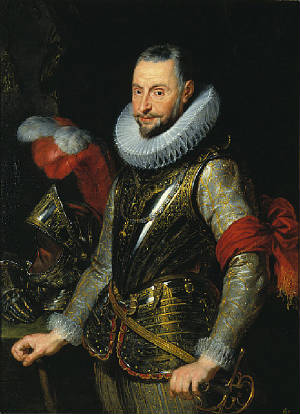
Peter_Paul_Rubens_-_Marquis_Ambrogio_Spinola.jpg

The Full List of Spanish Marquistates

Aguilar de Campóo
Aitona
Albudeite
Alcañices
Ariza
Astorga
Atarfe
Ayerbe
Balbases
Boil
Bondad Real
Bosch de Arés
Camarasa
Cañete
Carpio
Casta
Castellbell
Castel Moncayo
Castel Rodrigo
Castromonte
Cenete
Cenia
Corvera
Duero
Eslava
Estepa
Esteva de las Delicias
Gramosa
Habana
Hoyos
Jabalquinto
Laconi
Lapilla
Leganes
Malferit
Mancera
Marianao
Mina
Miraflores
Molíns
Montealegre
Nervión
Pozo-Rubio
Priego
Puebla de los Infantes
la Puente
Rafal
Romana
Santa Cristina
San Vicente
San Vicente del Barco
Santa Cruz de Mudela
Santa María de Barberá
Sierra Bullones
Távara
Torrecilla
Valcarlos
Valdeolmos
Vallecerrato
Vallehermoso
Valparaíso
Velada
los Vélez
Vellisca
Villadarias
Villafranca del Bierzo
Villasor

Count – Countess – Conde – Condesa

  • County of Barcelona
  • County of Castella de Vigo
  • County of Candia de Valencia
  • County of Cervera
  • County of Covadonga
  • County of Empúries
  • County of Frigiliana
  • County of Guaqui
  • County of Luchana
  • County of Mansilla
  • County of Montealegre
  • County of Olivito
  • County of Ripalda
  • County of Roussillon
  • County of Salvatierra
  • County of Teba
  • County of Toreno
  • County of Urgell
  • County of Vigo
  • County of Fuensaldaña
  • County of Olocau

The Full List of Spanish Countships

Alcaudete
Alcubierre
Almodóvar
Altamira
Amayuelas
Aranda
Arcos
Asalto
Atarés
Barajas
Belalcázar
Cabra
Cardona
Casa Dávalos
Castillo
Cervellón
Cervellón
Cifuentes
Corzana
Chinchón I
Chinchón II
Elda
Eril
España
Fernandina
Fuenclara
Fuensalida
Glimes de Brabante
Lemos
Lerín
Miranda del Castañar
Mollina
Monterrey
Montijo
Oñate
Oropesa
Osorno
Palma del Río
Paredes de Nava
Peñaranda de Bracamonte
Peralada
Priego
Real
Salvatierra
Santa Coloma
Santa Cruz de los Manueles
Santa Cruz de Mopox
Santa Gadea
Santa Isabel
Sástago
Siruela
Torrepalma
Torres Cabrera
Torroella de Montgrí
Truillas
Vallesa de Mandor
Vía Manuel
Villafranqueza
Villanueva
Zavellá

Viscount – Viscountess – Vizconde – Vizcondesa

  • Viscounty of la Alborada.
  • Viscounty of Altamira
  • Viscounty of Banderas.
  • Viscounty of Cabrera.
  • Viscounty of la Calzada.
  • Viscounty of Quintanilla de Florez.

Baron – Baroness – Barón – Baronesa

  • Baron of Polop

Title of Lord – Lady – Señor – Señora

The title of Lord is out of the usual ranks of Spanish nobility, meaning that it has no place in the order of precedence and stays alone. Many of the spanish lordships are among the oldest nobility titles in Spain, and they usually granted the holder the political power over their lordship. Although some lordships were created by the kings of Spain, others existed before them, and haven’t been created by any known king. For example, the lord of Biscay would be the head of Biscay, holding a great degree of independence from the king of Castile, to whom he could pledge or not pledge suzerainty, but to whom he was not, at least at first, a vassal: each new lord of Biscay had to renew their oath to the king, although in the end the kings of Castile inherited the lordship.

  • Lord of Balaguer: held by the King of Spain
  • Lord of Biscay: since 1378 held by the King of Spain, thus acquiring the hitherto semi-independent lordship of Biscay
  • Lord of Molina de Aragón
  • Lord of Salas
Moroni_Don_Gabriel_de_la_Cueva.jpg

Other Titles of Nobility

  • Infante: currently used by those royal princes who are not the heir apparent to the throne. Previously, it was also a high nobility title, being the most famous holders the Infantes de Carrión that appear in the Lay of the Cid.
  • Prince: as said before, it is a title used by the heir apparent to the throne. Three princedoms exist in Spain, one for each one of the three kingdoms that merged to form Spain:
    • the Prince of Asturias, heir apparent to the throne of the kingdom of Castile and Leon.
    • the Prince of Viana, heir apparent to the throne of the kingdom Navarre.
    • the Prince of Girona, heir apparent to the throne of the kingdom of Aragon.
  • Ricohombre (fem. Ricahembra): used during the Reconquista, it is a roughly equivalent to Baron. By the 17th century, it was a synonym of nobleman.
  • Condestable: cognate with Constable, it is hereditary title used in the Kingdoms of Castile and Leon to refer to the second person in power in the kingdom, after the King. It was a hereditary title within the Velasco family, that gradually lost the powers once attributed to the Condestable of Castile.
  • Caballero: equivalent to Knight, it was very rare in the kingdom of Castile, but common in the kingdom of Aragon, where there were four types of caballeros:
    • Golden-spur caballero: used by those infanzones (look below) who has been enknighted. They hold the greatest prestige among the knights’ ranks.
    • Royal-privilege caballero: it was a personal title not to be inherited by his descendents, granted by the king to the Doctors in Law (LL.D. holders). It was rarely used by their holders, since the doctoral rank had bigger privileges.
    • Caballero Mesnadero: to refer to the non first-born sons of a Ricohombre. It disappeared during the 18th century, when the Burbon kings purged the ranks of the nobility.
    • Caballero franco: to refer to those who had previously been hijosdalgo or infanzones, but were commoner-born.
  • Potestad: only in the kingdom of Aragon, its equivalent is the Italian podestà, an administrative-related title. It disappeared with the Nueva Planta decrees in 1713.
  • Doctor: indeed, any holder of a PhD or any other doctoral rank was recognised privileges equal to those of higher nobility. For example, doctors were exempt of uncovering their heads in the presence of the King, a privilege shared only by the grandees.
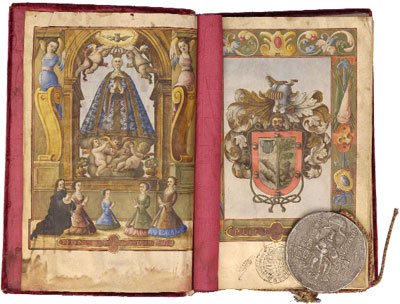
nobility-patent.jpg

The Lower Nobility of Spain

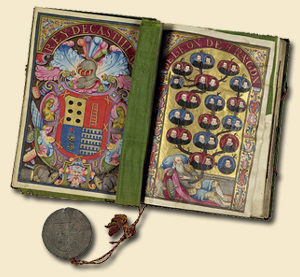
Lower nobility held titles such as hidalgo, infanzon (aragonese equivalent to hidalgo), escudero (esquire), but these do not correspond to baron, a title unknown to spanish nobility but in Catalonia. Hidalgo (plural: hijosdalgo) was the most common one, all the people of Biscay having been granted that noble title. All titled and untitled nobles are considered hidalgos. Contrary to the rest of noble titles, the one of hidalgo didn’t have attached any fief, grant or land, and, therefore, many were as poor as commoners, although they were tax-exempted and could join the civil service or the army. Hidalgo is usually regarded as a paradigm of Spanish racism: literally it means son of something, meaning that the hidalgo title holder was of pure christian blood, being able to trace his ancestors and prove he was not of Jewish or Moorish descendant; they were usually considered descendants of noblemen who did not inherit the throne.[citation needed]. Indeed, although during the Middle Ages it was a title granted by the King of Castile as a reward for any service done to the crown (or as a way of recognising rights, as in the case of Biscay), in the same way escudero was granted for military achievements, when the Reconquista ended, hidalgo, being the simplest way of proving one’s pure blood, came to be the only lesser title to remain among the ranks of spanish nobility.
nobilit-of-spain.jpg

Right of Succession

The evidence supporting one’s claim to a title may be reviewed by the Deputation of Grandees and Titled Nobles of the Kingdom (Diputación de Grandes y Títulos del Reino). The body includes eight grandees, eight nobles who are not grandees, and a president who must hold both a grandeeship and a hereditary title without grandeeship.

Succession to Spanish noble titles is hereditary, but not automatic. The original letters patent which created the title determines the course of succession. The title of King of Spain however currently follows male-preference cognatic primogeniture, as set in the medievalCastilian law Siete Partidas.

While noble titles historically have followed the rule of male-preference primogeniture, a Spanish law came into effect on October 30, 2006, after approval by both houses of parliament, establishing the inheritance of hereditary noble titles by the firstborn regardless of sex. The law is retroactive to July 27, 2005.

Following the death of a noble, the senior heir may petition the King through the Spanish Ministry of Justice for permission to use the title. If the senior heir does not make a petition within two years, then other heirs may themselves do so. Furthermore, there is an overall limit of forty years within which one may claim a title.

The petitioner must demonstrate that he or she is a child, grandchild or direct male line descendant of a noble (whether a grandee or not), or that he or she belongs to certain bodies or orders of chivalry deemed noble, or that the father’s family is recognized as noble (if succeeding to a grandeeship, the mother’s family also). Furthermore, a fee must be paid; the fees depend on whether the title is attached to a grandeeship or not, and on whether the heir is a direct descendant or collateralkinsman to the previous holder. The petition is normally granted, except if the petitioner is a criminal.

Titles may also be ceded to heirs other than the senior heir during the lifetime of the main titleholder. Normally, the process is used to allow younger children to succeed to the titles, while the highest or principal title goes to the senior heir. Only subsidiary titles may be ceded; the principal title must be reserved for the senior heir. The cession of titles may only be done with the approval of the monarch. Cayetana Fitz-James Stuart, 18th Duchess of Alba, holds the Guinness Book of Records for number of titles with over 50 titles.

References

  1. ^ http://www.boe.es/boe/dias/2006/10/31/pdfs/A37742-37743.pdf
  • Atienza, Julio de. Nobiliario Español: Diccionario Heráldico de Apellidos Españoles y de Títulos Nobiliarios. Madrid: Aguilar, 1948.
  • Figueroa y Melgar, Alfonso de. Estudio Histórico Sobre Algunas Familias Españolas. 6v. in 12 parts. Madrid: Editions Dawson & Fry, 1965.
  • Noble Titles in Spain and Spanish Grandees
  • Nobility & Grandee Titles in Spain (Ministry of Justice)

We use cookies to personalise content and ads, to provide social media features and to analyse our traffic. We also share information about your use of our site with our social media, advertising and analytics partners. View more
Cookies settings
Accept
Decline
Privacy & Cookie policy
Privacy & Cookies policy
Cookie name Active

Privacy and Cookie Policy Last updated: 11 August 2026

Neue Gotha respects your privacy and is committed to handling personal data lawfully, fairly, and transparently. This Privacy and Cookie Policy explains who is responsible for personal data, what information we process, why we process it, how long we retain it, who may receive it, and the rights available to individuals under the General Data Protection Regulation (EU) 2016/679 (“GDPR”) and applicable national data-protection and electronic-communications law.

1. Who is responsible for your personal data?

The controller responsible for the processing described in this policy is:

  • Legal name: Neue Gotha Historical Register gUG
  • Trading or project name: Neue Gotha
  • Postal address: Musterstraße 12, 10115 Berlin, Germany
  • Email: editor@neuegotha.de
  • EU/EEA representative: Not applicable (the controller is established in Germany).
  • Data Protection Officer: No Data Protection Officer has been appointed. Privacy enquiries are handled through editor@neuegotha.de.

Questions about this policy or requests concerning personal data may be sent to the email or postal address above.

2. Scope of this policy

This policy applies to personal data processed through https://neuegotha.com, correspondence with the Neue Gotha editorial office, material submitted for editorial consideration, and editorial or archival records concerning identifiable living individuals.

It does not govern independent third-party websites or services linked from this website. Those providers are responsible for their own privacy practices.

3. Personal data we process and why

Processing activity Personal data Purpose Legal basis Retention
Website delivery, logging, and security IP address; date and time of access; requested page or file; referring page; browser, operating-system, and device information; error and security-event data Deliver the website, maintain availability, diagnose faults, prevent abuse, and protect the website and its users Article 6(1)(f) GDPR — our legitimate interests in operating a secure and reliable website. Where processing is required by law, Article 6(1)(c) GDPR may also apply. Routine access and error logs are retained for 14 days. Records isolated for investigation of a suspected security incident may be retained for up to 90 days after the incident is resolved, or longer where required for legal claims.
Editorial correspondence and enquiries Name, contact details, message content, correspondence history, and any documents or other information voluntarily provided Respond to enquiries, assess corrections or submissions, maintain editorial records, and protect legal rights Article 6(1)(f) GDPR — our legitimate interests in conducting editorial work and responding to correspondence; Article 6(1)(b) GDPR where processing is necessary to take steps at an individual’s request before entering into a contract; Article 6(1)(c) GDPR where retention or disclosure is legally required Correspondence is ordinarily retained for 24 months after the matter closes. Material required to document an editorial decision, resolve a dispute, meet a legal obligation, or establish, exercise, or defend a legal claim may be retained for the applicable limitation period.
Editorial, genealogical, and archival records Names; titles and styles; dates and places associated with public or genealogical events; family relationships; jurisdictions, offices, and public roles; images; biographical information; source and citation information; and correspondence relating to accuracy or provenance Research, document, preserve, verify, correct, and publish material concerning dynastic, genealogical, heraldic, and institutional history Article 6(1)(f) GDPR — our legitimate interests and those of readers, researchers, and institutions in maintaining an accurate historical and genealogical reference work, subject to a documented necessity and balancing assessment. Applicable national rules implementing Article 85 GDPR concerning freedom of expression and information may also apply. For as long as the information remains relevant to the legitimate editorial or archival purpose, subject to accuracy review, correction, restriction, erasure, and applicable archiving or legal requirements
Cookie-consent and language preferences Consent choice, language preference, cookie identifiers, and related technical information Remember privacy choices, demonstrate consent where required, and provide the language selected by the visitor Article 6(1)(f) GDPR for strictly necessary preference and consent-management functions; Article 6(1)(a) GDPR for optional storage, access, or associated processing based on consent As stated in the cookie table below
Optional external services IP address, page URL, device and browser information, language choice, and service-interaction data, depending on the provider Provide optional translation, embedded content, analytics, or similar features actually enabled on the website Article 6(1)(a) GDPR — consent. Non-essential services remain disabled until consent is given. As described for each service and by the relevant provider

We do not use personal data for solely automated decisions that produce legal effects or similarly significant effects concerning individuals.

4. Editorial and archival information obtained from other sources

Neue Gotha is an editorial and historical reference project. Some information in the register may concern identifiable living individuals and may not have been collected directly from those individuals.

Depending on the record, information may be obtained from official gazettes and public registers; archives and libraries; published books and scholarly works; institutional publications; reputable news sources; publicly accessible websites; submissions from the individual concerned or their authorised representative; family representatives; and other documented sources.

The categories of information may include the categories listed under “Editorial, genealogical, and archival records” above. The material may be made available to website visitors and may be indexed by search engines. Neue Gotha seeks to use relevant, proportionate, and appropriately sourced information and to distinguish documented fact from uncertainty or editorial interpretation.

Individuals may contact the editorial office to request access, correction, contextualisation, restriction, or erasure. Requests are assessed under the GDPR and applicable national law, taking into account accuracy, source integrity, the public interest, freedom of expression and information, archival considerations, and the rights and freedoms of other people. No provision of this policy removes a right granted by applicable law.

Neue Gotha does not intentionally publish special-category personal data or information concerning criminal convictions about living individuals unless a specific lawful basis and any additional legal condition have been identified and documented.

5. Cookies and similar technologies

Cookies are small text files stored on, or read from, a visitor’s device. Similar technologies may perform comparable functions. Some are strictly necessary for a website or a service expressly requested by the visitor. Others, including many analytics, advertising, social-media, translation, or embedded-content technologies, require prior consent under applicable EU electronic-communications rules.

Neue Gotha does not place or access non-essential cookies, or activate non-essential external services, before valid consent has been given. Visitors may accept or reject optional purposes separately and may withdraw consent at any time by selecting the permanently available “Cookie settings” control. Withdrawing consent does not affect processing that was lawful before withdrawal. Strictly necessary technologies cannot be disabled through the consent tool, but they may be controlled through browser settings where technically possible.

The following table reflects the technologies currently deployed on the website. It is updated whenever a plugin, host, analytics tool, embedded service, or cookie configuration changes.

Name Provider Purpose Category Duration Third-party access
_scc_session Neue Gotha / managed hosting and site-control provider Maintains a short-lived session for website security and site-control functions Strictly necessary Browser session The contracted hosting or site-control provider may access the identifier when providing technical support
_tccl_visit Neue Gotha / managed website-analytics provider Distinguishes a single website visit and reduces duplicate counting within the same session Analytics — disabled until consent 30 minutes Yes; the contracted analytics provider processes the identifier on Neue Gotha’s behalf
_tccl_visitor Neue Gotha / managed website-analytics provider Assigns a pseudonymous visitor identifier used to produce aggregated website-usage statistics Analytics — disabled until consent 12 months Yes; the contracted analytics provider processes the identifier on Neue Gotha’s behalf
googtrans Neue Gotha / Google Translate Stores or applies the visitor’s language selection for the translation feature Functional — disabled until consent 12 months Google may receive technical and service-interaction data when Google Translate is activated
ng_gt_default_applied Neue Gotha / website translation plugin Records whether the website’s default translation setting has been applied Functional — disabled until consent 24 hours No direct vendor access is assumed; Google may receive data if activation causes Google Translate to load
eu_cookies_bar_consent Neue Gotha / locally hosted EU Cookies Bar plugin Stores the visitor’s cookie choices and prevents the banner from being shown unnecessarily Strictly necessary 6 months No, provided the consent plugin remains locally hosted and does not transmit consent records to its developer
wordpress_test_cookie Neue Gotha / WordPress Checks whether the browser supports cookies when an authorised user visits the sign-in page Strictly necessary Browser session No; the cookie is processed by Neue Gotha and its contracted host

Authorised editorial users may receive WordPress authentication, security, or preference cookies when they sign in. wordpress_logged_in_[hash] maintains an authenticated session for up to two weeks when “Remember Me” is selected; wordpress_sec_[hash] protects administrative access for the session; and wp-settings-[user_id] stores an editor’s interface preferences for up to one year. These internal cookies are processed solely for editorial access and site administration.

6. Google Translate, web fonts, and other external content

Where enabled with the visitor’s consent, Neue Gotha may use Google Translate to provide machine-generated translations. Activating the service may cause the visitor’s browser to connect to Google and disclose technical information such as the IP address, requested page URL, browser or device information, and language or service-interaction data. Machine translations may contain errors and do not replace the original editorial text.

Website fonts are hosted locally by Neue Gotha and do not require a connection to Google. Google Translate remains an optional external service that is activated only after the visitor provides consent.

Information about Google’s processing is available in the Google Privacy Policy and Google’s explanation of how it uses information from sites and applications that use its services.

Embedded material from another website may allow that provider to process personal data as if the visitor had visited the provider directly. Non-essential embeds remain blocked until consent is obtained. Each enabled provider is identified in this policy and in the consent interface.

7. Recipients of personal data

Personal data may be disclosed only where necessary to:

  • hosting, content-delivery, backup, website-maintenance, email, security, and consent-management providers acting under contract;
  • translation, analytics, media, or other external-service providers selected by the visitor through the consent interface;
  • professional advisers, insurers, auditors, or other specialists where necessary to protect legal or operational interests;
  • courts, regulators, law-enforcement bodies, or public authorities where disclosure is required or permitted by law; and
  • the public and search engines where personal data form part of a lawfully published editorial or archival record.

8. International data transfers

Some service providers may process personal data outside the European Economic Area. Where the GDPR restricts such a transfer, Neue Gotha relies on an applicable European Commission adequacy decision or appropriate safeguards under Article 46 GDPR, such as the European Commission’s Standard Contractual Clauses, together with supplementary measures where required.

Cloudflare and Google may transfer limited technical information to recipients in the United States. Where the recipient is validly certified, the transfer is based on the European Commission’s adequacy decision for the EU–US Data Privacy Framework. Where that mechanism is unavailable or does not cover a transfer, the relevant provider’s European Commission Standard Contractual Clauses and supplementary technical and organisational measures are used. Information about the applicable safeguards, including how to obtain a copy, may be requested from editor@neuegotha.de.

9. How long we retain personal data

We retain personal data only for as long as necessary for the purposes described in this policy, including security, editorial integrity, source verification, dispute resolution, and compliance with legal obligations. The specific periods or criteria are stated in the processing and cookie tables above.

When a retention period ends, information is deleted or anonymised unless continued retention is required by law, is necessary for legal claims, or is justified by a documented editorial or archival purpose. Encrypted rolling backups are retained for 35 days and are then overwritten automatically, unless a backup has been isolated for incident recovery or a legal hold.

10. Security

Neue Gotha uses appropriate technical and organisational measures designed to protect personal data against accidental or unlawful destruction, loss, alteration, unauthorised disclosure, or access. No method of internet transmission or electronic storage is completely secure, and absolute security cannot be guaranteed.

11. Your data-protection rights

Subject to the conditions and limitations in the GDPR and applicable national law, an individual may have the right to:

  • obtain confirmation as to whether personal data concerning them are processed and request access to those data;
  • request correction of inaccurate or incomplete personal data;
  • request erasure of personal data;
  • request restriction of processing;
  • object, on grounds relating to their particular situation, to processing based on legitimate interests;
  • receive personal data they provided in a structured, commonly used, machine-readable format and transmit those data to another controller where the right to portability applies;
  • withdraw consent at any time, without affecting the lawfulness of processing carried out before withdrawal; and
  • lodge a complaint with a competent data-protection supervisory authority.

To exercise a right, contact editor@neuegotha.de. Please identify the information or record concerned and the nature of the request. We may request information reasonably necessary to verify identity and protect personal data from unauthorised disclosure. Requests are normally answered within one month, subject to any extension permitted by law.

Where a request concerns published editorial or archival content, applicable rights may be limited where necessary and proportionate to reconcile data protection with freedom of expression and information or other rights recognised by law. Each request will be assessed individually.

12. Complaints

We encourage individuals to contact us first so that we can try to resolve a concern. Individuals also have the right to complain to the supervisory authority in the EU or EEA country of their habitual residence, place of work, or the place of the alleged infringement.

For this Berlin-based controller the supervisory authority is the Berliner Beauftragte für Datenschutz und Informationsfreiheit, Alt-Moabit 59–61, 10555 Berlin, Germany; telephone +49 30 13889-0; email mailbox@datenschutz-berlin.de; website https://www.datenschutz-berlin.de/.

13. Children

The website is intended as a general historical and reference resource and is not directed specifically at children. We do not knowingly request personal data directly from children for an online service requiring parental consent. If you believe a child has provided personal data inappropriately, please contact us.

14. Changes to this policy

We may update this policy when our processing activities, service providers, technologies, or legal obligations change. The current version will be published on this page with a revised “Last updated” date. Where required, we will provide additional notice or request renewed consent before introducing a new processing purpose.

Decline All
Save settings Accept All
Cookies settings