
Nobility and directory

Nobility of Mexico – Brazil

History and Register of The Nobility of Mexico – Brazil

Jurisdiction
Mexico
Entry type
Directory
Editorial status
Reviewed - Verified
Thumbnail for version as of 18:56, 13 May 2011

Nobility of the World

Volume VIII – Brazil – Mexico
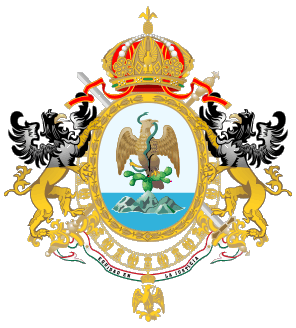
imperialarmsofmexico.gif
brazil.gif

The History and Register of the Nobility of Mexico and Brazil

Mexican nobility refers to the titled nobles and untitled gentry families of Mexico. Most of the descendants of these families still live in Mexico today, while others can also be found in Europe and other countries. With the victories of the Mexican Republics over the monarchies of the First Mexican Empire, headed by Agustín I, and the Second Mexican Empire, under Maximilian I and the writing of the Mexican Constitution of 1917 titles of nobility in Mexico were henceforth legally abolished in Mexico.
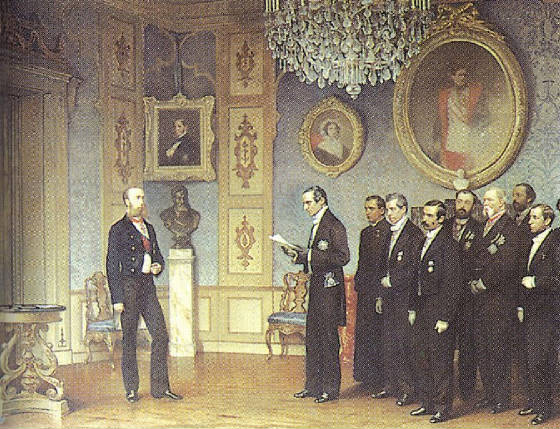
emperormaximillian.jpg

A Mexican deputation, including many members of the Mexican nobility, offering the Mexican throne to Archduke Maximilian. From the pre-Hispanic era, and stretching from the viceregal and colonial periods under the Habsburgs and Bourbons, to the First and Second Mexican Empires and beyond, these families played vital roles in the history of Mexico. There are several periods in Mexico’s modern history in which families were granted noble status and given titles. While titles were granted in Mexico itself, other families brought with them their old titles from Europe. Mexicans who by marriage to titled foreigners or through outright purchase, acquired titles of nobility from European countries excluding Spain or the Vatican. These were primarily Italian and German titles, with some rare exceptions.
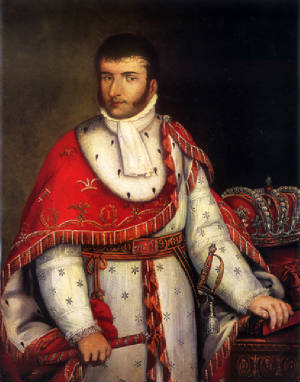
Iturbide_Emperador_by_Josephus_Arias_Huerta.jpg

At the beginning of the nineteenth century, the Mexican aristocracy-both titled and untitled-consisted of approximately 4% of Mexico’s population, or approximately 200,000 individuals. Signers of the Mexican Declaration of Independence included: the Marqués de San Juan de Rayas, the Marqués de Salvatierra, the Marqués de Salinas del Río Pisuerga, the Conde de Santa María de Regla, the Marqués de la Cadena, the Marqués de San Miguel de Aguayo, among others. Leading families active in 19th c. politics, the economy, the clergy, arts and culture included: Romero de Terreros, Rincón Gallardo, Pérez Gálvez, Rul, Vivanco, Canal, Cañedo, Fernández de Jáuregui, Obando, Gómez de Parada, Pérez de Salazar, Valdivieso, Fagoaga, Castañiza, Gómez de la Cortina, Moncada, Diez de Sollano, Caserta, Trebuesto, García de Teruel, Vizcarra, Cervantes, Rábago, Sardaneta, Ozta, Azcárate, Samaniego del Castillo, Cosío, Sánchez de Tagle, Hurtado de Mendoza, López Portillo, García Pimentel, Villaurrutia, among others.

Historically, many of these Mexican families married into European nobility and some of these unions have produced figures such as Rainier III, Prince of Monaco and Elena Poniatowska, whose family claims the throne of the Kingdom of Poland. Other families who have married into European nobility include the Gutiérrez de Estradas, the Polignacs, and the Iturbides-the Head of the Imperial House of Mexico in exile, Maximilian von Götzen-Itúrbide, is married to a member of the Venetian and Croatian nobility.
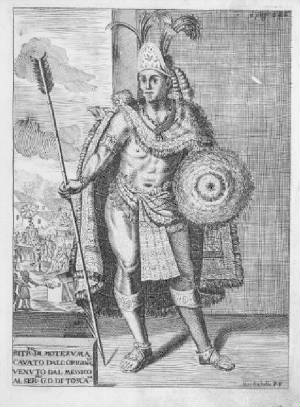
Motecuzoma_Xocoyotzin.jpeg

The Indigenous Nobility of Mexico

Moctezuma II’s royal descendants weregranted titles in Mexico and Spain. The Aztecs and other Indigenous peoples in Mexico had a system of hereditary aristocracy in place when the Spanish conquered their empires. The Spaniards respected this system and added to it, resulting in many unions between Aztec and Spanish nobility. Descendents of the elites of pre-Columbian Mexico who received these distinctions included the heirs of the Aztec ruler Moctezuma II; That family became known as the condes de Moctezuma. Their descendants, who still reside in Spain, became a part of the Spanish peerage. They later receivedgrandeza and became Duques de Moctezuma. A branch of their family, on the female side, continued to receive an annual payment from the Mexican government in the amount of some 500 Ducats, gold, until 1938, as part of a contract signed in the 16th c. granting Mexico City access to water and lumber on family property. Numerous other Indigenous elites collaborated with the conquest, earning noble titles and privileges. Most notably, all the Tlaxcallans whom resettled into northern Mexico, became hidalgos.
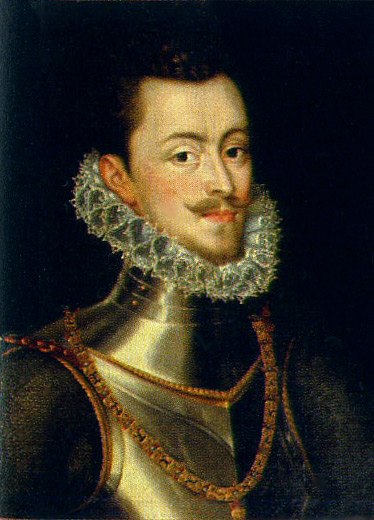
don_juan_de_austria.jpg

The Titles in New Spain and Early Republican of Mexico

Families who received a título de Castilla during the Colonial period were the first to be granted European noble titles in Mexico. One of the first was the Conquistador Hernán Cortés, who was granted the title of the Marqués del Valle de Oaxaca. Approximately 130 such titles were held by Spaniards born or resident in New Spain. Main centers of population included Mexico City, Puebla, Querétaro, San Miguel de Allende, Guanajuato, Guadalajara, and Morelia (Valladolid).

At independence, a few princely dignities were accorded the Imperial family’s relations and three titles of nobility-the latter already under application with the Spanish government-were recognized by the Congress of the Mexican Empire, such as the Marqués de Samaniego del Castillo. Knighthoods were also created, most notably, of Guadalupe. Over the nineteenth century, others received pontifical titles of nobility, and through loopholes in Spanish law, had these titles recognized as títulos de Castilla; these are known as títulos negros and include the titles of the marqués de Barrón, conde de Subervielle, conde del Valle (Fernández del Valle family), duquesa de Mier, and others. Many of these families were part of the hidalgo class. Some families, after Mexican Independence, received títulos de Castilla from the Spanish monarch directly, such as the duque de Regla and the duquesa de Prim, or indirectly, through marriage to individuals holding these titles, such as the duque de Castroterreño or the Escandón family members who subsequently became duques de Montellano, marqueses de Villavieja.

Some families of pure Amerindian ancestry, such as the Mixtec Villagómez family, were among the richest landowners in New Spain. Despite being part of the colonial elite after the conquest, the Villagómez retained their Mixtec identity, speaking the Mixtec language and keeping a collection of Mixtec codices.
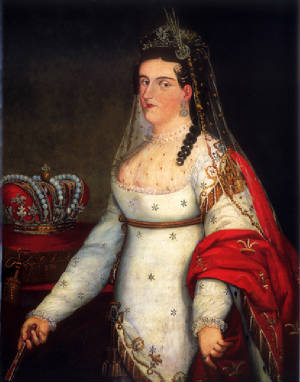
Emperatriz_Ana_Maria_by_Josephus_Arias_Huerta.jpg

H.I.M. Empress Ana María – Consort of Agustin I of Mexico.

The First and Second Mexican Empires

Many families also received a title of nobility from the regencies and/or Congresses of the First or Second Empire. During the First Mexican Republic, after the end of the First Mexican Empire, many of the old families of the nobility lived as common citizens, but appended the prefix “ex-” to their titles, using them in their formal signatures, grave inscriptions, and portraits. Afterwards, during the Second Mexican Empire, under Maximilian I of Mexico of the House of Habsburg-Lorraine, the nobility was resurgent.

Some of these families granted titles during these periods were the Iturbides-whose Basque ancestors had been ennobled by King Juan II of Aragon-,the Samaniego del Castillos, and the Marquis de la Cadena. José Manuel Velázquez de la Cadena is listed in the Soberana Junta Provisional Governante del Imperio Mexicano. (Ref. La Calle de Cadena en Mexico, p. 1-46, Guillermo Porras Munoz). De la Cadena relations fled to South Texas in 1800 and to Louisiana after the fall of Maximillian and Carlota. This branch married into the Baron d’Ivry family and their descendants relocated to Paris, France in the 1800s. Other branches of the family remained in Nuevo León until the last Mexican Revolution, but then fled to South Texas.
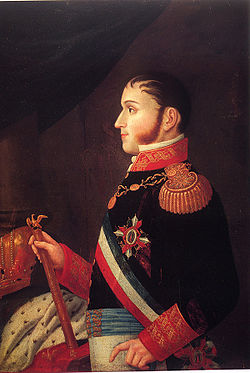
agustin_de_iturbide.jpg

The Modern Period

During the Porfiriato, the Mexican aristocracy was very active in politics. Prince Agustín de Iturbide y Green, Maximilian’s adopted son, was naively prompted by reactionaries into making public pronouncements against Díaz, who promptly exiled him after serving a brief sentence given him by a martial court. Don Agustín died in exile in the U.S., where he taught as a Spanish professor at Georgetown University. Members of the Rincón Gallardo, Fagoaga and Pimentel families (marqués de Guadalupe, marqués del Apartado and conde de Heras Soto) were active in Mexico City government, the Ministry of Foreign Affairs, the armed forces, and the Academia de la Lengua or the Sociedad de Geografía e Historia.

Around 1902, Don Ricardo Ortega y Pérez Gallardo, Mexico’s unofficial King of Arms commenced work on a project to prepare an encyclopedic repertoire of Mexico’s aristocracy. The resulting Historia genealógica de las familias más antiguas de México, or Genealogical History of the Oldest Families of Mexico-an Almanach de Gotha of sorts-listed the histories of a select group of families residing in Mexico who held Habsburg, Bourbon, Mexican, and Pontifical titles and patents of nobility, entailments, and knighthoods; it also listed those notables who had accepted honours from foreign sovereigns and republics.

After the revolution, the nobility migrated to Mexico City in large numbers, although many entered the professional and educated classes. A number found employment in the diplomatic service, arts and letters, public relations, or as representatives of transnational corporations. Art history and antiquities have attracted many, such as the marqués de San Francisco, don Manuel Romero de Terreros, among others. While monarchists organized masses for the repose of Maximilian well into the 20th century at the Church of La Profesa, and were kept under surveillance by the Ministry of the Interior. Many of them greeted the arrival of the Royal Family in 1977-the first such visit in Mexico’s history-and purportedly feuded over the order of precedence at receptions.

Wealthy Mexican families have attempted to obtain titles of nobility from Spain since the 1980s, when relations were re-established, but ran afoul of the law. The appeal of and fascination with the nobility in Mexico, without a doubt, has not subsided. Countless soap operas, novels, films, museum exhibits, and now, websites, are devoted to the topic.
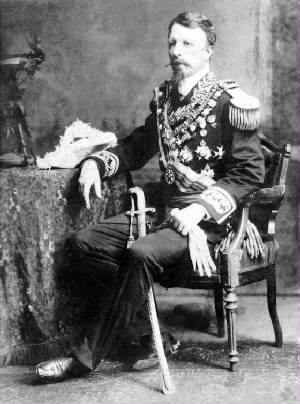
brazilian-nobility.jpg

The Nobility Of Brazil

Brazilian nobility refers to the titled nobles and fidalgo families of Brazil. It began in the early 19th century duringColonial Brazil and lasted until the end of the Empire of Brazil in 1889. The noble titles were a sign of political poweramong the elite. Some of the nobles were direct descendants of the Portuguese nobility, and even of the high nobility, especially the families that arrived during the first centuries of the colonization of Bahia, Sergipe, Pernambuco, Rio de Janeiro and São Paulo. The elevation of Brazil to the status of kingdom, under the United Kingdom of Portugal, Brazil and the Algarves, in 1815, led to the creation of the first Brazilian noble titles. With the Independence of Brazil from Portugal in 1822, the Empire of Brazil established its own nobility. It was constituted of the titles of Duke, Marquis, Count, Viscount and Baron; and by honorific orders, decorations, and medals.

Between 1831 and 1840, there were nominations to titles and honors, on account of the Regency Law, a constitutional correction approved during the Trine Provisional Regency. During the reign of Pedro II, the advent of the commercialization of coffee, it was the great coffee-growers who started to collect such titles, being acquaintances of the coffee barons. According to Affonso de Taunay, around 300 holders had their income linked to coffee: farmers, bankers and traders.

With the proclamation of the Brazilian republic, in 1889, the Brazilian nobility was extinguished. It was also prohibited, under penalty of accusation of high treason and the suspension of political rights, to accept noble titles and foreign decorations without the proper permission of the State. Particularly, the nobles of greater distinction, by respect and tradition, were allowed to use their titles during the republican regime; a well-known example is the Baron of Rio Branco.
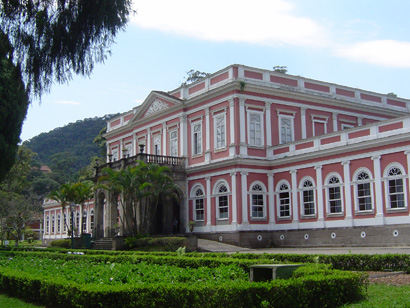
Petropolis-museum.jpg

The Brazilian Nobility in 1869

Duke 1

Marquis 11

Count 11

Viscount 36

Baron 180

Total 239
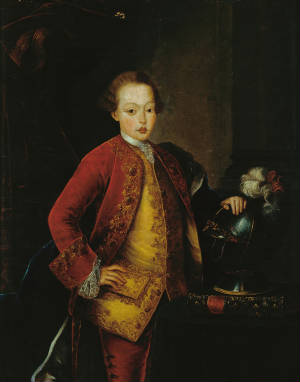
brazilian-nobility-noble.jpg

The Famous Members of Brazilian Nobility

  • Domitila de Castro do Canto e Melo, the Marchioness of Santos
  • José Maria da Silva Paranhos Júnior, the Baron of Rio Branco
  • Luís Alves de Lima e Silva, the Duke of Caxias
  • Manuel Luís Osório, the Marquis of Erval
  • Manuel Marques de Sousa, the Count of Porto Alegre

References

* Ladd, Doris M., The Mexican Nobility at Independence, 1780-1826. Institute of Latin American Studies, University of Texas, 1976.

* Fernández de Recas, Guillermo S. Cacicazgos y Nobiliario Indígena de la Nueva España’ (Indian Chiefs and Nobility of New Spain). México, D.F.: Instituto Bibliográfico Mexicano, 196l. (FHL book 972 F3f.)

* Macias-González, Victor M. “The Mexican Aristocracy in the Porfirian Foreign Service.” Book Manuscript Summary, available online at: http://www.lclark.edu/~tepo/Papers/macias.pdf * Muñoz Altea, Fernando. Blasones y Apellidos (Coats of Arms and Noble surnames). México: Joaquín Porrúa, S.A. de C.V., 1987. (FHL book 972 D6m.)

* Ortega y Pérez Gallardo, Ricardo. Historia Genealógica de las Familias más Antiguas de México (Genealogical History of the Oldest Families of Mexico). Austin, Texas: Golightly-Payne-Coon Company, 1957. (FHL films 0283555-0283556.)*Schwarcz, Lilia Moritz. As barbas do Imperador: D. Pedro II, um monarca nos trópicos. 2. Ed. São Paulo: Companhia das Letras, 1998. (Portuguese)

We use cookies to personalise content and ads, to provide social media features and to analyse our traffic. We also share information about your use of our site with our social media, advertising and analytics partners. View more
Cookies settings
Accept
Decline
Privacy & Cookie policy
Privacy & Cookies policy
Cookie name Active

Privacy and Cookie Policy Last updated: 11 August 2026

Neue Gotha respects your privacy and is committed to handling personal data lawfully, fairly, and transparently. This Privacy and Cookie Policy explains who is responsible for personal data, what information we process, why we process it, how long we retain it, who may receive it, and the rights available to individuals under the General Data Protection Regulation (EU) 2016/679 (“GDPR”) and applicable national data-protection and electronic-communications law.

1. Who is responsible for your personal data?

The controller responsible for the processing described in this policy is:

  • Legal name: Neue Gotha Historical Register gUG
  • Trading or project name: Neue Gotha
  • Postal address: Musterstraße 12, 10115 Berlin, Germany
  • Email: editor@neuegotha.de
  • EU/EEA representative: Not applicable (the controller is established in Germany).
  • Data Protection Officer: No Data Protection Officer has been appointed. Privacy enquiries are handled through editor@neuegotha.de.

Questions about this policy or requests concerning personal data may be sent to the email or postal address above.

2. Scope of this policy

This policy applies to personal data processed through https://neuegotha.com, correspondence with the Neue Gotha editorial office, material submitted for editorial consideration, and editorial or archival records concerning identifiable living individuals.

It does not govern independent third-party websites or services linked from this website. Those providers are responsible for their own privacy practices.

3. Personal data we process and why

Processing activity Personal data Purpose Legal basis Retention
Website delivery, logging, and security IP address; date and time of access; requested page or file; referring page; browser, operating-system, and device information; error and security-event data Deliver the website, maintain availability, diagnose faults, prevent abuse, and protect the website and its users Article 6(1)(f) GDPR — our legitimate interests in operating a secure and reliable website. Where processing is required by law, Article 6(1)(c) GDPR may also apply. Routine access and error logs are retained for 14 days. Records isolated for investigation of a suspected security incident may be retained for up to 90 days after the incident is resolved, or longer where required for legal claims.
Editorial correspondence and enquiries Name, contact details, message content, correspondence history, and any documents or other information voluntarily provided Respond to enquiries, assess corrections or submissions, maintain editorial records, and protect legal rights Article 6(1)(f) GDPR — our legitimate interests in conducting editorial work and responding to correspondence; Article 6(1)(b) GDPR where processing is necessary to take steps at an individual’s request before entering into a contract; Article 6(1)(c) GDPR where retention or disclosure is legally required Correspondence is ordinarily retained for 24 months after the matter closes. Material required to document an editorial decision, resolve a dispute, meet a legal obligation, or establish, exercise, or defend a legal claim may be retained for the applicable limitation period.
Editorial, genealogical, and archival records Names; titles and styles; dates and places associated with public or genealogical events; family relationships; jurisdictions, offices, and public roles; images; biographical information; source and citation information; and correspondence relating to accuracy or provenance Research, document, preserve, verify, correct, and publish material concerning dynastic, genealogical, heraldic, and institutional history Article 6(1)(f) GDPR — our legitimate interests and those of readers, researchers, and institutions in maintaining an accurate historical and genealogical reference work, subject to a documented necessity and balancing assessment. Applicable national rules implementing Article 85 GDPR concerning freedom of expression and information may also apply. For as long as the information remains relevant to the legitimate editorial or archival purpose, subject to accuracy review, correction, restriction, erasure, and applicable archiving or legal requirements
Cookie-consent and language preferences Consent choice, language preference, cookie identifiers, and related technical information Remember privacy choices, demonstrate consent where required, and provide the language selected by the visitor Article 6(1)(f) GDPR for strictly necessary preference and consent-management functions; Article 6(1)(a) GDPR for optional storage, access, or associated processing based on consent As stated in the cookie table below
Optional external services IP address, page URL, device and browser information, language choice, and service-interaction data, depending on the provider Provide optional translation, embedded content, analytics, or similar features actually enabled on the website Article 6(1)(a) GDPR — consent. Non-essential services remain disabled until consent is given. As described for each service and by the relevant provider

We do not use personal data for solely automated decisions that produce legal effects or similarly significant effects concerning individuals.

4. Editorial and archival information obtained from other sources

Neue Gotha is an editorial and historical reference project. Some information in the register may concern identifiable living individuals and may not have been collected directly from those individuals.

Depending on the record, information may be obtained from official gazettes and public registers; archives and libraries; published books and scholarly works; institutional publications; reputable news sources; publicly accessible websites; submissions from the individual concerned or their authorised representative; family representatives; and other documented sources.

The categories of information may include the categories listed under “Editorial, genealogical, and archival records” above. The material may be made available to website visitors and may be indexed by search engines. Neue Gotha seeks to use relevant, proportionate, and appropriately sourced information and to distinguish documented fact from uncertainty or editorial interpretation.

Individuals may contact the editorial office to request access, correction, contextualisation, restriction, or erasure. Requests are assessed under the GDPR and applicable national law, taking into account accuracy, source integrity, the public interest, freedom of expression and information, archival considerations, and the rights and freedoms of other people. No provision of this policy removes a right granted by applicable law.

Neue Gotha does not intentionally publish special-category personal data or information concerning criminal convictions about living individuals unless a specific lawful basis and any additional legal condition have been identified and documented.

5. Cookies and similar technologies

Cookies are small text files stored on, or read from, a visitor’s device. Similar technologies may perform comparable functions. Some are strictly necessary for a website or a service expressly requested by the visitor. Others, including many analytics, advertising, social-media, translation, or embedded-content technologies, require prior consent under applicable EU electronic-communications rules.

Neue Gotha does not place or access non-essential cookies, or activate non-essential external services, before valid consent has been given. Visitors may accept or reject optional purposes separately and may withdraw consent at any time by selecting the permanently available “Cookie settings” control. Withdrawing consent does not affect processing that was lawful before withdrawal. Strictly necessary technologies cannot be disabled through the consent tool, but they may be controlled through browser settings where technically possible.

The following table reflects the technologies currently deployed on the website. It is updated whenever a plugin, host, analytics tool, embedded service, or cookie configuration changes.

Name Provider Purpose Category Duration Third-party access
_scc_session Neue Gotha / managed hosting and site-control provider Maintains a short-lived session for website security and site-control functions Strictly necessary Browser session The contracted hosting or site-control provider may access the identifier when providing technical support
_tccl_visit Neue Gotha / managed website-analytics provider Distinguishes a single website visit and reduces duplicate counting within the same session Analytics — disabled until consent 30 minutes Yes; the contracted analytics provider processes the identifier on Neue Gotha’s behalf
_tccl_visitor Neue Gotha / managed website-analytics provider Assigns a pseudonymous visitor identifier used to produce aggregated website-usage statistics Analytics — disabled until consent 12 months Yes; the contracted analytics provider processes the identifier on Neue Gotha’s behalf
googtrans Neue Gotha / Google Translate Stores or applies the visitor’s language selection for the translation feature Functional — disabled until consent 12 months Google may receive technical and service-interaction data when Google Translate is activated
ng_gt_default_applied Neue Gotha / website translation plugin Records whether the website’s default translation setting has been applied Functional — disabled until consent 24 hours No direct vendor access is assumed; Google may receive data if activation causes Google Translate to load
eu_cookies_bar_consent Neue Gotha / locally hosted EU Cookies Bar plugin Stores the visitor’s cookie choices and prevents the banner from being shown unnecessarily Strictly necessary 6 months No, provided the consent plugin remains locally hosted and does not transmit consent records to its developer
wordpress_test_cookie Neue Gotha / WordPress Checks whether the browser supports cookies when an authorised user visits the sign-in page Strictly necessary Browser session No; the cookie is processed by Neue Gotha and its contracted host

Authorised editorial users may receive WordPress authentication, security, or preference cookies when they sign in. wordpress_logged_in_[hash] maintains an authenticated session for up to two weeks when “Remember Me” is selected; wordpress_sec_[hash] protects administrative access for the session; and wp-settings-[user_id] stores an editor’s interface preferences for up to one year. These internal cookies are processed solely for editorial access and site administration.

6. Google Translate, web fonts, and other external content

Where enabled with the visitor’s consent, Neue Gotha may use Google Translate to provide machine-generated translations. Activating the service may cause the visitor’s browser to connect to Google and disclose technical information such as the IP address, requested page URL, browser or device information, and language or service-interaction data. Machine translations may contain errors and do not replace the original editorial text.

Website fonts are hosted locally by Neue Gotha and do not require a connection to Google. Google Translate remains an optional external service that is activated only after the visitor provides consent.

Information about Google’s processing is available in the Google Privacy Policy and Google’s explanation of how it uses information from sites and applications that use its services.

Embedded material from another website may allow that provider to process personal data as if the visitor had visited the provider directly. Non-essential embeds remain blocked until consent is obtained. Each enabled provider is identified in this policy and in the consent interface.

7. Recipients of personal data

Personal data may be disclosed only where necessary to:

  • hosting, content-delivery, backup, website-maintenance, email, security, and consent-management providers acting under contract;
  • translation, analytics, media, or other external-service providers selected by the visitor through the consent interface;
  • professional advisers, insurers, auditors, or other specialists where necessary to protect legal or operational interests;
  • courts, regulators, law-enforcement bodies, or public authorities where disclosure is required or permitted by law; and
  • the public and search engines where personal data form part of a lawfully published editorial or archival record.

8. International data transfers

Some service providers may process personal data outside the European Economic Area. Where the GDPR restricts such a transfer, Neue Gotha relies on an applicable European Commission adequacy decision or appropriate safeguards under Article 46 GDPR, such as the European Commission’s Standard Contractual Clauses, together with supplementary measures where required.

Cloudflare and Google may transfer limited technical information to recipients in the United States. Where the recipient is validly certified, the transfer is based on the European Commission’s adequacy decision for the EU–US Data Privacy Framework. Where that mechanism is unavailable or does not cover a transfer, the relevant provider’s European Commission Standard Contractual Clauses and supplementary technical and organisational measures are used. Information about the applicable safeguards, including how to obtain a copy, may be requested from editor@neuegotha.de.

9. How long we retain personal data

We retain personal data only for as long as necessary for the purposes described in this policy, including security, editorial integrity, source verification, dispute resolution, and compliance with legal obligations. The specific periods or criteria are stated in the processing and cookie tables above.

When a retention period ends, information is deleted or anonymised unless continued retention is required by law, is necessary for legal claims, or is justified by a documented editorial or archival purpose. Encrypted rolling backups are retained for 35 days and are then overwritten automatically, unless a backup has been isolated for incident recovery or a legal hold.

10. Security

Neue Gotha uses appropriate technical and organisational measures designed to protect personal data against accidental or unlawful destruction, loss, alteration, unauthorised disclosure, or access. No method of internet transmission or electronic storage is completely secure, and absolute security cannot be guaranteed.

11. Your data-protection rights

Subject to the conditions and limitations in the GDPR and applicable national law, an individual may have the right to:

  • obtain confirmation as to whether personal data concerning them are processed and request access to those data;
  • request correction of inaccurate or incomplete personal data;
  • request erasure of personal data;
  • request restriction of processing;
  • object, on grounds relating to their particular situation, to processing based on legitimate interests;
  • receive personal data they provided in a structured, commonly used, machine-readable format and transmit those data to another controller where the right to portability applies;
  • withdraw consent at any time, without affecting the lawfulness of processing carried out before withdrawal; and
  • lodge a complaint with a competent data-protection supervisory authority.

To exercise a right, contact editor@neuegotha.de. Please identify the information or record concerned and the nature of the request. We may request information reasonably necessary to verify identity and protect personal data from unauthorised disclosure. Requests are normally answered within one month, subject to any extension permitted by law.

Where a request concerns published editorial or archival content, applicable rights may be limited where necessary and proportionate to reconcile data protection with freedom of expression and information or other rights recognised by law. Each request will be assessed individually.

12. Complaints

We encourage individuals to contact us first so that we can try to resolve a concern. Individuals also have the right to complain to the supervisory authority in the EU or EEA country of their habitual residence, place of work, or the place of the alleged infringement.

For this Berlin-based controller the supervisory authority is the Berliner Beauftragte für Datenschutz und Informationsfreiheit, Alt-Moabit 59–61, 10555 Berlin, Germany; telephone +49 30 13889-0; email mailbox@datenschutz-berlin.de; website https://www.datenschutz-berlin.de/.

13. Children

The website is intended as a general historical and reference resource and is not directed specifically at children. We do not knowingly request personal data directly from children for an online service requiring parental consent. If you believe a child has provided personal data inappropriately, please contact us.

14. Changes to this policy

We may update this policy when our processing activities, service providers, technologies, or legal obligations change. The current version will be published on this page with a revised “Last updated” date. Where required, we will provide additional notice or request renewed consent before introducing a new processing purpose.

Decline All
Save settings Accept All
Cookies settings