Formerly Sovereign House
Kingdom of Romania – House of Hohenzollern
Kingdom of Romania – House of Hohenzollern
- Jurisdiction
- Romania
- Dynasty
- House of Hohenzollern
- Entry type
- House
- Editorial status
- Reviewed - Verified
Regatul României
The Kingdom of Romania was the Romanian state based on a form of parliamentary monarchy between 13 March 1881 and 30 December 1947, specified by the first three Constitutions of Romania (1866, 1923, 1938). Thus, the Kingdom of Romania began with the reign of King Carol I of Romania who gained Romanian’s independence in the Romanian War of Independence, and ended with the abdication of King Michael I of Romania in 30 December 1947, imposed by the Soviet Union with the tacit and secret, implicit consent of its allies (as a result of the Yalta Conference and secret agreements). As such, it is quite distinct from the Romanian Old Kingdom, which refers strictly to the reign of King Carol I of Romania, between 13 March 1881 and 10 October 1914.
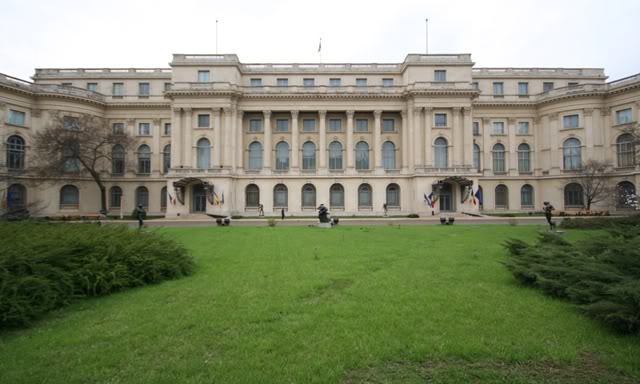
From 1859 to 1877, Romania evolved from a personal union of two vassal principalities (Moldavia and Wallachia) under a single prince to a full-fledged independent kingdom with a Hohenzollern monarchy. In 1918, at the end of World War I, Transylvania, Eastern Moldavia (Bessarabia), and Bukovina united with the Kingdom of Romania, resulting in a “Greater Romania”. In 1940, Bessarabia, Northern Bukowina, Northern Transylvania and Southern Dobruja were ceded to the Soviet Union, Hungary and Bulgaria respectively, only Northern Transylvania being recovered after World War II ended. In 1947 the last king was compelled to abdicate and a republic ruled by the Romanian Communist Party replaced the monarchy.
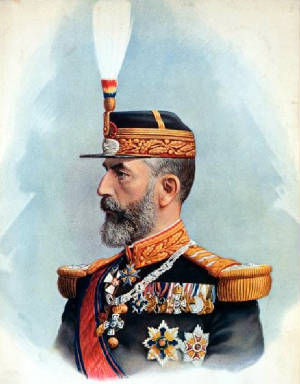
The Kings of Romania
King of the Romanians (in Romanian: Regele Românilor), rather than King of Romania (in Romanian: Regele României), was the official title of the ruler of the Kingdom of Romania from 1881 until 1947, when Romania was proclaimed a republic. The state had been called the Principality of Romania (in French “Roumanie”) since 1862, after the Ottoman vassal states of Wallachia and Moldavia had been united in 1859 under Alexandru Ioan Cuza as Prince of Romania, or Domnitor. Cuza had become the prince of the separate principalities in 1859. He was deposed in 1866 by an ad hoc coalition of the main political parties, which then officially offered the throne of the United Principalities to the German Prince of the Royal family, Carol (Charles) of Hohenzollern-Sigmaringen, to become the new Prince of Romania.
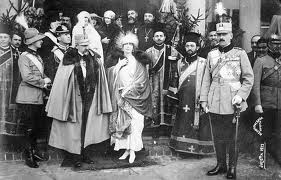
Romania’s independence from the Ottoman Empire was recognized in 1878 at the Congress of Berlin; the principality became a sovereign kingdom in 1881, with Prince Carol as King Carol I of Romania. Romania was a constitutional monarchy for most of its existence as a kingdom with the exception of 1938-1944, during the dictatorships of Carol II (1938-1940) and of Marshal Ion Antonescu (1940-1944). On 23 August 1944, King Michael restored the last democratic royal Constitution of 1923. However, during his second reign (1940-1947), King Michael reigned as an unconstitutional king, without an oath on the Constitution and without a vote of the Parliament, initially suspended and reinstated only later, in 1946. Michael was instead crowned and anointed King by the Orthodox Patriarch of Romania, Nicodim Munteanu, in the Patriarchal Cathedral of Bucharest, on the very day of his second accession, 6 September 1940. Michael, thus, reigned the second time as an absolute, unconstitutional King, solely “by the Grace of God”, that is by divine right. However, legally, Michael could not exercise much authority besides some prerogatives such as being the Supreme Head of the Army and designating a plenipotentiary Prime-Minister (“Conducător”).
In 1927, King Ferdinand died, and the country was left in the care of Michael despite Carol II being his father. Carol II, unlike King Carol I, in the beginning had no desire to rule Romania, and was frequently out of the country exploring the rest of Europe with his mistress. Michael’s first term of reign would be short lived at a span of only three years, until his father Carol II came back to contest the title at the behest of a dissatisfied political faction that staged a sudden ‘coup d’état’ (in spite of the fact that only a few years earlier he had renounced in official documents, written and signed in front of his own father, all his future claims to the throne of Romania). After a ten years rule, King Carol II gave up his royal title and all accoutrements attached in order to be able to leave Romania and marry his mistress Elena Lupescu. The couple ultimately settled in Portugal, and the ‘playboy king’ was never recalled back to Romania.
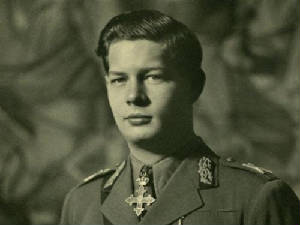
In August 1944, with the Soviet troops already deep inside Romania’s territory, King Michael deposed the Nazi-allied dictator Ion Antonescu at the urge of the opposition parties, and aligned the country with the Allied forces. Helped by the presence of Soviet forces, Communist gradually took control of the administration. In December 1947 King Michael abdicated and left Romania at the request of the Communist-dominated government, while the Parliament proclaimed the country a republic. After the Revolution of 1989, the former King Michael visited Romania to an enthusiastic reception of a large crowd in the streets of Bucharest, however the country preserved its republican character.
| Picture | Name | Monarch from | Monarch until | |
|---|---|---|---|---|
| 1 | Carol I of Romania | 26 March [O.S. 14 March] 1881 | 10 October [O.S. 27 September] 1914 | |
| 2 | Ferdinand of Romania | 10 October [O.S. 27 September] 1914 | 20 July 1927 | |
| 3 | Michael (1st reign) | 20 July 1927 | 8 June 1930 | |
| 4 | Carol II | 8 June 1930 | 6 September 1940 | |
| (3) | Michael (2nd reign) | 6 September 1940 | 30 December 1947 |
The House of Hohenzollern is a noble family and royal dynasty of electors, kings and emperors of Prussia, Germany and Romania. It originated in the area around the town of Hechingen in Swabia during the 11th century. They took their name from their ancestral home, the Burg Hohenzollern castle near Hechingen. The family uses the motto Nihil Sine Deo (English: Nothing Without God). The family coat of arms, first adopted in 1192, began as a simple shield quarterly sable and argent. A century later, in 1317, Frederick IV, Burgrave of Nuremberg, added the head and shoulders of a hound as a crest. Later quartering reflected heiresses’ marriages into the family.
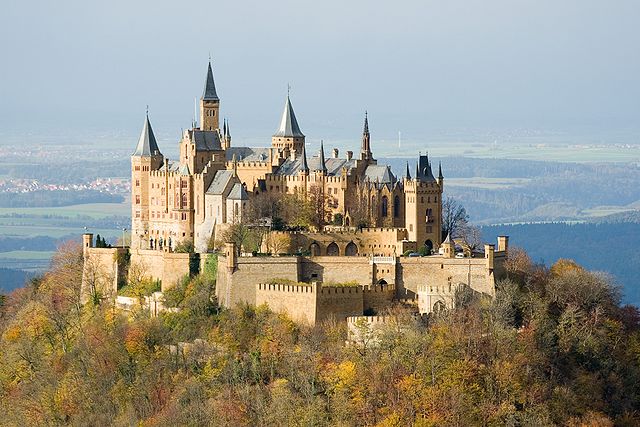
The family split into two branches, the Catholic Swabian branch and the Protestant Franconian branch, known also as the Kirschner line. The Swabian branch ruled the area of Hechingen until their eventual extinction in 1869. The Franconian-Kirschner branch was more successful: members of the Franconian branch became Margrave of Brandenburg in 1415 and Duke of Prussia in 1525. Following the union of these two Franconian lines in 1618, the Kingdom of Prussia was created in 1701, eventually leading to the unification of Germany and the creation of the German Empire in 1871. Social unrest at the end of World War I led to the German Revolution of 1918, with the formation of the Weimar Republic forcing the Hohenzollerns to abdicate, thus bringing an end to the modern German monarchy. The Treaty of Versailles in 1919 set the final terms for the dismantling of the German Empire.
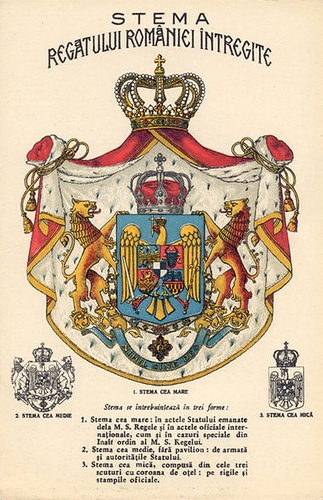
The Royal Family Titles and Styles
The members of this family bear the title Prince or Princess of Romania together with the formal appellation of His or Her Royal Highness. They are entitled to titles as members of the House of Hohenzollern, though King Michael has recently announced that he and his family have relinquished these German titles and names.

The Genealogy of the Royal House of Romania
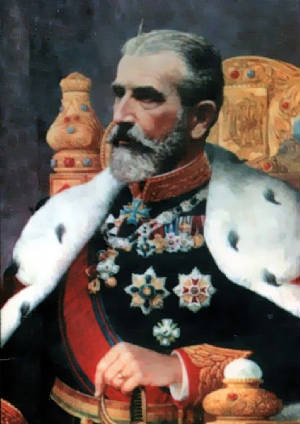
Karl Eitel Friedrich Zephyrinus Ludwig Pr von Hohenzollern-Sigmaringen (Sigmaringen 20 Apr 1839-Pelesch Castle, Sinaia 10 Oct 1914; see Hohenzollern) was elected Prince of Romania 20 Apr 1866, and proclaimed King CAROL I of Romania 26 Mar 1881; he m.at Neuwied 15 Nov 1869 Elisabeth Pss zu Wied (Neuwied 29 Dec 1843-Curtea de Arges 3 Mar 1916)
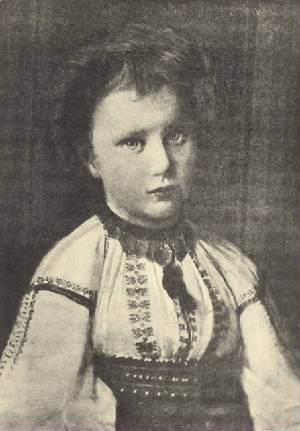
1a) Marie (Bucharest 8 Sep 1870-Pelesch Castle 9 Apr 1874)
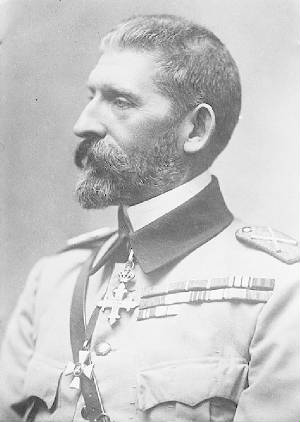
Ferdinand Viktor Albert Meinrad Pr von Hohenzollern (Sigmaringen 24 Aug 1865-Sinaia 20 Jul 1927; see Hohenzollern) succeeded his uncle, King Carol I on his death without issue 10 Oct 1914, as King FERDINAND of Romania; he m. at Sigmaringen 10 Jan 1893 Marie Pss of Great Britain and Ireland, Pss of Saxe-Coburg-Gotha, etc (Eastwell Park 29 Oct 1875-Pelesch Castle 10 Jul 1938)
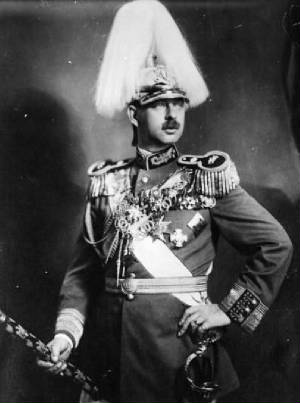
1a) CAROL II, King of Romania, renounced his rights 28 Dec 1925 but reneged on the renunciation and was proclaimed King 8 Jun 1930, then abdicated again 6 Sep 1940 (Castle Pelesch 16 [or 15] Oct 1893-Estoril 4 Apr 1953); m.1st Odessa 31 Aug 1918 (annulled 1919) Joanna Marie Valentina “Zizi” Lambrino (Roman, Romania 3 Oct 1898-Paris 11 Mar 1953); m.2d Athens 10 Mar 1921 (div 1928) Helen Pss of Greece and Denmark (Athens 3 May 1896-Lausanne 28 Nov 1982); m.3d Rio de Janeiro 3 Jun 1947 Elena Lupescu (Hertza, Moldavia 15 Sep 1899-Estoril 29 Jun 1977)
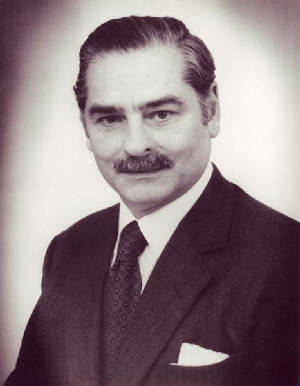
1b) Prince Mircea Gregor Carol of Romania (Bucharest 9 Jan 1920-London 27 Jan 2006); m.1st Paris 22 Mar 1948 (div 1958) Helene Navagatzine (b. Paris 26 May 1925); m.2d Paris 20 Dec 1960 (div 1977) Thelma Williams (Nashville, Tennessee 15 Nov 1930-Rutland, Vermont 5 Jun 1988); m.3d Fulham Town Hall 27 Jun 1984 Antonia Colville (Bracken, Church Crookham, Hants, 29 May 1939-13 Jun 2007)
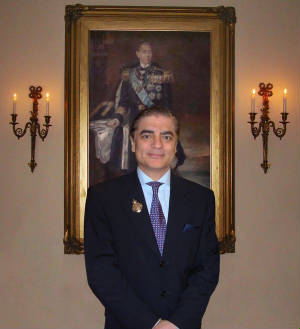
1c) Prince Paul Philip of Romania (b. Paris 13 Aug 1948); m. Bucharest 15 Sep 1996 Lia Georgia Triff (b. Great Lakes, Illinois 23 Feb 1949)
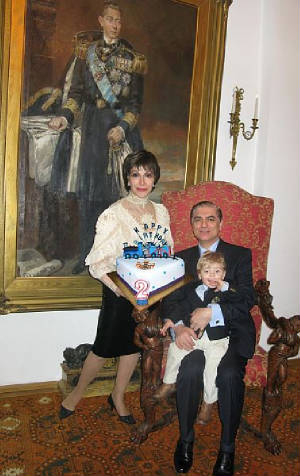
1d) Prince Carol Ferdinand of Romania (b. Bucharest 11 Jan 2010)
2c) Prince Ion George Nicholas Alexander of Romania (b. Poole, Dorset 1 Sep 1961)
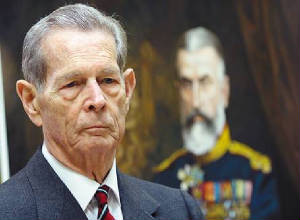
2b) MICHAEL, King of Romania 20 Jul 1927-8 Jun 1930 and again 6 Sep 1940, abdicated 30 Dec 1947 (b. Castle Pelesch 25 Oct 1921); m. Athens 10 Jun 1948 Anne Pss of Bourbon-Parma (b. Paris 18 Sep 1923)
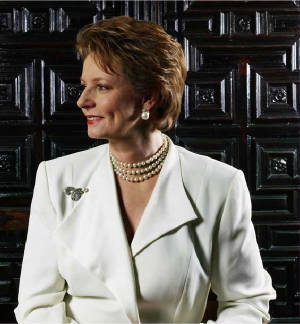
1c) Margarita (b. Lausanne 26 Mar 1949); m. Lausanne 21 Sep 1996 Radu Duda, cr 1 Jan 1999 Prinz von Hohenzollern-Veringen (b. Iasi, Romania 7 Jun 1960)
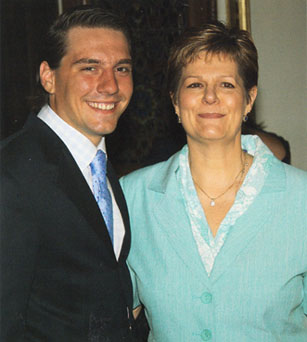
2c) Elena (b. Lausanne 15 Nov 1950); m.1st Lausanne 24 Sep 1983 (div 1991) Robin Medforth-Mills (Sproatley, Yorks 8 Dec 1942-Geneva 2 Feb 2002); m.2d Peterlee, co. Durham 14 Aug 1998 Alexander Phillips Nixon McAteer (b. Easington, co. Durham 22 Oct 1964)
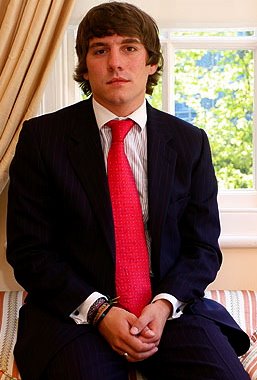
1d) Nicholas Michael de Roumanie-Medforth-Mills, [by rules instituted by King Michael in 2007, he became on 25th birthday] Prince of Romania, Royal Highness (b. Geneva 1 Apr 1985)
2d) Elizabeth Karina de Roumanie-Medforth-Mills (b. Newcastle-upon-Tyne 4 Jan 1989)
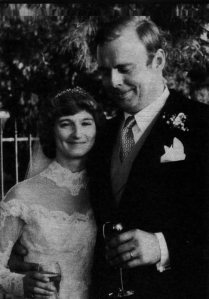
3c) Irina (b. Lausanne 28 Feb 1953); m.1st Lausanne 10 Dec 1983 John Kreuger (b. Solna, Sweden 3 Aug 1945); m.1st Lausanne 10 Dec 1983 (div 2003) John Kreuger (b. Solna, Sweden 3 Aug 1945); m.2nd Reno 2 Nov 2007 John Wesley Walker (b. Douglas, Missouri 30 Dec 1945)
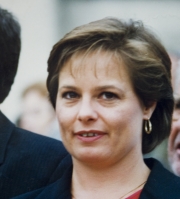
4c) Sophia (b. Tatoi, Greece 28 Oct 1957); m. Neuilly 29 Aug 1998 Alain Michel Léonce Biarneix de Laufenborg (b. Nancy 10 Jul 1957)
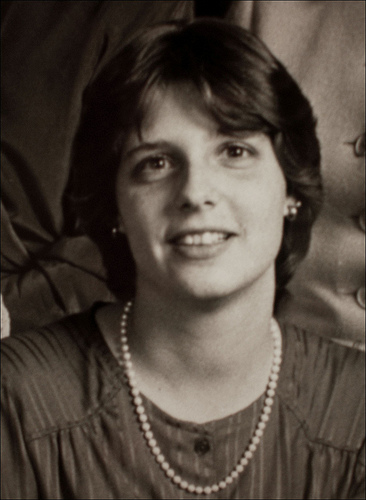
5c) Maria (b. Hellerup, Denmark 13 Jul 1964); m. New York 16 Sep 1995 Casimir Mystkowski (b. Las-Poczylowo, Poland 13 Sep 1958)
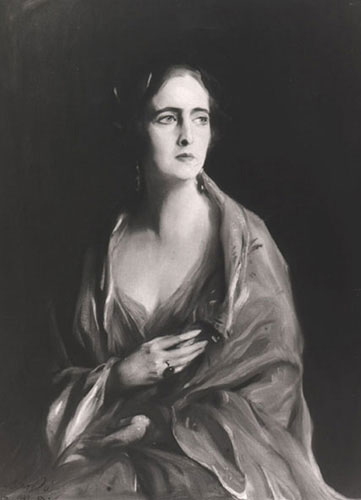
2a) Elisabeth (Castle Pelesch 12 Oct 1894-Cannes 15 Nov 1956); m. Bucharest 27 Feb 1921 (div 1935) King George II of the Hellenes (Tatoi 19 Jul 1890-Athens 1 Apr 1947)
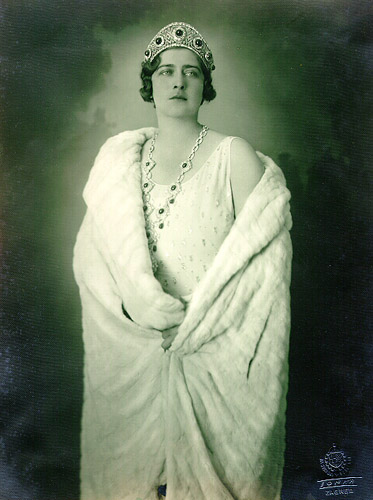
3a) Marie (Gotha 9 Jan 1900-London 22 Jun 1961); m. Belgrade 8 Jun 1922 King Alexander of Yugoslavia (Cetinje 4 Dec 1888-assassinated at Marseilles 9 Oct 1934)
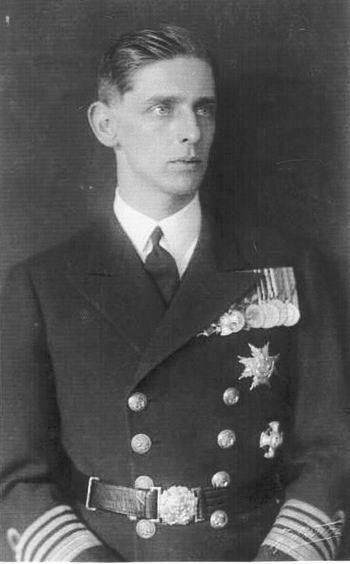
4a) Nicholas, assumed title Pr von Hohenzollern (Castle Pelesch 18 Aug 1903-Madrid 9 Jul 1978); m.1st Tohani, Romania, 7 Nov 1931 Joanna Dumitrescu-Doletti (Bucharest 24 Sep 1909 [other dates of birth have been named in various sources]-Lausanne 19 Feb 1963); m.2d Lausanne 13 Jul 1967 Thereza Lisboa Figueria de Mello (Rome 10 Jun 1913-Madrid 30 Mar 1997)
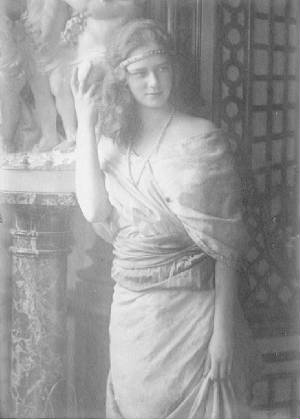
5a) Ileana (Bucharest 5 Jan 1909-Youngstown, Ohio 21 Jan 1991); m.1st Sinaia 26 Jul 1931 (div 1954) Anton, Archduke of Austria (Vienna 20 Mar 1901-Salzburg 22 Oct 1987); m.2d Newton, Massachusetts 20 Jun 1954 (div 1965) Stefan Issarescu (Turnu-Severin 5 Oct 1906-Providence 21 Dec 2002)
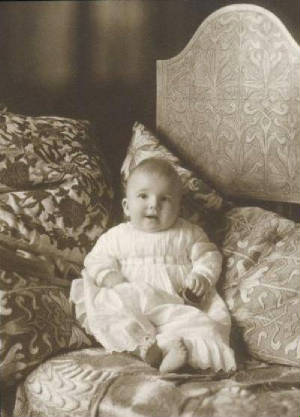
6a) Mircea (Bucharest 3 Jan 1913-Buftea 2 Nov 1916)