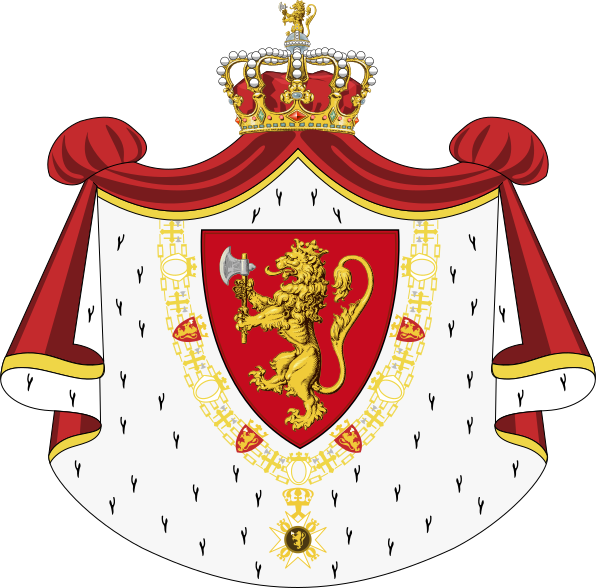
Reigning House

Kingdom of Norway – House of Oldenburg

Kingdom of Norway – House of Oldenburg

Jurisdiction
Norway
Dynasty
House of Oldenburg
Entry type
House
Editorial status
Reviewed - Verified
Royal Arms of Norway.svg

Kongeriket Norge – Kongeriket Noreg

House of Oldenburg Norway, officially the Kingdom of Norway, is a Nordic unitary constitutional monarchy whose territory comprises the western portion of the Scandinavian Peninsula, Jan Mayen, the Arctic archipelago of Svalbard and the subantarctic Bouvet Island. Norway has a total area of 385,252 square kilometres (148,747 sq mi) and a population of about 5 million. It is the second least densely populated country in Europe. The majority of the country shares a border to the east with Sweden; its northernmost region is bordered by Finland to the south and Russia to the east; in its south Norway borders the Skagerrak Strait across from Denmark. The capital city of Norway is Oslo. Norway’s extensive coastline, facing the North Atlantic Ocean and the Barents Sea, is home to its famous fjords.
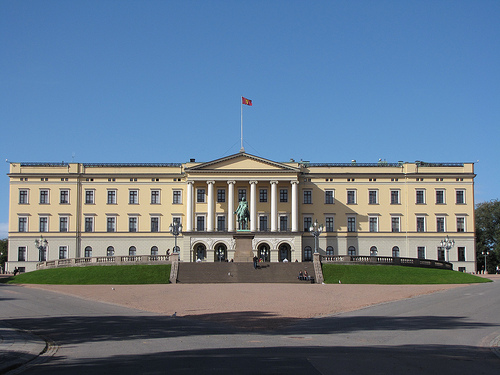
royal-palace-norway-oslo.jpg

Two centuries of Viking raids tapered off following the adoption of Christianity by King Olav Tryggvason in 994. A period of civil war ended in the 13th century when Norway expanded its control overseas to parts of the British Isles, Iceland, and Greenland. Norwegian territorial power peaked in 1265, but competition from the Hanseatic League and the spread of the Black Death weakened the country. In 1380, Norway was absorbed into a union with Denmark that lasted more than four centuries. In 1814, Norwegians resisted the cession of their country to Sweden and adopted a new constitution. Sweden then invaded Norway but agreed to let Norway keep its constitution in return for accepting the union under a Swedish king. Rising nationalism throughout the 19th century led to a 1905 referendum granting Norway independence. Although Norway remained neutral in World War I, it suffered heavy losses to its shipping. Norway proclaimed its neutrality at the outset of World War II, but was nonetheless occupied for five years by the Third Reich. In 1949, neutrality was abandoned and Norway became a founding member of NATO. Discovery of oil and gas in adjacent waters in the late 1960s boosted Norway’s economic fortunes. In referenda held in 1972 and 1994, Norway rejected joining the EU. Key domestic issues include immigration and integration of ethnic minorities, maintaining the country’s extensive social safety net with an aging population, and preserving economic competitiveness.
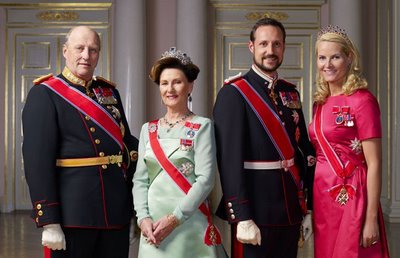
Royal-family-Norway.jpg

Norway is a unitary parliamentary democracy and constitutional monarchy, with King Harald V as its head of state. It is a unitary state with administrative subdivisions on two levels known as counties (fylke) and municipalities (kommuner). The Sámi people have a certain amount of self-determination and influence over traditional territories through the Sámi Parliament and the Finnmark Act. Although having rejected European Union membership in two referenda, Norway maintains close ties with the union and its member countries, as well as with the United States. Norway remains one of the biggest financial contributors to the United Nations, and participates with UN forces in international missions, notably in Afghanistan, Kosovo, Sudan and Libya. Norway is a founding member of the United Nations, NATO, the Council of Europe, and the Nordic Council; a member of the European Economic Area, the WTO, and the OECD; and is also a part of Schengen Area.
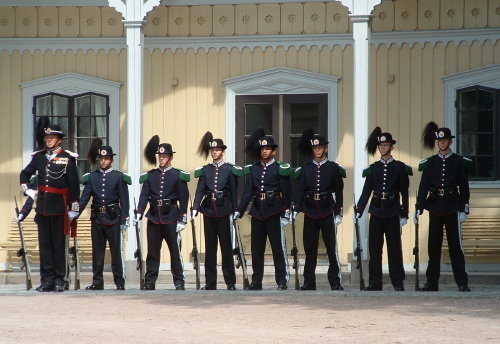
royal-guard-norway.jpg

Norway has extensive reserves of petroleum, natural gas, minerals, lumber, seafood, fresh water, and hydropower. The country has the fourth-highest per capita income in the world. On a per-capita basis, it is the world’s largest producer of oil and natural gas outside the Middle East, and the petroleum industry accounts for around a quarter of the country’s gross domestic product. The country maintains a Nordic welfare model with universal health care, subsidized higher education, and a comprehensive social security system. From 2001 to 2006, and then again from 2009 through 2011, Norway has had the highest human development index ranking in the world. In 2011, Norway also ranked the highest on the Democracy Index.
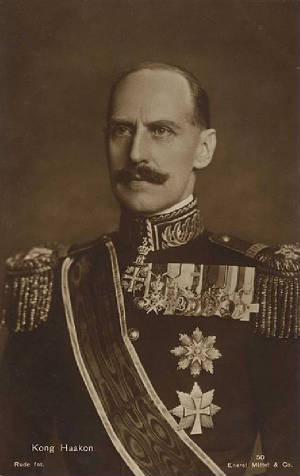
Haakon_VII.jpg

List of Norwegian Monarchs – 1450-Present

P Name Portrait Birth Marriages Death References
DS Christian I 2 August 1450- 21 May 1481 February 1426 Oldenburg eldest son of Dietrich, Count of Oldenburg and Helvig of Schauenburg Dorothea of Brandenburg 28 October 1449 Church of Our Lady five children 21 May 1481 Copenhagen Castle aged 55
R Interregnum (1481-1483) Jon Svaleson Smør as regent
DS John 20 July 1483- 20 February 1513 2 February 1455 Aalborghus Castle third son of Christian I and Dorothea of Brandenburg Christina of Saxony 6 September 1478 Copenhagen five children 20 February 1513 Aalborghus Castle aged 58
DS Christian II 22 July 1513-1523 (deposed) 1 July 1481 Nyborg Castle second son of John and Christina of Saxony Isabella of Austria 12 August 1515 Copenhagen six children 25 January 1559 Kalundborg Castle aged 77
D
D Frederick I 1523-1533 7 October 1471 Haderslevhus Castle fourth son of Christian I and Dorothea of Brandenburg (1) Anna of Brandenburg 10 April 1502 Stendal two children (2) Sophie of Pomerania 9 October 1518 Kiel Castle six children 10 April 1533 Gottorp Castle aged 61
R Interregnum (1533-1537) Olav Engelbrektsson as regent
D Christian III 1537- 1 January 1559 12 August 1503 Gottorp Castle only son of Frederick I and Anna of Brandenburg Dorothea of Saxe-Lauenburg 29 October 1525 Lauenburg Castle five children 1 January 1559 Koldinghus Castle aged 55
D Frederick II 1559-1588 1 July 1534 Haderslevhus Castle eldest son of Christian III and Dorothea of Saxe-Lauenburg Sophie of Mecklenburg-Güstrow 20 July 1572 Copenhagen eight children 4 April 1588 Antvorskov Castle aged 53
D Christian IV 4 April 1588- 28 February 1648 12 April 1577 Frederiksborg Palace eldest son of Frederick II and Sophie of Mecklenburg-Güstrow (1) Anne Catherine of Brandenburg 27 November 1597 Haderslevhus Castle seven children (2) Kirsten Munk 31 December 1615 Copenhagen twelve children 28 February 1648 Rosenborg Castle aged 70
D Frederick III 1 May 1648- 9 February 1670 18 March 1609 Haderslevhus Castle third son of Christian IV and Anne Catherine of Brandenburg Sophie Amalie of Brunswick-Lüneburg 1 October 1643 Glücksburg Castle eight children 9 February 1670 Copenhagen Castle aged 60
D Christian V 9 February 1670- 25 August 1699 15 April 1646 Duborg Castle eldest son of Frederick III and Sophie Amalie of Brunswick-Lüneburg Charlotte Amalie of Hesse-Kassel 25 June 1667 Nykøbing Castle eight children 25 August 1699 Copenhagen Castle aged 53
D Frederick IV 25 August 1699- 12 October 1730 11 October 1671 Copenhagen Castle eldest son of Christian V and Charlotte Amalie of Hesse-Kassel (1) Louise of Mecklenburg-Güstrow 5 December 1695 Copenhagen five children (2) Elisabeth Helene von Vieregg 6 September 1703 one son (3) Anne Sophie Reventlow 4 April 1721 Copenhagen three children 12 October 1730 Odense Palace aged 59
D Christian VI 12 October 1730- 6 August 1746 30 November 1699 Copenhagen Castle second son of Frederick IV and Louise of Mecklenburg-Güstrow Sophia Magdalene of Brandenburg-Kulmbach 7 August 1721 Pretzsch Castle three children 6 August 1746 Hirschholm Palace aged 46
D Frederick V 6 August 1746- 14 January 1766 31 March 1723 Copenhagen Castle only son of Christian VI and Sophia Magdalene of Brandenburg-Kulmbach (1) Louise of Great Britain 11 December 1743 Altona five children (2) Juliana Maria of Brunswick-Wolfenbüttel 8 July 1752 Frederiksborg Palace one son 14 January 1766 Christiansborg Palace aged 42
D Christian VII 14 January 1766- 13 March 1808 29 January 1749 Christiansborg Palace second son of Frederick V and Louise of Great Britain Caroline Matilda of Wales 8 November 1766 Christiansborg Palace two children 13 March 1808 Rendsburg aged 59
D Frederick VI 13 March 1808- 7 February 1814 (abdicated) 28 January 1768 Christiansborg Palace only son of Christian VII and Caroline Matilda of Wales Marie Sophie of Hesse-Kassel 31 July 1790 Gottorp Castle eight children 3 December 1839 Amalienborg Palace aged 70
I Christian Frederick 17 May 1814- 14 August 1814 (abdicated) 18 September 1786 Christiansborg Palace eldest son of Frederick, Hereditary Prince of Denmark and Norway and Sophia Frederica of Mecklenburg-Schwerin (1) Charlotte Frederica of Mecklenburg-Schwerin 21 June 1806 Ludwigslust Castle two sons (2) Caroline Amalie of Schleswig-Holstein-Sonderburg-Augustenburg 22 May 1815 Augustenborg Palace no issues 20 January 1848 Amalienborg Palace aged 61

House of Oldenburg – Line of Holstein-Gottorp

P Name Portrait Birth Marriages Death References
S Charles II 4 November 1814- 5 February 1818 7 October 1748 Stockholm Palace second son of Adolf Frederick of Sweden and Louisa Ulrika of Prussia Hedvig Elisabeth Charlotte of Holstein-Gottorp 7 July 1774 Stockholm Cathedral two children 5 February 1818 Stockholm Palace aged 69

House of Bernadotte

P Name Portrait Birth Marriages Death References
S Charles III John 5 February 1818- 8 March 1844 26 January 1763 Pau son of Jean Henri Bernadotte and Jeanne de Saint Vincent Désirée Clary 17 August 1798 Sceaux one son 8 March 1844 Stockholm Palace aged 81
S Oscar I 8 March 1844- 8 July 1859 4 July 1799 Paris only son of Charles III John and Désirée Clary Josephine of Leuchtenberg 19 June 1823 Stockholm Cathedral five children 8 July 1859 Stockholm Palace aged 60
S Charles IV 8 July 1859- 18 September 1872 3 May 1826 Stockholm Palace eldest son of Oscar I and Josephine of Leuchtenberg Louise of the Netherlands 19 June 1850 Stockholm Cathedral two children 18 September 1872 Malmö aged 46
S Oscar II 18 September 1872- 26 October 1905 21 January 1829 Stockholm Palace third son of Oscar I and Josephine of Leuchtenberg Sophia of Nassau 6 June 1857 Biebrich Palace four children 8 December 1907 Stockholm Palace aged 78

House of Oldenburg – Line of Schleswig-Holstein-Sonderburg-Glücksburg

P Name Portrait Birth Marriages Death References
I Haakon VII 18 November 1905- 21 September 1957 3 August 1872 Charlottenlund Palace second son of Frederick VIII of Denmark and Louise of Sweden Maud of Wales 22 July 1896 Buckingham Palace one son 21 September 1957 Royal Palace aged 85
I Olav V The People’s King 21 September 1957- 17 January 1991 2 July 1903 Sandringham House only son of Haakon VII and Maud of Wales Märtha of Sweden 21 March 1929 Oslo Cathedral three children 17 January 1991 Royal Lodge Kongsseteren aged 87
I Harald V 17 January 1991- present 21 February 1937 Skaugum only son of Olav V and Märtha of Sweden Sonja Haraldsen 29 August 1968 Oslo Cathedral two children Incumbent

House of Oldenburg

The House of Oldenburg is a North German dynasty and one of Europe’s most influential Royal Houses with branches that rule or have ruled in Denmark, Russia, Greece, Norway, Schleswig, Holstein, Oldenburg and Sweden. The current Queen of Denmark, the King of Norway and the ex-King of Greece as well as consorts of Spain, Greece and the United Kingdom belong to this House. It rose to prominence when Count Christian I of Oldenburg was elected King of Denmark in 1448, and of Norway in 1450. The house has occupied the Danish throne ever since. Marriages of medieval counts of Oldenburg had paved the way for their heirs to become kings of various Scandinavian kingdoms. Through marriage with a descendant of King Valdemar I of Sweden and of King Eric IV of Denmark, a claim to Sweden and Denmark was staked, since 1350.

Blason Grand-duché d'Oldenbourg (Grandes armes).svg
Source: Wikimedia Commons

At that time, its competitors were the successors of Margaret I of Denmark. In the 15th century, the Oldenburg heir of that claim married Hedwig of Schauenburg, a descendant of Euphemia of Sweden and Norway and also a descendant of Eric V of Denmark. Since descendants better situated in genealogical charts died out, their son Christian (the abovementioned) became the king of all three kingdoms of the whole Kalmar Union. The House of Mecklenburg was its chief competitor regarding the Northern thrones, and other aspirants included the Duke of Lauenburg. Different Oldenburgine branches have reigned in several countries. The House of Oldenburg was briefly poised to claim the thrones of England and Scotland through the marriage of the Stuart Princess Anne (later Queen) to Prince George of Denmark and Norway; however, following the early death of their only heir, Prince William, Duke of Gloucester, the line of succession passed to the House of Hanover.
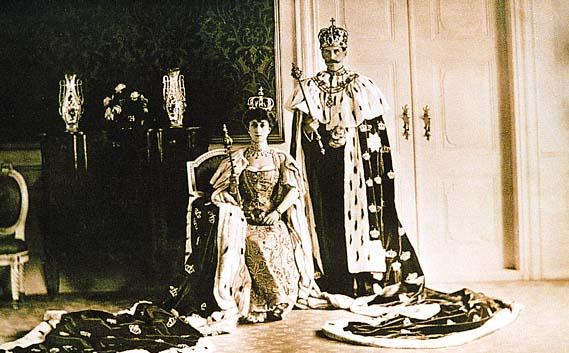
kingandqueenofnorway.JPG

The Family Titles and Styles

The members of this family bear the title Prince or Princess of Norway, together with the formal appellation of His or Her Royal Highness.

The Genealogy of the Royal House

Carl, Pr of Denmark (see Denmark), was b. Charlottenlund 3 Aug 1872; he was elected King of Norway 18 Nov 1905 and assumed the throne as King HAAKON VII; he d. Oslo 21 Sep 1957; he m. Buckingham Palace 22 Jul 1896 Maud Pss of Great Britain and Ireland, etc (Marlborough House 26 Nov 1869-London 20 Nov 1938)
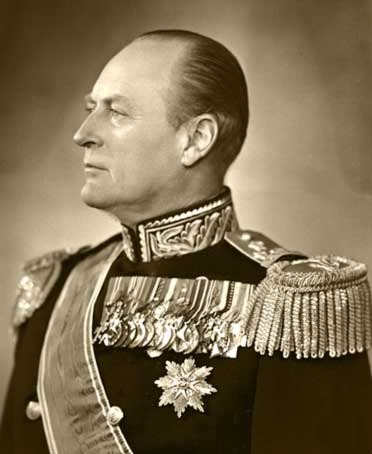
Olav_V_of_Norway.jpg

1a) OLAV V, King of Norway [born Alexander Edward Christian Frederik Pr of Denmark] (Appleton House, Sandringham, 2 Jul 1903-Kongsseteren, Oslo 17 Jan 1991); m. Oslo 21 Mar 1929 Märtha Pss of Sweden (Stockholm 28 Mar 1901-Oslo 5 Apr 1954)
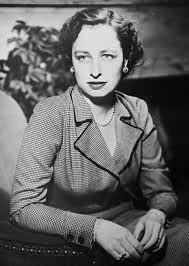
Princess-Ragnhild-norway.jpg

1b) Ragnhild Alexandra [currently bears the title Pss Ragnhild, Mrs. Lorentzen (Highness)] (b. Oslo 9 Jun 1930); m. Asker 15 May 1953 Erling Sven Lorentzen (b. Oslo 28 Jan 1923)
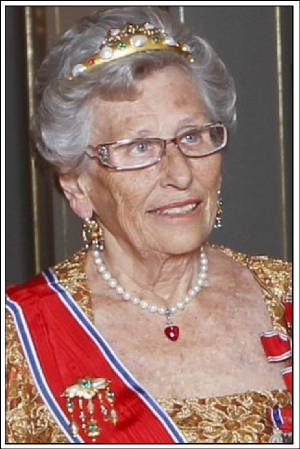
PrincessAstridofNorway.jpg

2b) Astrid Maud Ingeborg [currently bears the title Pss Astrid, Mrs. Ferner (Highness)] (b. Oslo 12 Feb 1932); m. Asker 12 Jan 1961 Johan Martin Ferner (b. Oslo 22 Jul 1927)
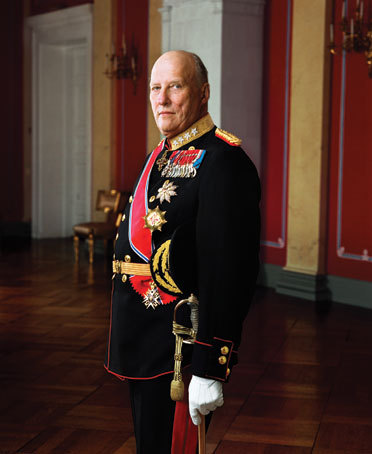
harald-v-king-of-norway.jpg

3b) HARALD, King of Norway (b. Skaugum 21 Feb 1937); m. Oslo 29 Aug 1968 Sonja Haraldsen (b. Oslo 4 Jul 1937)
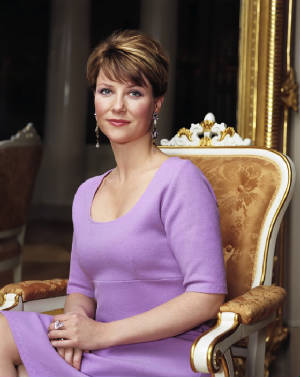
prinsess-Martha-Louise-of-norway.jpg

1c) Märtha Louise (b. Oslo 22 Sep 1971); m. Trondheim 24 May 2002 Ari Mikael Behn (b.Århus 30 Sep 1972)
MaudAngelicabehn.jpg

1d) Maud Angelica Behn (b. Oslo 29 Apr 2003)
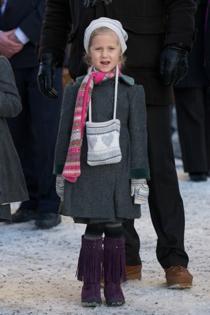
leah-behn.jpg

2d) Leah Isadora Behn (b. Bloksbjerg, Fredrikstad 8 Apr 2005)
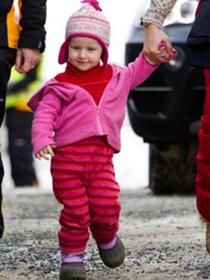
emma-behn.jpg

3d) Emma Tallulah Behn (b. Lommedalen 29 Sep 2008)
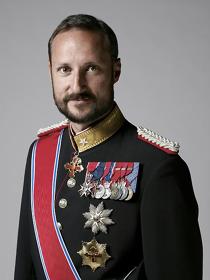
Crown-prince-haakon-of-norway.jpg

2c) Haakon Magnus, Crown Prince of Norway (b. Oslo 20 Jul 1973); m. Oslo 25 Aug 2001 Mette-Marit Tjessem Høiby (b. Kristiansand 19 Aug 1973)

princess-Ingrid-of-norway.jpg

1d) Ingrid Alexandra (b. Oslo 21 Jan 2004)

prince-Svere-magnus-of-norway.jpg

2d) Sverre Magnus (b. Oslo 3 Dec 2005)
We use cookies to personalise content and ads, to provide social media features and to analyse our traffic. We also share information about your use of our site with our social media, advertising and analytics partners. View more
Cookies settings
Accept
Decline
Privacy & Cookie policy
Privacy & Cookies policy
Cookie name Active

Privacy and Cookie Policy Last updated: 11 August 2026

Neue Gotha respects your privacy and is committed to handling personal data lawfully, fairly, and transparently. This Privacy and Cookie Policy explains who is responsible for personal data, what information we process, why we process it, how long we retain it, who may receive it, and the rights available to individuals under the General Data Protection Regulation (EU) 2016/679 (“GDPR”) and applicable national data-protection and electronic-communications law.

1. Who is responsible for your personal data?

The controller responsible for the processing described in this policy is:

  • Legal name: Neue Gotha Historical Register gUG
  • Trading or project name: Neue Gotha
  • Postal address: Musterstraße 12, 10115 Berlin, Germany
  • Email: editor@neuegotha.de
  • EU/EEA representative: Not applicable (the controller is established in Germany).
  • Data Protection Officer: No Data Protection Officer has been appointed. Privacy enquiries are handled through editor@neuegotha.de.

Questions about this policy or requests concerning personal data may be sent to the email or postal address above.

2. Scope of this policy

This policy applies to personal data processed through https://neuegotha.com, correspondence with the Neue Gotha editorial office, material submitted for editorial consideration, and editorial or archival records concerning identifiable living individuals.

It does not govern independent third-party websites or services linked from this website. Those providers are responsible for their own privacy practices.

3. Personal data we process and why

Processing activity Personal data Purpose Legal basis Retention
Website delivery, logging, and security IP address; date and time of access; requested page or file; referring page; browser, operating-system, and device information; error and security-event data Deliver the website, maintain availability, diagnose faults, prevent abuse, and protect the website and its users Article 6(1)(f) GDPR — our legitimate interests in operating a secure and reliable website. Where processing is required by law, Article 6(1)(c) GDPR may also apply. Routine access and error logs are retained for 14 days. Records isolated for investigation of a suspected security incident may be retained for up to 90 days after the incident is resolved, or longer where required for legal claims.
Editorial correspondence and enquiries Name, contact details, message content, correspondence history, and any documents or other information voluntarily provided Respond to enquiries, assess corrections or submissions, maintain editorial records, and protect legal rights Article 6(1)(f) GDPR — our legitimate interests in conducting editorial work and responding to correspondence; Article 6(1)(b) GDPR where processing is necessary to take steps at an individual’s request before entering into a contract; Article 6(1)(c) GDPR where retention or disclosure is legally required Correspondence is ordinarily retained for 24 months after the matter closes. Material required to document an editorial decision, resolve a dispute, meet a legal obligation, or establish, exercise, or defend a legal claim may be retained for the applicable limitation period.
Editorial, genealogical, and archival records Names; titles and styles; dates and places associated with public or genealogical events; family relationships; jurisdictions, offices, and public roles; images; biographical information; source and citation information; and correspondence relating to accuracy or provenance Research, document, preserve, verify, correct, and publish material concerning dynastic, genealogical, heraldic, and institutional history Article 6(1)(f) GDPR — our legitimate interests and those of readers, researchers, and institutions in maintaining an accurate historical and genealogical reference work, subject to a documented necessity and balancing assessment. Applicable national rules implementing Article 85 GDPR concerning freedom of expression and information may also apply. For as long as the information remains relevant to the legitimate editorial or archival purpose, subject to accuracy review, correction, restriction, erasure, and applicable archiving or legal requirements
Cookie-consent and language preferences Consent choice, language preference, cookie identifiers, and related technical information Remember privacy choices, demonstrate consent where required, and provide the language selected by the visitor Article 6(1)(f) GDPR for strictly necessary preference and consent-management functions; Article 6(1)(a) GDPR for optional storage, access, or associated processing based on consent As stated in the cookie table below
Optional external services IP address, page URL, device and browser information, language choice, and service-interaction data, depending on the provider Provide optional translation, embedded content, analytics, or similar features actually enabled on the website Article 6(1)(a) GDPR — consent. Non-essential services remain disabled until consent is given. As described for each service and by the relevant provider

We do not use personal data for solely automated decisions that produce legal effects or similarly significant effects concerning individuals.

4. Editorial and archival information obtained from other sources

Neue Gotha is an editorial and historical reference project. Some information in the register may concern identifiable living individuals and may not have been collected directly from those individuals.

Depending on the record, information may be obtained from official gazettes and public registers; archives and libraries; published books and scholarly works; institutional publications; reputable news sources; publicly accessible websites; submissions from the individual concerned or their authorised representative; family representatives; and other documented sources.

The categories of information may include the categories listed under “Editorial, genealogical, and archival records” above. The material may be made available to website visitors and may be indexed by search engines. Neue Gotha seeks to use relevant, proportionate, and appropriately sourced information and to distinguish documented fact from uncertainty or editorial interpretation.

Individuals may contact the editorial office to request access, correction, contextualisation, restriction, or erasure. Requests are assessed under the GDPR and applicable national law, taking into account accuracy, source integrity, the public interest, freedom of expression and information, archival considerations, and the rights and freedoms of other people. No provision of this policy removes a right granted by applicable law.

Neue Gotha does not intentionally publish special-category personal data or information concerning criminal convictions about living individuals unless a specific lawful basis and any additional legal condition have been identified and documented.

5. Cookies and similar technologies

Cookies are small text files stored on, or read from, a visitor’s device. Similar technologies may perform comparable functions. Some are strictly necessary for a website or a service expressly requested by the visitor. Others, including many analytics, advertising, social-media, translation, or embedded-content technologies, require prior consent under applicable EU electronic-communications rules.

Neue Gotha does not place or access non-essential cookies, or activate non-essential external services, before valid consent has been given. Visitors may accept or reject optional purposes separately and may withdraw consent at any time by selecting the permanently available “Cookie settings” control. Withdrawing consent does not affect processing that was lawful before withdrawal. Strictly necessary technologies cannot be disabled through the consent tool, but they may be controlled through browser settings where technically possible.

The following table reflects the technologies currently deployed on the website. It is updated whenever a plugin, host, analytics tool, embedded service, or cookie configuration changes.

Name Provider Purpose Category Duration Third-party access
_scc_session Neue Gotha / managed hosting and site-control provider Maintains a short-lived session for website security and site-control functions Strictly necessary Browser session The contracted hosting or site-control provider may access the identifier when providing technical support
_tccl_visit Neue Gotha / managed website-analytics provider Distinguishes a single website visit and reduces duplicate counting within the same session Analytics — disabled until consent 30 minutes Yes; the contracted analytics provider processes the identifier on Neue Gotha’s behalf
_tccl_visitor Neue Gotha / managed website-analytics provider Assigns a pseudonymous visitor identifier used to produce aggregated website-usage statistics Analytics — disabled until consent 12 months Yes; the contracted analytics provider processes the identifier on Neue Gotha’s behalf
googtrans Neue Gotha / Google Translate Stores or applies the visitor’s language selection for the translation feature Functional — disabled until consent 12 months Google may receive technical and service-interaction data when Google Translate is activated
ng_gt_default_applied Neue Gotha / website translation plugin Records whether the website’s default translation setting has been applied Functional — disabled until consent 24 hours No direct vendor access is assumed; Google may receive data if activation causes Google Translate to load
eu_cookies_bar_consent Neue Gotha / locally hosted EU Cookies Bar plugin Stores the visitor’s cookie choices and prevents the banner from being shown unnecessarily Strictly necessary 6 months No, provided the consent plugin remains locally hosted and does not transmit consent records to its developer
wordpress_test_cookie Neue Gotha / WordPress Checks whether the browser supports cookies when an authorised user visits the sign-in page Strictly necessary Browser session No; the cookie is processed by Neue Gotha and its contracted host

Authorised editorial users may receive WordPress authentication, security, or preference cookies when they sign in. wordpress_logged_in_[hash] maintains an authenticated session for up to two weeks when “Remember Me” is selected; wordpress_sec_[hash] protects administrative access for the session; and wp-settings-[user_id] stores an editor’s interface preferences for up to one year. These internal cookies are processed solely for editorial access and site administration.

6. Google Translate, web fonts, and other external content

Where enabled with the visitor’s consent, Neue Gotha may use Google Translate to provide machine-generated translations. Activating the service may cause the visitor’s browser to connect to Google and disclose technical information such as the IP address, requested page URL, browser or device information, and language or service-interaction data. Machine translations may contain errors and do not replace the original editorial text.

Website fonts are hosted locally by Neue Gotha and do not require a connection to Google. Google Translate remains an optional external service that is activated only after the visitor provides consent.

Information about Google’s processing is available in the Google Privacy Policy and Google’s explanation of how it uses information from sites and applications that use its services.

Embedded material from another website may allow that provider to process personal data as if the visitor had visited the provider directly. Non-essential embeds remain blocked until consent is obtained. Each enabled provider is identified in this policy and in the consent interface.

7. Recipients of personal data

Personal data may be disclosed only where necessary to:

  • hosting, content-delivery, backup, website-maintenance, email, security, and consent-management providers acting under contract;
  • translation, analytics, media, or other external-service providers selected by the visitor through the consent interface;
  • professional advisers, insurers, auditors, or other specialists where necessary to protect legal or operational interests;
  • courts, regulators, law-enforcement bodies, or public authorities where disclosure is required or permitted by law; and
  • the public and search engines where personal data form part of a lawfully published editorial or archival record.

8. International data transfers

Some service providers may process personal data outside the European Economic Area. Where the GDPR restricts such a transfer, Neue Gotha relies on an applicable European Commission adequacy decision or appropriate safeguards under Article 46 GDPR, such as the European Commission’s Standard Contractual Clauses, together with supplementary measures where required.

Cloudflare and Google may transfer limited technical information to recipients in the United States. Where the recipient is validly certified, the transfer is based on the European Commission’s adequacy decision for the EU–US Data Privacy Framework. Where that mechanism is unavailable or does not cover a transfer, the relevant provider’s European Commission Standard Contractual Clauses and supplementary technical and organisational measures are used. Information about the applicable safeguards, including how to obtain a copy, may be requested from editor@neuegotha.de.

9. How long we retain personal data

We retain personal data only for as long as necessary for the purposes described in this policy, including security, editorial integrity, source verification, dispute resolution, and compliance with legal obligations. The specific periods or criteria are stated in the processing and cookie tables above.

When a retention period ends, information is deleted or anonymised unless continued retention is required by law, is necessary for legal claims, or is justified by a documented editorial or archival purpose. Encrypted rolling backups are retained for 35 days and are then overwritten automatically, unless a backup has been isolated for incident recovery or a legal hold.

10. Security

Neue Gotha uses appropriate technical and organisational measures designed to protect personal data against accidental or unlawful destruction, loss, alteration, unauthorised disclosure, or access. No method of internet transmission or electronic storage is completely secure, and absolute security cannot be guaranteed.

11. Your data-protection rights

Subject to the conditions and limitations in the GDPR and applicable national law, an individual may have the right to:

  • obtain confirmation as to whether personal data concerning them are processed and request access to those data;
  • request correction of inaccurate or incomplete personal data;
  • request erasure of personal data;
  • request restriction of processing;
  • object, on grounds relating to their particular situation, to processing based on legitimate interests;
  • receive personal data they provided in a structured, commonly used, machine-readable format and transmit those data to another controller where the right to portability applies;
  • withdraw consent at any time, without affecting the lawfulness of processing carried out before withdrawal; and
  • lodge a complaint with a competent data-protection supervisory authority.

To exercise a right, contact editor@neuegotha.de. Please identify the information or record concerned and the nature of the request. We may request information reasonably necessary to verify identity and protect personal data from unauthorised disclosure. Requests are normally answered within one month, subject to any extension permitted by law.

Where a request concerns published editorial or archival content, applicable rights may be limited where necessary and proportionate to reconcile data protection with freedom of expression and information or other rights recognised by law. Each request will be assessed individually.

12. Complaints

We encourage individuals to contact us first so that we can try to resolve a concern. Individuals also have the right to complain to the supervisory authority in the EU or EEA country of their habitual residence, place of work, or the place of the alleged infringement.

For this Berlin-based controller the supervisory authority is the Berliner Beauftragte für Datenschutz und Informationsfreiheit, Alt-Moabit 59–61, 10555 Berlin, Germany; telephone +49 30 13889-0; email mailbox@datenschutz-berlin.de; website https://www.datenschutz-berlin.de/.

13. Children

The website is intended as a general historical and reference resource and is not directed specifically at children. We do not knowingly request personal data directly from children for an online service requiring parental consent. If you believe a child has provided personal data inappropriately, please contact us.

14. Changes to this policy

We may update this policy when our processing activities, service providers, technologies, or legal obligations change. The current version will be published on this page with a revised “Last updated” date. Where required, we will provide additional notice or request renewed consent before introducing a new processing purpose.

Decline All
Save settings Accept All
Cookies settings