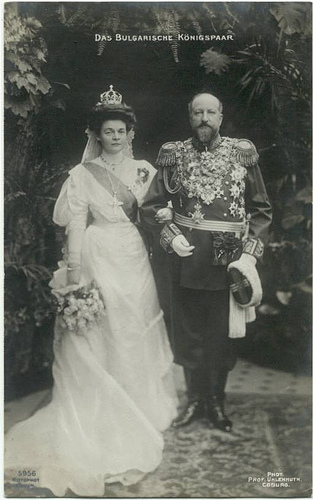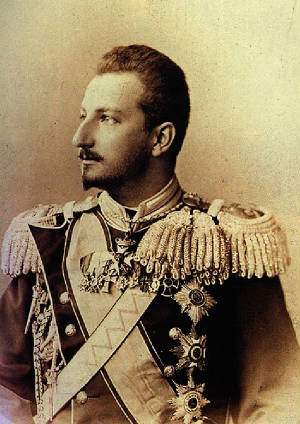
Formerly Sovereign House

Kingdom of Bulgaria – House of Wettin

Kingdom of Bulgaria – House of Wettin

Jurisdiction
Bulgaria
Dynasty
House of Wettin
Entry type
House
Editorial status
Reviewed - Verified

Царство България – Tsarstvo Balgariya

House of Wettin

The Kingdom of Bulgaria or the Tsardom of Bulgaria (Bulgarian: Царство България, Tsarstvo Balgariya; also called Third Bulgarian Tsardom to distinguish it from the First Bulgarian Tsardom and the Second Bulgarian Tsardom) was a constitutional monarchy, created on 22 September 1908 (old style), as а result of an elevation of the Bulgarian state to independendent kingdom from tributary principality. This move was taken by Ferdinand who was crowned a Tsar at the declaration of independence, mainly taken for military plans and more accurately for seeking options for unification of all lands in the Balkans populated with ethnic Bulgarian majority, seized from Bulgaria and given to the Ottoman Empire with the Treaty of Berlin.
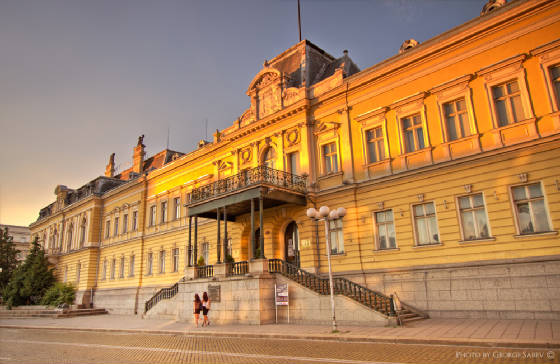
royalpalaceofbulgaria.jpg

The state itself was one of the most actively warring as a proportion of its existence for which was referred to as “the Balkan Prussia”, for several years Bulgaria mobilized army of more than 1 million people from its population of about 5 million and in the next decade (1910-20) it engaged in three wars – the First, the Second Balkan War and the First World War, but lost both the Balkan and the World War. After this the Bulgarian army was forbidden to exist by the winning side of the World War and was actually disbanded and all plans for national unification of the Bulgarian lands failed.
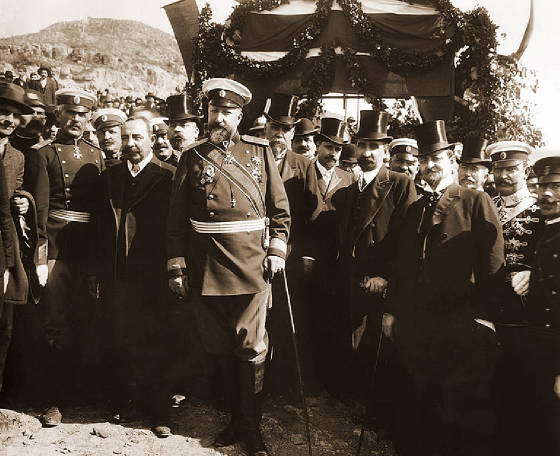
Tzar_Ferdinand_at_proclamation_of_Bulgarian-independence.jpg

After less than two decades Bulgaria was again warring for national unification in the Second World War, but was fighting again on the losing side, which was a fourth lost war. In 1946, the monarchy was abolished, its final Tsar was sent into exile and the Kingdom was replaced by a People’s Republic. Although rarely, it is sometimes referred to as the Third Bulgarian Empire, as in the Middle Ages the term Tsardom meant an Empire. However, the Third Bulgarian state was internationally recognized as a Kingdom.
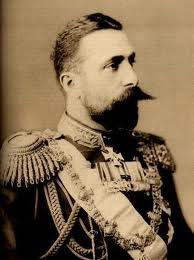
Alexander-Battenberg.jpg

Principality of Bulgaria

The Principality of Bulgaria (Bulgarian: Княжество България, Knyazhestvo Balgariya) was a constitutional monarchy, vassal of the Ottoman Empire, created at the Treaty of San Stefano on 3 March 1878 (old style) as a result of Russian victory in the Russo-Turkish War of 1877-78. The Тreaty of San Stefano between the Russian Empire and the Porte (the Ottoman government) had provided a significantly large Bulgarian territory, encompassing nearly all ethnic Bulgarians in the Balkans and including most of Moesia, Thrace and Macedonia, the coastline on both the Black Sea, and the Aegean Sea on the Mediterranean. The treaty was said to be preliminary and was pending for unavoidable revision by the Western great powers, the United Kingdom and Austria-Hungary feared the establishment of a large Russian client state in the Balkans which might have tipped influential balance on matters concerning the Mediterranean. As such, the great powers were not willing to accede and the revision of the great powers came in the same 1878 with the Treaty of Berlin, which took effect only 4 months later than 3 March.
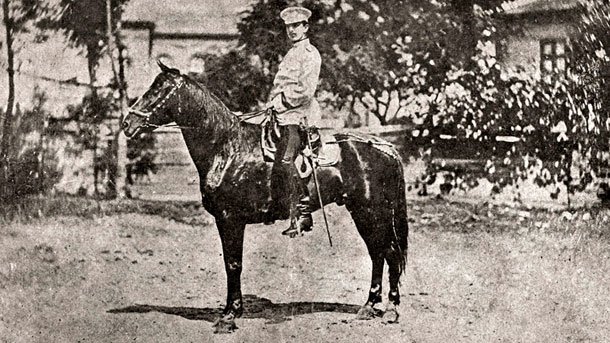
alexander-of-battenberg.jpg

The Treaty of Berlin ruined the Bulgarian principality and divided its territory into six parts: 1) the Principality of Bulgaria remaining only in Moesia, 2) an autonomous Ottoman province of Eastern Rumelia was created in the northern part of Thrace, 3) the southern part of Thrace was given to the Ottoman Empire, 4) Macedonia, the entire was given to the Ottoman Empire, 5 and 6) two more smaller parts were given to Serbia and Romania. By 1885, Eastern Rumelia succeeded to became again part of the principality after a bloodless revolution. Bulgaria’s de facto control of its principality and the surrounding region made it a successor of the Second Bulgarian Empire and the Bulgarian state after the Liberation from Ottoman rule is referred to as the Third Bulgarian State. The Principality of Bulgaria ended on 22 September 1908 (old style), when Bulgaria officially declared independence rejecting all sorts of Ottoman suzerainty and dependence, elevating the principality to Kingdom of Bulgaria.

Royal House of Bulgaria – Wettin

The current Bulgarian royal family is a line of the Kohary branch of the House of Saxe-Coburg and Gotha – Wettin, which ruled Bulgaria from 1887 to 1946. The House of Wettin is a dynasty of German counts, dukes, prince-electors (Kurfürsten) and kings that once ruled the area of today’s German states of Saxony, the Saxon part of Saxony-Anhalt, and Thuringia for more than 800 years as well as holding at times the kingship of Poland. Agnates of the House of Wettin have, at various times, ascended the thrones of Great Britain, Portugal, Bulgaria, Poland, Saxony, and Belgium; of these, only the British and Belgian lines retain their thrones today. The oldest member of the House of Wettin who is known for certain was Thiedericus (died 982), who was probably based in the Liesgau (located at the western edge of the Harz). Around 1000, as part of the German conquest of Slavic territory, the family acquired Wettin Castle, after which they named themselves.

wettin-castle-saale-river-saxony-anhalt.jpg

Wettin Castle is located in Wettin in the Hosgau on the Saale River. Around 1030, the Wettin family received the Eastern March as a fief. The prominence of the Wettin family in the Slavic marches caused Emperor Henry IV to invest them with the March of Meissen as a fief in 1089. The family advanced over the course of the Middle Ages: in 1263 they inherited the landgraviate of Thuringia (though without Hesse), and in 1423 they were invested with the Duchy of Saxony, centred at Wittenberg, thus becoming one of the prince-electors of the Holy Roman Empire.
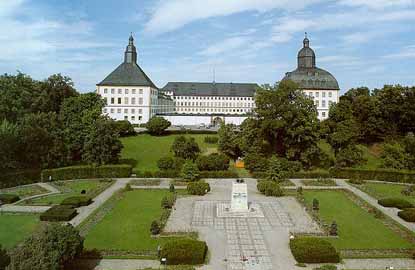
Gothapalace.jpg

The family divided into two ruling branches in 1485 when the sons of Frederick II, Elector of Saxony divided the territories hitherto ruled jointly. The elder son Ernest, who had succeeded his father as Prince-elector, received the territories assigned to the Elector (Electoral Saxony) and Thuringia, while his younger brother Albert obtained the March of Meissen, which he ruled from Dresden. As Albert ruled under the title of “Duke of Saxony”, his possessions were also known as Ducal Saxony.
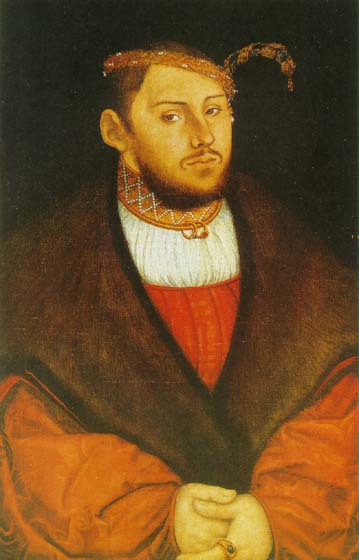
JohannFredSaxony.jpg

The older, Ernestine branch remained predominant until 1547 and played an important role in the beginnings of the Protestant Reformation. Their predominance ended in the Schmalkaldic War, which pitted the Protestant Schmalkaldic League against Emperor Charles V. Although itself Protestant, the Albertine branch rallied to the Empire’s cause; Charles V rewarded them by forcing the Ernestines to sign away their rights to the Electoral title and lands to the Albertines.
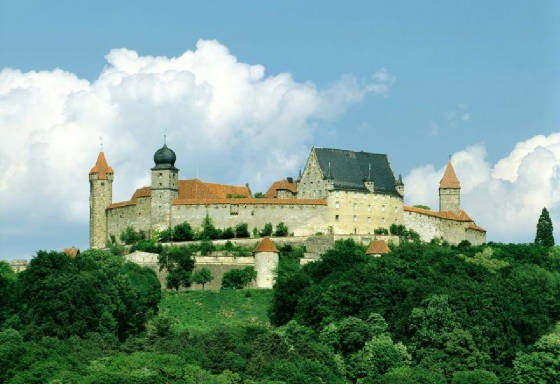
Coburg_castle.jpg

The Ernestine line was thereafter restricted to Thuringia, and its dynastic unity swiftly crumbled. The Albertine Wettin maintained most of the territorial integrity of Saxony, preserving it as a significant power in the region, and using small appanage fiefs for their cadet branches, few of which survived for significant lengths of time. The Ernestine Wettin, on the other hand, repeatedly subdivided their territory, creating an intricate patchwork of small duchies and counties in Thuringia.

dukeFriedrichofsaxe-coburg.jpg

The junior Albertine branch ruled as Electors (1547-1806) and Kings of Saxony (1806-1918) and also played a role in Polish history: two Wettin were Kings of Poland (between 1697-1763) and a third ruled the Duchy of Warsaw (1807-1814) as a satellite of Napoleon. After the Napoleonic Wars, the Albertine branch lost about 40% of its lands, including the old Electoral Saxony, to Prussia, restricting it to a territory coextensive with the modern Saxony.

Line of Succession to the Bulgarian Throne

The Bulgarian monarchy was abolished in 1946. The last reigning monarch was HM Tsar Simeon II of Bulgaria, who is now the currect head of the Bulgarian Royal Family. The law of succession of the family is agnatic primogeniture. Thus therefore, only males can succeed Simeon II, leading to the theoretical order of succession to the Bulgarian throne:

  1. HRH Kardam, Prince of Turnovo, Duke of Saxony(born 2 December 1962)
  2. HRH Prince Boris of Bulgaria, Duke of Saxony (born 10 October 1997)
  3. HRH Prince Beltran of Bulgaria, Duke of Saxony (born 23 March 1999)
  4. HRH Kyril, Prince of Preslav, Duke of Saxony (born 11 July 1964)
  5. HRH Prince Tassilo of Bulgaria, Duke of Saxony (born 20 January 2002)
  6. HRH Kubrat, Prince of Panagyurishte, Duke of Saxony (born 5 November 1965)
  7. HRH Prince Mirko of Bulgaria, Duke of Saxony (born 26 April 1995)
  8. HRH Prince Lukás of Bulgaria, Duke of Saxony (born 15 July 1997)
  9. HRH Prince Tirso of Bulgaria, Duke of Saxony (born 3 June 2002)
  10. HRH Konstantin-Assen, Prince of Vidin, Duke of Saxony (born 5 December 1967)
  11. HRH Prince Umberto of Bulgaria, Duke of Saxony (born 20 November 1999)

royalpicturebulgaria.jpg

Sovereigns of Bulgaria – 1878-1946

Principality of Bulgaria and Kingdom of Bulgaria – 1878-1946

House of Battenberg
Prince Alexander I 29 April 1879 – 7 September 1886 Resigned due to Russian pressure. Died on 23 October 1893 in Graz.
House of Wettin
Prince/King (Tsar) Ferdinand I 7 July 1887 – 3 October 1918 Became Tsar (internationally recognized as King) after the official proclamation of independence on 22 September 1908. Abdicated on 3 October 1918 after the defeat in World War I. Died on 10 September 1948 in Coburg.
King (Tsar) Boris III 3 October 1918 – 28 August 1943 Died on 28 August 1943 in unclear circumstances.
King (Tsar) Simeon II 28 August 1943 – 15 September 1946 Monarchy abolished by the Communists. He served as the 47th Prime Minister of Bulgaria between 24 July 2001 and 17 August 2005.
kingferdinandofbulgaria.jpg

Family Titles and Styles of the Royal House

The members of this family bear the titles Prince or Princess of Bulgaria, Duke or Duchess of Saxony, together with the formal appellation of His or Her Royal Highness.
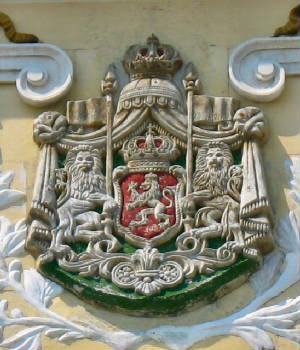
royalarmsofbulgaria.jpg

The Genealogy of The Royal House

Ferdinand_of_Bulgaria.jpg

FERDINAND Maximilian Karl Leopold Maria Pr of Saxe-Coburg-Gotha, b. Vienna 26 Feb 1861, d. Coburg 10 Sep 1948, was elected Prince of Bulgaria 7 Jul 1887 and proclaimed himself King (Tsar) of the Bulgarians 5 Oct 1908; he abdicated on 3 Oct 1918; he m.1st Villa Pianore 20 Apr 1893 Marie Louise Pss of Bourbon-Parma (Rome 17 Jan 1870-Sofia 31 Jan 1899); m.2d (Catholic) Coburg 28 Feb 1908 (Prot.) Schloß Osterstein 1 Mar 1908 Eleonore Pss Reuss (Trebschen 22 Aug 1860-Euxinograd 12 Sep 1917)
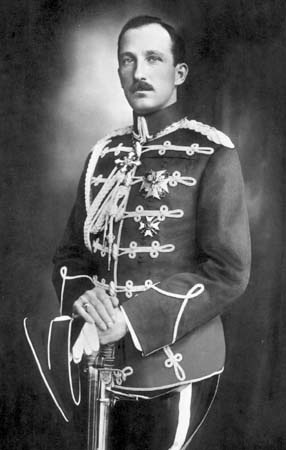
kingborisIIIofbulgaria.jpg

1a) BORIS III Klemens Robert Maria Pius Ludwig Stanislaus Xaver, King of the Bulgarians (Sofia 30 Jan 1894-Sofia 28 Aug 1943); m. Assisi 25 Oct 1930 Giovanna Pss of Savoy (Rome 13 Nov 1907-Estoril 26 Feb 2000)

PrincessMariaLouiseofBulgaria.jpg

1b) Maria Luisa, b. Sofia 13 Jan 1933; m.1st (civ) Amorbach 14 Feb 1957 (rel) Cannes 20 Feb 1957 (div 1968) Karl Pr zu Leiningen (Coburg 2 Jan 1928-Vered Hagalil, Israel 28 Sep 1990); m.2d Toronto, Ontario 16 Nov 1969 Bronislaw Chrobok (b. Kattowitz 27 Aug 1933)

simeon-II-of-Bulgaria.jpg

2b) SIMEON II, King of the Bulgarians from the death of his father until he was forced into exile in 1946; b. Sofia 16 Jun 1937; m.(civ) Lausanne 20 Jan 1962 (rel) Vevey 21 Jan 1962 Margarita Gómez-Acebo y Cejuela (b. Madrid 6 Jan 1935)
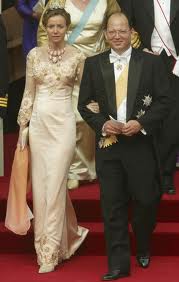
Kardamofbulgaria.jpg

1c) Kardam, Pr of Tirnovo, b. Madrid 2 Dec 1962; m. Madrid 11 Jul 1996 Miriam Ungria y López (b. Madrid 2 Sep 1963)

1d) Boris, b. Madrid 10 Oct 1997

2d) Beltran, b. Madrid 23 Mar 1999

kyrilofbulgaria.jpg

2c) Kyrill, Pr of Preslav, b. Madrid 11 Jul 1964; m. Palma de Mallorca 15 Sep 1989 Rosario Nadal y Fuster-Puigdorfila (b. Palma de Mallorca 22 Oct 1968)

1d) Mafalda-Cecilia Preslavska, b. London 27 Jul 1994

2d) Olimpia Preslavska, b. London 13 Dec 1995

3d) Tassilo, b.20 Jan 2002

Kubratofbulgaria.jpg

3c) Kubrat, Pr of Panagjuriste, b. Madrid 5 Nov 1965; m. Madrid 2 Jul 1993 Carla-Maria Royo-Villanova y Urrestarazu (b. Madrid 3 Jan 1969)

1d) Mirko Panagjurski, b. Madrid 26 Apr 1995

2d) Lucas Panagjurski, b. Madrid 15 Jul 1997

3d) Tirso, b. Madrid 3 Jun 2002

Konstantin-Assenofbulgaria.jpg

4c) Konstantin-Assen, Pr of Vidin, b. Madrid 5 Dec 1967; m. Madrid 7 Jul 1994 Maria Garcia de la Rasilla y Gortazar (b. Madrid 13 May 1970)

1d) Umberto, b.20 Nov 1999

2d) Sofia, b.20 Nov 1999

Kalinaofbulgaria.jpg

5c) Kalina, b. Madrid 19 Jan 1972; m. Borovets, Bulgaria 26 Oct 2002 Antonio Muñoz Valcárcel (b. Sidi Ifni, Morocco 19 Nov 1958)
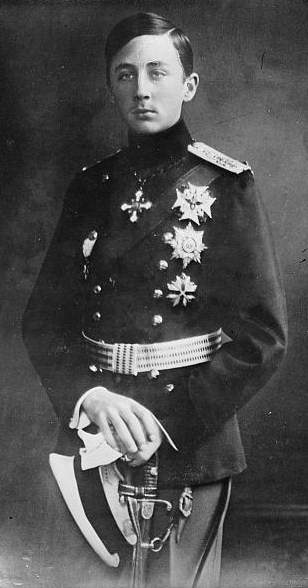
Cyril_of_Bulgaria.jpg

2a) Kyril Heinrich Franz Ludwig Anton Karl Philipp, Prince Regent 1943-4 (Sofia 17 Nov 1895-executed at Sofia 1 Feb 1945)
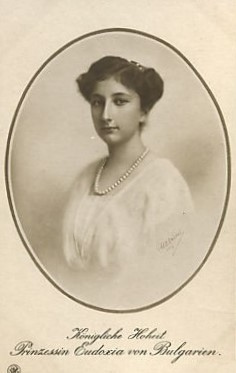
EudoxiaAugustaofbulgaria.jpg

3a) Eudoxia Augusta Philippine Clementine Maria (Sofia 17 Jan 1898-Friedrichshafen 4 Oct 1985)
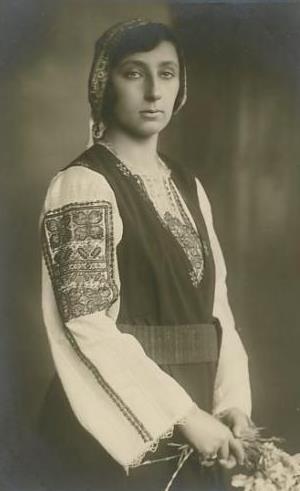
NadejdaClementineofbulgaria.jpg

4a) Nadejda Clementine Maria Pia Majella (Sofia 30 Jan 1899-Stuttgart 15 Feb 1958); m. Bad-Margentheim 24 Jan 1924 Albrecht Eugen Duke of Württemberg (Stuttgart 8 Jan 1895-Schwäbisch-Gmünd 24 Jun 1954)

We use cookies to personalise content and ads, to provide social media features and to analyse our traffic. We also share information about your use of our site with our social media, advertising and analytics partners. View more
Cookies settings
Accept
Decline
Privacy & Cookie policy
Privacy & Cookies policy
Cookie name Active

Privacy and Cookie Policy Last updated: 11 August 2026

Neue Gotha respects your privacy and is committed to handling personal data lawfully, fairly, and transparently. This Privacy and Cookie Policy explains who is responsible for personal data, what information we process, why we process it, how long we retain it, who may receive it, and the rights available to individuals under the General Data Protection Regulation (EU) 2016/679 (“GDPR”) and applicable national data-protection and electronic-communications law.

1. Who is responsible for your personal data?

The controller responsible for the processing described in this policy is:

  • Legal name: Neue Gotha Historical Register gUG
  • Trading or project name: Neue Gotha
  • Postal address: Musterstraße 12, 10115 Berlin, Germany
  • Email: editor@neuegotha.de
  • EU/EEA representative: Not applicable (the controller is established in Germany).
  • Data Protection Officer: No Data Protection Officer has been appointed. Privacy enquiries are handled through editor@neuegotha.de.

Questions about this policy or requests concerning personal data may be sent to the email or postal address above.

2. Scope of this policy

This policy applies to personal data processed through https://neuegotha.com, correspondence with the Neue Gotha editorial office, material submitted for editorial consideration, and editorial or archival records concerning identifiable living individuals.

It does not govern independent third-party websites or services linked from this website. Those providers are responsible for their own privacy practices.

3. Personal data we process and why

Processing activity Personal data Purpose Legal basis Retention
Website delivery, logging, and security IP address; date and time of access; requested page or file; referring page; browser, operating-system, and device information; error and security-event data Deliver the website, maintain availability, diagnose faults, prevent abuse, and protect the website and its users Article 6(1)(f) GDPR — our legitimate interests in operating a secure and reliable website. Where processing is required by law, Article 6(1)(c) GDPR may also apply. Routine access and error logs are retained for 14 days. Records isolated for investigation of a suspected security incident may be retained for up to 90 days after the incident is resolved, or longer where required for legal claims.
Editorial correspondence and enquiries Name, contact details, message content, correspondence history, and any documents or other information voluntarily provided Respond to enquiries, assess corrections or submissions, maintain editorial records, and protect legal rights Article 6(1)(f) GDPR — our legitimate interests in conducting editorial work and responding to correspondence; Article 6(1)(b) GDPR where processing is necessary to take steps at an individual’s request before entering into a contract; Article 6(1)(c) GDPR where retention or disclosure is legally required Correspondence is ordinarily retained for 24 months after the matter closes. Material required to document an editorial decision, resolve a dispute, meet a legal obligation, or establish, exercise, or defend a legal claim may be retained for the applicable limitation period.
Editorial, genealogical, and archival records Names; titles and styles; dates and places associated with public or genealogical events; family relationships; jurisdictions, offices, and public roles; images; biographical information; source and citation information; and correspondence relating to accuracy or provenance Research, document, preserve, verify, correct, and publish material concerning dynastic, genealogical, heraldic, and institutional history Article 6(1)(f) GDPR — our legitimate interests and those of readers, researchers, and institutions in maintaining an accurate historical and genealogical reference work, subject to a documented necessity and balancing assessment. Applicable national rules implementing Article 85 GDPR concerning freedom of expression and information may also apply. For as long as the information remains relevant to the legitimate editorial or archival purpose, subject to accuracy review, correction, restriction, erasure, and applicable archiving or legal requirements
Cookie-consent and language preferences Consent choice, language preference, cookie identifiers, and related technical information Remember privacy choices, demonstrate consent where required, and provide the language selected by the visitor Article 6(1)(f) GDPR for strictly necessary preference and consent-management functions; Article 6(1)(a) GDPR for optional storage, access, or associated processing based on consent As stated in the cookie table below
Optional external services IP address, page URL, device and browser information, language choice, and service-interaction data, depending on the provider Provide optional translation, embedded content, analytics, or similar features actually enabled on the website Article 6(1)(a) GDPR — consent. Non-essential services remain disabled until consent is given. As described for each service and by the relevant provider

We do not use personal data for solely automated decisions that produce legal effects or similarly significant effects concerning individuals.

4. Editorial and archival information obtained from other sources

Neue Gotha is an editorial and historical reference project. Some information in the register may concern identifiable living individuals and may not have been collected directly from those individuals.

Depending on the record, information may be obtained from official gazettes and public registers; archives and libraries; published books and scholarly works; institutional publications; reputable news sources; publicly accessible websites; submissions from the individual concerned or their authorised representative; family representatives; and other documented sources.

The categories of information may include the categories listed under “Editorial, genealogical, and archival records” above. The material may be made available to website visitors and may be indexed by search engines. Neue Gotha seeks to use relevant, proportionate, and appropriately sourced information and to distinguish documented fact from uncertainty or editorial interpretation.

Individuals may contact the editorial office to request access, correction, contextualisation, restriction, or erasure. Requests are assessed under the GDPR and applicable national law, taking into account accuracy, source integrity, the public interest, freedom of expression and information, archival considerations, and the rights and freedoms of other people. No provision of this policy removes a right granted by applicable law.

Neue Gotha does not intentionally publish special-category personal data or information concerning criminal convictions about living individuals unless a specific lawful basis and any additional legal condition have been identified and documented.

5. Cookies and similar technologies

Cookies are small text files stored on, or read from, a visitor’s device. Similar technologies may perform comparable functions. Some are strictly necessary for a website or a service expressly requested by the visitor. Others, including many analytics, advertising, social-media, translation, or embedded-content technologies, require prior consent under applicable EU electronic-communications rules.

Neue Gotha does not place or access non-essential cookies, or activate non-essential external services, before valid consent has been given. Visitors may accept or reject optional purposes separately and may withdraw consent at any time by selecting the permanently available “Cookie settings” control. Withdrawing consent does not affect processing that was lawful before withdrawal. Strictly necessary technologies cannot be disabled through the consent tool, but they may be controlled through browser settings where technically possible.

The following table reflects the technologies currently deployed on the website. It is updated whenever a plugin, host, analytics tool, embedded service, or cookie configuration changes.

Name Provider Purpose Category Duration Third-party access
_scc_session Neue Gotha / managed hosting and site-control provider Maintains a short-lived session for website security and site-control functions Strictly necessary Browser session The contracted hosting or site-control provider may access the identifier when providing technical support
_tccl_visit Neue Gotha / managed website-analytics provider Distinguishes a single website visit and reduces duplicate counting within the same session Analytics — disabled until consent 30 minutes Yes; the contracted analytics provider processes the identifier on Neue Gotha’s behalf
_tccl_visitor Neue Gotha / managed website-analytics provider Assigns a pseudonymous visitor identifier used to produce aggregated website-usage statistics Analytics — disabled until consent 12 months Yes; the contracted analytics provider processes the identifier on Neue Gotha’s behalf
googtrans Neue Gotha / Google Translate Stores or applies the visitor’s language selection for the translation feature Functional — disabled until consent 12 months Google may receive technical and service-interaction data when Google Translate is activated
ng_gt_default_applied Neue Gotha / website translation plugin Records whether the website’s default translation setting has been applied Functional — disabled until consent 24 hours No direct vendor access is assumed; Google may receive data if activation causes Google Translate to load
eu_cookies_bar_consent Neue Gotha / locally hosted EU Cookies Bar plugin Stores the visitor’s cookie choices and prevents the banner from being shown unnecessarily Strictly necessary 6 months No, provided the consent plugin remains locally hosted and does not transmit consent records to its developer
wordpress_test_cookie Neue Gotha / WordPress Checks whether the browser supports cookies when an authorised user visits the sign-in page Strictly necessary Browser session No; the cookie is processed by Neue Gotha and its contracted host

Authorised editorial users may receive WordPress authentication, security, or preference cookies when they sign in. wordpress_logged_in_[hash] maintains an authenticated session for up to two weeks when “Remember Me” is selected; wordpress_sec_[hash] protects administrative access for the session; and wp-settings-[user_id] stores an editor’s interface preferences for up to one year. These internal cookies are processed solely for editorial access and site administration.

6. Google Translate, web fonts, and other external content

Where enabled with the visitor’s consent, Neue Gotha may use Google Translate to provide machine-generated translations. Activating the service may cause the visitor’s browser to connect to Google and disclose technical information such as the IP address, requested page URL, browser or device information, and language or service-interaction data. Machine translations may contain errors and do not replace the original editorial text.

Website fonts are hosted locally by Neue Gotha and do not require a connection to Google. Google Translate remains an optional external service that is activated only after the visitor provides consent.

Information about Google’s processing is available in the Google Privacy Policy and Google’s explanation of how it uses information from sites and applications that use its services.

Embedded material from another website may allow that provider to process personal data as if the visitor had visited the provider directly. Non-essential embeds remain blocked until consent is obtained. Each enabled provider is identified in this policy and in the consent interface.

7. Recipients of personal data

Personal data may be disclosed only where necessary to:

  • hosting, content-delivery, backup, website-maintenance, email, security, and consent-management providers acting under contract;
  • translation, analytics, media, or other external-service providers selected by the visitor through the consent interface;
  • professional advisers, insurers, auditors, or other specialists where necessary to protect legal or operational interests;
  • courts, regulators, law-enforcement bodies, or public authorities where disclosure is required or permitted by law; and
  • the public and search engines where personal data form part of a lawfully published editorial or archival record.

8. International data transfers

Some service providers may process personal data outside the European Economic Area. Where the GDPR restricts such a transfer, Neue Gotha relies on an applicable European Commission adequacy decision or appropriate safeguards under Article 46 GDPR, such as the European Commission’s Standard Contractual Clauses, together with supplementary measures where required.

Cloudflare and Google may transfer limited technical information to recipients in the United States. Where the recipient is validly certified, the transfer is based on the European Commission’s adequacy decision for the EU–US Data Privacy Framework. Where that mechanism is unavailable or does not cover a transfer, the relevant provider’s European Commission Standard Contractual Clauses and supplementary technical and organisational measures are used. Information about the applicable safeguards, including how to obtain a copy, may be requested from editor@neuegotha.de.

9. How long we retain personal data

We retain personal data only for as long as necessary for the purposes described in this policy, including security, editorial integrity, source verification, dispute resolution, and compliance with legal obligations. The specific periods or criteria are stated in the processing and cookie tables above.

When a retention period ends, information is deleted or anonymised unless continued retention is required by law, is necessary for legal claims, or is justified by a documented editorial or archival purpose. Encrypted rolling backups are retained for 35 days and are then overwritten automatically, unless a backup has been isolated for incident recovery or a legal hold.

10. Security

Neue Gotha uses appropriate technical and organisational measures designed to protect personal data against accidental or unlawful destruction, loss, alteration, unauthorised disclosure, or access. No method of internet transmission or electronic storage is completely secure, and absolute security cannot be guaranteed.

11. Your data-protection rights

Subject to the conditions and limitations in the GDPR and applicable national law, an individual may have the right to:

  • obtain confirmation as to whether personal data concerning them are processed and request access to those data;
  • request correction of inaccurate or incomplete personal data;
  • request erasure of personal data;
  • request restriction of processing;
  • object, on grounds relating to their particular situation, to processing based on legitimate interests;
  • receive personal data they provided in a structured, commonly used, machine-readable format and transmit those data to another controller where the right to portability applies;
  • withdraw consent at any time, without affecting the lawfulness of processing carried out before withdrawal; and
  • lodge a complaint with a competent data-protection supervisory authority.

To exercise a right, contact editor@neuegotha.de. Please identify the information or record concerned and the nature of the request. We may request information reasonably necessary to verify identity and protect personal data from unauthorised disclosure. Requests are normally answered within one month, subject to any extension permitted by law.

Where a request concerns published editorial or archival content, applicable rights may be limited where necessary and proportionate to reconcile data protection with freedom of expression and information or other rights recognised by law. Each request will be assessed individually.

12. Complaints

We encourage individuals to contact us first so that we can try to resolve a concern. Individuals also have the right to complain to the supervisory authority in the EU or EEA country of their habitual residence, place of work, or the place of the alleged infringement.

For this Berlin-based controller the supervisory authority is the Berliner Beauftragte für Datenschutz und Informationsfreiheit, Alt-Moabit 59–61, 10555 Berlin, Germany; telephone +49 30 13889-0; email mailbox@datenschutz-berlin.de; website https://www.datenschutz-berlin.de/.

13. Children

The website is intended as a general historical and reference resource and is not directed specifically at children. We do not knowingly request personal data directly from children for an online service requiring parental consent. If you believe a child has provided personal data inappropriately, please contact us.

14. Changes to this policy

We may update this policy when our processing activities, service providers, technologies, or legal obligations change. The current version will be published on this page with a revised “Last updated” date. Where required, we will provide additional notice or request renewed consent before introducing a new processing purpose.

Decline All
Save settings Accept All
Cookies settings