
Reigning House

Kingdom of Belgium – House of Wettin

Kingdom of Belgium – House of Wettin

Jurisdiction
Belgium
Dynasty
House of Wettin
Entry type
House
Editorial status
Reviewed - Verified

Koninkrijk België – Royaume de Belgique

House of Wettin

Belgium (i/ˈbɛldʒəm/ bel-jəm), officially the Kingdom of Belgium, is a federal state in Western Europe. It is a founding member of the European Union and hosts the EU’s headquarters, and those of several other major international organisations such as NATO. Belgium covers an area of 30,528 square kilometres (11,787 sq mi), and it has a population of about 11 million people. Straddling the cultural boundary between Germanic and Latin Europe, Belgium is home to two main linguistic groups, the Dutch-speakers, mostly Flemish (about 60%), and the French-speakers, mostly Walloons (about 40%), plus a small group of German-speakers. Belgium’s two largest regions are the Dutch-speaking region of Flanders in the north and the French-speaking southern region of Wallonia. The Brussels-Capital Region, officially bilingual, is a mostly French-speaking enclave within the Flemish Region. A German-speaking Community exists in eastern Wallonia. Belgium’s linguistic diversity and related political conflicts are reflected in the political history and a complex system of government.
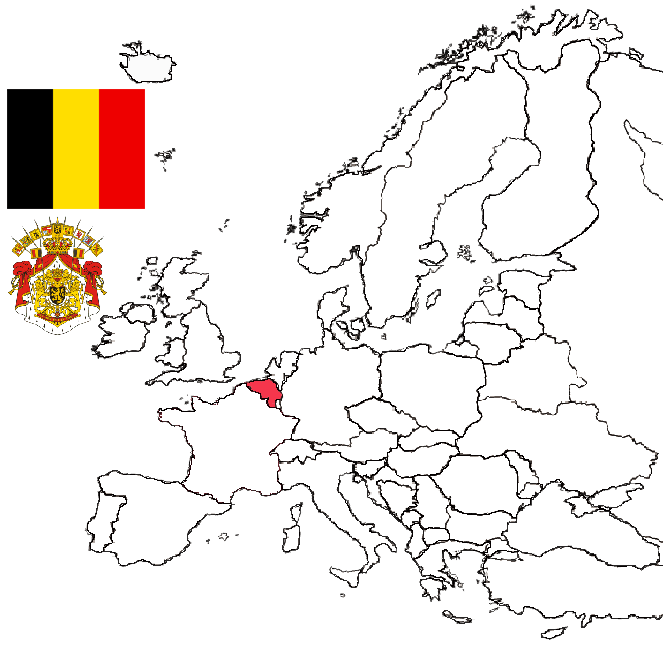
kingdom-of-belgium.gif

Historically, Belgium, the Netherlands and Luxembourg were known as the Low Countries, which used to cover a somewhat larger area than the current Benelux group of states. The region was called Belgica in Latin because of the Roman province Gallia Belgica which covered more or less the same area. From the end of the Middle Ages until the 17th century, it was a prosperous centre of commerce and culture. From the 16th century until the Belgian Revolution in 1830, when Belgium seceded from the Netherlands, many battles between European powers were fought in the area of Belgium, causing it to be dubbed the battleground of Europe, a reputation strengthened by both World Wars.

Upon its independence, Belgium participated in the Industrial Revolution and, during the course of the 20th century, possessed a number of colonies in Africa. The second half of the 20th century was marked by the rise of contrasts between the Flemish and the Francophones fuelled by language differences on the one hand and an asymmetrical economic evolution of Flanders and Wallonia on the other hand. These ongoing conflicts have caused far-reaching reforms of the formerly unitary Belgian state into a federal state and a very long political instability

Belgium was recognised as an independent country in 1830, but the monarchy was not formally established until 1831. King Leopold I, Prince of Saxe-Coburg and Gotha, took the constitutional oath on 21 July 1831 to become the first King of the Belgians. Under the hereditary constitutional monarchy system, the role and operation of Belgium’s institutions, including the monarchy, are governed by the Constitution. “Hereditary” means the royal office, as described in the Constitution, is earmarked solely for a descendent of the first King of the Belgians, Leopold I. Bound by the Constitution above all other ideological and religious considerations, political opinions and debates and economic interests, the King acts as an arbiter and guardian of the country’s unity and independence.

Historical source image

Residences of the Royal House

King Albert II and Queen Paola live at Belvédère Castle, Laeken. It is situated very near Laeken Castle, which is the castle where Prince Philippe and Princess Mathilde live with their children. Since 1998 Queen Fabiola lives at Stuyvenberg Castle, Laeken. Also Princess Astrid and her family live there. Prince Laurent and Princess Claire live at the Villa Clementine at Tervuren. The Royal Palace at Brussels, as well as sometimes Laken Castle, is used for official events. Both the Royal Palace at Brussels and Laeken Castle belong to the state, and are made available to the King. At present als Belvédère Castle, Stuyvenberg Castle, Villa Clémentine, Ciergnon Castle and Fenffe Castle are made available to the king. These residences belong to the Royal Trust, and via the Trust, to the state. King Albert II himself owns the residence “Le Romarin” at Châteauneuf de Grasse. Queen Fabiola owns the Villa Astrida at Motril. Postal address: Royal Palace, Brederodestraat 16, 1000 Brussels, Belgium.
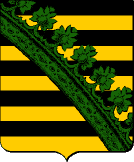
Saxony-kingdom.gif

The History of the House of Wettin

The House of Wettin is a dynasty of German counts, dukes, prince-electors (Kurfürsten) and kings that once ruled the area of today’s German states of Saxony, the Saxon part of Saxony-Anhalt, and Thuringia for more than 800 years as well as holding at times the kingship of Poland. Agnates of the House of Wettin have, at various times, ascended the thrones of Great Britain, Portugal, Bulgaria, Poland, Saxony, and Belgium; of these, only the British and Belgian lines retain their thrones today. The oldest member of the House of Wettin who is known for certain was Thiedericus (died 982), who was probably based in the Liesgau (located at the western edge of the Harz). Around 1000, as part of the German conquest of Slavic territory, the family acquired Wettin Castle, after which they named themselves. Wettin Castle is located in Wettin in the Hosgau on the Saale River. Around 1030, the Wettin family received the Eastern March as a fief. The prominence of the Wettin family in the Slavic marches caused Emperor Henry IV to invest them with the March of Meissen as a fief in 1089. The family advanced over the course of the Middle Ages: in 1263 they inherited the landgraviate of Thuringia (though without Hesse), and in 1423 they were invested with the Duchy of Saxony, centred at Wittenberg, thus becoming one of the prince-electors of the Holy Roman Empire.

The family divided into two ruling branches in 1485 when the sons of Frederick II, Elector of Saxony divided the territories hitherto ruled jointly. The elder son Ernest, who had succeeded his father as Prince-elector, received the territories assigned to the Elector (Electoral Saxony) and Thuringia, while his younger brother Albert obtained the March of Meissen, which he ruled from Dresden. As Albert ruled under the title of “Duke of Saxony”, his possessions were also known as Ducal Saxony. The older, Ernestine branch remained predominant until 1547 and played an important role in the beginnings of the Protestant Reformation. Their predominance ended in the Schmalkaldic War, which pitted the Protestant Schmalkaldic League against Emperor Charles V. Although itself Protestant, the Albertine branch rallied to the Empire’s cause; Charles V rewarded them by forcing the Ernestines to sign away their rights to the Electoral title and lands to the Albertines.

The Ernestine line was thereafter restricted to Thuringia, and its dynastic unity swiftly crumbled. The Albertine Wettin maintained most of the territorial integrity of Saxony, preserving it as a significant power in the region, and using small appanage fiefs for their cadet branches, few of which survived for significant lengths of time. The Ernestine Wettin, on the other hand, repeatedly subdivided their territory, creating an intricate patchwork of small duchies and counties in Thuringia. The junior Albertine branch ruled as Electors (1547-1806) and Kings of Saxony (1806-1918) and also played a role in Polish history: two Wettin were Kings of Poland (between 1697-1763) and a third ruled the Duchy of Warsaw (1807-1814) as a satellite of Napoleon. After the Napoleonic Wars, the Albertine branch lost about 40% of its lands, including the old Electoral Saxony, to Prussia, restricting it to a territory coextensive with the modern Saxony.
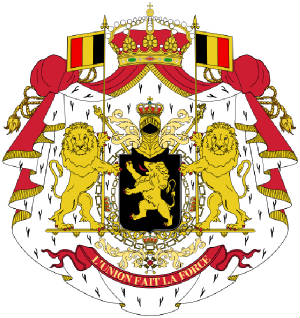
Greater_Coat_of_Arms_of_Belgium.jpg

Succession to the Throne of Belgium

Until 1991 the Constitution said: the constitutional power of the King is hereditary in direct, natural and legal line from HRH Leopold of Saxe-Coburg, from male to male descendant, in order of birth, and with the eternal exclusion of women and their descendance. However on March 8th, 1992, the Salian Law was replaced by the absolute rule about the right of the first born, with the result that now the princesses have the same rights of succession as their brothers. The King can’t be head of state of another country at the same time, unless a 2/3 majority of both parliaments agree with it. When there is no descendance anymore the King has the right to appoint his successor. The Chambers have to agree with that choice with 2/3 majority. A Prince looses his right of succession when he marries without asking permission. The King is able to give this Prince his rights back.
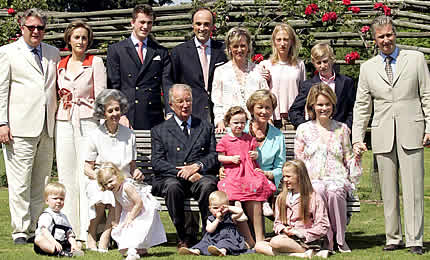
royal-family-of-belgium.jpg

The Family Titles and Styles

The Sovereign is His Majesty, King of the Belgians, the other members of the royal family are styled His or Her Royal Highness and Prince or Princess of Belgium, the children of Princess Astrid are styled His or Her Imperial and Royal Highness and are Archdukes or Archduchesses of Austria-Este, Prince or Princess of Belgium. Until World War I the family members also bore the German titles Prince or Princess of Saxe-Coburg and Gotha and Duke or Duchess of Saxony.

The Genealogy of the Royal House
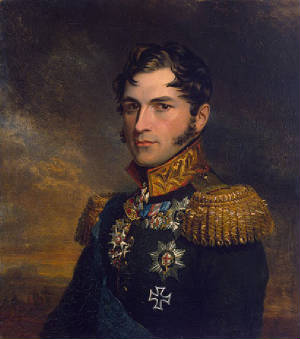
king-Leopold-of-belgium.jpg

Leopold Georg Christian Friedrich Pr of Saxe-Coburg-Gotha, Duke of Saxony, was b. Coburg 16 Dec 1790. On 2 May 1816 he married Pss Charlotte Of Great Britain, Ireland and Hannover (Carlton House 7 Jan 1796-Claremont House 6 Nov 1817), the only child of the then Prince of Wales [later, King George IV]. Had she lived, Leopold would have assumed the role later taken by his nephew, Prince Albert, as Prince Consort of Great Britain. It was not to be. However, on 4 Jun 1831 he was elected as King LÉOPOLD I of the Belgians. He died at Laeken 10 Dec 1865. He m.2d Compiègne 9 Aug 1832 Louise Marie Pss d’Orléans (Palermo 3 Apr 1812-Ostende 11 Oct 1850)
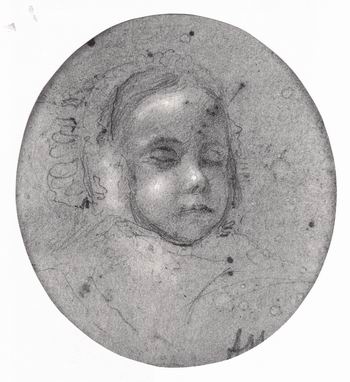
crown-prince-louis-of-belgium.jpg

1a) Louis-Philippe Léopold Victor Ernest (Laeken 24 Jul 1833-Laeken 16 May 1834)
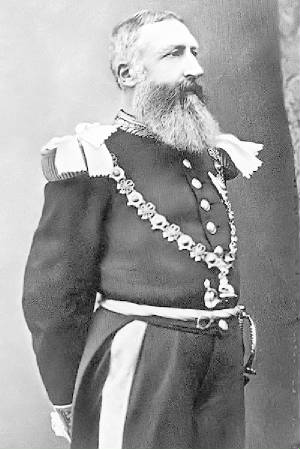
king-Leopold_II_of-belgium.jpg

2a) LÉOPOLD II Louis Philippe Marie Victor, King of the Belgians (Brussels 9 Apr 1835-Laeken 17 Dec 1909); m. Brussels 22 Aug 1853 Marie Henriette Archdss of Austria (Buda 23 Aug 1836-Spa 19 Sep 1902); m.2d Brussels 14 Dec 1909, in a religious ceremony “in articulo mortis” (on his deathbed) by the priest of Laeken Cooreman, Blanche Delacroix (Bucharest 1883-Cambo 1948), unofficially cr Bss de Vaughan in Belgium (a courtesy title)
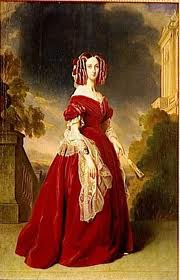
Louise-Marie-of-belgium-Princess-of-Kohary.jpg

1b) Louise Marie Amélie (Brussels 18 Feb 1858-Wiesbaden 1 Mar 1924); m. Brussels 4 Feb 1875 (div Gotha 15 Jan 1906) Philipp Pr of Saxe-Coburg-Gotha (Paris 28 Mar 1844-Coburg 3 Jul 1921)
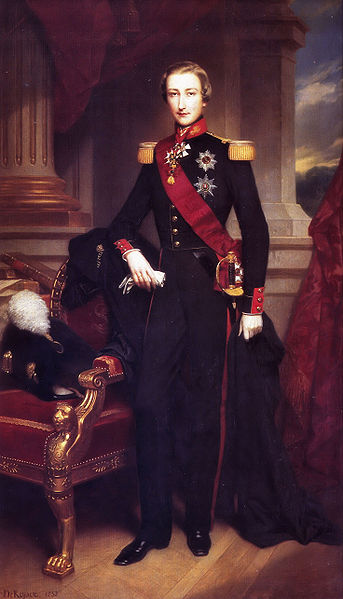
Leopold_of_Belgium_Duke_of_Brabant.jpg

2b) Léopold Ferdinand Élie Victor Albert Marie, Duke of Brabant (Laeken 12 Jun 1859-Brussels 22 Jan 1869)
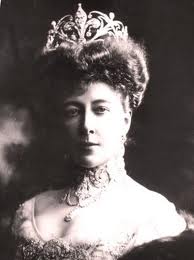
Stephanie-of-belgium.jpg

3b) Stéphanie Clotilde Louise Herminie Marie Charlotte (Laeken 21 May 1864-Pannonhalma 23 Aug 1945); m.1st Vienna 10 May 1881 Crown Prince Rudolf of Austria (Laxenburg 21 Aug 1858-Mayerling 30 Jan 1889); m.2d Miramar 22 Mar 1900 Elemér Pr Lónyay de Nagy-Lónya et Vásáros-Namény (Bodrog-Olaszi 24 Aug 1863-Budapest 20 Jul 1946)
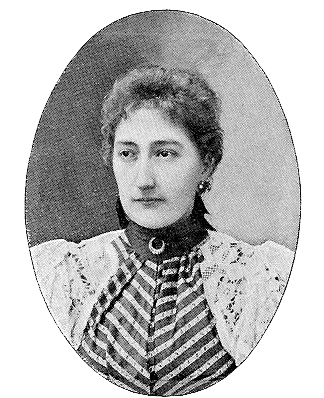
Clementine_of_Belgium.jpg

4b) Clémentine Albertine Marie Léopoldine (Laeken 30 Jul 1872-Nice 8 Mar 1955); m. Moncalieri 14 Nov 1910 Pr Victor Napoléon (Paris 18 Jul 1862-Brussels 3 May 1926)
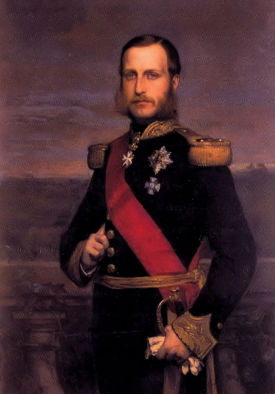
philippe-de-belgique-comte-de-flandres.jpg

3a) Philippe Eugène Ferdinand Marie Clément Baudouin Léopold Georges, Ct of Flanders (Laeken 24 Mar 1837-Brussels 17 Nov 1905); m. Berlin 25 Apr 1867 Marie Pss von Hohenzollern-Sigmaringen (Sigmaringen 17 Nov 1845-Brussels 26 Nov 1912)
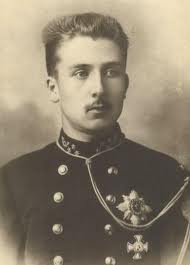
Baudouin-Leopold-of-belgium.jpg

1b) Baudouin Léopold Philippe Marie Charles Antoine Joseph Louis (Brussels 3 Jun 1869-Brussels 23 Jan 1891)
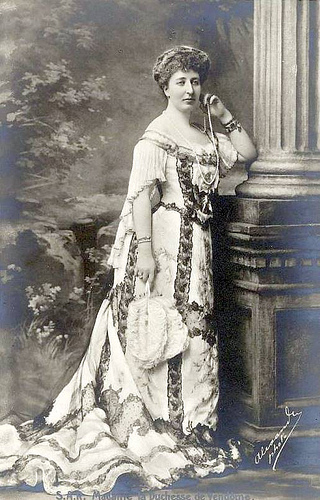
Henriette-of-belgium.jpg

2b) Henriette Marie Charlotte Antoinette (Brussels 30 Nov 1870-Sierre, Valais, Switzerland 28 Mar 1948); m. Brussels 12 Feb 1896 Emanuel Pr d’Orléans Duc de Vendôme (Obermais 18 Jan 1872-Cannes 1 Feb 1931)

3b) Joséphine Marie Stéphanie Victoire (Brussels 30 Nov 1870-Brussels 18 Jan 1871)
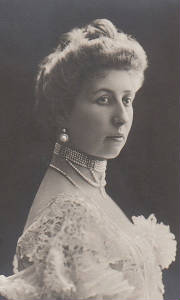
Princess-Josephine-of-belgium.jpg

4b) Joséphine Caroline Marie Albertine (Brussels 18 Oct 1872-Namur 6 Jan 1958); m. Brussels 28 May 1894 Karl Anton Pr von Hohenzollern (Sigmaringen 1 Sep 1868-Namedy 21 Feb 1919)
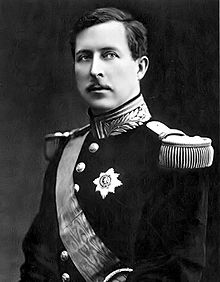
king-Albert-I-of-belgium.jpg

5b) ALBERT I Leopold Clemens Marie Meinrad, King of the Belgians 1909-1934 (Brussels 8 Apr 1875-d.in mountaineering accident at Marche-les-Dames 17 Feb 1934); m. Munich 2 Oct 1900 Elisabeth Dss in Bavaria (Possenhofen 25 Jul 1876-Brussels 23 Nov 1965)
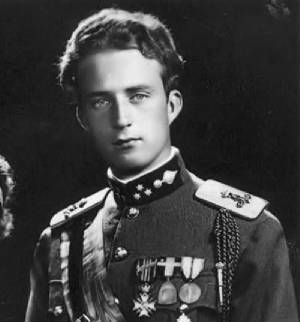
king_leopold-III-of-belgium.jpg

1c) LÉOPOLD III Philipp Karl Albert Meinrad Hubertus Maria Miguel, King of the Belgians, abdicated 1951 (Brussels 3 Nov 1901-Woluwe-Saint-Lambert 25 Sep 1983); m.1st (civ) Stockholm 4 Nov 1926 (rel) Brussels 10 Nov 1926 Astrid Pss of Sweden (Stockholm 17 Nov 1905-k.in car accident at Kußnacht, Switzerland 29 Aug 1935); m.2d Laeken (rel) 11 Sep 1941 (civ) 6 Dec 1941 Mary Lilian Baels, cr Pss de Rethy (London 28 Nov 1916-Domaine d’Argenteuil, Waterloo 7 Jun 2002)
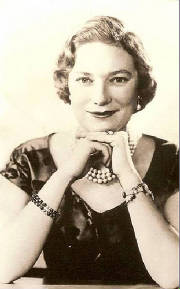
princess-Josephine-of-belgium-grandduchess-of-luxembourg.jpg

1d) Joséphine Charlotte Ingeborg Elisabeth Maria Josepha Margarethe Astrid (Brussels 11 Oct 1927-Fischbach 10 Jan 2005); m. Luxemburg 9 Apr 1953 Jean, Grand Duke of Luxemburg (b. Schloß Berg 5 Jan 1921)
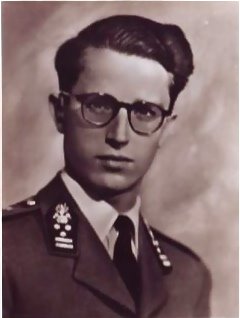
king-baudouin-of-belgium.jpg

2d) BAUDOUIN Albert Charles Leopold Axel Marie Gustav, King of the Belgians 1951 (Château de Stuyvenberg, Brussels 7 Sep 1930-Motril, Spain 31 Jul 1993); m. Brussels 15 Dec 1960 Doña Fabiola Mora y Aragón (b. Madrid 11 Jun 1928)
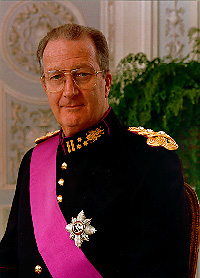
king-albert-II-of-belgium.jpg

3d) ALBERT II Felix Humbert Theodor Christian Eugène Marie, former King of the Belgians, King from 9 August 1993 until his abdication on the 21 July 2013, b. Château de Stuyvenberg, Brussels 6 Jun 1934; m. Brussels 2 Jul 1959 Donna Paola Ruffo di Calabria, (b. Forte dei Marmi 11 Sep 1937)
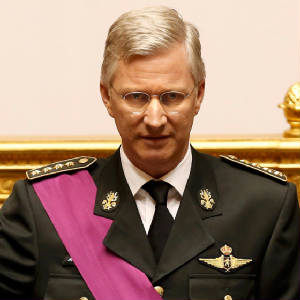
king-philippe-of-belgium.jpg

1e) PHILLIPE I Leopold Louis Marie, ascended the throne on 21 July 2013, b. Château de Belvédère, nr Laeken 15 Apr 1960; m. Brussels 4 Dec 1999 Mathilde Marie Christine Ghislaine d’Udekem d’Acoz (b. Uccle 20 Jan 1973)

Princess-Elisabeth-of-Belgium.jpg

1f) ElisabethThérèse Marie Hélène, Duchess of Brabant. (b. Anderlecht 25 Oct 2001)
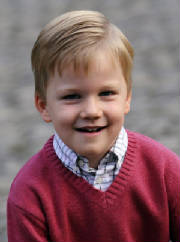
Prince-Gabriel-of-Belgium.jpg

2f) Gabriel Baudouin Charles Marie (b. Anderlecht 20 Aug 2003)
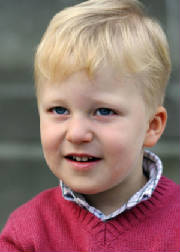
Prince-Emmanuel-of-Belgium.jpg

3f) Emmanuel Léopold Guillaume François Marie (b. Anderlecht 4 Oct 2005)

4f) Eléonore Fabiola Victoria Anna Marie (b. Anderlecht 16 Apr 2008)
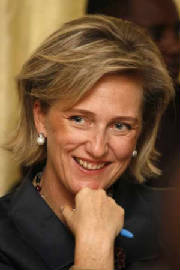
Princess-Astrid-of-Belgium.jpg

2e) Astrid Josephine-Charlotte Fabrizia Elisabeth Paola Marie, b. Château de Belvédère 5 Jun 1962; m. Brussels 22 Sep 1984 Lorenz Archduke of Austria, cr Pr of Belgium 10 Nov 1995 (b. Boulogne-sur-Seine 16 Dec 1955); their children bear by Royal Decree 2 Dec 1991 the title Prince or Princess of Belgium in addition to their Austrian titles

prince-amedeo-of-belgium.jpeg

1f) Amadeo Maria Josef Carl Pierre Philippe Paola Marcus d’Aviano, Archduke of Austria[-Este] and Pr of Belgium, b. Woluwe St. Lambert 21 Feb 1986
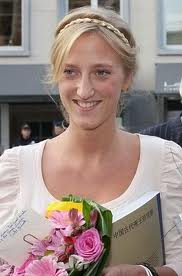
PrincessMariaLauraofBelgium.jpg

2f) Maria Laura Zita Beatrix Gerhard, Archduchess of Austria[-Este] and Pss of Belgium, b. Woluwe St. Lambert 26 Aug 1988

Joachim_of_Belgium.jpg

3f) Joachim Karl-Maria Nikolaus Isabelle Marcus d`Aviano, Archduke of Austria[-Este] and Pr of Belgium, b. Woluwe-St. Lambert 9 Dec 1991

4f) Luisa Maria Anna Martine Pilar, Archduchess of Austria[-Este] and Pss of Belgium, b. Woluwe-St. Lambert 11 Oct 1995

5f) Laetitia Maria Nora Anna Joachim Zita, Archduchess of Austria[-Este] and Pss of Belgium, b. Brussels 23 Apr 2003
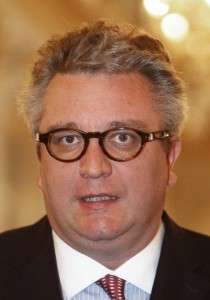
prince-laurent-of-belgium.jpg

3e) Laurent Benoit Baudouin Marie, b. Château de Belvédère 19 Oct 1963; m. Brussels 12 Apr 2003 Claire Louise Coombs (b. Bath 18 Jan 1974)
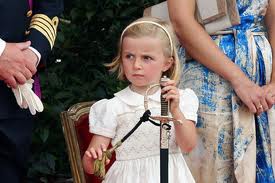
PrincessLouiseofBelgium.jpg

1f) Louise Sophie Mary (b. Woluwé-Saint-Lambert 6 Feb 2004)

2f) Nicolas Casimir Marie (b. Woluwé-Saint-Lambert 13 Dec 2005)

3f) Aymeric Auguste Marie (b. Woluwé-Saint-Lambert 13 Dec 2005)
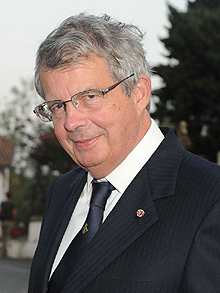
prince-alexandre-of-belgium.jpg

4d) Alexandre Emanuel Henry Albert Marie Leopold (Laeken 18 Jul 1942-29 Nov 2009); m. Deben, Suffolk 14 Mar 1991 Léa Inga Dora Wolman (b. Etterbeek 2 Dec 1951)
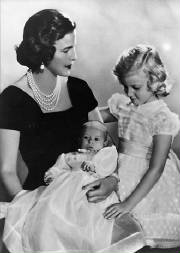
Marie-Christine-of-belgium.jpg

5d) Marie-Christine Daphné Astrid Elisabeth Léopoldine, b. Laeken 6 Feb 1951; m.1st Coral Gables, Florida 23 May 1981 (div 1981) Paul Druker (Montreal 1 Nov 1937-1 Apr 2008); m.2d Westwood, California 28 Sep 1989 Jean-Paul Gourgues (b. Bordeaux)

HRH_Princess_Marie-Esmeralda_of_Belgium.jpg

6d) Marie-Esmeralda Adelaide Lilian Anna Léopoldine, b. Laeken 30 Sep 1956; m. London 4 Apr 1998 Sir Salvador Moncada (b. Tegucigalpa, Honduras 3 Dec 1944)
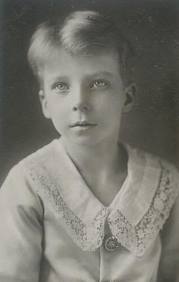
CharlesTheodorecountofFlanders.jpg

2c) Charles Théodore Henri Antoine Meinrad, Ct of Flanders, Regent 1944-1950 (Brussels 10 Oct 1903-Ostende 1 Jun 1983; in Paris on 14 Sep 1977 he went through a religious ceremony blessing his union with one Jacqueline Peyrebrune (b. La Réole 16 Feb 1921).
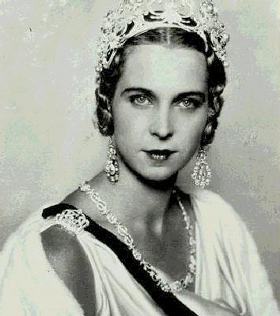
Marie-Jose-of-Belgium.jpg

3c) Marie-José Charlotte Sophie Amélie Henriette Gabrielle (Ostende 4 Aug 1906-Geneva 27 Jan 2001); m. Rome 8 Jan 1930 King Umberto II of Italy (Racconigi 15 Sep 1904-Geneva 18 Mar 1983)
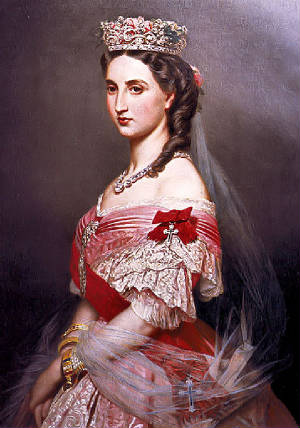
princess-carlota-of-belgium-empress-consort-of-emperor-maximilian-mexico.jpg

4a) Maria Charlotte Amélie Auguste Victoire Clémentine Léopoldine (Laeken 7 Jun 1840-Château de Bouchout, Belgium 19 Jan 1927); m. Brussels 27 Jul 1857 Maximilian – Archduke of Austria – Emperor of Mexico 1864-7 (Vienna 6 Jul 1832-Queretaro, Mexico 19 Jun 1867)
We use cookies to personalise content and ads, to provide social media features and to analyse our traffic. We also share information about your use of our site with our social media, advertising and analytics partners. View more
Cookies settings
Accept
Decline
Privacy & Cookie policy
Privacy & Cookies policy
Cookie name Active

Privacy and Cookie Policy Last updated: 11 August 2026

Neue Gotha respects your privacy and is committed to handling personal data lawfully, fairly, and transparently. This Privacy and Cookie Policy explains who is responsible for personal data, what information we process, why we process it, how long we retain it, who may receive it, and the rights available to individuals under the General Data Protection Regulation (EU) 2016/679 (“GDPR”) and applicable national data-protection and electronic-communications law.

1. Who is responsible for your personal data?

The controller responsible for the processing described in this policy is:

  • Legal name: Neue Gotha Historical Register gUG
  • Trading or project name: Neue Gotha
  • Postal address: Musterstraße 12, 10115 Berlin, Germany
  • Email: editor@neuegotha.de
  • EU/EEA representative: Not applicable (the controller is established in Germany).
  • Data Protection Officer: No Data Protection Officer has been appointed. Privacy enquiries are handled through editor@neuegotha.de.

Questions about this policy or requests concerning personal data may be sent to the email or postal address above.

2. Scope of this policy

This policy applies to personal data processed through https://neuegotha.com, correspondence with the Neue Gotha editorial office, material submitted for editorial consideration, and editorial or archival records concerning identifiable living individuals.

It does not govern independent third-party websites or services linked from this website. Those providers are responsible for their own privacy practices.

3. Personal data we process and why

Processing activity Personal data Purpose Legal basis Retention
Website delivery, logging, and security IP address; date and time of access; requested page or file; referring page; browser, operating-system, and device information; error and security-event data Deliver the website, maintain availability, diagnose faults, prevent abuse, and protect the website and its users Article 6(1)(f) GDPR — our legitimate interests in operating a secure and reliable website. Where processing is required by law, Article 6(1)(c) GDPR may also apply. Routine access and error logs are retained for 14 days. Records isolated for investigation of a suspected security incident may be retained for up to 90 days after the incident is resolved, or longer where required for legal claims.
Editorial correspondence and enquiries Name, contact details, message content, correspondence history, and any documents or other information voluntarily provided Respond to enquiries, assess corrections or submissions, maintain editorial records, and protect legal rights Article 6(1)(f) GDPR — our legitimate interests in conducting editorial work and responding to correspondence; Article 6(1)(b) GDPR where processing is necessary to take steps at an individual’s request before entering into a contract; Article 6(1)(c) GDPR where retention or disclosure is legally required Correspondence is ordinarily retained for 24 months after the matter closes. Material required to document an editorial decision, resolve a dispute, meet a legal obligation, or establish, exercise, or defend a legal claim may be retained for the applicable limitation period.
Editorial, genealogical, and archival records Names; titles and styles; dates and places associated with public or genealogical events; family relationships; jurisdictions, offices, and public roles; images; biographical information; source and citation information; and correspondence relating to accuracy or provenance Research, document, preserve, verify, correct, and publish material concerning dynastic, genealogical, heraldic, and institutional history Article 6(1)(f) GDPR — our legitimate interests and those of readers, researchers, and institutions in maintaining an accurate historical and genealogical reference work, subject to a documented necessity and balancing assessment. Applicable national rules implementing Article 85 GDPR concerning freedom of expression and information may also apply. For as long as the information remains relevant to the legitimate editorial or archival purpose, subject to accuracy review, correction, restriction, erasure, and applicable archiving or legal requirements
Cookie-consent and language preferences Consent choice, language preference, cookie identifiers, and related technical information Remember privacy choices, demonstrate consent where required, and provide the language selected by the visitor Article 6(1)(f) GDPR for strictly necessary preference and consent-management functions; Article 6(1)(a) GDPR for optional storage, access, or associated processing based on consent As stated in the cookie table below
Optional external services IP address, page URL, device and browser information, language choice, and service-interaction data, depending on the provider Provide optional translation, embedded content, analytics, or similar features actually enabled on the website Article 6(1)(a) GDPR — consent. Non-essential services remain disabled until consent is given. As described for each service and by the relevant provider

We do not use personal data for solely automated decisions that produce legal effects or similarly significant effects concerning individuals.

4. Editorial and archival information obtained from other sources

Neue Gotha is an editorial and historical reference project. Some information in the register may concern identifiable living individuals and may not have been collected directly from those individuals.

Depending on the record, information may be obtained from official gazettes and public registers; archives and libraries; published books and scholarly works; institutional publications; reputable news sources; publicly accessible websites; submissions from the individual concerned or their authorised representative; family representatives; and other documented sources.

The categories of information may include the categories listed under “Editorial, genealogical, and archival records” above. The material may be made available to website visitors and may be indexed by search engines. Neue Gotha seeks to use relevant, proportionate, and appropriately sourced information and to distinguish documented fact from uncertainty or editorial interpretation.

Individuals may contact the editorial office to request access, correction, contextualisation, restriction, or erasure. Requests are assessed under the GDPR and applicable national law, taking into account accuracy, source integrity, the public interest, freedom of expression and information, archival considerations, and the rights and freedoms of other people. No provision of this policy removes a right granted by applicable law.

Neue Gotha does not intentionally publish special-category personal data or information concerning criminal convictions about living individuals unless a specific lawful basis and any additional legal condition have been identified and documented.

5. Cookies and similar technologies

Cookies are small text files stored on, or read from, a visitor’s device. Similar technologies may perform comparable functions. Some are strictly necessary for a website or a service expressly requested by the visitor. Others, including many analytics, advertising, social-media, translation, or embedded-content technologies, require prior consent under applicable EU electronic-communications rules.

Neue Gotha does not place or access non-essential cookies, or activate non-essential external services, before valid consent has been given. Visitors may accept or reject optional purposes separately and may withdraw consent at any time by selecting the permanently available “Cookie settings” control. Withdrawing consent does not affect processing that was lawful before withdrawal. Strictly necessary technologies cannot be disabled through the consent tool, but they may be controlled through browser settings where technically possible.

The following table reflects the technologies currently deployed on the website. It is updated whenever a plugin, host, analytics tool, embedded service, or cookie configuration changes.

Name Provider Purpose Category Duration Third-party access
_scc_session Neue Gotha / managed hosting and site-control provider Maintains a short-lived session for website security and site-control functions Strictly necessary Browser session The contracted hosting or site-control provider may access the identifier when providing technical support
_tccl_visit Neue Gotha / managed website-analytics provider Distinguishes a single website visit and reduces duplicate counting within the same session Analytics — disabled until consent 30 minutes Yes; the contracted analytics provider processes the identifier on Neue Gotha’s behalf
_tccl_visitor Neue Gotha / managed website-analytics provider Assigns a pseudonymous visitor identifier used to produce aggregated website-usage statistics Analytics — disabled until consent 12 months Yes; the contracted analytics provider processes the identifier on Neue Gotha’s behalf
googtrans Neue Gotha / Google Translate Stores or applies the visitor’s language selection for the translation feature Functional — disabled until consent 12 months Google may receive technical and service-interaction data when Google Translate is activated
ng_gt_default_applied Neue Gotha / website translation plugin Records whether the website’s default translation setting has been applied Functional — disabled until consent 24 hours No direct vendor access is assumed; Google may receive data if activation causes Google Translate to load
eu_cookies_bar_consent Neue Gotha / locally hosted EU Cookies Bar plugin Stores the visitor’s cookie choices and prevents the banner from being shown unnecessarily Strictly necessary 6 months No, provided the consent plugin remains locally hosted and does not transmit consent records to its developer
wordpress_test_cookie Neue Gotha / WordPress Checks whether the browser supports cookies when an authorised user visits the sign-in page Strictly necessary Browser session No; the cookie is processed by Neue Gotha and its contracted host

Authorised editorial users may receive WordPress authentication, security, or preference cookies when they sign in. wordpress_logged_in_[hash] maintains an authenticated session for up to two weeks when “Remember Me” is selected; wordpress_sec_[hash] protects administrative access for the session; and wp-settings-[user_id] stores an editor’s interface preferences for up to one year. These internal cookies are processed solely for editorial access and site administration.

6. Google Translate, web fonts, and other external content

Where enabled with the visitor’s consent, Neue Gotha may use Google Translate to provide machine-generated translations. Activating the service may cause the visitor’s browser to connect to Google and disclose technical information such as the IP address, requested page URL, browser or device information, and language or service-interaction data. Machine translations may contain errors and do not replace the original editorial text.

Website fonts are hosted locally by Neue Gotha and do not require a connection to Google. Google Translate remains an optional external service that is activated only after the visitor provides consent.

Information about Google’s processing is available in the Google Privacy Policy and Google’s explanation of how it uses information from sites and applications that use its services.

Embedded material from another website may allow that provider to process personal data as if the visitor had visited the provider directly. Non-essential embeds remain blocked until consent is obtained. Each enabled provider is identified in this policy and in the consent interface.

7. Recipients of personal data

Personal data may be disclosed only where necessary to:

  • hosting, content-delivery, backup, website-maintenance, email, security, and consent-management providers acting under contract;
  • translation, analytics, media, or other external-service providers selected by the visitor through the consent interface;
  • professional advisers, insurers, auditors, or other specialists where necessary to protect legal or operational interests;
  • courts, regulators, law-enforcement bodies, or public authorities where disclosure is required or permitted by law; and
  • the public and search engines where personal data form part of a lawfully published editorial or archival record.

8. International data transfers

Some service providers may process personal data outside the European Economic Area. Where the GDPR restricts such a transfer, Neue Gotha relies on an applicable European Commission adequacy decision or appropriate safeguards under Article 46 GDPR, such as the European Commission’s Standard Contractual Clauses, together with supplementary measures where required.

Cloudflare and Google may transfer limited technical information to recipients in the United States. Where the recipient is validly certified, the transfer is based on the European Commission’s adequacy decision for the EU–US Data Privacy Framework. Where that mechanism is unavailable or does not cover a transfer, the relevant provider’s European Commission Standard Contractual Clauses and supplementary technical and organisational measures are used. Information about the applicable safeguards, including how to obtain a copy, may be requested from editor@neuegotha.de.

9. How long we retain personal data

We retain personal data only for as long as necessary for the purposes described in this policy, including security, editorial integrity, source verification, dispute resolution, and compliance with legal obligations. The specific periods or criteria are stated in the processing and cookie tables above.

When a retention period ends, information is deleted or anonymised unless continued retention is required by law, is necessary for legal claims, or is justified by a documented editorial or archival purpose. Encrypted rolling backups are retained for 35 days and are then overwritten automatically, unless a backup has been isolated for incident recovery or a legal hold.

10. Security

Neue Gotha uses appropriate technical and organisational measures designed to protect personal data against accidental or unlawful destruction, loss, alteration, unauthorised disclosure, or access. No method of internet transmission or electronic storage is completely secure, and absolute security cannot be guaranteed.

11. Your data-protection rights

Subject to the conditions and limitations in the GDPR and applicable national law, an individual may have the right to:

  • obtain confirmation as to whether personal data concerning them are processed and request access to those data;
  • request correction of inaccurate or incomplete personal data;
  • request erasure of personal data;
  • request restriction of processing;
  • object, on grounds relating to their particular situation, to processing based on legitimate interests;
  • receive personal data they provided in a structured, commonly used, machine-readable format and transmit those data to another controller where the right to portability applies;
  • withdraw consent at any time, without affecting the lawfulness of processing carried out before withdrawal; and
  • lodge a complaint with a competent data-protection supervisory authority.

To exercise a right, contact editor@neuegotha.de. Please identify the information or record concerned and the nature of the request. We may request information reasonably necessary to verify identity and protect personal data from unauthorised disclosure. Requests are normally answered within one month, subject to any extension permitted by law.

Where a request concerns published editorial or archival content, applicable rights may be limited where necessary and proportionate to reconcile data protection with freedom of expression and information or other rights recognised by law. Each request will be assessed individually.

12. Complaints

We encourage individuals to contact us first so that we can try to resolve a concern. Individuals also have the right to complain to the supervisory authority in the EU or EEA country of their habitual residence, place of work, or the place of the alleged infringement.

For this Berlin-based controller the supervisory authority is the Berliner Beauftragte für Datenschutz und Informationsfreiheit, Alt-Moabit 59–61, 10555 Berlin, Germany; telephone +49 30 13889-0; email mailbox@datenschutz-berlin.de; website https://www.datenschutz-berlin.de/.

13. Children

The website is intended as a general historical and reference resource and is not directed specifically at children. We do not knowingly request personal data directly from children for an online service requiring parental consent. If you believe a child has provided personal data inappropriately, please contact us.

14. Changes to this policy

We may update this policy when our processing activities, service providers, technologies, or legal obligations change. The current version will be published on this page with a revised “Last updated” date. Where required, we will provide additional notice or request renewed consent before introducing a new processing purpose.

Decline All
Save settings Accept All
Cookies settings