Formerly Sovereign House

Kingdom of Finland – House of Hesse

Kingdom of Finland – House of Hesse

Jurisdiction
Finland
Dynasty
House of Hesse
Entry type
House
Editorial status
Reviewed - Verified

Suomen kuningaskunta

Finland declared independence from Russia on December 6, 1917, leading to a debate on whether the new state should declare itself a republic or remain a monarchy. At the time of its Declaration of Independence, monarchists were a minority in the Finnish Eduskunta (Parliament), and Finland was declared a republic. However, after the Finnish Civil War, and while the pro-republic Social Democratic Party was mostly excluded from the Eduskunta, Frederick was elected to the throne of the Kingdom of Finland on October 9, 1918. A primary motive for his election was the belief that, being the brother of William II of Germany, his kingship would solidify Finland’s alliance with Germany and thereby afford protection against the Russians.

The adoption of a new constitution had been delayed by the Civil War, and the legitimacy of the royal election was based upon the Constitution of Sweden of 1772, adopted under King Gustav III, when Finland had been a part of Sweden. The same constitutional document had also served as the basis for the rule of the Russian Tsars, as grand dukes of Finland, during the nineteenth century when the weakening Sweden lost Finland to the Russian Empire.

Historical source image

The reaction of the Bolshevik regime in Russia was thus crucial. Great Britain, the United States, Germany, France and the other Scandinavian countries were initially reluctant to recognize the newly independent Finland, waiting for the Russian reaction. When Lenin’s government recognized Finland’s independence, Germany, in addition to France and the other Scandinavian countries quickly followed suit.
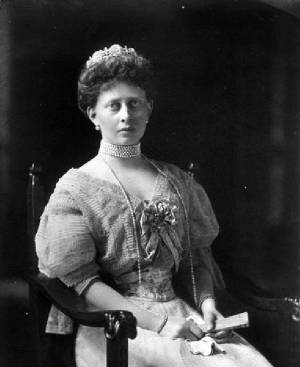
Margaret_queen-of-finland.jpg

On November 11, 1918, the armistice between the warring factions of World War I, was signed, and only two days earlier William II had abdicated and Germany was declared a republic. Germany’s defeat in the war and the stated fact that none of the Allies of World War I would ever accept a German-born prince as the king of Finland, led Frederick to renounce the throne on December 14, 1918, without having ever set foot on his “kingdom.” He had hesitated previously due to the circumstances of his election, where approximately 40 percent of the members of the Parliament had boycotted the election.
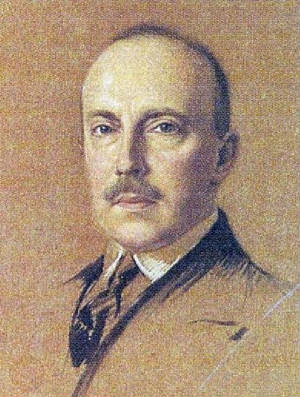
king-of-Finland.jpg

Frederik Kaarle I – King of Finland

Frederick Charles Louis Constantine, Prince and Landgrave of Hesse (1 May 1868, Gut Panker – 28 May 1940, Kassel), Friedrich Karl Ludwig Konstantin Prinz und Landgraf von Hessen-Kassel in German, was the brother-in-law of the German Emperor William II and the elected King of Finland from 9 October to 14 December 1918.

Early life of Frederick

Frederick was born at his family’s manor, Gut Panker, in Plön, Holstein. He was the third son of Frederick William of Hesse, the then Landgrave of Hesse, and his wife Princess Anna of Prussia, daughter of Prince Charles of Prussia and Princess Marie Louise of Saxe-Weimar-Eisenach. The elder Frederick, a Danish military officer, had been one (and perhaps the foremost) of the candidates of Christian VIII of Denmark in the 1840s to succeed to the Danish throne if the latter’s male line died out, but renounced his rights to the throne in 1851 in favor of his sister, Louise. The elder Frederick was of practically Danish upbringing, having lived all his life in Denmark, but in 1875, when the senior branch of Hesse-Kassel became extinct, he settled in northern Germany, where the House had substantial landholdings.

Eighteen days after his own birth, the baby Frederick’s first cousin, the then Tsarevna Maria Fyodorovna of Russia, daughter of his aunt Queen Louise of Denmark, gave birth in Saint Petersburg to Nicholas II of Russia, who would become Frederick Charles’ predecessor as the monarch of Finland (1894-1917).

Marriage

On 25 January 1893, Frederick married Princess Margaret of Prussia, the youngest daughter of the late Frederick III, German Emperor and Victoria, Princess Royal, eldest daughter of Queen Victoria of the United Kingdom and her consort Prince Albert of Saxe-Coburg and Gotha. They had six children, including two sets of twins:

  • Friedrich Wilhelm Sigismund (23 November 1893-12 September 1916), died in World War I
  • Maximilian Friedrich Wilhelm Georg (20 October 1894-13 October 1914), died in World War I
  • Philipp (1896-1980) married to Princess Mafalda of Savoy (1902-1944, Buchenwald), had issue.
  • Wolfgang Moritz (1896-1989)
  • Prince Christoph Ernst August of Hesse (1901-1943) married Princess Sophie of Greece and Denmark, had issue.
  • Richard Wilhelm Leopold (1901-1969), unmarried

Upon their father’s death in 1884, Frederick’s eldest brother Frederick William became the head of the House of Hesse, and afterwards his next brother Alexander.

The Finnish throne

Frederick Charles was elected as the King of Finland by the Parliament of Finland on 9 October 1918. However, with the end of World War I, in light of his German birth and the abdication of Emperor William II of Germany ending monarchies in Germany, the arrangement was quickly considered untenable by influential Finns of the time and by Frederick himself. Not much is known of the official stance of the victorious allies. Frederick Charles renounced the throne on 14 December 1918, without ever arriving in the country, much less taking up his position. Finland subsequently adopted a republican constitution.

Later life

Landgrave Alexander Frederick of Hesse abdicated as the head of the House of Hesse on 16 March 1925, and was succeeded by Frederick Charles, his younger brother. At Frederick’s death, his eldest surviving son, Philipp, succeeded him as head. However, according to certain family documents and correspondence, his successor as King of Finland would have been his second surviving son Prince Wolfgang of Hesse (1896-1989), apparently because Wolfgang was with his parents in 1918 and ready to travel to Finland, where a wedding to a Finnish lady was already in preparation for the coming Crown Prince. Philipp was in the military and unable to be contacted at the time. This choice of the younger of these two twins at that time, however is no precedent that in next generations, the kingship would have been succeeded in secundogeniture, putting the eldest son always to the Hesse title (according to Dr. Vesa Vares). On the contrary, it is practically inconceivable that succession of a kingdom would depend on secondary consideration. the source Viini 2/2007 (in Finnish) indicates a view that Moritz of Hesse is the current successor, and prince Donatus is the heir.

Titles and Styles of Frederick

  • 1 May 1868 – 15 March 1925: His Highness Prince Fredrick Charles of Hesse
  • 9 October 1918 – 14 December 1918: His Majesty The King of Finland
  • 15 March 1925 – 28 May 1940: His Royal Highness The Landgrave of Hesse

House of Hesse

The House of Hesse is a European royal dynasty from the region of Hesse, originally and still formally the House of Brabant. The origins of the House of Hesse begin with the marriage of Sophie of Thuringia, daughter of Louis IV, Landgrave of Thuringia and Elizabeth of Hungary with Henry II, Duke of Brabant from the House of Reginar. Sophie was the heiress of Hesse which she passed on to her son, Henry upon her retention of the territory following her partial victory in the War of the Thuringian Succession in which she was one of the belligerents.

Originally the western part of the Landgraviate of Thuringia, in the mid 13th century it was inherited by the younger son of Henry II, Duke of Brabant, and became a distinct political entity. From the late 16th century it was generally divided into several branches, the most important of which were those of Hesse-Kassel (or Hesse-Cassel) and Hesse-Darmstadt. In the early 19th century the Landgrave of Hesse-Kassel was elevated to Elector of Hesse (1803), while the Landgrave of Hesse-Darmstadt became the Grand Duke of Hesse (1806), later Grand Duke of Hesse and by Rhine. Electoral Hesse (Hesse-Kassel) was annexed by Prussia in 1866, while Grand Ducal Hesse (Hesse-Darmstadt) as lasted until the end of the German monarchies in 1918.

Rulers of Hesse

Philip I, Landgrave of Hesse, died in 1567. Hesse was divided between his four sons, four new lines which arose: Hesse-Darmstadt, Hesse-Kassel, Hesse-Marburg and Hesse-Rheinfels. The line of Hesse-Darmstadt was also part of the morganatic line of the Battenberg family when Prince Alexander of Hesse and by Rhinemarried to Countess Julia Hauke. The Battenbergs who later settled in England changed that name to Mountbatten after World War I.

  • House of Brabant
    • Hesse (1264-1567)
      • Hesse-Darmstadt (1567-1918), became Grand Duchy of Hesse in 1806
        • Hesse-Butzbach (1609-1642)
        • Hesse-Braubach (1609-1651)
        • Hesse-Homburg (1622-1866)
        • Hesse-Itter (1661-1676)
        • Battenberg (1858, morganatic line. Mountbatten since 1917)
      • Hesse-Kassel (1567-1866), became Electorate of Hesse in 1803
        • Hesse-Rotenburg (1627-1834)
        • Hesse-Wanfried (1627-1755)
        • Hesse-Rheinfels (1627-1754)
        • Hesse-Philippsthal (1685-1866)
          • Hesse-Philippsthal-Barchfeld (1721-1866)
      • Hesse-Marburg (1567, divided in 1604 between Hesse-Darmstadt and Hesse-Kassel)
      • Hesse-Rheinfels (1567, divided in 1583 between Hesse-Darmstadt, Hesse-Kassel and Hesse-Marburg)

Hesse-Kassel and its junior lines were annexed by Prussia in 1866; Hesse-Darmstadt became the People’s State of Hesse when the monarchy was abolished in 1918. Hesse-Philippsthal died out in the male line in 1925; Hesse-Darmstadt in 1968. Descendants of Hesse-Kassel and Hesse-Philippsthal-Barchfeld are alive to this day.

Titles and Styles of the King of Finland

Charles I, King of Finland and Karelia, Duke of Aland, Grand Duke of Lapland, Lord of Kaleva and the North – Finnish: Kaarle I, Suomen ja Karjalan kuningas, Ahvenanmaan herttua, Lapinmaan suuriruhtinas, Kalevan ja Pohjolan isanta; Swedish: Karl I, Kung av Finland och Karelen, hertig av Aland, storhertig av Lappland, herre over Kaleva och Pohjola
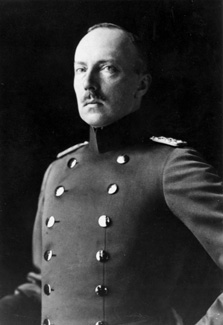
Friedrich_Karl-of-finland.jpg

Titles and Styles of the Royal House

The members of this family bear the titles Prince or Princess of Finland, together with the formal appellation of His or Her Royal Highness.

Historical source image

The Genealogy of The Royal House

  • FRIEDRICH KARL Ludwig Konstantin, CHARLES I OF FINLAND
  • Elected King of Finland, from October 9th to December 14th, 1918,
  • and Landgrave of Hesse, head of the Electoral House of Hesse from
  • 15 Mar 1925 (Schloß Panker, Holstein 1 May 1868-Kassel 28 May
  • 1940); m. Berlin 25 Jan 1893 Margarethe Pss of Prussia (Neues
  • Palais, nr Potsdam 22 Apr 1872- Schönberg bei Kronberg,
  • Taunus 22 Jan 1954). see: Landgraviate of Hesse
  • Friedrich Wilhelm Sigismund Viktor (Frankfurt 23
  • Nov 1893-k.a. Kara Orman, Romania 12/13 Sep 1916)
  • Maximilian Friedrich Wilhelm Georg Eduard (Schloß
  • Rumpenheim 20 Oct 1894- k.a. St. Jean-Chapelle 13 Oct 1914)
  • PHILIPP, de jure King of Finland, Landgrave of Hesse, became
  • head of all the House of Hesse 30 May 1968 (Schloß Rumpenheim
  • 6 Nov 1896-Rome 25 Oct 1980); m. Racconigi 23 Sep 1925 Mafalda
  • Pss of Savoy (Rome 19 Nov 1902-d.in Buchenwald concentration
  • camp 28 Aug 1944)
Moritz-finland.jpg
  • MORITZ Friedrich Karl Emmanuel Humbert, de jure
  • King of Finland, Landgrave of Hesse, b. Racconigi 6
  • Aug 1926; m. Kronberg (civ) 1 Jun1964 (rel) 3 Jun
  • 1964 (div 1974) Tatiana Pss zu Sayn-Wittgenstein-
  • Berleburg (b. Gießen 31 Jul 1940)
  • Mafalda Margarethe, b. Kiel 6 Jul 1965; m.1st Kronberg 6 Jul 1989
  • (div) Enrico dei Conti Marone Cinzano (b. Turin 5 Apr 1963); m.2d
  • Lütjenburg 19 Dec 1991 (div 1999) Carlo Galdo (b. Naples 26 Mar 1954);
  • m.3d Rome 14 Jul 2000 (rel) Palazzo Grotta Pallotta 28 Sep 2000
  • Ferdinando dei Conti Brachetti-Peretti (b. Rome 13 Jan 1960)
  • Tatiana Marie Galdo,
  • b.20 Jan 1992
  • Polissena Galdo,
  • b.30 Sep 1993
  • Cosmo Maria Tebaldo Maurizio Enrico
  • Brachetti-Peretti, b. Rome 11 Jan 2000
  • 4h) Briano Maria Tebaldo Brachetti
  • -Peretti, b. Rome 16 Apr 2002
  • Heinrich Donatus Philipp Umberto, Hereditary Pr of Hesse,
  • b. Kiel 17 Oct 1966; m. Wiesbaden 25 Apr 2003 (rel) Kronberg
  • 17 May 2003 Floria Gfn von Faber-Castell (b. Düsseldorf 14
  • Oct 1974) Elena Elisabeth Madeleine, b. Kiel 8 Nov 1967
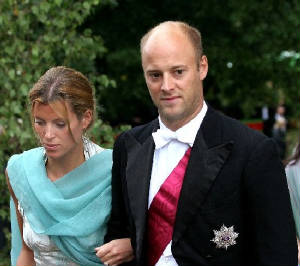
philipp-finland.jpg
  • Philipp Robin, b. Kiel 17 Sep 1970; m. Hamburg 5 May 2006
  • (rel) Panker 10 Jun 2006 Laetitia Bechtolf (b. Wedel 5 May 1978)
  • Heinrich Wilhelm Konstantin Victor Franz (Rome 30
  • Oct 1927-Langen, Hessen [or, Frankfurt] 18 Nov 1999)
  • Otto Adolf (Rome 3 Jun 1937-Hannover 3 Jan 1998); m.1st
  • (morganatically) (civ) Munich 5 Apr 1965 (rel) Trostberg, Upper
  • Bavaria 6 Apr 1965 (div 1969) Angela von Doering (Goslar 12
  • Aug 1940-Hannover 11 Apr 1991); m.2d (morganatically) Latrup
  • -Matrum 28 Dec 1988 (div 1994) Elisabeth Bönker
  • (b. Rumburg, Czechoslovakia 31 Jan 1944)
  • Elisabeth Margarethe Elena Johanna Maria Jolanda Polyxene,
  • b. Rome 8 Oct 1940; m. Frankfurt (civ) 26 Feb 1962 (rel)
  • 28 Feb 1962 Friedrich Carl Gf von Oppersdorff
  • (Oberglogau 30 Jan 1925-Gravenbruch 11 Jan 1985)
  • Wolfgang Moritz (Schloß Rumpenheim 6 Nov 1896-Kronberg,
  • Taunus 12 Jul 1989); m.1st Salem 17 Sep 1924 Marie Alexandra Pss
  • of Baden (Salem 1 Aug 1902-k.in air raid at Frankfurt 29 Jan 1944);
  • m.2d Frankfurt 7 Sep 1948 Ottilie Moeller
  • (Frankfurt 24 Jun 1903-Kronberg 4 Nov 1991)
  • Richard Wilhelm Leopold (Frankfurt
  • 14 May 1901-Frankfurt 11 Feb 1969)
  • Christoph Ernst August (Frankfurt 14 May 1901-k.a.in
  • the Apennines 7 Oct 1943); m. Kronberg 15 Dec 1930
  • Sophie Pss of Greece and Denmark (Corfu 26 Jun
  • 1914- Neuhaus bei Schliersee 24 Nov 2001)
  • Christina Margarethe, b. Kronberg 10 Jan 1933; m.1st Kronberg 2
  • Aug 1956 (div 1962) Andreas Pr of Yugoslavia (Veldes, Krain 28 Jun
  • 1929-Irvine, California 7 May 1990); m.2d London 3 Dec 1962 (div
  • 1986) Robert van Eyck (The Hague 3 May 1916-Ashford 19 Dec 1991)
  • 1g) Helene Sophie van Eyck, b. London 25 Oct 1963; m. Hastings 24
  • Jan 1986 Roderick Alan Harman (b. Chang-chou, China 18 Jul 1942)
  • Alexandra Sophia Harman,
  • b. St. Leonard’s-on-Sea 26 Jul 1986
  • Pascale Olivia Harman, b. St.
  • Leonard’s-on-Sea 19 Mar 1989
  • Mark Nicholas van Eyck, b. Oxford 16 Feb 1966; m. London
  • 13 Jun 1992 Joanne Marea Green (b. Timaru NZ 11 Oct 1961)
  • Dorothea Charlotte Karin, b. Schloß Panker 24 Jul
  • 1934; m.(civ) Schliersee, Upper Bavaria 31 Mar 1959
  • (rel) Munich 1 Apr 1959 Friedrich Pr zu Windisch-Grätz
  • (Heiligenberg, Baden 7 Jul 1917-Gersau 29 May 2002)
  • Karl Adolf Andreas, b. Berlin 26 Mar 1937; m. The
  • Hague (civ) 26 Mar 1966 (rel) 18 Apr 1966 Yvonne Gfn
  • Szapáry von Muraszombath, Széchysziget
  • u. Szapár (b. Budapest 4 Apr 1944)
  • Christoph, b. Munich 18 Jun 1969
  • Irina Verena, b. Munich 1 Apr 1971; m.(civ) Berlin
  • 30 Apr 1999 (rel) Heusenstamm 29 May 1999
  • Alexander Gf von Schönburg-Glauchau
  • (b. Mogadishu, Somalia 15 Aug 1969)
  • Rainer Christoph Friedrich,
  • b. Kronberg 18 Nov 1939
  • Clarissa Alice, b. Kronberg 6 Feb 1944; m.
  • Paris 20 Jul 1971 (div 1976) Claude Jean Derrien
  • (b. Boulogne-sur-Seine 12 Mar 1948)
  • Johanna von Hessen,
  • b. Munich 25 Aug 1980
We use cookies to personalise content and ads, to provide social media features and to analyse our traffic. We also share information about your use of our site with our social media, advertising and analytics partners. View more
Cookies settings
Accept
Decline
Privacy & Cookie policy
Privacy & Cookies policy
Cookie name Active

Privacy and Cookie Policy Last updated: 11 August 2026

Neue Gotha respects your privacy and is committed to handling personal data lawfully, fairly, and transparently. This Privacy and Cookie Policy explains who is responsible for personal data, what information we process, why we process it, how long we retain it, who may receive it, and the rights available to individuals under the General Data Protection Regulation (EU) 2016/679 (“GDPR”) and applicable national data-protection and electronic-communications law.

1. Who is responsible for your personal data?

The controller responsible for the processing described in this policy is:

  • Legal name: Neue Gotha Historical Register gUG
  • Trading or project name: Neue Gotha
  • Postal address: Musterstraße 12, 10115 Berlin, Germany
  • Email: editor@neuegotha.de
  • EU/EEA representative: Not applicable (the controller is established in Germany).
  • Data Protection Officer: No Data Protection Officer has been appointed. Privacy enquiries are handled through editor@neuegotha.de.

Questions about this policy or requests concerning personal data may be sent to the email or postal address above.

2. Scope of this policy

This policy applies to personal data processed through https://neuegotha.com, correspondence with the Neue Gotha editorial office, material submitted for editorial consideration, and editorial or archival records concerning identifiable living individuals.

It does not govern independent third-party websites or services linked from this website. Those providers are responsible for their own privacy practices.

3. Personal data we process and why

Processing activity Personal data Purpose Legal basis Retention
Website delivery, logging, and security IP address; date and time of access; requested page or file; referring page; browser, operating-system, and device information; error and security-event data Deliver the website, maintain availability, diagnose faults, prevent abuse, and protect the website and its users Article 6(1)(f) GDPR — our legitimate interests in operating a secure and reliable website. Where processing is required by law, Article 6(1)(c) GDPR may also apply. Routine access and error logs are retained for 14 days. Records isolated for investigation of a suspected security incident may be retained for up to 90 days after the incident is resolved, or longer where required for legal claims.
Editorial correspondence and enquiries Name, contact details, message content, correspondence history, and any documents or other information voluntarily provided Respond to enquiries, assess corrections or submissions, maintain editorial records, and protect legal rights Article 6(1)(f) GDPR — our legitimate interests in conducting editorial work and responding to correspondence; Article 6(1)(b) GDPR where processing is necessary to take steps at an individual’s request before entering into a contract; Article 6(1)(c) GDPR where retention or disclosure is legally required Correspondence is ordinarily retained for 24 months after the matter closes. Material required to document an editorial decision, resolve a dispute, meet a legal obligation, or establish, exercise, or defend a legal claim may be retained for the applicable limitation period.
Editorial, genealogical, and archival records Names; titles and styles; dates and places associated with public or genealogical events; family relationships; jurisdictions, offices, and public roles; images; biographical information; source and citation information; and correspondence relating to accuracy or provenance Research, document, preserve, verify, correct, and publish material concerning dynastic, genealogical, heraldic, and institutional history Article 6(1)(f) GDPR — our legitimate interests and those of readers, researchers, and institutions in maintaining an accurate historical and genealogical reference work, subject to a documented necessity and balancing assessment. Applicable national rules implementing Article 85 GDPR concerning freedom of expression and information may also apply. For as long as the information remains relevant to the legitimate editorial or archival purpose, subject to accuracy review, correction, restriction, erasure, and applicable archiving or legal requirements
Cookie-consent and language preferences Consent choice, language preference, cookie identifiers, and related technical information Remember privacy choices, demonstrate consent where required, and provide the language selected by the visitor Article 6(1)(f) GDPR for strictly necessary preference and consent-management functions; Article 6(1)(a) GDPR for optional storage, access, or associated processing based on consent As stated in the cookie table below
Optional external services IP address, page URL, device and browser information, language choice, and service-interaction data, depending on the provider Provide optional translation, embedded content, analytics, or similar features actually enabled on the website Article 6(1)(a) GDPR — consent. Non-essential services remain disabled until consent is given. As described for each service and by the relevant provider

We do not use personal data for solely automated decisions that produce legal effects or similarly significant effects concerning individuals.

4. Editorial and archival information obtained from other sources

Neue Gotha is an editorial and historical reference project. Some information in the register may concern identifiable living individuals and may not have been collected directly from those individuals.

Depending on the record, information may be obtained from official gazettes and public registers; archives and libraries; published books and scholarly works; institutional publications; reputable news sources; publicly accessible websites; submissions from the individual concerned or their authorised representative; family representatives; and other documented sources.

The categories of information may include the categories listed under “Editorial, genealogical, and archival records” above. The material may be made available to website visitors and may be indexed by search engines. Neue Gotha seeks to use relevant, proportionate, and appropriately sourced information and to distinguish documented fact from uncertainty or editorial interpretation.

Individuals may contact the editorial office to request access, correction, contextualisation, restriction, or erasure. Requests are assessed under the GDPR and applicable national law, taking into account accuracy, source integrity, the public interest, freedom of expression and information, archival considerations, and the rights and freedoms of other people. No provision of this policy removes a right granted by applicable law.

Neue Gotha does not intentionally publish special-category personal data or information concerning criminal convictions about living individuals unless a specific lawful basis and any additional legal condition have been identified and documented.

5. Cookies and similar technologies

Cookies are small text files stored on, or read from, a visitor’s device. Similar technologies may perform comparable functions. Some are strictly necessary for a website or a service expressly requested by the visitor. Others, including many analytics, advertising, social-media, translation, or embedded-content technologies, require prior consent under applicable EU electronic-communications rules.

Neue Gotha does not place or access non-essential cookies, or activate non-essential external services, before valid consent has been given. Visitors may accept or reject optional purposes separately and may withdraw consent at any time by selecting the permanently available “Cookie settings” control. Withdrawing consent does not affect processing that was lawful before withdrawal. Strictly necessary technologies cannot be disabled through the consent tool, but they may be controlled through browser settings where technically possible.

The following table reflects the technologies currently deployed on the website. It is updated whenever a plugin, host, analytics tool, embedded service, or cookie configuration changes.

Name Provider Purpose Category Duration Third-party access
_scc_session Neue Gotha / managed hosting and site-control provider Maintains a short-lived session for website security and site-control functions Strictly necessary Browser session The contracted hosting or site-control provider may access the identifier when providing technical support
_tccl_visit Neue Gotha / managed website-analytics provider Distinguishes a single website visit and reduces duplicate counting within the same session Analytics — disabled until consent 30 minutes Yes; the contracted analytics provider processes the identifier on Neue Gotha’s behalf
_tccl_visitor Neue Gotha / managed website-analytics provider Assigns a pseudonymous visitor identifier used to produce aggregated website-usage statistics Analytics — disabled until consent 12 months Yes; the contracted analytics provider processes the identifier on Neue Gotha’s behalf
googtrans Neue Gotha / Google Translate Stores or applies the visitor’s language selection for the translation feature Functional — disabled until consent 12 months Google may receive technical and service-interaction data when Google Translate is activated
ng_gt_default_applied Neue Gotha / website translation plugin Records whether the website’s default translation setting has been applied Functional — disabled until consent 24 hours No direct vendor access is assumed; Google may receive data if activation causes Google Translate to load
eu_cookies_bar_consent Neue Gotha / locally hosted EU Cookies Bar plugin Stores the visitor’s cookie choices and prevents the banner from being shown unnecessarily Strictly necessary 6 months No, provided the consent plugin remains locally hosted and does not transmit consent records to its developer
wordpress_test_cookie Neue Gotha / WordPress Checks whether the browser supports cookies when an authorised user visits the sign-in page Strictly necessary Browser session No; the cookie is processed by Neue Gotha and its contracted host

Authorised editorial users may receive WordPress authentication, security, or preference cookies when they sign in. wordpress_logged_in_[hash] maintains an authenticated session for up to two weeks when “Remember Me” is selected; wordpress_sec_[hash] protects administrative access for the session; and wp-settings-[user_id] stores an editor’s interface preferences for up to one year. These internal cookies are processed solely for editorial access and site administration.

6. Google Translate, web fonts, and other external content

Where enabled with the visitor’s consent, Neue Gotha may use Google Translate to provide machine-generated translations. Activating the service may cause the visitor’s browser to connect to Google and disclose technical information such as the IP address, requested page URL, browser or device information, and language or service-interaction data. Machine translations may contain errors and do not replace the original editorial text.

Website fonts are hosted locally by Neue Gotha and do not require a connection to Google. Google Translate remains an optional external service that is activated only after the visitor provides consent.

Information about Google’s processing is available in the Google Privacy Policy and Google’s explanation of how it uses information from sites and applications that use its services.

Embedded material from another website may allow that provider to process personal data as if the visitor had visited the provider directly. Non-essential embeds remain blocked until consent is obtained. Each enabled provider is identified in this policy and in the consent interface.

7. Recipients of personal data

Personal data may be disclosed only where necessary to:

  • hosting, content-delivery, backup, website-maintenance, email, security, and consent-management providers acting under contract;
  • translation, analytics, media, or other external-service providers selected by the visitor through the consent interface;
  • professional advisers, insurers, auditors, or other specialists where necessary to protect legal or operational interests;
  • courts, regulators, law-enforcement bodies, or public authorities where disclosure is required or permitted by law; and
  • the public and search engines where personal data form part of a lawfully published editorial or archival record.

8. International data transfers

Some service providers may process personal data outside the European Economic Area. Where the GDPR restricts such a transfer, Neue Gotha relies on an applicable European Commission adequacy decision or appropriate safeguards under Article 46 GDPR, such as the European Commission’s Standard Contractual Clauses, together with supplementary measures where required.

Cloudflare and Google may transfer limited technical information to recipients in the United States. Where the recipient is validly certified, the transfer is based on the European Commission’s adequacy decision for the EU–US Data Privacy Framework. Where that mechanism is unavailable or does not cover a transfer, the relevant provider’s European Commission Standard Contractual Clauses and supplementary technical and organisational measures are used. Information about the applicable safeguards, including how to obtain a copy, may be requested from editor@neuegotha.de.

9. How long we retain personal data

We retain personal data only for as long as necessary for the purposes described in this policy, including security, editorial integrity, source verification, dispute resolution, and compliance with legal obligations. The specific periods or criteria are stated in the processing and cookie tables above.

When a retention period ends, information is deleted or anonymised unless continued retention is required by law, is necessary for legal claims, or is justified by a documented editorial or archival purpose. Encrypted rolling backups are retained for 35 days and are then overwritten automatically, unless a backup has been isolated for incident recovery or a legal hold.

10. Security

Neue Gotha uses appropriate technical and organisational measures designed to protect personal data against accidental or unlawful destruction, loss, alteration, unauthorised disclosure, or access. No method of internet transmission or electronic storage is completely secure, and absolute security cannot be guaranteed.

11. Your data-protection rights

Subject to the conditions and limitations in the GDPR and applicable national law, an individual may have the right to:

  • obtain confirmation as to whether personal data concerning them are processed and request access to those data;
  • request correction of inaccurate or incomplete personal data;
  • request erasure of personal data;
  • request restriction of processing;
  • object, on grounds relating to their particular situation, to processing based on legitimate interests;
  • receive personal data they provided in a structured, commonly used, machine-readable format and transmit those data to another controller where the right to portability applies;
  • withdraw consent at any time, without affecting the lawfulness of processing carried out before withdrawal; and
  • lodge a complaint with a competent data-protection supervisory authority.

To exercise a right, contact editor@neuegotha.de. Please identify the information or record concerned and the nature of the request. We may request information reasonably necessary to verify identity and protect personal data from unauthorised disclosure. Requests are normally answered within one month, subject to any extension permitted by law.

Where a request concerns published editorial or archival content, applicable rights may be limited where necessary and proportionate to reconcile data protection with freedom of expression and information or other rights recognised by law. Each request will be assessed individually.

12. Complaints

We encourage individuals to contact us first so that we can try to resolve a concern. Individuals also have the right to complain to the supervisory authority in the EU or EEA country of their habitual residence, place of work, or the place of the alleged infringement.

For this Berlin-based controller the supervisory authority is the Berliner Beauftragte für Datenschutz und Informationsfreiheit, Alt-Moabit 59–61, 10555 Berlin, Germany; telephone +49 30 13889-0; email mailbox@datenschutz-berlin.de; website https://www.datenschutz-berlin.de/.

13. Children

The website is intended as a general historical and reference resource and is not directed specifically at children. We do not knowingly request personal data directly from children for an online service requiring parental consent. If you believe a child has provided personal data inappropriately, please contact us.

14. Changes to this policy

We may update this policy when our processing activities, service providers, technologies, or legal obligations change. The current version will be published on this page with a revised “Last updated” date. Where required, we will provide additional notice or request renewed consent before introducing a new processing purpose.

Decline All
Save settings Accept All
Cookies settings