
About the project
Neue Gotha
An independent, continuously maintained reference work devoted to the dynastic, genealogical, heraldic, and institutional history of the world’s sovereign and noble houses brought into the modern age. The Almanach de Gotha’s rich heritage lives on through the Neue Gotha.
A modern reference tradition
Built for careful research, public access, and long-term preservation.
Neue Gotha connects records that are too often scattered across family histories, archives, historic publications, and changing political jurisdictions.
How Neue Gotha is funded
A rare annual book sustains the living digital archive.
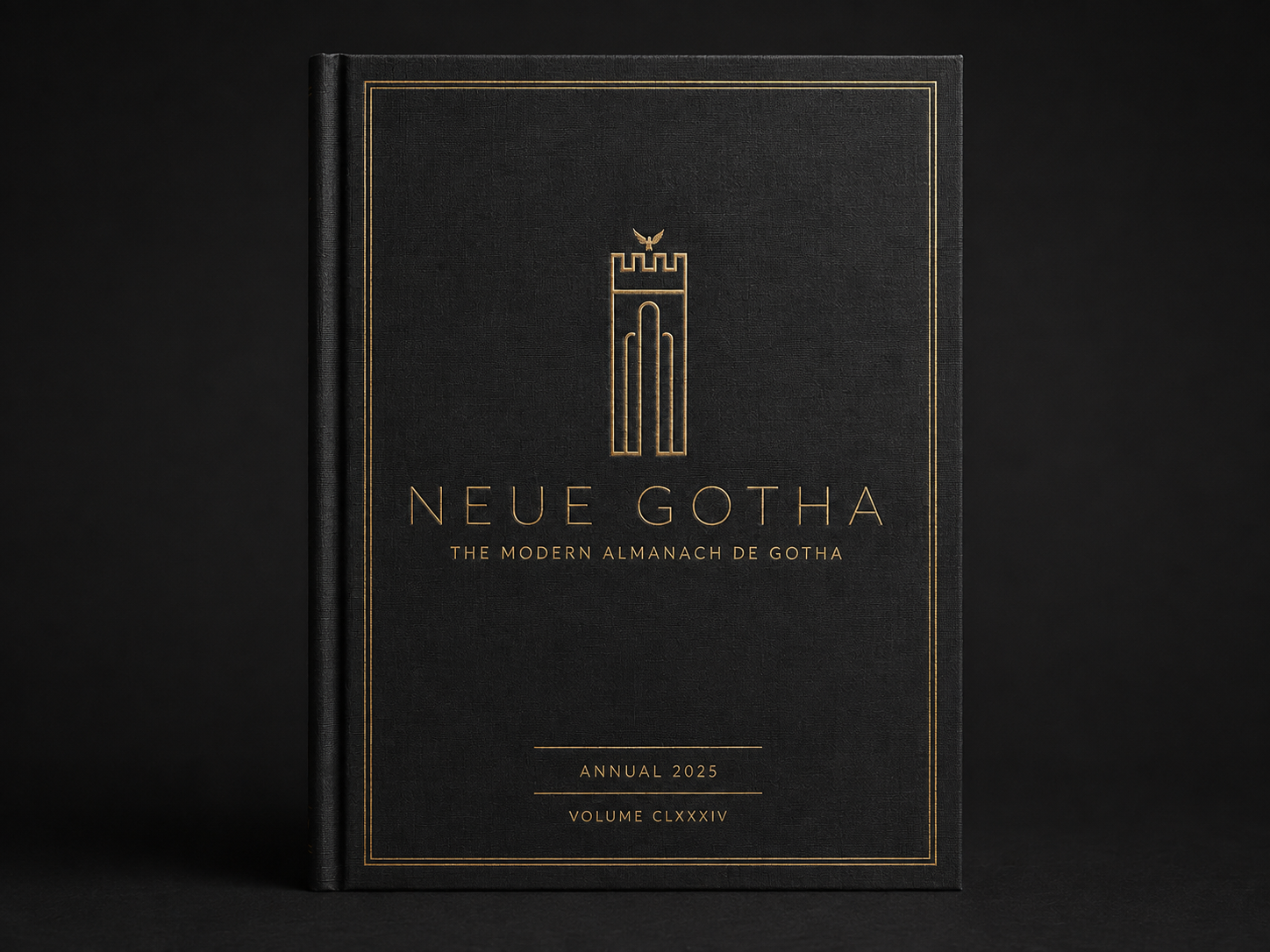
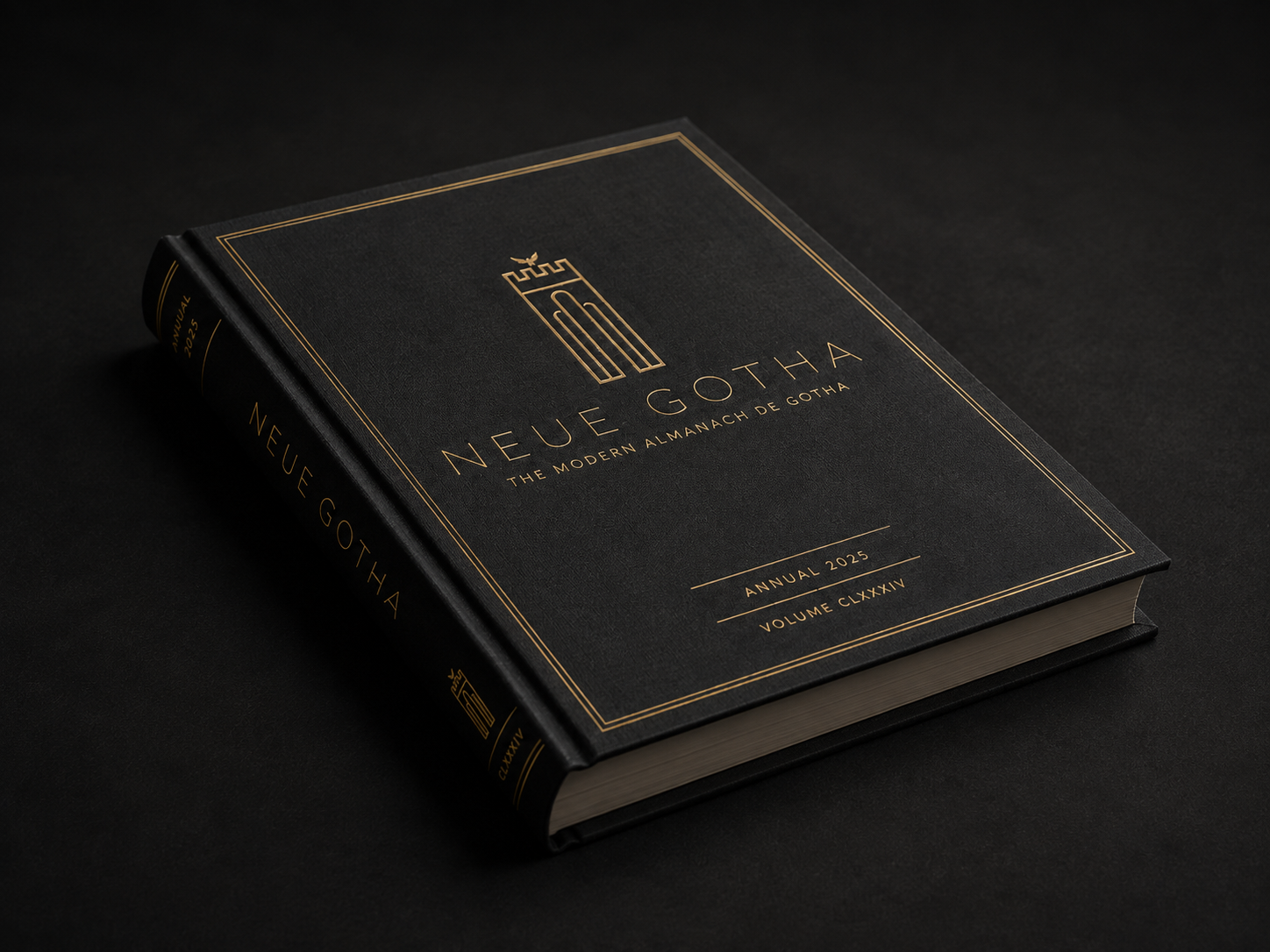
Neue Gotha is funded through sales of its annual hardbound limited edition. Each year, only 500 copies are produced. Each copy is offered at €4,000, and distribution is deliberately restricted.
Demand exceeds the number of available volumes, and prospective purchasers must join a waiting list. Placement on the waiting list records an expression of interest; it does not guarantee that a copy will be available in a particular year.
Proceeds from the limited edition support the continuing work of research, editorial review, digitisation, preservation, technical maintenance, and public presentation. This model allows the online Register to develop without making editorial inclusion dependent on advertising or routine access fees.
Purchase of a hardbound volume does not confer a title, recognition, editorial preference, or guaranteed inclusion in the Register. The publication’s funding and its editorial judgments remain separate.
The annual hardbound edition
500copies produced each year
€4,000price per copy
Waiting listrequired before allocation
Limitedinternational distribution
Availability is restricted. Joining the waiting list does not guarantee allocation.
Who the project serves
A specialist archive with a public purpose.
- Historians and scholarsTracing dynastic, diplomatic, institutional, and political relationships.
- Genealogists and familiesLocating lineages within wider historical and jurisdictional contexts.
- Libraries and archivesConnecting publications, collections, images, and reference records.
- Students and general readersExploring a complex subject through structured and accessible entries.