Nobility and directory

Higher Nobility of Europe – Part XIV

Higher Nobility of Europe – Part XIV

Jurisdiction
Europe
Entry type
Directory
Series
Higher Nobility of Europe
Editorial status
Reviewed - Verified

Volume VII – Part XIV

duke-bridgewater.jpg

House of Egerton

Duke of Bridgewater – Marquis of Brackley – Baron of Ellesmere

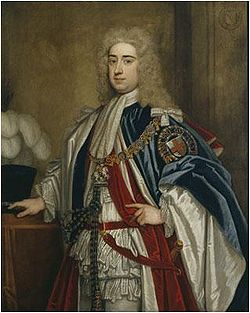
Scroop Egerton, 1st Duke of Bridgewater (11 August 1681 – 11 January 1744), known as Viscount Brackley from 1687 to 1701 and as the Earl of Bridgewater from 1701 to 1720, was a British peer and courtier. Originally the 4th Earl of Bridgewater he was created Duke of Bridgewater in 1720 with the subsidiary title Marquess of Brackley.
He served as Lord Lieutenant of Buckinghamshire twice, first from 1702 to 1711 and next from 1714 to 1728, as a Whig. He was employed in the household of Prince George of Denmark as Gentleman of the Bedchamber and Master of the Horse. He later served as Lord Chamberlain to Caroline of Ansbach, then Princess of Wales, and subsequently as Lord of the Bedchamber to her husband King George II.

Thomas Egerton, illegitimate son of Sir Richard Egerton, of Ridley, Cheshire; cr 1603 Lord Ellesmere, cr 1616 Viscount Brackley, Lord Chancellor of England (1540-York House, Whitehall 15 Mar 1617); m.1st before 1576 Elizabeth Ravenscroft (d.1588); m.2nd Elizabeth, Lady Wolley, née More (d.1600); m.3rd 20 Oct 1600 Alice, Dowager Countess of Derby, née Spencer (d.23 Jan 1637)

  • 1a) Sir Thomas (d.in Ireland 23 Aug 1599); m. Elizabeth Venables
  • 1b) Elizabeth; m. John Dutton, of Dutton
  • 2b) Mary (d.1669); m.11 Nov 1610 Thomas Leigh, cr 1643 Lord Leigh of Stoneleigh (1595-22 Feb 1672)
  • 3b) Vere; m. William Booth, of Dunham Massey
  • 2a) John, 2nd Viscount Brackley, cr 1617 Earl of Bridgwater (1579-4 Dec 1649); m.ca 1601 Lady Frances Stanley (May 1583-11 Mar 1636)
  • 1b) James, Viscount Brackley (21 Sep 1616-1620)
  • 2b) Charles, Viscount Brackley (d.1623)
  • 3b) John, 2nd Earl of Bridgwater (Jun 1623-London 26 Oct 1686); m. London 22 Jul 1641 Lady Elizabeth Cavendish (d. London 14 Jun 1663)
  • 1c) John, 3rd Earl of Bridgwater (9 Nov 1646-19 Mar 1701); m.1st 17 Nov 1664 Lady Elizabeth Cranfield (d.3 Mar 1670); m.2nd 2 Apr 1673 Lady Jane Powlett (d.23 May 1716)
  • 1d) John Egerton (11 Jan 1668-31 Mar 1670)
  • 2d) Charles, Viscount Brackley (7 May 1675-burnt to death 11 Apr 1687)
  • 3d) Mary (14 May 1676-11 Apr 1703); m. Feb 1703 William, Lord Byron (4 Jan 1669-8 Aug 1736)
  • 4d) Thomas (15 Aug 1679-burnt to death 11 Apr 1687)
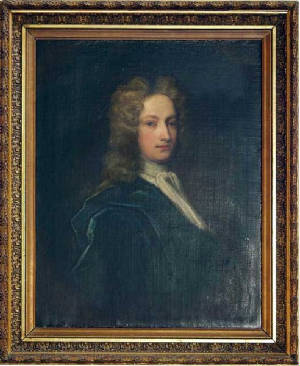
1stDuke-of-Bridgewater.jpg
  • 5d) SCROOPE, cr 1720 Duke of Bridgwater and Marquess of Brackley (11 Aug 1681-11 Jan 1745); m.1st 9 Feb 1703 Lady Elizabeth Churchill (d.22 Mar 1714); m.2nd 4 Aug 1722 Lady Rachael Russell (d.22 May 1777)
  • 1e) John, Viscount Brackley (3 Feb 1704-Eton 30 Jan 1719)
  • 2e) [by 1st m.] Anne, d. London 15 Jun 1762; m.1st 22 Apr 1725 Wriothesley Russell, 3rd Duke of Bedford (25 May 1708-23 Oct 1732); m.2nd London 23 Jun 1733 William Villiers, 3rd Earl of Jersey (d.28 Aug 1769)
  • 3e) Louisa (30 Apr 1723-14 Mar 1761); m.28 Mar 1748 Granville Leveson-Gower, Marquess of Stafford (4 Aug 1721-26 Oct 1803); most of the estates of the 3rd Duke were left to her son, Lord Gower, and her younger grandson, Francis, took the surname Egerton, and was cr 1846 Earl of Ellesmere and Viscount Brackley
  • 4e) Caroline (21 May 1724- )
  • 5e) Charles, Marquess of Brackley (27 Jul 1725-2 May 1731)
  • 6e) JOHN, 2nd Duke of Bridgwater (29 Apr 1727-26 Feb 1748)
  • 7e) William (15 Jan 1729-10 Feb 1729)
  • 8e) Thomas (18 Apr 1730-1 May 1730)
  • 9e) Lady Diana (3 Mar 1732-13 Aug 1758); m.9 Mar 1753 Frederick Calvert, 6th Lord Baltimore (6 Feb 1732-4 Sep 1771)
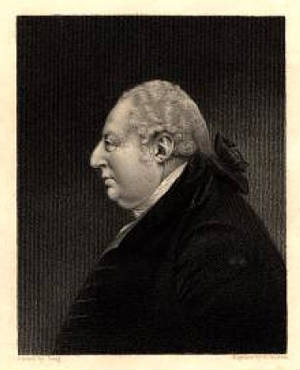
Duke_of_Bridgewater_Francis_Egerton.jpg
  • 10e) FRANCIS, 3rd Duke of Bridgwater (21 May 1736-8 Mar 1803)
  • 6d) William (5 Nov 1684-1732); m. Anna Maria Saunders
  • 1e) Jane; m. Thomas Revel
  • 2e) Henrietta
  • 3e) Anne; m. Thomas Russell
  • 7d) Henry, Bp of Hereford, d.1 Apr 1746; m.18 Dec 1720 Lady Elizabeth Ariana Bentinck (d.1765)
  • 1e) John, Bp of Durham (30 Jan 1721-18 Jun 1787); m.1st 21 Nov 1748 Lady Anne Sophia Grey (d.24 Mar 1780); m.2nd 31 Mar 1782 Mary Boughton
  • 1f) John William, 7th Earl of Bridgwater (14 Apr 1753-Ashridge Park 21 Oct 1823); m. London 14 Jan 1783 Charlotte Catherine Anne Haynes (20 Nov 1763-Ashridge Park 11 Feb 1849)
  • 2f) Francis Henry, 8th Earl of Bridgwater (11 Nov 1756-Paris 11 Feb 1829)
  • 3f) Amelia (1751-1809); m. Sir Abraham Hume, Bt (d.1838)
  • 2e) William, d.26 Mar 1783; m.1751 Mary Kirke
  • 1f) Ariana Margaret
  • 2f) Elizabeth (1760-1810); m. London 19 Feb 1783 Antoine Charles Benjamin Saladin (1757-1814)
  • 3f) Isabella Frances (12 Dec 1759-Paris 2 Dec 1847); m.18 Mar 1784 Richard Master (1746-Fort Royal, Martinique 26 Oct 1800)
  • 3e) Rev Henry
  • 4e) Charles, d.13 May 1793; m. N Skinner
  • 1f) Anne, d.7 May 1839; m.30 Oct 1798 William Green, of Stanway Hall (8 Oct 1766-11 Aug 1840)
  • 2f) Harriet; m. George Brooks
  • 5e) Francis
  • 6e) Anne
  • 8d) John
  • 9d) Charles (1694-7 Nov 1725); m. Catharine Brooke
  • 1e) Scroop, d.23 Apr 1787; m. Sarah Pope
  • 1f) Scroop, d.young
  • 2f) Doddington, d.12 Sep 1773
  • 3f) Elizabeth; m. M Hayter
  • 2e) Doddington
  • 10d) Elizabeth, d.18 Feb 1738; m.6 May 1718 Thomas Catesby Paget, Lord Paget (1689-4 Feb 1742)
  • 2c) William (15 Aug 1649- ); m. Hon. Honora Leigh
  • 1d) John, d.young
  • 2d) Honora (11 Aug 1685- ); m. Thomas Arden Bagot, of Pipe Hall
  • 3d) Jane
  • 4d) Mary
  • 5d) Elizabeth
  • 3c) Thomas, of Tatton Park (16 Mar 1651-29 Oct 1685); m. Hesther Busby (d.1724)
  • 1d) John, of Tatton Park (12 Feb 1679-1724); m. Elizabeth Barbour (d.1743)
  • 1e) John, of Tatton Park (14 Oct 1710-1738); m. Apr 1735 Christian Ward
  • 2e) Samuel, of Tatton Park (28 Dec 1711-10 Feb 1780); m. Beatrix Copley
  • 1f) Beatrix; m. Daniel Wilson, of Dalham Tower
  • 3e) Hester (1708-9 Jul 1780); m. May 1747 William Tatton, of Wythenshaw (13 Jun 1703-28 Apr 1776); among their issue were:
  • 1f) William Tatton Egerton, of Tatton Park and Wythenshawe (1749-1806); m.1st 1773 Frances Maria Fountayne (d.1777); m.2nd 1780 Mary Bootle (d.1784); m.3rd Anna Maria Armytage; m.4th 1803 Charlotte Clara Payler
  • 1g) Wilbraham Tatton, later Egerton, of Tatton (1 Sep 1781- ); m.11 Jan 1806 Elizabeth Sykes
  • 1h) William Tatton Egerton, Lord Egerton of Tatton (30 Dec 1806-21 Feb 1883); m.18 Dec 1830 Lady Charlotte Elizabeth Loftus (d.11 Sep 1878)
  • 1i) Wilbraham Egerton, Earl Egerton of Tatton (17 Jan 1832-16 Mar 1909); m.1st 15 Oct 1857 Lady Mary Sarah Amherst; m.2nd Lambeth Palace 8 Aug 1894 Alice Anne, Dss of Buckingham and Chandos, née Graham-Montgomery
  • 2d) Thomas (1680- )
  • 3d) Rev William (6 Jul 1682-26 Feb 1737); m. Anne Head (1704-1778)
  • 1e) John, d. Nov 1740
  • 2e) Charlotte (1726-1770); m.1745 William Hammond (1721-1772)
  • 3e) Jemima (1728-1809); m.1747 Edward Brydges, of Wootton Court (1712-1780)
  • 4d) Mainwaring
  • 5d) Elizabeth (15 Jan 1679-15 Mar 1720); m.15 Sep 1698 Rev Peter Leigh (d.15 Mar 1719)
  • 4c) Charles (1654-1717); m. Elizabeth Murray
  • 1d) Charles
  • 5c) Steward (1660- )
  • 6c) Frances, d.young
  • 7c) Elizabeth (24 Aug 1653-1709); m.1672 Robert Sydney, 4th Earl of Leicester (1649-11 Nov 1702)
  • 8c) Catharine, d.young
  • 4b) Thomas, d.young
  • 5b) Frances, d.27 Nov 1664; m. Feb 1621 Sir John Hobart, 2nd Bt (19 Apr 1593-20 Apr 1647)
  • 6b) Arabella, d.1669; m. Oliver St. John, Lord St. John (d. Edgehill 23 Oct 1642)
  • 7b) Elizabeth; m. David Cecil, 3rd Earl of Exeter (d.1654)
  • 8b) Mary, d.1659; m. Richard Herbert, 2nd Lord Herbert of Chirbury (d.13 May 1655)
  • 9b) Cecilia
  • 10b) Alice, d.young
  • 11b) Anne
  • 12b) Penelope, d.1658; m. Sir Robert Napier, 2nd Bt (d.1661)
  • 13b) Catharine; m. Sir William Courteen (d. Florence 1655)
  • 14b) Magdalen, d.24 Sep 1664; m. Sir Gervase Cutler, of Stainborough (b.1592, d.during siege of Pontefract Castle 1645)
  • 15b) Alice, d.1689; m.1652 Edward Vaughan, 2nd Earl of Carbery (d.3 Dec 1687)
  • 3a) Mary; m. Sir Francis Leigh
dukeofDorset.JPG

House of Sackville

Dukes of Dorset

Duke of Dorset was a title in the Peerage of Great Britain. It was created in 1720 for the politician Lionel Sackville, 7th Earl of Dorset. The Sackville family descended from Sir Richard Sackville. His only surviving son, Thomas Sackville, was a statesman, poet and dramatist and notably served as Lord High Treasurer between 1599 and 1608. He was raised to the Peerage of England as Baron Buckhurst, of Buckhurst in the County of Sussex, in 1567, and was made Earl of Dorset in 1604, also in the Peerage of England. The titles descended in the direct line until the death of his grandson, the third Earl, in 1624. The late Earl was succeeded by his younger brother, the fourth Earl. He was Lord Chamberlain between 1642 and 1649. He was succeeded by his son, the fifth Earl. He married Lady Frances, daughter of Lionel Cranfield, 1st Earl of Middlesex. He was succeeded by his eldest son, the sixth Earl. He succeeded to the Cranfield estates on the death of his maternal uncle Lionel Cranfield, 3rd Earl of Middlesex. In 1675, two years before he succeeded his father, he was raised to the Peerage of England in his own right as Baron Cranfield, of Cranfield in the County of Middlesex, and Earl of Middlesex. He was succeeded by his son, the aforementioned seventh Earl, who was made Duke of Dorset in 1720.

The Duke of Dorset was succeeded by his eldest son, the second Duke. The latter was succeeded by his nephew, the third Duke. He was the son of Lord John Sackville, second son of the first Duke. Dorset was He was the British Ambassador to France between 1783 and 1789 in the lead up to the French Revolution. He was succeeded by his only son, the fourth Duke. He died unmarried at an early age in 1815 after a fall from his horse. The titles passed to his cousin, Charles Sackville-Germain, 2nd Viscount Sackville, who became the fifth Duke. He was the son of George Germain, 1st Viscount Sackville, third son of the first Duke (see Viscount Sackville). All the titles became extinct on his death in 1845.
The family seat was Knole House, Kent. On the death of the fourth Duke in 1815 Knole House was inherited by the late Duke’s sister, Lady Elizabeth Sackville. She was the wife of George West, 5th Earl De La Warr, who assumed the additional surname of Sackville. In 1865 the barony of Buckhurst held by the Earls and Dukes of Dorset was revived in Elizabeth’s favour. In 1876 the Sackville title was also revived when her younger son Mortimer Sackville-West was created Baron Sackville.
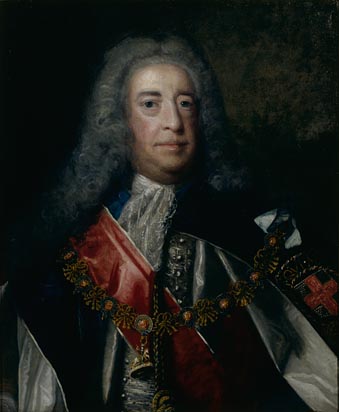
1stdukeofdorset.jpg

1st Duke of Dorset

Lionel Cranfield Sackville, 1st Duke of Dorset, PC (18 January 1688 – 10 October 1765) was an English political leader and Lord Lieutenant of Ireland. He was the son of the 6th Earl of Dorset and 1st Earl of Middlesex and the former Lady Mary Compton, younger daughter of the 3rd Earl of Northampton. Styled Lord Buckhurst from birth, he succeeded his father as 7th Earl of Dorset and 2nd Earl of Middlesex in 1706, and was created Duke of Dorset in 1720.

Dorset served twice as Lord Lieutenant of Ireland, from 1731 to 1737 and again from 1751 to 1755. In 1739, at the foundation of the Foundling Hospital, he was one of that charity’s original governors. Sackville Street, the main thoroughfare in Dublin city, was named in his honour; while the name was changed to O’Connell Street in 1924, his name survives in nearby Sackville Place. Horace Walpole gave this sketch of his character : “with the greatest dignity in his appearance, he was in private the greatest lover of buffoonery and low company.. he was never thought to have wanted a tendency to power, in whosever hands it was”.

He married Elizabeth Colyear, the daughter of Lieutenant-General Walter Colyear (brother of the 1st Earl of Portmore), in January 1709. Their sons were: Charles, Earl of Middlesex (later 2nd Duke of Dorset) Lord John Sackville (father of the 3rd Duke of Dorset) Lord George Sackville (later Lord George Germain and 1st Viscount Sackville) Sir Richard Sackville (d.1556); m. Winifred Brydges (d.ca 1586), who m.2ndly the Marquess of Winchester

1a) Thomas, cr 1567 Baron Buckhurst, cr 1604 Earl of Dorset (d. Whitehall 19 Apr 1608); m.1555 Cicely Baker (d.1 Oct 1615)

  • 1b) Robert, 2nd Earl of Dorset (1561-Dorset House 27 Feb 1609); m.1st 1580 Lady Margaret Howard (d.19 Aug 1591); m.2nd Yarnton, Oxon 4 Dec 1592 Anne Spencer (d.22 Sep 1618), widow of Lord Compton and of Lord Monteagle
  • 1c) Richard, 3rd Earl of Dorset (London 28 Mar 1589-Dorset House 28 Mar 1624); m. London 25 Feb 1609 Lady Anne Clifford, Baroness Clifford (Skipton Castle 30 Jan 1590-Brougham Castle 22 Mar 1676); she m.2ndly the Earl of Pembroke & Montgomery
  • 1d) Thomas, Lord Buckhurst (bap Knole 1620, d.an infant)
  • 2c) Edward, 4th Earl of Dorset (1590-Dorset House 18 Jul 1652); m. Mary Curzon (1586-16 May 1645)
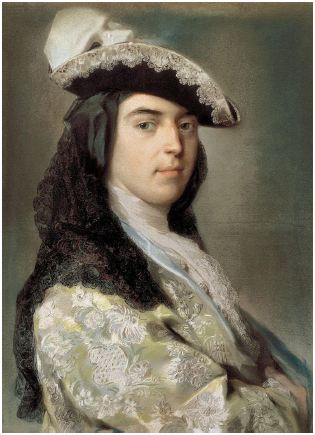
  • 1d) Richard, 5th Earl of Dorset (Dorset House 16 Sep 1622-Knole 27 Aug 1677); m.1637 Lady Frances Cranfield (d. London 20 Apr 1687)
  • 1e) Charles, 6th Earl of Dorset (24 Jan 1638-Bath 29 Jan 1706); m.1st Jun 1674 Mary, Dowager Countess of Falmouth, née Bagot (1645-12 Sep 1679); m.2nd 7 Mar 1685 Lady Mary Compton (d. London 6 Aug 1691); m.3rd 27 Oct 1704 Mrs Anne Roche (d. Aug 1706)
  • 1f) LIONEL CRANFIELD, 7th Earl of Dorset, cr 1720 Duke of Dorset (18 Jan 1688-Knole 10 Oct 1765); m. Jan 1709 Elizabeth Colyear (d.12 Jun 1768)
2nd-duke-of-dorset.JPG

1g) CHARLES, 2nd Duke of Dorset (6 Feb 1711-6 Jan 1769); m. London 30 Oct 1744 Hon. Grace Boyle (d. London 10 May 1763)

2g) John Philip (22 Jun 1713-3 Dec 1765); m.1744 Lady Frances Gower
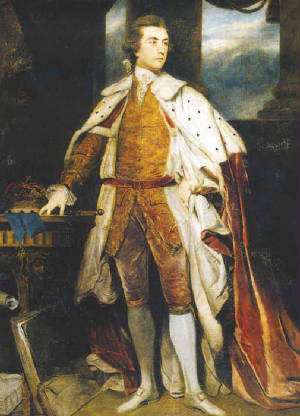
JohnSackville3rdDukeofDorset.jpg

1h) JOHN FREDERICK, 3rd Duke of Dorset (25 Mar 1745-Knole 19 Jul 1799); m. Knole 4 Jan 1790 Arabella Diana Cope (1769-Knole 1 Aug 1825)

  • 1i) Mary (30 Jul 1792-Bournemouth 20 Jul 1864); m.1st Knole 5 Aug 1811 Other Archer, 6th Earl of Plymouth (2 Jul 1789-10 Jul 1833); m.2nd Knole 25 May 1839 William Pitt Amherst, Earl Amherst (Bath 14 Jan 1773-Knole 13 Mar 1857)
  • 2i) GEORGE JOHN FREDERICK, 4th Duke of Dorset (15 Nov 1793-14 Feb 1815)

  • 3i) Elizabeth, cr 1864 Baroness Buckhurst (11 Aug 1795-9 Jan 1870); m.21 Jun 1813 George John West, later Sackville-West, 5th Earl de la Warr (London 26 Oct 1791-Knole 23 Feb 1869); they and their issue inherited Knole and much of the other Sackville property after the death of her brother and sister
  • 2h) Mary (1 Apr 1746-30 Sep 1778); m.30 Aug 1767 Sackville Tufton, 8th Earl of Thanet (Aug 1733-Nice 27 Mar 1786)
  • 3g) George, took surname Germain, having inherited the estates of Lady Elizabeth Germain, cr 1782 Viscount Sackville of Drayton and Lord Bolebrooke (26 Jan 1716-Stoneland Lodge 26 Aug 1785); m. London 3 Sep 1754 Diana Sambrooke (d. Knole 15 Jan 1778)
  • 1h) CHARLES, 2nd Viscount Sackville, 5th Duke of Dorset (27 Aug 1767-London 29 Jul 1843)
  • 2h) George (7 Dec 1770-31 May 1836); m. Dec 1814 Harriet Pearce (d.18 Apr 1835)
  • 1i) Caroline Harriet (d.16 Jan 1908); m.2 Jun 1837 William Bruce Stopford, later Stopford Sackville (1 Apr 1806-29 May 1872); they inherited Drayton and other property of this branch of the family
  • 3h) Diana (8 Jul 1756-Ardfert Abbey 29 Aug 1814); m. London 26 Nov 1777 John Crosbie, 2nd Earl of Glandore (25 May 1752-Ardfert Abbey 23 Oct 1815)
  • 4h) Elizabeth; m. Henry Arthur Herbert
  • 5h) Caroline (d.1789)
  • 4g) Anne (d.23 Mar 1721)
  • 5g) Elizabeth (d.19 Jun 1729); m.6 Dec 1726 Thomas Thynne, 2nd Viscount Weymouth (21 May 1710-12 Jan 1751)
  • 6g) Caroline (6 Mar 1718-24 Mar 1775); m. Knole 27 Jul 1742 Joseph Damer, Earl of Dorchester (12 Mar 1718-London 12 Jan 1798)
  • 2f) [illegitimate] Mary (d. London 26 Jun 1714); m.1st Feb 1693 Lionel Boyle, 3rd Earl of Orrery (1670-Earl’s Court, Kensington 24 Aug 1703); m.2nd Richard Boyle, 2nd Viscount Shannon (1675-London 20 Dec 1740)
  • 2e) Edward (2 Apr 1641-1678)

  • 3e) Lionel (25 Jun 1645- )
  • 4e) Richard (30 Apr 1646-1712)
  • 5e) Lionel (25 Oct 1656-d.young)
  • 6e) Cranfield (18 Dec 1660- )
  • 7e) Thomas (3 Feb 1662-14 Aug 1675)
  • 8e) Elizabeth (d.young)
  • 9e) Anne (d.young)
  • 10e) Catherine (d.young)
  • 11e) Mary (4 Feb 1648-London 4 Nov 1710); m. London 6 Feb 1665 Roger Boyle, 2nd Earl of Orrery (1646-29 Mar 1682)
  • 12e) Anne (17 Jun 1650-22 Aug 1672); m.19 Apr 1671 Alexander Home, 4th Earl of Home (d.1674)
  • 13e) Frances (6 Feb 1655-21 Jan 1722); m.1st 11 Dec 1673 George Lane, Lord Lanesborough (d. Lanesborough 11 Dec 1683); m.2nd Denny Mischamp
  • 2d) Edward (k.a.11 Apr 1646); m.24 Dec 1645 Bridget Wray, Baroness Norreys (12 May 1627-1657)
  • 3c) Cecily; m. Hon. Sir Henry Compton (1583-1648)
  • 4c) Anne; m.1st 21 Jun 1609 Edward Seymour, Lord Beauchamp (d.15 Sep 1618); m.2nd Sir Edward Lewis, of the Van
  • 2b) Henry
  • 3b) Sir William (k.a. France 1591)
  • 4b) Thomas
  • 5b) Anne; m. Sir Henry Glemham
  • 6b) Jane; m. Feb 1591 Anthony Browne, 2nd Viscount Montague (1 Feb 1574-23 Oct 1629)
  • 7b) Mary; m. Henry Neville, Lord Abergavenny (d.1641)
  • 2a) Anne (d.14 May 1595); m. Grgeory Fiennes, 10th Lord Dacre (bap 1539-Chelsea 25 Sep 1594)
We use cookies to personalise content and ads, to provide social media features and to analyse our traffic. We also share information about your use of our site with our social media, advertising and analytics partners. View more
Cookies settings
Accept
Decline
Privacy & Cookie policy
Privacy & Cookies policy
Cookie name Active

Privacy and Cookie Policy Last updated: 11 August 2026

Neue Gotha respects your privacy and is committed to handling personal data lawfully, fairly, and transparently. This Privacy and Cookie Policy explains who is responsible for personal data, what information we process, why we process it, how long we retain it, who may receive it, and the rights available to individuals under the General Data Protection Regulation (EU) 2016/679 (“GDPR”) and applicable national data-protection and electronic-communications law.

1. Who is responsible for your personal data?

The controller responsible for the processing described in this policy is:

  • Legal name: Neue Gotha Historical Register gUG
  • Trading or project name: Neue Gotha
  • Postal address: Musterstraße 12, 10115 Berlin, Germany
  • Email: editor@neuegotha.de
  • EU/EEA representative: Not applicable (the controller is established in Germany).
  • Data Protection Officer: No Data Protection Officer has been appointed. Privacy enquiries are handled through editor@neuegotha.de.

Questions about this policy or requests concerning personal data may be sent to the email or postal address above.

2. Scope of this policy

This policy applies to personal data processed through https://neuegotha.com, correspondence with the Neue Gotha editorial office, material submitted for editorial consideration, and editorial or archival records concerning identifiable living individuals.

It does not govern independent third-party websites or services linked from this website. Those providers are responsible for their own privacy practices.

3. Personal data we process and why

Processing activity Personal data Purpose Legal basis Retention
Website delivery, logging, and security IP address; date and time of access; requested page or file; referring page; browser, operating-system, and device information; error and security-event data Deliver the website, maintain availability, diagnose faults, prevent abuse, and protect the website and its users Article 6(1)(f) GDPR — our legitimate interests in operating a secure and reliable website. Where processing is required by law, Article 6(1)(c) GDPR may also apply. Routine access and error logs are retained for 14 days. Records isolated for investigation of a suspected security incident may be retained for up to 90 days after the incident is resolved, or longer where required for legal claims.
Editorial correspondence and enquiries Name, contact details, message content, correspondence history, and any documents or other information voluntarily provided Respond to enquiries, assess corrections or submissions, maintain editorial records, and protect legal rights Article 6(1)(f) GDPR — our legitimate interests in conducting editorial work and responding to correspondence; Article 6(1)(b) GDPR where processing is necessary to take steps at an individual’s request before entering into a contract; Article 6(1)(c) GDPR where retention or disclosure is legally required Correspondence is ordinarily retained for 24 months after the matter closes. Material required to document an editorial decision, resolve a dispute, meet a legal obligation, or establish, exercise, or defend a legal claim may be retained for the applicable limitation period.
Editorial, genealogical, and archival records Names; titles and styles; dates and places associated with public or genealogical events; family relationships; jurisdictions, offices, and public roles; images; biographical information; source and citation information; and correspondence relating to accuracy or provenance Research, document, preserve, verify, correct, and publish material concerning dynastic, genealogical, heraldic, and institutional history Article 6(1)(f) GDPR — our legitimate interests and those of readers, researchers, and institutions in maintaining an accurate historical and genealogical reference work, subject to a documented necessity and balancing assessment. Applicable national rules implementing Article 85 GDPR concerning freedom of expression and information may also apply. For as long as the information remains relevant to the legitimate editorial or archival purpose, subject to accuracy review, correction, restriction, erasure, and applicable archiving or legal requirements
Cookie-consent and language preferences Consent choice, language preference, cookie identifiers, and related technical information Remember privacy choices, demonstrate consent where required, and provide the language selected by the visitor Article 6(1)(f) GDPR for strictly necessary preference and consent-management functions; Article 6(1)(a) GDPR for optional storage, access, or associated processing based on consent As stated in the cookie table below
Optional external services IP address, page URL, device and browser information, language choice, and service-interaction data, depending on the provider Provide optional translation, embedded content, analytics, or similar features actually enabled on the website Article 6(1)(a) GDPR — consent. Non-essential services remain disabled until consent is given. As described for each service and by the relevant provider

We do not use personal data for solely automated decisions that produce legal effects or similarly significant effects concerning individuals.

4. Editorial and archival information obtained from other sources

Neue Gotha is an editorial and historical reference project. Some information in the register may concern identifiable living individuals and may not have been collected directly from those individuals.

Depending on the record, information may be obtained from official gazettes and public registers; archives and libraries; published books and scholarly works; institutional publications; reputable news sources; publicly accessible websites; submissions from the individual concerned or their authorised representative; family representatives; and other documented sources.

The categories of information may include the categories listed under “Editorial, genealogical, and archival records” above. The material may be made available to website visitors and may be indexed by search engines. Neue Gotha seeks to use relevant, proportionate, and appropriately sourced information and to distinguish documented fact from uncertainty or editorial interpretation.

Individuals may contact the editorial office to request access, correction, contextualisation, restriction, or erasure. Requests are assessed under the GDPR and applicable national law, taking into account accuracy, source integrity, the public interest, freedom of expression and information, archival considerations, and the rights and freedoms of other people. No provision of this policy removes a right granted by applicable law.

Neue Gotha does not intentionally publish special-category personal data or information concerning criminal convictions about living individuals unless a specific lawful basis and any additional legal condition have been identified and documented.

5. Cookies and similar technologies

Cookies are small text files stored on, or read from, a visitor’s device. Similar technologies may perform comparable functions. Some are strictly necessary for a website or a service expressly requested by the visitor. Others, including many analytics, advertising, social-media, translation, or embedded-content technologies, require prior consent under applicable EU electronic-communications rules.

Neue Gotha does not place or access non-essential cookies, or activate non-essential external services, before valid consent has been given. Visitors may accept or reject optional purposes separately and may withdraw consent at any time by selecting the permanently available “Cookie settings” control. Withdrawing consent does not affect processing that was lawful before withdrawal. Strictly necessary technologies cannot be disabled through the consent tool, but they may be controlled through browser settings where technically possible.

The following table reflects the technologies currently deployed on the website. It is updated whenever a plugin, host, analytics tool, embedded service, or cookie configuration changes.

Name Provider Purpose Category Duration Third-party access
_scc_session Neue Gotha / managed hosting and site-control provider Maintains a short-lived session for website security and site-control functions Strictly necessary Browser session The contracted hosting or site-control provider may access the identifier when providing technical support
_tccl_visit Neue Gotha / managed website-analytics provider Distinguishes a single website visit and reduces duplicate counting within the same session Analytics — disabled until consent 30 minutes Yes; the contracted analytics provider processes the identifier on Neue Gotha’s behalf
_tccl_visitor Neue Gotha / managed website-analytics provider Assigns a pseudonymous visitor identifier used to produce aggregated website-usage statistics Analytics — disabled until consent 12 months Yes; the contracted analytics provider processes the identifier on Neue Gotha’s behalf
googtrans Neue Gotha / Google Translate Stores or applies the visitor’s language selection for the translation feature Functional — disabled until consent 12 months Google may receive technical and service-interaction data when Google Translate is activated
ng_gt_default_applied Neue Gotha / website translation plugin Records whether the website’s default translation setting has been applied Functional — disabled until consent 24 hours No direct vendor access is assumed; Google may receive data if activation causes Google Translate to load
eu_cookies_bar_consent Neue Gotha / locally hosted EU Cookies Bar plugin Stores the visitor’s cookie choices and prevents the banner from being shown unnecessarily Strictly necessary 6 months No, provided the consent plugin remains locally hosted and does not transmit consent records to its developer
wordpress_test_cookie Neue Gotha / WordPress Checks whether the browser supports cookies when an authorised user visits the sign-in page Strictly necessary Browser session No; the cookie is processed by Neue Gotha and its contracted host

Authorised editorial users may receive WordPress authentication, security, or preference cookies when they sign in. wordpress_logged_in_[hash] maintains an authenticated session for up to two weeks when “Remember Me” is selected; wordpress_sec_[hash] protects administrative access for the session; and wp-settings-[user_id] stores an editor’s interface preferences for up to one year. These internal cookies are processed solely for editorial access and site administration.

6. Google Translate, web fonts, and other external content

Where enabled with the visitor’s consent, Neue Gotha may use Google Translate to provide machine-generated translations. Activating the service may cause the visitor’s browser to connect to Google and disclose technical information such as the IP address, requested page URL, browser or device information, and language or service-interaction data. Machine translations may contain errors and do not replace the original editorial text.

Website fonts are hosted locally by Neue Gotha and do not require a connection to Google. Google Translate remains an optional external service that is activated only after the visitor provides consent.

Information about Google’s processing is available in the Google Privacy Policy and Google’s explanation of how it uses information from sites and applications that use its services.

Embedded material from another website may allow that provider to process personal data as if the visitor had visited the provider directly. Non-essential embeds remain blocked until consent is obtained. Each enabled provider is identified in this policy and in the consent interface.

7. Recipients of personal data

Personal data may be disclosed only where necessary to:

  • hosting, content-delivery, backup, website-maintenance, email, security, and consent-management providers acting under contract;
  • translation, analytics, media, or other external-service providers selected by the visitor through the consent interface;
  • professional advisers, insurers, auditors, or other specialists where necessary to protect legal or operational interests;
  • courts, regulators, law-enforcement bodies, or public authorities where disclosure is required or permitted by law; and
  • the public and search engines where personal data form part of a lawfully published editorial or archival record.

8. International data transfers

Some service providers may process personal data outside the European Economic Area. Where the GDPR restricts such a transfer, Neue Gotha relies on an applicable European Commission adequacy decision or appropriate safeguards under Article 46 GDPR, such as the European Commission’s Standard Contractual Clauses, together with supplementary measures where required.

Cloudflare and Google may transfer limited technical information to recipients in the United States. Where the recipient is validly certified, the transfer is based on the European Commission’s adequacy decision for the EU–US Data Privacy Framework. Where that mechanism is unavailable or does not cover a transfer, the relevant provider’s European Commission Standard Contractual Clauses and supplementary technical and organisational measures are used. Information about the applicable safeguards, including how to obtain a copy, may be requested from editor@neuegotha.de.

9. How long we retain personal data

We retain personal data only for as long as necessary for the purposes described in this policy, including security, editorial integrity, source verification, dispute resolution, and compliance with legal obligations. The specific periods or criteria are stated in the processing and cookie tables above.

When a retention period ends, information is deleted or anonymised unless continued retention is required by law, is necessary for legal claims, or is justified by a documented editorial or archival purpose. Encrypted rolling backups are retained for 35 days and are then overwritten automatically, unless a backup has been isolated for incident recovery or a legal hold.

10. Security

Neue Gotha uses appropriate technical and organisational measures designed to protect personal data against accidental or unlawful destruction, loss, alteration, unauthorised disclosure, or access. No method of internet transmission or electronic storage is completely secure, and absolute security cannot be guaranteed.

11. Your data-protection rights

Subject to the conditions and limitations in the GDPR and applicable national law, an individual may have the right to:

  • obtain confirmation as to whether personal data concerning them are processed and request access to those data;
  • request correction of inaccurate or incomplete personal data;
  • request erasure of personal data;
  • request restriction of processing;
  • object, on grounds relating to their particular situation, to processing based on legitimate interests;
  • receive personal data they provided in a structured, commonly used, machine-readable format and transmit those data to another controller where the right to portability applies;
  • withdraw consent at any time, without affecting the lawfulness of processing carried out before withdrawal; and
  • lodge a complaint with a competent data-protection supervisory authority.

To exercise a right, contact editor@neuegotha.de. Please identify the information or record concerned and the nature of the request. We may request information reasonably necessary to verify identity and protect personal data from unauthorised disclosure. Requests are normally answered within one month, subject to any extension permitted by law.

Where a request concerns published editorial or archival content, applicable rights may be limited where necessary and proportionate to reconcile data protection with freedom of expression and information or other rights recognised by law. Each request will be assessed individually.

12. Complaints

We encourage individuals to contact us first so that we can try to resolve a concern. Individuals also have the right to complain to the supervisory authority in the EU or EEA country of their habitual residence, place of work, or the place of the alleged infringement.

For this Berlin-based controller the supervisory authority is the Berliner Beauftragte für Datenschutz und Informationsfreiheit, Alt-Moabit 59–61, 10555 Berlin, Germany; telephone +49 30 13889-0; email mailbox@datenschutz-berlin.de; website https://www.datenschutz-berlin.de/.

13. Children

The website is intended as a general historical and reference resource and is not directed specifically at children. We do not knowingly request personal data directly from children for an online service requiring parental consent. If you believe a child has provided personal data inappropriately, please contact us.

14. Changes to this policy

We may update this policy when our processing activities, service providers, technologies, or legal obligations change. The current version will be published on this page with a revised “Last updated” date. Where required, we will provide additional notice or request renewed consent before introducing a new processing purpose.

Decline All
Save settings Accept All
Cookies settings