
Formerly Sovereign House
Kingdom of Iraq – House of Al-Hashimi
Kingdom of Iraq – House of Al-Hashimi
- Jurisdiction
- Iraq
- Dynasty
- House of Al-Hashimi
- Entry type
- House
- Editorial status
- Reviewed - Verified

Al-Mamlakah Al-‘Irāqiyyah
The Kingdom of Iraq (Arabic: المملكة العراقية Al-Mamlakah Al-‘Irāqiyyah) was the first modern state in Iraq, which began in August 1921 with the coronation of Faisal bin al-Hussein bin Ali al-Hashemi as King Faisal I. Although a League of Nations mandate was awarded to Britain in 1920, the 1920 Iraqi revolt resulted in the mandate plan being dropped and a semi-independent kingdom being created under the Hashemite allies of Britain. The kingdom was granted full independence in 1932 following the Anglo-Iraqi Treaty (1930). The kingdom ended in 1958 when King Faisal II together with the Crown Prince were murdered and the monarchy was over thrown in a coup led by Abd al-Karim Qasim.
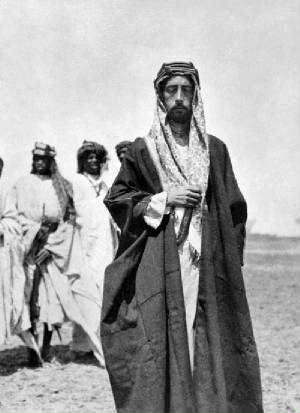
The House of Hashemite
Hashemite is the Latinate version of the Arabic: هاشمي, transliteration: Hāšimī, and traditionally refers to those belonging to the Banu Hashim, or “clan of Hashim”, a clan within the larger Quraish tribe. It also refers to an Arab dynasty whose original strength stemmed from the network of tribal alliances and blood loyalties in the Hejaz region of Saudi Arabia, along the Red Sea.
The Hashemites trace their ancestry from Hashim ibn Abd al-Manaf (died c. 510 AD), the great-grandfather of the Islamic prophet Muhammad, although the definition today mainly refers to the descendants of the prophet’s daughter, Fatimah. The early history of the Hashemites saw them in a continuous struggle against the Umayyads for control over who would be the caliph or successor to Muhammad. The Umayyads were of the same tribe as the Hashemites, but a different clan. After the overthrow of the Umayyads, the Abbasids would present themselves as representatives of the Hashemites, as they claimed descent from Abbas ibn Abd al-Muttalib, an uncle of Muhammad. Muhammad’s father had died before he was born, and his mother died while he was a child, so Muhammad was raised by his uncle Abu Talib, chief of the Hashemites.
From the 10th century onwards, the Sharif (religious leader) of Mecca and its Emir was by traditional agreement a Hashemite. Before World War I, Hussein bin Ali of the Hashemite Dhawu-‘Awn clan ruled the Hejaz on behalf of the Ottoman sultan. For some time it had been the practice of the Sublime Porte to appoint the Emir of Mecca from among a select group of candidates. In 1908, Hussein bin Ali was appointed Emir of Mecca. He found himself increasingly at odds with the Young Turks in control at Istanbul, while he strove to secure his family’s position as hereditary Emirs
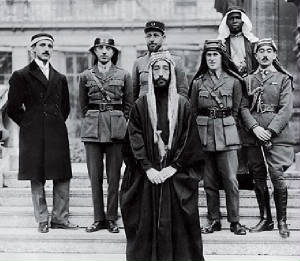
During and after World War I
Sharif Hussein bin Ali rebelled against the rule of the Ottomans during the Arab Revolt of 1916. Between 1917 and 1924, after the collapse of Ottoman power, Hussein bin Ali ruled an independent Hejaz, of which he proclaimed himself king, with the tacit support of the British Foreign Office. His supporters are sometimes referred to as “Sharifians” or the “Sharifian party”. His chief rival in the Arabian peninsula was the king of the highlanders on the highland of Najd named Ibn Saud, who annexed the Hejaz in 1925 and set his own son, Faysal bin Abdelaziz Al Saud, as governor, the region was later incorporated into Saudi Arabia.
Hussein bin Ali had five sons:
- Ali, who briefly succeeded to the throne of Hejaz before its loss to the Saud family.
- Abdullah, later became the king of Transjordan, and whose descendants rule the kingdom, that has been known ever since as the Hashemite Kingdom of Jordan.
- Faisal, was briefly proclaimed King of Syria, and ended up becoming King of Iraq.
- Prince Zeid, who moved to Jordan when his brother’s grandson, King Faisal II of Iraq, was overthrown and murdered in a coup in 1958.
- Hassan, died at a young age.
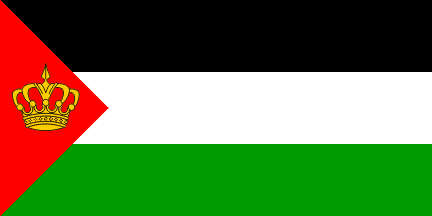
Royal Standard of the Kingdom of Iraq
Iraq’s first flag was inspired by the flag of the Kingdom of Hejaz, and was in use at the time of independence in 1932. The flag was actually used before independence, from 1924 to 1959.
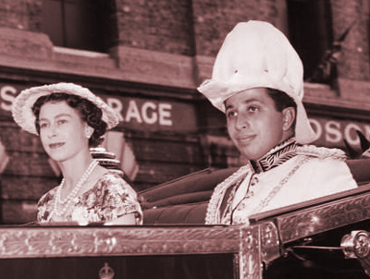
Hashemite Kingdom of Iraq – 1921-1958
| Name | Lifespan | Reign – start | Reign – end | Family | King |
Faisal I
|
20 May 1883 – 8 September 1933 | 23 August 1921 | 8 September 1933 | Hashemite |
Image unavailable |
Ghazi
|
21 March 1912 – 4 April 1939 | 8 September 1933 | 4 April 1939 | Hashemite | |
Faisal II
|
2 May 1935 – 14 July 1958 | 4 April 1939 | 14 July 1958 | Hashemite |
The 14th July Revolution in Iraq
In the summer of 1958, King Hussein of Jordan asked for Iraqi military assistance during the escalating Lebanon crisis. Units of the Iraqi Army under the command of Abd al-Karim Qasim, en route to Jordan, chose to march on Baghdad instead, where they mounted a coup d’état on 14 July 1958. During the 14 July Revolution, Faisal II ordered the royal guard to offer no resistance, and Faisal himself surrendered to the insurgents. Around 8 am, Captain Abdul Sattar Sabaa Al-Ibousi, leading the revolutionary assault group at the palace, ordered the King, Crown Prince ‘Abd al-Ilah, Princess Hiyam (‘Abd al-Ilah’s wife), Princess Nafeesa (‘Abd al-Ilah’s mother), Princess Abadiya (Faisal’s aunt) and several servants to gather in the palace courtyard. Here, they were told to turn towards the wall, where all were immediately machine-gunned by their captors. Faisal, who had not died during the initial fusillade, was transported to a hospital, but died en-route. Princess Hiyam survived her injuries, caused during the massacre, and was able to escape the country.
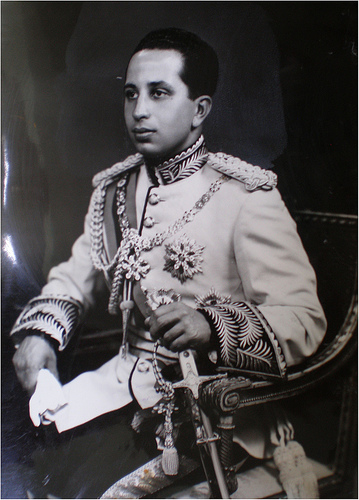
Nuri as-Said, Faisal’s Prime Minister, was killed by Qassim’s supporters the following day. The monarchy was formally abolished, and control over the country passed to a tripartite “Sovereignty Council,” composed of representatives of Iraq’s three major ethnic groups. A lengthy period of political instability ensued, culminating in the ultimate triumph in 1963 of the Ba’ath Party, which in turn led to the eventual coming to power of Saddam Hussein.
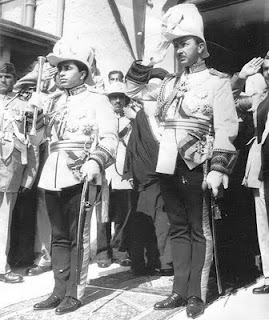
The Royal Family Titles and Styles
Sovereign of Iraq: has the Title of King of Iraq, with the formal appellation of His Majesty, wife of the Sovereign: has the Title of Queen of Iraq, with the formal appellation of Her Majesty, Heir Apparent: has the Title of Crown Prince, with the formal appellation of His Royal Highness, sons of the Sovereign: have the Title of Amir – Prince, with the formal appellation of His Royal Highness, daughters of the Sovereign: have the Title of Amira – Princess, with the formal appelltion of Her Royal Highness, whereas other members of the Royal Family of Iraq: have the Titles of Amir – Prince or Amira – Princess with the formal appellation of His or Her Highness, wives of Amirs, and the widows until they remarry: are able to use the title of Amira – Princess together with the formal appellation borne by husbands.
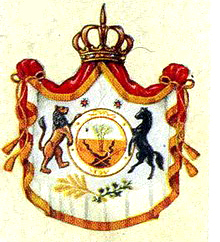
The Genealogy of The Royal House of Iraq
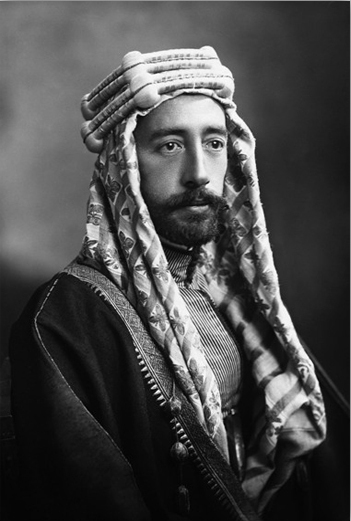
King of Iraq: 1921 – 1933
HM Faisal I bin Hussein bin Ali al-Hashemi, (Arabic: فيصل بن حسين بن علي الهاشمي Fayṣal ibn Ḥusayn; 20 May 1885 – 8 September 1933) was for a short time King of the Arab Kingdom of Syria or Greater Syria in 1920, and was King of the Kingdom of Iraq (today Iraq) from 23 August 1921 to 1933. He was a member of the Hashemite dynasty. Faisal encouraged overcoming cleavage between Sunni and Shiite to foster common loyalty and promote pan-Arabism in the goal of creating an Arab state that would include Iraq, Syria and the rest of the Fertile Crescent. While in power, Faisal tried to diversify his administration by including different ethnic and religious groups in offices. He faced great challenges in achieving this because the region was under European, specifically French and British, control and other Arab leaders of the time were hostile to his ideas as they pursued their own political aspirations for power. In addition, Faisal’s attempt at pan-Arab nationalism inevitably isolated certain religious groups.
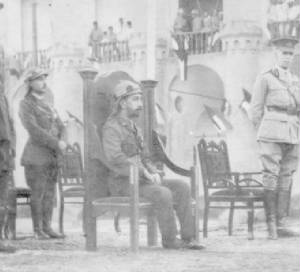
Faisal was born in Ta’if (in present-day Saudi Arabia) in 1883, the third son of Hussein bin Ali, Sharif of Mecca, the Grand Sharif of Mecca. He grew up in Constantinople and learned about leadership from his father. In 1913, he was elected as representative for the city of Jeddah for the Ottoman parliament. In 1916, on a mission to Istanbul, he visited Damascus twice. On one of these visits he received the Damascus Protocol, joined with the Al-Fatat group of Arab nationalists, and his father became king of Hejaz.
Faisal was married to Hazima bint Nasser and had one son and three daughters:
- Princess Azza bint Faisal
- Princess Rajiha bint Faisal
- Princess Raifia bint Faisal
- Ghazi, King of Iraq born 1912 died 4 April 1939, married Princess Aliya bint Ali daughter of HM King Ali of Hejaz.
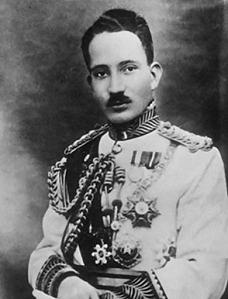
King of Iraq: 1933 – 1939
HM King Ghazi I (Arabic: غازي ابن فيصل Ġāzī bin Fayṣal) (March 21, 1912 – April 4, 1939) was the King of the Hashemite Kingdom of Iraq from 1933 to 1939 having been briefly Crown Prince of the Kingdom of Syria in 1920. He was born in Mecca (in present-day Saudi Arabia), the only son of Faisal I, the first King of Iraq.
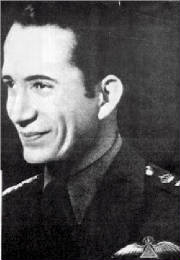
On 8 September 1933, King Faisal I died, and Ghazi was crowned as King Ghazi I. On the same day, Ghazi was appointed Admiral of the Fleet in the Royal Iraqi Navy, Field Marshal of the Royal Iraq Army, and Marshal of the Royal Iraqi Air Force. A staunch pan-Arab nationalist, opposed to British interests in his country, Ghazi’s reign was characterized by tensions between civilians and the army, which sought control of the government. He supported General Bakr Sidqi in his coup, which replaced the civilian government with a military one. This was the first coup d’état to take place in the Arab world. He was rumored to harbor sympathies for Nazi Germany and also put forth a claim for Kuwait to be annexed to Iraq. For this purpose he had his own radio station in al-Zuhoor royal palace in which he promoted that claim and other radical views. Ghazi died in 1939 in a mysterious accident involving a sports car he was driving. Some believe he was killed on the orders of Nuri as-Said. Faisal, Ghazi’s only son, succeeded him as King Faisal II. Because Faisal was under age, Prince Abdul Ilah served as Regent until 1953.
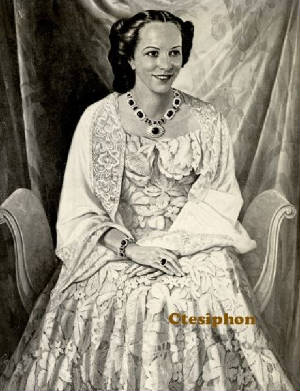
On January 25, 1934 Ghazi married Princess Aliya bint Ali daughter of King Ali of Hejaz in Baghdad Iraq. They had only one son:
- Faisal II, King of Iraq – born May 2, 1935 died July 14, 1958
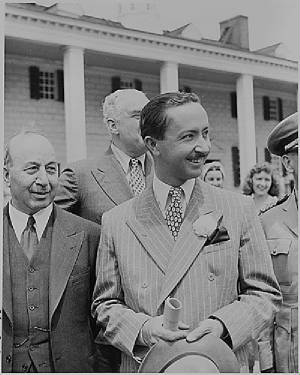
King of Iraq: 1939 – 1958
HM Faisal II (Arabic: الملك فيصل الثاني Al-Malik Fayṣal Ath-thānī) (May 2, 1935 – July 14, 1958) was the last King of Iraq. He reigned from 4 April 1939 until July 1958, when he was killed during the “14 July Revolution” together with several members of his family. Faisal’s regicide marked the end of the thirty-seven year old Hashemite monarchy in Iraq, which became a republic.
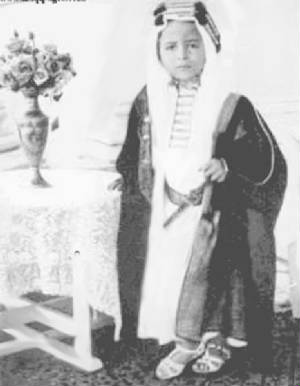
Faisal was the only son of Iraq’s second king, Ghazi, and his wife Queen Aliya, second daughter of ‘Ali bin Hussein, King of the Hijaz and Grand Sharif of Mecca. His father was killed in a mysterious car crash when Faisal was three years old; Faisal’s uncle ‘Abd al-Ilah served as regent until he came of age in 1953.
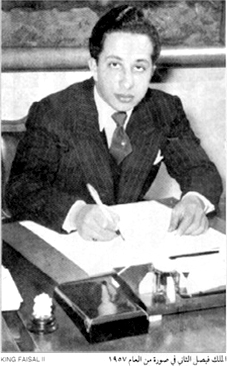
Faisal was first betrothed to Princess Kıymet Hanım, a descendant of the last Mamluk dynasty of Iraq, in January 1958. This engagement was called off three months later. Faisal then asked for the hand of Princess Shahnaz Pahlavi, daughter of the Iranian Shah Muhammad Reza Shah, but was turned down by Shahnaz. At the time of his death, King Faisal was engaged to be married to HH Princess Sabiha Fazila Hanım Sultan, the only daughter of HE Damat HH Prince Muhammad ‘Ali Ibrahim Beyefendi of Egypt and HIH Princess Zahra Hanzade Sultan.
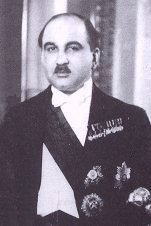
Head of Royal House: 1958 – 1970
Prince Zeid bin Hussein, GCVO, GBE (Arabic: الأمير زيد بن الحسين) born (February 28, 1898 – October 18, 1970) was a member of the Hashemite dynasty and the head of the Royal House of Iraq from 1958 until his death and had issue*. Prince Zeid was the only son of King Hussein of Hejaz and his third wife Adila Khanum. He was educated at Ghalata Serai (Galatasaray High School) College, Constantinople College and Balliol College, Oxford. From 1916 – 1919, Prince Zeid was the Commander of the Arab Northern Army. In 1918 T. E. Lawrence suggested that he be made King of a truncated Syria. The advent of French rule resulted in his 1923 assignment to the Iraqi Cavalry and he was promoted to Colonel. Zeid was also Iraqi ambassador in Berlin and in Ankara in 1930s and in London in the 1950s. On July 14, 1958, Prince Zeid was appointed Head of the Royal House of Iraq, following the assassination of his great-nephew King Faisal II by General Muhammad Najib ar-Ruba’i, who proclaimed Iraq to be a Republic. Zeid and his family continued to live in London, where the family resided during the coup, as Zeid was the Iraqi ambassador there. Prince Zeid died in Paris on October 18, 1970, and is buried in the Royal Mausoleum at Raghdan Palace, Amman, Jordan. His son Prince Ra’ad succeeded him as head of the Royal House of Iraq.
*HRH Prince Ra’ad bin Zeid – born February 18, 1936, married to Margaretha Inga Elisabeth Lind, now Majda Raad.

Head of Royal House: 1970-
Prince Ra’ad bin Zeid (Arabic: الأمير رعد بن زيد) (born 18 February 1936 in Berlin where his father was Iraqi ambassador at the time) is the son of Prince Zeid of the Hashemite House and Princess Fahrelnissa Zeid (Fakhr un-nisa), a Turkish noblewoman. Upon the death of his father on October 18, 1970, he inherited the position as head of the Royal Houses of Iraq and Syria. Ra’ad has lived in London and Paris. The Kingdom of Jordan has confirmed his style as His Royal Highness and Prince and has issue.

Heir to Headship of Royal House:
Prince Zeid Ra’ad Zeid Al-Hussein was born 26 January 1964 in Amman, Jordan to Prince Ra’ad bin Zeid head of the Royal Houses of Iraq and Syria and pretender to the Iraqi throne and his Swedish-born wife Margaretha Inga Elisabeth Lind, henceforward known as Majda Raad. He is Jordan’s Permanent Representative to the United Nations, a post he already held previously for six and a half years (2000-2007). From 2007-2010 he served as Jordan’s Ambassador to the United States and non-resident Ambassador to Mexico. Prince Zeid was married on the 5 July 2000 at Amman to Sarah Butler and has issue.