Nobility and directory
British Peerage – Duke – Marquess – Earl
British Peerage – Part I – Duke – Marquess – Earl
- Jurisdiction
- United Kingdom
- Entry type
- Directory
- Series
- British Peerage - Duke - Marquess
- Editorial status
- Reviewed - Verified
British Peerage System
Volume V – Part I

British Peerage: Royal Dukedoms
Style, His Royal Highness The Duke of __
With the exceptions of the dukedoms of Cornwall and Rothesay (which can only be held by the eldest son of the Sovereign), these dukedoms are hereditary according to the Letters Patent that created them, which contain the standard remainder “heirs male of his body”. The British monarch also holds and is entitled to the revenues of the Duchy of Lancaster, and within the borders of the County Palatine of Lancashire is by tradition saluted as “The Duke of Lancaster” (even when the monarch is a Queen regnant, she does not use the title Duchess). She also rules the Channel Islands as Duke of Normandy.
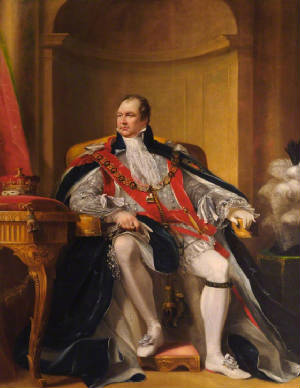
Past Royal Dukedoms include
:
* Albany * Albemarle * Bedford * Windsor * Clarence
* Connaught * Cumberland * Hereford * Kendal * Sussex The Hanoverians occasionally combined two territorial designations into a single royal dukedom – for example, the Duke of York and Albany. Other combinations included Gloucester and Edinburgh, Cumberland and Strathearn, Clarence and St Andrews, Kent and Strathearn, Cumberland and Teviotdale, Connaught and Strathearn and Clarence and Avondale. The idea was often to combine an English title with a Scottish one, emphasizing the unity of the (then new) United Kingdom. Such Hanoverian Dukes were generally also given an Irish title.
The dukedoms of Albany and Cumberland are not vacant but were suspended in 1919, as their holders were also reigning German rulers when Britain was at war with Germany in World War I; there still exist heirs to these titles who could apply for their restoration. There was speculation that Prince Edward would receive a dukedom such as Cambridge or Sussex upon his marriage in 1999, but instead he received the lesser title Earl of Wessex. At the same time as his creation as Earl of Wessex, it was announced that Prince Edward will be created Duke of Edinburgh on the death of both of his parents as Prince Charles will succeed to the title on his father’s death. The Dukedom of Edinburgh will become a non-royal dukedom with Prince Edward’s descendants.
In the United Kingdom, there is nothing about a particular dukedom that makes it “royal”. Rather, these peerages are called Royal Dukedoms because they are held by a member of the royal family who is entitled to the style Royal Highness. Although the term Royal Duke therefore has no official meaning per se, the category “Duke of the Blood Royal” was acknowledged as a rank conferring special precedence at court in the unrevoked 20th clause of the Lord Chamberlain’s order of 1520. This decree accorded precedence to any peer related by blood to the Sovereign above all others of the same degree within the peerage. The order did not apply within Parliament, nor did it grant precedence above the Archbishop of Canterbury or other Great Officers of State such as is now enjoyed by royal dukes. But it placed junior Dukes of the Blood Royal above the most senior non-royal duke, junior Earls of the Blood Royal above the most senior non-royal earl, etc. It did not matter how distantly related to the monarch the peers might be (presumably they ranked among each other in order of succession to the Crown). Although legally “time does not run against the King”, so that the 1520 order is theoretically still in effect, in fact the “Blood Royal” clause seems to have fallen into desuetude sometime in the 19th century. Thus peers of the Blood Royal who are not grandchildren of a Sovereign no longer enjoy precedence above other peers.
Under the 20 November 1917, Letters Patent of King George V, the titular dignity of Prince or Princess and the style Royal Highness are restricted to the legitimate children of a Sovereign, the sons of a Sovereign’s sons, and the eldest living son ofthe eldest son of a Prince of Wales. For example, when the current Duke of Gloucester and Duke of Kent are succeeded by their eldest sons, the Earl of Ulster and the Earl of St. Andrews, respectively, those peerages (or rather, the 1928 and 1934 creations of them) will cease to be royal dukedoms, instead the title holders will become ordinary Dukes. The third dukes of Gloucester and Kent will each be styled “His Grace” because as great-grandsons of George V, they are not Princes and are not styled HRH. Similarly, upon the death of Prince Arthur, Duke of Connaught (1850-1942), the third son of Queen Victoria, his only male-line grandson, Alastair Arthur Windsor, Earl of MacDuff (1914-43), briefly succeeded to his peerages. However, as a duke, the second Duke of Connaught, amale-line great grandson of Queen Victoria, he was simply styled “His Grace”.
The sovereign’s eldest daughter is typically created Princess Royal, and her marriage may create an interesting situation. Princess Louise, daughter of King Edward VII, married the 6th Earl of Fife in 1889; he was elevated to the title Duke of Fife, and his wife was styled HRH The Duchess of Fife. The dukedom was a non-royal one and it continues today. Princess Mary, daughter of King George V, married Viscount Lascelles-who succeeded as the 6th Earl of Harewood-in 1922, retaining her HRH; there was no elevation to a dukedom. Anne, Princess Royal, daughter of Queen Elizabeth II, has taken no title for herself or either of her commoner husbands, though there is absolutely nothing to impede the Sovereign creating a title-almost certainly an earldom, as for HRH Princess Margaret on her marriage to a commoner as Earl of Snowdon in 1961-at any time.
Sons of the sovereign are usually granted a dukedom upon marriage. Queen Victoria made her some of her grandsons Royal Dukes. Queen Elizabeth II could choose to do the same. While non-royal dukes are entitled to a coronet of eight strawberry leaves, to bear at a coronation and on his coat of arms, royal dukes are entitled to princely coronets (four crosses patée alternating with four strawberry leaves). The coronets of the royal family are dictated by letters patent. The Duke of York bears by letters patent, and the Duke of Edinburgh was granted in 1947 use of, the coronet of a child of the Sovereign (four crosses patée alternating with four fleurs-de-lis), while the Duke of Cornwall and Rothesay has use of the heir apparent’s coronet, and the current Dukes of Gloucester and of Kent, as grandsons of a Sovereign bear the corresponding coronet.
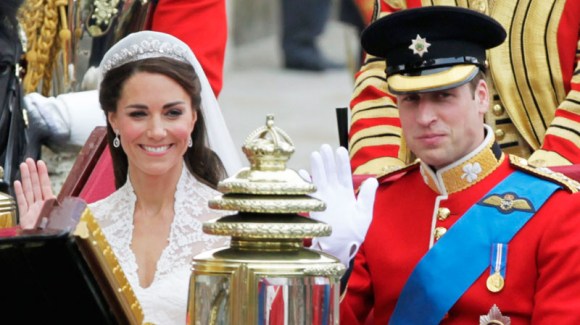
List of the 7 Royal Dukedoms within the British Peerage system
| Created | Title, order of succession, name, etc. | Heir | |
| 1337 | E | Cornwall, Charles, Prince of Wales, b. 1948, s. 1952, m. | § |
| 1947 | UK | Edinburgh (1st), The Prince Philip, b. 1921, m. | The Prince of Wales, b. 1948 |
| 1928 | UK | Gloucester (2nd), Prince Richard, b. 1944, s. 1974, m. | Earl of Ulster, b. 1974 |
| 1934 | UK | Kent (2nd), Prince Edward, b. 1935, s. 1942, m. | Earl of St Andrews, b. 1962 |
| 1398 | S | Rothesay, Charles, Prince of Wales, b. 1948, s. 1952, m. | § |
| 1986 | UK | York (1st), The Prince Andrew, b. 1960, m. | None |
| 2011 | UK | Cambridge (1st), Prince William of Wales, b. 1982, m | None |
§ The title is not hereditary but is held by the Sovereign’s eldest son from
the later of (a) the moment of his birth, or (b) the Sovereign’s accession
British Peerage: Dukedoms
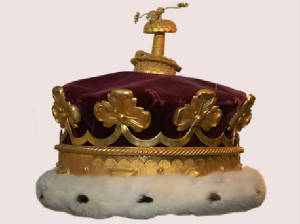
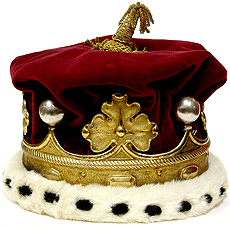
Coronet, Eight strawberry leaves Style, His Grace the Duke of ___ Wife’s style, Her Grace the Duchess of ___ Eldest son’s style, Takes his father’s second title as a courtesy title Younger sons’ style, ‘Lord’ before forename and family name Daughters’ style, ‘Lady’ before forename and family name Edward III of England created the first three dukedoms of England (Cornwall, Lancaster and Clarence). His eldest son Edward was created Duke of Cornwall, the first English Duke, in 1337. Two weeks after his death the dukedom was recreated for the 9 year old Richard II who would eventually succeed his grandfather. The Dukes of Cornwall are not
numbered as part of their style.
The second dukedom was originally was given to Henry of Grosmont, 1st Duke of Lancaster, but upon his death was re-created for the 3rd son of Edward III, John of Gaunt, 1st Duke of Lancaster. On that same day Edward III also created a dukedom for his second son, Lionel of Antwerp, 1st Duke of Clarence. When Richard II reached majority, he created dukedoms for his last two uncles on the same day: Edmund of Langley, 1st Duke of York, and Thomas of Woodstock, 1st Duke of Gloucester.
By the end of the Middle Ages, traditionally marked by the Battle of Bosworth Field on 22 August 1485, a total of 31 dukedoms (with 16 distinct titles) had been created; yet only those of Cornwall and Lancaster remained. The duchy of Cornwall was permanently associated with the heir apparent, and the duchy of Lancaster became crown property. The first Duke of Norfolk had died in the battle of Bosworth Field in 1485. Three decades later the Dukedom of Norfolk was restored to his son by Henry VIII. Thus when Elizabeth I came to power the only living duke was Thomas Howard, 4th Duke of Norfolk. Elizabeth did not create any dukes, and she beheaded Thomas Howard at the age of 36 for plotting to wed Mary, Queen of Scots and overthrow her. There were no Dukes for the last 30 years of her reign. The extant Dukedoms in the Peerage of England were all created (or restored, in the cases of Norfolk and Somerset) in the Stuart period.

List of the 29 Dukedoms within the British Peerage system
| Created | Title, order of succession, name, etc. | Heir | |
| 1868 | I | Abercorn (5th), James Hamilton, b. 1934, s. 1979, m. | Marquess of Hamilton, b. 1969 |
| 1701 | S | Argyll (13th), Torquhil Ian Campbell, b. 1968, s. 2001, m. | Marquess of Kintyre and Lorne, b. 2004 |
| 1892 | UK | Argyll (6th), held by the Duke of Argyll | |
| 1703 | S | Atholl (11th), John Murray, b. 1929, s. 1996, m. | Marquess of Tullibardine, b. 1960 |
| 1682 | E | Beaufort (11th), David Robert Somerset, b. 1928, s. 1984, m. | Marquess of Worcester, b. 1952 |
| 1694 | E | Bedford (15th), Andrew Ian Henry Russell, b. 1962, s. 2003, m. | Marquess of Tavistock, b. 2005 |
| 1711 | GB | Brandon (12th), held by the Duke of Hamilton | |
| 1663 | S | Buccleuch (9th), Walter Francis John Montagu-Douglas-Scott, b. 1923, s. 1973, m. | Earl of Dalkeith, b. 1954 |
| 1694 | E | Devonshire (12th), Peregrine Andrew Morny Cavendish, b. 1944, s. 2004, m. | Marquess of Hartington, b. 1969 |
| 1900 | UK | Fife (3rd), James George Alexander Bannerman Carnegie, b. 1929, s. 1959, m. | Earl of Southesk, b. 1961 |
| 1876 | UK | Gordon (5th), held by the Duke of Richmond | |
| 1675 | E | Grafton (11th), Hugh Denis Charles FitzRoy, b. 1919, s. 1970, m. | Earl of Euston, b. 1947 |
| 1643 | S | Hamilton (15th), Angus Alan Douglas Douglas-Hamilton, b. 1938, s. 1973, m. | Marquess of Douglas and Clydesdale, b. 1978 |
| 1766 | I | Leinster (9th), Maurice FitzGerald, b. 1948, s. 2004, m. | Capt Lord John FitzGerald, b. 1952 |
| 1675 | S | Lennox (10th), held by the Duke of Richmond | |
| 1719 | GB | Manchester (13th), Alexander Charles David Drogo Montagu, b. 1962, s. 2002, m. | Viscount Mandeville, b. 1993 |
| 1702 | E | Marlborough (11th), John George Vanderbilt Henry Spencer-Churchill, b. 1926, s. 1972, m. | Marquess of Blandford, b. 1955 |
| 1707 | S | Montrose (8th), James Graham, b. 1935, s. 1992, m. | Marquess of Graham, b. 1973 |
| 1483 | E | Norfolk (18th), Edward William Fitzalan-Howard, b. 1956, s. 2002, m. | Earl of Arundel and Surrey, b. 1987 |
| 1766 | GB | Northumberland (12th), Ralph George Algernon Percy, b. 1956, s. 1995, m. | Earl Percy, b. 1984 |
| 1684 | S | Queensberry (11th), held by the Duke of Buccleuch | |
| 1675 | E | Richmond (10th), Charles Henry Gordon-Lennox, b. 1929, s. 1989, m. | Earl of March and Kinrara, b. 1955 |
| 1707 | S | Roxburghe (10th), Guy David Innes-Ker, b. 1954, s. 1974, m. | Marquess of Bowmont and Cessford, b. 1981 |
| 1703 | E | Rutland (11th), David Charles Robert Manners, b. 1959, s. 1999, m. | Marquess of Granby, b. 1999 |
| 1684 | E | Saint Albans (14th), Murray de Vere Beauclerk, b. 1939, s. 1988, m. | Earl of Burford, b. 1965 |
| 1547 | E | Somerset (19th), John Michael Edward Seymour, b. 1952, s. 1984, m. | Lord Seymour, b. 1982 |
| 1833 | UK | Sutherland (7th), Francis Ronald Egerton, b. 1940, s. 2000, m. | Marquess of Stafford, b. 1975 |
| 1814 | UK | Wellington (8th), Arthur Valerian Wellesley, b. 1915, s. 1972, m. | Marquess of Douro, b. 1945 |
| 1874 | UK | Westminster (6th), Gerald Cavendish Grosvenor, b. 1951, s. 1979, m. | Earl Grosvenor, b. 1991 |
British Peerage: Marquessates
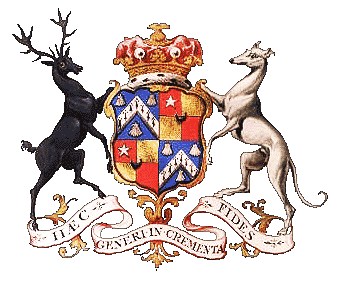
Coronet, Four strawberry leaves alternating with four silver balls Style, The Most Hon. the Marquess (of) __ Wife’s style, The Most Hon. the Marchioness (of) __ Eldest son’s style, Takes his father’s second title as a courtesy title Younger sons’ style, ‘Lord’ before forename and family name Daughters’ style, ‘Lady’ before forename and family name * there is no “of” in the title The Marquessate of Winchester (created in 1551) is the oldest English (and British) marquessate still in existence, and as a result, the holder of the title is considered the “Premier Marquess of England”. Since Marquessates in England created after 1707 became Marquessates of Great Britain and, from 1801, of the United Kingdom, he is now the only English Marquess; all other English Marquesses are Dukes who use their title of Marquess as a subsidiary title. Unlike the continent, in England (later Britain, ultimately the UK) the monarchy is the only authority capable of awarding hereditary titles and it has managed to keep a tight grip on aristocratic titles. Thus, there are currently only 34 marquessates.
The first marquess in England was Robert de Vere, 9th Earl of Oxford, who was appointed the Marquess of Dublin by King Richard II of England on 1 December 1385. On 13 October 1386, the patent of this marquessate was recalled, and Robert de Vere was raised to the rank of the Duke of Ireland. John Beaufort, 1st Earl of Somerset, the second illegitimate son of John of Gaunt, was raised to the second marquessate as the Marquess of Dorset in September 1397. In 1399, he was disgraced, and the king revoked his marquessate. The British House of Commons later petitioned King Henry IV for his restoration but the King objected stating “the name of marquess is a strange name in this realm”. From that period the title appears to have been dormant till the reign of Henry VI, when it was revived in 1442. The only woman to be appointed as a marquess in her own right was Anne Boleyn, who was appointed the Marquess of Pembroke in preparation for her marriage to Henry VIII. The investiture ceremony was held at Windsor Castle on 1 September 1532.
The title Marquess was always more exclusive than that of an Earl. In the late 19th and in the 20th century many Viceroys of India were appointed as marqueses after their resignation. Some of the German relatives of King George V were made Marquesses in the Peerage of Great-Britain after their denouncing of their German princely titles in 1917. Prince Louis of Battenberg, the princely head of the Battenberg family became the first Marquess of Milford Haven in the peerage of the United Kingdom. A British marquess is formally styled “The Most Honourable The Marquess of [X]” and informally styled “Lord [X]’, and his wife “Lady [X]”. As with dukes, all sons bear the courtesy style “Lord Forename [Surname]” and all daughters bear the courtesy style “Lady Forename [Surname]”. This courtesy style for the eldest son, however, is often trumped by a subsidiary title of his father, such as earl or viscount, which is used instead. Especially for signing documents, the signature being only the name of the title, [X]). This form of signature is true for all peers, including peers by courtesy. For example, the Marquess of Salisbury would sign his name merely “Salisbury”.
A marquess by courtesy, however (who would always be the heir to a dukedom, since the courtesy title of an heir must always be at least one rank below that of the peer), does not enjoy the style of “Most Honourable”, but is merely known as Marquess of [X] (the definite article is omitted because the Duke would be THE Marquess of [X]). The genuine marquess as a peer, however, is always the “Most Honourable the Marquess of [X]”, to differentiate a marquess by courtesy (i.e., the heir to a dukedom) from a marquess in his own right. The spelling of the title in Scotland is very often the “marquis” variation, particularly when the title was created prior to the formation of the United Kingdom of Great Britain in 1707.
List of the 55 Marquessates within the British Peerage system
| Created | Title, order of succession, name, etc. | Heir | |
| 1790 | GB | Abercorn (6th), held by the Duke of Abercorn | |
| 1916 | UK | Aberdeen and Temair (7th), Alexander George Gordon, b. 1955, s. 2002, m. | Earl of Haddo, b. 1983 |
| 1876 | UK | Abergavenny (6th), Christopher George Charles Nevill, b. 1955, s. 2000, m. | None |
| 1821 | UK | Ailesbury (8th), Michael Sidney Cedric Brudenell-Bruce, b. 1926, s. 1974, m. | Earl of Cardigan, b. 1952 |
| 1831 | UK | Ailsa (8th), Archibald Angus Charles Kennedy, b. 1956, s. 1994 | Lord David Thomas Kennedy, b. 1958 |
| 1815 | UK | Anglesey (7th), George Charles Henry Victor Paget, b. 1922, s. 1947, m. | Earl of Uxbridge, b. 1950 |
| 1676 | S | Atholl (12th), held by the Duke of Atholl | |
| 1789 | GB | Bath (7th), Alexander George Thynn, b. 1932, s. 1992, m. | Viscount Weymouth, b. 1974 |
| 1702 | E | Blandford (11th), held by the Duke of Marlborough | |
| 1707 | S | Bowmont and Cessford (10th), held by the Duke of Roxburghe | |
| 1826 | UK | Bristol (8th), Frederick William Augustus Hervey, b. 1979, s. 1999 | Alexander George Hervey, b. 1920 |
| 1796 | GB | Bute (7th), John Colum Crichton-Stuart, b. 1958, s. 1993, m. | Earl of Dumfries, b. 1989 |
| 1812 | UK | *Camden (6th), David George Edward Henry Pratt, b. 1930, s. 1983, m. | Earl of Brecknock, b. 1965 |
| 1815 | UK | Cholmondeley (7th), David George Philip Cholmondeley, b. 1960, s. 1990 | Charles George Cholmondeley, b. 1959 |
| 1643 | S | Clydesdale (15th), held by the Duke of Hamilton | |
| 1816 | I | *Conyngham (8th), Henry Vivian Pierpoint Conyngham, b. 1951, s. 2009, m. | Earl of Mount Charles, b. 1975 |
| 1791 | I | Donegall (8th), (Arthur)Patrick Chichester, b. 1952, s. 2007, m. | Earl of Belfast, b. 1990 |
| 1633 | S | Douglas (12th), held by the Duke of Hamilton | |
| 1814 | UK | *Douro (8th), held by the Duke of Wellington | |
| 1789 | I | Downshire (9th), (Arthur Francis) Nicholas Wills Hill, b. 1959, s. 2003, m. | Earl of Hillsborough, b. 1996 |
| 1683 | S | Dumfriesshire (11th), held by the Duke of Buccleuch |
| 1801 | I | Ely (9th), (Charles) John Tottenham, b. 1943, s. 2006, m. | Viscount Loftus, b. 1973 |
| 1801 | UK | Exeter (8th), (William) Michael Anthony Cecil, b. 1935, s. 1988, m. | Lord Burghley, b. 1970 |
| 1707 | S | Graham and Buchanan (8th), held by the Duke of Montrose | |
| 1703 | E | Granby (11th), held by the Duke of Rutland |
| 1868 | I | Hamilton (5th), held by the Duke of Abercorn | |
| 1694 | E | Hartington (12th), held by the Duke of Devonshire | |
| 1800 | UK | Headfort (7th), (Thomas Michael Ronald) Christopher Taylour, b. 1959, s. 2005, m. | Earl of Bective, b. 1989 |
| 1793 | GB | Hertford (9th), Henry Jocelyn Seymour, b. 1958, s. 1997, m. | Earl of Yarmouth, b. 1993 |
| 1599 | S | Huntly (13th), Granville Charles Gomer Gordon, b. 1944, s. 1987, m. | Earl of Aboyne, b. 1973 |
| 1761 | I | Kildare (8th), held by the Duke of Leinster | |
| 1701 | S | Kintyre and Lorne (13th), held by the Duke of Argyll |
| 1784 | GB | Lansdowne (9th), Charles Maurice Petty-Fitzmaurice, b. 1941, s. 1999, m. | Earl of Shelburne, b. 1970 |
| 1902 | UK | Linlithgow (4th), Adrian John Charles Hope, b. 1946, s. 1987, m. | Earl of Hopetoun, b. 1969 |
| 1816 | I | Londonderry (9th), Alexander Charles Robert Vane-Tempest-Stewart, b. 1937, s. 1955, m. | Viscount Castlereagh, b. 1972 |
| 1701 | S | Lothian (13th), Michael Andrew Foster Jude Kerr, b. 1945, s. 2004, m. | Lord Ralph William Francis Joseph Kerr, b. 1954 |
| 1917 | UK | Milford Haven (4th), George Ivar Louis Mountbatten, b. 1961, s. 1970, m. | Earl of Medina, b. 1991 |
| 1644 | S | Montrose (11th), held by the Duke of Montrose |
| 1838 | UK | Normanby (5th), Constantine Edmund Walter Phipps, b. 1954, s. 1994, m. | Earl of Mulgrave, b. 1994 |
| 1812 | UK | Northampton (7th), Spencer Douglas David Compton, b. 1946, s. 1978, m. | Earl Compton, b. 1973 |
| 1682 | S | Queensberry (12th), David Harrington Angus Douglas, b. 1929, s. 1954, m. | Viscount Drumlanrig, b. 1967 |
| 1926 | UK | Reading (4th), Simon Charles Henry Rufus Isaacs, b. 1942, s. 1980, m. | Viscount Erleigh, b. 1986 |
| 1789 | GB | Salisbury (7th), Robert Michael James Gascoyne-Cecil, b. 1946, s. 2003, m. | Viscount Cranborne, b. 1970 |
| 1800 | I | Sligo (11th), Jeremy Ulick Browne, b. 1939, s. 1991, m. | Sebastian Ulick Browne, b. 1964 |
| 1786 | GB | Stafford (8th), held by the Duke of Sutherland |
| 1694 | E | Tavistock (15th), held by the Duke of Bedford | |
| 1787 | GB | *Townshend (7th), George John Patrick Dominic Townshend, b. 1916, s. 1921, m. | Viscount Raynham, b. 1945 |
| 1703 | S | Tullibardine (11th), held by the Duke of Atholl | |
| 1694 | S | Tweeddale (14th), Charles David Montagu Hay, b. 1947, s. 2005 | Lord Alistair James Montagu Hay, b. 1955 |
| 1789 | I | Waterford (8th), John Hubert de la Poer Beresford, b. 1933, s. 1934, m. | Earl of Tyrone, b. 1958 |
| 1812 | UK | Wellington (8th), held by the Duke of Wellington | |
| 1831 | UK | Westminster (8th), held by the Duke of Westminster | |
| 1551 | E | Winchester (18th), Nigel George Paulet, b. 1941, s. 1968, m. | Earl of Wiltshire, b. 1969 |
| 1643 | E | Worcester (13th), held by the Duke of Beaufort |
| 1892 | UK | Zetland (4th), Lawrence Mark Dundas, b. 1937, s. 1989, m. | Earl of Ronaldshay, b. 1965 |
British Peerage: Earldoms
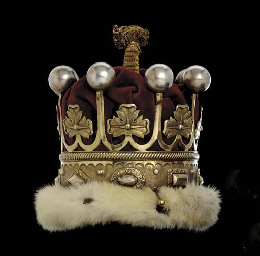
Coronet, Eight silver balls on stalks alternating with eight gold strawberry leaves Style, The Right Hon. the Earl (of) __ Wife’s style, The Right Hon. the Countess (of) __ Eldest son’s style, Takes his father’s second title as a courtesy title Younger sons’ style, ‘The Hon.’ before forename and family name Daughters’ style, ‘Lady’ before forename and family name* there is no “of” in the title.
An earl has the title Earl of [X] when the title originates from a placename, or Earl [X] when the title comes from a surname. In either case, he is referred to as Lord [X], and his wife as Lady [X]. A countess who holds an earldom in her own right also uses Lady [X], but her husband does not have a title (unless he has one in his own right). In Anglo-Saxon England, earls had authority over their own regions and right of judgement in provincial courts, as delegated by the king. They collected fines and taxes and in return received a “third penny”, one-third of the money they collected. In wartime they led the king’s armies. Some shires were grouped together into larger units known as earldoms, headed by an ealdorman or earl. Under Edward the Confessor earldoms like Wessex, Mercia, East Anglia and Northumbria-names that represented earlier independent kingdoms-were much larger than any shire.
Earls originally functioned essentially as royal governors. Though the title of Earl was nominally equal to the continental duke, unlike them earls were not de facto rulers in their own right. After the Norman Conquest, William the Conqueror tried to rule England using the traditional system but eventually modified it to his own liking. Shires became the largest secular subdivision in England and earldoms disappeared. The Normans did create new earls like those of Herefordshire, Shropshire, and Cheshire but they were associated with only a single shire at most. Their power and regional jurisdiction was limited to that of the Norman counts. There was no longer any administrative layer larger than the shire, and shires became “counties”. Earls no longer aided in tax collection or made decisions in country courts and their numbers were small.
King Stephen increased the number of earls to reward those loyal to him in his war with his cousin Empress Matilda. He gave some earls the right to hold royal castles or control the sheriff and soon other earls assumed these rights themselves. By the end of his reign, some earls held courts of their own and even minted their own coins, against the wishes of the king. It fell to Stephen’s successor Henry II to again curtail the power of earls. He took back the control of royal castles and even demolished castles that earls had built for themselves. He did not create new earls or earldoms. No earl was allowed to remain independent of royal control.
The English kings had found it dangerous to give additional power to an already powerful aristocracy, so gradually sheriffs assumed the governing role. The details of this transition remain obscure, since earls in more peripheral areas, such as the Scottish and Welsh marches and Cornwall, retained some viceregal powers long after other earls had lost them. The loosening of central authority during the Anarchy also complicates any smooth description of the changeover. By the 13th century, earls had a social rank just below the king and princes, but were not necessarily more powerful or wealthier than other noblemen. The only way to become an earl was to inherit the title or marry into one-and the king reserved a right to prevent the transfer of the title. By the 14th century, creating an earl included a special public ceremony where the king personally tied a sword belt around the waist of the new earl, emphasizing the fact that the earl’s rights came from him.
Earls still held influence and as “companions of the king”, were regarded as supporters of the king’s power. They showed that power for the first time in 1327 when they deposed Edward II. They would later do the same with other kings they disapproved of. Still, the number of earls remained the same until 1337 when Edward III declared that he intended to create six new earldoms. A loose connection between earls and shires remained for a long time after authority had moved over to the sheriffs. An official defining characteristic of an earl still consisted of the receipt of the “third penny”, one-third of the revenues of justice of a shire, that later became a fixed sum. Thus every earl had an association with some shire, and very often a new creation of an earldom would take place in favour of the county where the new earl already had large estates and local influence.
Also, due to the association of earls and shires, the medieval practice could remain somewhat loose regarding the precise name used: no confusion could arise by calling someone earl of a shire, earl of the county town of the shire, or earl of some other prominent place in the shire; these all implied the same. So there were the “earl of Shrewsbury” (Shropshire), “earl of Arundel”, “earl of Chichester” (Sussex), “earl of Winchester” (Hampshire), etc. In a few cases the earl was traditionally addressed by his family name, e.g. the “earl Warenne”(in this case the practice may have arisen because these earls had little or no property in Surrey, their official county). Thus an earl did not always have an intimate association with “his” county. Another example comes from the earls of Oxford, whose property largely lay in Essex. They became earls of Oxford because earls of Essex and of the other nearby shires already existed. Eventually the connection between an earl and a shire disappeared, so that in the present day a number of earldoms take their names from towns, mountains, or simply surnames. Nevertheless, some consider that the earldoms named after counties (or county towns) retain more prestige.
List of the 317 Earldoms within the British Peerage system
| Created | Title, order of succession, name, etc. | Heir | |
| 1606 | S | Abercorn (14th), held by the Duke of Abercorn | |
| 1682 | S | Aberdeen (13th), held by the Marquess of Aberdeen & Temair | |
| 1784 | GB | Abergavenny (10th), held by the Marquess of Abergavenny | David Michael Ralph Nevill, b. 1941 |
| 1682 | E | Abingdon (9th), held by the Earl of Lindsey | |
| 1660 | S | Aboyne (9th), held by the Marquess of Huntly | |
| 1776 | GB | Ailesbury (9th), held by the Marquess of Ailesbury | |
| 1771 | I | Altamont (13th), held by the Marquess of Sligo | |
| 1639 | S | Airlie (8th), David George Coke Patrick Ogilvy, b. 1926, s. 1968, m. | Lord Ogilvy, b. 1958 |
| 1696 | E | Albemarle (10th), Rufus Arnold Alexis Keppel, b. 1965, s. 1979 | Viscount Bury, b. 2003 |
| 1952 | UK | *Alexander of Tunis (2nd), Shane William Desmond Alexander, b. 1935, s. 1969, m. | Hon Brian James Alexander, b. 1939 |
| 1633 | S | Ancram (15th), held by the Marquess of Lothian | |
| 1389 | S | Angus (22nd), held by the Duke of Hamilton | |
| 1662 | S | Annandale and Hartfell (11th), Patrick Andrew Wentworth Hope Johnstone, b. 1941, claim established 1985, m. | Lord Johnstone, b. 1971 |
| 1789 | I | *Annesley (11th), Philip Harrison Annesley, b. 1927, s. 2001, m. | Hon Michael Robert Annesley, b. 1933 |
| 1785 | I | Antrim (9th), Alexander Randal Mark McDonnell, b. 1935, s. 1977, m. | Viscount Dunluce, b. 1967 |
| 1457 | S | Argyll (22nd), held by the Duke of Argyll | |
| 1762 | I | Arran (9th), Arthur Desmond Colquhoun Gore, b. 1938, s. 1983, m. | Paul Annesley Gore, b. 1921 |
| 1643 | S | Arran & Cambridge (15th), held by the Duke of Hamilton | |
| 1139 | E | Arundel (36th/29th), held by the Duke of Norfolk | |
| 1629 | S | Atholl (14th), held by the Duke of Atholl | |
| 1955 | UK | *Attlee (3rd), John Richard Attlee, b. 1956, s. 1991, m. | None |
| 1714 | GB | Aylesford (12th), Charles Heneage Finch-Knightley, b. 1947, s. 2008, m. | Lord Guernsey, b. 1985 |
| 1651 | S | Balcarres (12th), held by the Earl of Crawford | |
| 1937 | UK | *Baldwin of Bewdley (4th), Edward Alfred Alexander Baldwin, b. 1938, s. 1976, m. | Viscount Corvedale, b. 1973 |
| 1922 | UK | Balfour (5th), Roderick Francis Arthur Balfour, b. 1948, s. 2003, m. | Charles George Yule Balfour, b. 1951 |
| 1772 | GB | *Bathurst (8th), Henry Allen John Bathurst, b. 1927, s. 1943, m. | Lord Apsley, b. 1961 |
| 1919 | UK | *Beatty (3rd), David Beatty, b. 1946, s. 1972, m. | Viscount Borodale, b. 1973 |
| 1786 | I | Bective (7th), held by the Marquess of Headfort | |
| 1550 | E | Bedford (19th), held by the Duke of Bedford | |
| 1791 | I | Belfast (7th), held by the Marquess of Donegall | |
| 1797 | I | *Belmore (8th), John Armar Lowry-Corry, b. 1951, s. 1960, m. | Viscount Corry, b. 1985 |
| 1626 | E | Berkshire (14th), held by the Earl of Suffolk | |
| 1739 | I | Bessborough (12th), Miles Fitzhugh Longfield Ponsonby, b. 1941, s. 2002, m. | Viscount Duncannon, b. 1974 |
| 1790 | GB | Beverley (9th), held by the Duke of Northumberland | |
| 1815 | UK | Bradford (7th), Richard Thomas Orlando Bridgeman, b. 1947, s. 1981, m. | Viscount Newport, b. 1980 |
| 1812 | UK | Brecknock (6th), held by the Marquess Camden | |
| 1714 | GB | Bristol (12th), held by the Marquess of Bristol | |
| 1746 | GB | Brooke (9th), held by the Earl of Warwick | |
| 1821 | UK | *Bruce (8th), held by the Marquess of Ailesbury | |
| 1619 | S | Buccleuch (12th), held by the Duke of Buccleuch | |
| 1469 | S | Buchan (17th), Malcolm Henry Erskine, b. 1930, s. 1984, m. | Lord Cardross, b. 1960 |
| 1746 | GB | *Buckinghamshire (10th), George Miles Hobart-Hampden, b. 1944, s. 1983, m. | Sir John Vere Hobart, 4th Bt., b. 1945 |
| 1676 | E | Burford (14th), held by the Duke of St Albans | |
| 1703 | S | Bute (10th), held by the Marquess of Bute |
| 1800 | GB | *Cadogan (8th), Charles Gerald John Cadogan, b. 1937, s. 1997, m. | Viscount Chelsea, b. 1966 |
| 1878 | UK | *Cairns (6th), Simon Dallas Cairns, b. 1939, s. 1989, m. | Viscount Garmoyle, b. 1965 |
| 1455 | S | Caithness (20th), Malcolm Ian Sinclair, b. 1948, s. 1965, m. | Lord Berriedale, b. 1981 |
| 1800 | I | Caledon (7th), Nicholas James Alexander, b. 1955, s. 1980, m. | Viscount Alexander, b. 1990 |
| 1786 | GB | *Camden (7th), held by the Marquess Camden | |
| 1701 | S | Campbell & Cowall (13th), held by the Duke of Argyll | |
| 1661 | E | Cardigan (14th), held by the Marquess of Ailesbury | |
| 1661 | E | Carlisle (13th), George William Beaumont Howard, b. 1949, s. 1994 | Hon Philip Charles Wentworth Howard, b. 1963 |
| 1793 | GB | Carnarvon (8th), George Reginald Oliver Molyneux Herbert, b. 1956, s. 2001, m. | Lord Porchester, b. 1992 |
| 1748 | I | Carrick (10th), David James Theobald Somerset Butler, b. 1953, s. 1992, m. | Viscount Ikerrin, b. 1975 |
| 1509 | S | Cassillis (19th), held by the Marquess of Ailsa | |
| 1800 | I | *Castle Stewart (8th), Arthur Patrick Avondale Stuart, b. 1928, s. 1961, m. | Viscount Stuart, b. 1953 |
| 1814 | UK | *Cathcart (7th), Charles Alan Cathcart, b. 1952, s. 1999, m. | Lord Greenock, b. 1986 |
| 1647 | I | Cavan (13th), Roger Cavan Lambart, b. 1944, s. 1988 | None |
| 1827 | UK | *Cawdor (7th), Colin Robert Vaughan Campbell, b. 1962, s. 1993, m. | Viscount Emlyn, b. 1998 |
| 1801 | UK | Chichester (9th), John Nicholas Pelham, b. 1944, s. 1944, m. | Richard Anthony Henry Pelham, b. 1952 |
| 1706 | E | Cholmondeley (10th), held by the Marquess of Cholmondeley | |
| 1803 | I | Clancarty (9th), Nicholas Power Richard Le Poer Trench, b. 1952, s. 1995 | None |
| 1800 | I | Clanricarde (9th), held by the Marquess of Sligo | |
| 1776 | I | Clanwilliam (7th), John Herbert Meade, b. 1919, s. 1989, m. | Lord Gillford, b. 1960 |
| 1776 | GB | Clarendon (8th), George Edward Laurence Villiers, b. 1976, s. 2009, m. | Lord Hyde, b. 2008 |
| 1812 | UK | *Compton (7th), held by the Marquess of Northampton | |
| 1797 | I | *Conyngham (8th), held by the Marquess Conyngham | |
| 1620 | I | Cork (15th), John Richard Boyle, b. 1945, s. 2003, m. | Viscount Dungarvan, b. 1978 |
| 1850 | UK | Cottenham (9th), Mark John Henry Pepys, b. 1983, s. 2000 | Hon Sam Richard Pepys, b. 1986 |
| 1762 | I | Courtown (9th), James Patrick Montagu Burgoyne Winthrop Stopford, b. 1954, s. 1975, m. | Viscount Stopford, b. 1988 |
| 1697 | E | Coventry (13th), George William Coventry, b. 1939, s. 2004, m. | David Duncan Sherwood Coventry, b. 1973 |
| 1857 | UK | *Cowley (7th), Garret Graham Wellesley, b. 1934, s. 1975, m. | Viscount Dangan, b. 1965 |
| 1892 | UK | Cranbrook (5th), Gathorne Gathorne-Hardy, b. 1933, s. 1978, m. | Lord Medway, b. 1968 |
| 1801 | UK | Craven (9th), Benjamin Robert Joseph Craven, b. 1989, s. 1990 | Rupert José Evelyn Craven, b. 1926 |
| 1398 | S | Crawford (29th), Robert Alexander Lindsay, b. 1927, s. 1975, m. | Lord Balniel, b. 1958 |
| 1861 | UK | Cromartie (5th), John Ruaridh Blunt Grant Mackenzie, b. 1948, s. 1989, m. | Viscount Tarbat, b. 1987 |
| 1901 | UK | Cromer (4th), Evelyn Rowland Esmond Baring, b. 1946, s. 1991, m. | Viscount Errington, b. 1994 |
| 1633 | S | Dalhousie (17th), James Hubert Ramsay, b. 1948, s. 1999, m. | Lord Ramsay, b. 1981 |
| 1663 | S | Dalkeith (9th), held by the Duke of Buccleuch | |
| 1675 | S | Darnley (10th), held by the Duke of Richmond | |
| 1725 | I | Darnley (11th), Adam Ivo Stuart Bligh, b. 1941, s. 1980, m. | Lord Clifton, b. 1968 |
| 1711 | GB | Dartmouth (10th), William Legge, b. 1949, s. 1997 | Hon Rupert Legge, b. 1951 |
| 1761 | GB | *De La Warr (11th), William Herbrand Sackville, b. 1948, s. 1988, m. | Lord Buckhurst, b. 1979 |
| 1622 | E | Denbigh (12th), Alexander Stephen Rudolph Feilding, b. 1970, s. 1995, m. | Viscount Feilding, b. 2005 |
| 1485 | E | Derby (19th), Edward Richard William Stanley, b. 1962, s. 1994, m. | Lord Stanley, b. 1998 |
| 1622 | I | Desmond (11th), held by the Earl of Denbigh | |
| 1553 | E | Devon (18th), Hugh Rupert Courtenay, b. 1942, s. 1998, m. | Lord Courtenay, b. 1975 |
| 1618 | E | Devonshire (14th), held by the Duke of Devonshire | |
| 1663 | E | Doncaster (9th), held by the Duke of Buccleuch | |
| 1647 | I | Donegall (11th), held by the Marquess of Donegall | |
| 1800 | I | Donoughmore (8th), Richard Michael John Hely-Hutchinson, b. 1927, s. 1981, m. | Viscount Suirdale, b. 1952 |
| 1661 | I | Drogheda (12th), Henry Dermot Ponsonby Moore, b. 1937, s. 1989, m. | Viscount Moore, b. 1983 |
| 1682 | S | Drumlanrig & Sanquhar (11th), held by the Duke of Buccleuch | |
| 1837 | UK | Ducie (7th), David Leslie Moreton, b. 1951, s. 1991, m. | Lord Moreton, b. 1981 |
| 1860 | UK | Dudley (4th), William Humble David Ward, b. 1920, s. 1969, m. | Viscount Ednam, b. 1947 |
| 1633 | S | Dumfries (12th), held by the Marquess of Bute | |
| 1660 | S | Dundee (12th), Alexander Henry Scrymgeour, b. 1949, s. 1983, m. | Lord Scrymgeour, b. 1982 |
| 1669 | S | Dundonald (15th), Iain Alexander Douglas Blair Cochrane, b. 1961, s. 1986, m. | Lord Cochrane, b. 1991 |
| 1686 | S | Dunmore (12th), Malcolm Kenneth Murray, b. 1946, s. 1995, m. | Hon Geoffrey Charles Murray, b. 1949 |
| 1822 | UK | Dunraven and Mount Earl (7th), Thady Windham Thomas Wyndham-Quin, b. 1939, s. 1965, m. | None |
| 1833 | UK | Durham (7th), Edward Richard Lambton, b. 1961, s. 2006, m. | Viscount Lambton, b. 1985 |
| 1837 | UK | Effingham (7th), David Mowbray Algernon Howard, b. 1939, s. 1996, m. | Lord Howard of Effingham, b. 1971 |
| 1507 | S | Eglinton (18th), Archibald George Montgomerie, b. 1939, s. 1966, m. | Lord Montgomerie, b. 1966 |
| 1733 | I | Egmont (12th), Thomas Frederick Gerald Perceval, b. 1934, s. 2001, m. | None |
| 1821 | UK | Eldon (5th), John Joseph Nicholas Scott, b. 1937, s. 1976, m. | Viscount Encombe, b. 1962 |
| 1633 | S | Elgin (11th), Andrew Douglas Alexander Thomas Bruce, b. 1924, s. 1968, m. | Lord Bruce, b. 1961 |
| 1846 | UK | Ellesmere (6th), held by the Duke of Sutherland | |
| 1794 | I | Ely (8th), held by the Marquess of Ely | |
| 1789 | I | Enniskillen (7th), Andrew John Galbraith Cole, b. 1942, s. 1989, m. | Arthur Gerald Cole, b. 1920 |
| 1789 | I | *Erne (6th), Henry George Victor John Crichton, b. 1937, s. 1940, m. | Viscount Crichton, b. 1971 |
| 1452 | S | Erroll (24th), Merlin Sereld Victor Gilbert Hay, b. 1948, s. 1978, m. | Lord Hay, b. 1984 |
| 1661 | E | Essex (11th), (Frederick) Paul de Vere Capell, b. 1944, s. 2005 | William Jennings Capell, b. 1952 |
| 1672 | E | Euston (11th), held by the Duke of Grafton | |
| 1605 | E | Exeter (17th), held by the Marquess of Exeter |
| 1711 | GB | *Ferrers (13th), Robert Washington Shirley, b. 1929, s. 1954, m. | Viscount Tamworth, b. 1952 |
| 1789 | GB | *Fortescue (8th), Charles Hugh Richard Fortescue, b. 1951, s. 1993, m. | John Andrew Francis Fortescue, b. 1955 |
| 1841 | UK | Gainsborough (5th), Anthony Gerard Edward Noel, b. 1923, s. 1927, m. | Viscount Campden, b. 1950 |
| 1623 | S | Galloway (13th), Randolph Keith Reginald Stewart, b. 1928, s. 1978, m. | Andrew Clyde Stewart, b. 1949 |
| 1694 | S | Gifford (13th), held by the Marquess of Tweeddale | |
| 1703 | S | Glasgow (10th), Patrick Robin Archibald Boyle, b. 1939, s. 1984, m. | Viscount of Kelburn, b. 1978 |
| 1806 | I | Gosford (7th), Charles David Nicholas Alexander John Sparrow Acheson, b. 1942, s. 1966, m. | Hon Patrick Bernard Victor Montagu Acheson, b. 1915 |
| 1746 | GB | *Gower (9th), held by the Duke of Sutherland | |
| 1845 | UK | Gowrie (2nd), Alexander Patric Greysteil Hore-Ruthven, b. 1939, s. 1955, m. | Viscount Ruthven of Canberra, b. 1964 |
| 1722 | GB | *Graham (8th), held by the Duke of Montrose | |
| 1684 | I | Granard (10th), Peter Arthur Edward Hastings Forbes, b. 1957, s. 1992, m. | Viscount Forbes, b. 1981 |
| 1833 | UK | *Granville (6th), Granville George Fergus Leveson-Gower, b. 1959, s. 1996, m. | Lord Leveson, b. 1999 |
| 1806 | UK | *Grey (6th), Richard Fleming George Charles Grey, b. 1939, s. 1963, m. | Hon Philip Kent Grey, b. 1940 |
| 1784 | GB | *Grosvenor (9th), held by the Duke of Westminster | |
| 1752 | GB | Guilford (10th), Piers Edward Brownlow North, b. 1971, s. 1999, m. | Lord North, b. 2002 |
| 1619 | S | Haddington (13th), John George Baillie-Hamilton, b. 1941, s. 1986, m. | Lord Binning, b. 1985 |
| 1916 | UK | Haddo (7th), held by the Marquess of Aberdeen & Temair | |
| 1919 | UK | *Haig (3rd), Alexander Douglas Derrick Haig, b. 1961, s. 2009, | None |
| 1944 | UK | Halifax (3rd), Charles Edward Peter Neil Wood, b. 1944, s. 1980, m. | Lord Irwin, b. 1977 |
| 1898 | UK | Halsbury (4th), Adam Edward Giffard, b. 1934, s. 2000, m. | None |
| 1754 | GB | Hardwicke (10th), Joseph Philip Sebastian Yorke, b. 1971, s. 1974 | Charles Edward Yorke, b. 1951 |
| 1812 | UK | Harewood (7th), George Henry Hubert Lascelles, b. 1923, s. 1947, m. | Viscount Lascelles, b. 1950 |
| 1742 | GB | Harrington (12th), Charles Henry Leicester Stanhope, b. 1945, s. 2009, m. | Viscount Petersham, b. 1967 |
| 1809 | UK | Harrowby (8th), (Dudley Adrian) Conroy Ryder, b. 1951, s. 2007, m. | Viscount Sandon, b. 1981 |
| 1750 | GB | Hertford (9th), held by the Marquess of Hertford | |
| 1751 | I | Hillsborough (9th), held by the Marquess of Downshire | |
| 1772 | GB | Hillsborough (9th), held by the Marquess of Downshire | |
| 1605 | S | Home (15th), David Alexander Cospatrick Douglas-Home, b. 1943, s. 1995, m. | Lord Dunglass, b. 1987 |
| 1703 | S | Hopetoun (10th), held by the Marquess of Linlithgow | |
| 1821 | UK | *Howe (7th), Frederick Richard Penn Curzon, b. 1951, s. 1984, m. | Vsicount Curzon, b. 1994 |
| 1529 | E | Huntingdon (16th), William Edward Robin Hood Hastings Bass, b. 1948, s. 1990, m. | Hon Simon Aubrey Robin Hood Hastings Bass, b. 1950 |
| 1885 | UK | Iddesleigh (5th), John Stafford Nothcote, b. 1957, s. 2004, m. | Viscount St Cyres, b. 1985 |
| 1756 | GB | Ilchester (10th), Robin Maurice Fox-Strangways, b. 1942, s. 2006, m. | Lord Strangways, b. 1972 |
| 1929 | UK | Inchcape (4th), Peter Lyle Mackay, b. 1943, s. 1994, m. | Viscount Glenapp, b. 1979 |
| 1837 | UK | *Innes (5th), held by the Duke of Roxburghe | |
| 1986 | UK | Inverness (1st), held by the Duke of York | |
| 1919 | UK | Iveagh (4th), Arthur Edward Rory Guinness, b. 1969, s. 1992 | Viscount Elveden, b. 2003 |
| 1925 | UK | *Jellicoe (3rd), Patrick John Bernard Jellicoe, b. 1950, s. 2007, m. | Viscount Brocas, b. 1970 |
| 1826 | UK | *Jermyn (8th), held by the Marquess of Bristol | |
| 1697 | E | Jersey (10th), George Francis William Child-Villiers, b. 1976, s. 1998, m. | Hon Jamie Charles Child-Villiers, b. 1994 |
| 1616 | S | Kellie (16th), held by the Earl of Mar (cr. 1565) | |
| 1707 | S | Kelso (10th), held by the Duke of Roxburghe | |
| 1722 | I | Kerry (10th), held by the Marquess of Lansdowne | |
| 1316 | I | Kildare (27th), held by the Duke of Leinster | |
| 1822 | I | Kilmorey (6th), Richard Francis Needham, b. 1942, s. 1977, m. | Viscount Newry and Morne, b. 1966 |
| 1866 | UK | Kimberley (5th), John Armine Wodehouse, b. 1951, s. 2002, m. | Lord Wodehouse, b. 1978 |
| 1644 | S | Kincardine (11th), held by the Duke of Montrose | |
| 1647 | S | Kincardine (15th), held by the Earl of Elgin | |
| 1768 | I | Kingston (12th), Robert Charles Henry King-Tenison, b. 1969, s. 2002, m. | Viscount Kingsborough, b. 2000 |
| 1633 | S | Kinnoull (15th), (Arthur) William George Patrick Hay, b. 1935, s. 1938, m. | Viscount Dupplin, b. 1962 |
| 1876 | UK | Kinrara (5th), held by the Duke of Richmond | |
| 1677 | S | Kintore (14th), James William Falconer Keith, b. 1976, s. 2004 | Hon Alexander David Keith, b. 1946 |
| 1914 | UK | *Kitchener of Khartoum and of Broome (3rd), Henry Herbert Kitchener, b. 1919, s. 1937 | None |
| 1639 | S | Lanark (14th), held by the Duke of Hamilton | |
| 1624 | S | Lauderdale (18th), Ian Maitland, b. 1937, s. 2008, m. | Viscount Maitland, b. 1965 |
| 1837 | UK | Leicester (7th), Edward Douglas Coke, b. 1936, s. 1994, m. | Viscount Coke, b. 1965 |
| 1641 | S | Leven (16th), Alexander Robert Leslie Melville, b. 1924, s. 1947, m. | Lord Balgonie, b. 1954 |
| 1876 | UK | Lewes (5th), held by the Marquess of Abergavenny | |
| 1831 | UK | Lichfield (6th), Thomas William Robert Hugh Anson, b. 1976, s. 2005 | George Rupert Anson, b. 1960 |
| 1803 | I | Limerick (7th), Edmund Christopher Pery, b. 1963, s. 2003, m. | Viscount Glentworth, b. 1991 |
| 1572 | E | Lincoln (19th), Robert Edward Fiennes-Clinton, b. 1972, s. 2001, m. | Hon William Roy Fiennes-Clinton, b. 1980 |
| 1633 | S | Lindsay (16th), James Randolph Lindesay-Bethune, b. 1955, s. 1989, m. | Viscount Garnock, b. 1990 |
| 1626 | E | Lindsey (14th), Richard Henry Rupert Bertie, b. 1931, s. 1963, m. | Lord Norreys, b. 1958 |
| 1776 | I | Lisburne (8th), John David Malet Vaughan, b. 1918, s. 1965, m. | Viscount Vaughan, b. 1945 |
| 1822 | I | Listowel (6th), Michael Francis Hare, b. 1964, s. 1997, m. | Hon Timothy Patrick Hare, b. 1966 |
| 1905 | UK | Liverpool (5th), Edward Peter Bertram Savile Foljambe, b. 1944, s. 1969, m. | Viscount Hawkesbury, b. 1972 |
| 1945 | UK | Lloyd George of Dwyfor (3rd), Owen Lloyd George, b. 1924, s. 1968, m. | Viscount Gwynedd, b. 1951 |
| 1796 | I | Londonderry (9th), held by the Marquess of Londonderry | |
| 1785 | I | Longford (8th), Thomas Frank Dermot Pakenham, b. 1933, s. 1971, m. | Lord Silchester, b. 1970 |
| 1807 | UK | Lonsdale (8th), Hugh Clayton Lowther, b. 1949, s. 2006, m. | Hon William James Lowther, b. 1957 |
| 1631 | S | Lothian (14th), held by the Marquess of Lothian | |
| 1633 | S | Loudoun (14th), Michael Edward Abney-Hastings, b. 1942, s. 2002, m. | Lord Mauchline, b. 1974 |
| 1838 | UK | Lovelace (5th), Peter Axel William Locke King, b. 1951, s. 1964, m. | None |
| 1795 | I | Lucan (7th), Richard John Bingham, b. 1934, s. 1964, m. | Lord Bingham, b. 1967 |
| 1880 | UK | Lytton (5th), John Peter Michael Scawen Lytton, b. 1950, s. 1985, m. | Viscount Knebworth, b. 1989 |
| 1721 | GB | Macclesfield (9th), Richard Timothy George Mansfield Parker, b. 1943, s. 1992, m. | Hon (Jonathan) David Geoffrey Parker, b. 1945 |
| 1900 | UK | Macduff (3rd), held by the Duke of Fife | |
| 1800 | GB | Malmesbury (7th), James Carleton Harris, b. 1946, s. 2000, m. | Viscount FitzHarris, b. 1970 |
| 1626 | E | Manchester (16th), held by the Duke of Manchester | |
| 1776 | GB | Mansfield (8th), William David Mungo James Murray, b. 1930, s. 1971, m. | Viscount Stormont, b. 1956 |
| 1792 | GB | Mansfield (8th), held by the Earl of Mansfield | |
| 1565 | S | Mar (14th), James Thorne Erskine, b. 1949, s. 1993, m. | Hon Alexander David Erskine, b. 1952 |
| 1675 | E | March (10th), held by the Duke of Richmond | |
| 1697 | S | March (8th), held by the Earl of Wemyss | |
| 1689 | E | Marlborough (11th), held by the Duke of Marlborough | |
| 1785 | I | Mayo (11th), Charles Diarmuidh John Bourke, b. 1953, s. 2006 | Lord Naas, b. 1985 |
| 1627 | I | Meath (15th), John Anthony Brabazon, b. 1941, s. 1998, m. | Lord Ardee, b. 1977 |
| 1917 | UK | Medina (4th), held by the Marquess of Milford Haven | |
| 1690 | S | Melville (13th), held by the Earl of Leven | |
| 1947 | UK | Merioneth (1st), held by the Duke of Edinburgh | |
| 1766 | I | Mexborough (8th), John Christopher George Savile, b. 1931, s. 1980, m. | Viscount Pollington, b. 1959 |
| 1911 | UK | Midlothian (3rd), held by the Earl of Rosebery | |
| 1813 | UK | Minto (7th), (Gilbert) Timothy George Lariston Elliot-Murray-Kynynmound, b. 1953, s. 2005, m. | Viscount Melgund, b. 1984 |
| 1605 | E | Montgomery (15th), held by the Earl of Pembroke | |
| 1503 | S | Montrose (15th), held by the Duke of Montrose | |
| 1562 | S | Moray (20th), Douglas John Moray Stuart, b. 1928, s. 1974, m. | Lord Doune, b. 1966 |
| 1815 | UK | Morley (6th), John St Aubyn Parker, b. 1923, s. 1962, m. | Viscount Boringdon, b. 1956 |
| 1760 | I | Mornington (12th), held by the Duke of Wellington | |
| 1458 | S | Morton (21st), John Charles Sholto Douglas, b. 1927, s. 1976, m. | Lord Aberdour, b. 1952 |
| 1816 | I | Mount Charles (8th), held by the Marquess Conyngham | |
| 1789 | GB | Mount Edgcumbe (8th), Robert Charles Edgcumbe, b. 1939, s. 1962 | Piers Valletot Edgcumbe, b. 1946 |
| 1812 | UK | Mulgrave (6th), held by the Marquess of Normanby |
| 1805 | UK | *Nelson (10th), Simon John Horatio Nelson, b. 1971, s. 2009, m. | Hon Edward James Horatio Nelson, b. 1994 |
| 1660 | S | Newburgh (12th), Don Filippo Giambattista Camillo Francesco Aldo Maria Rospigliosi, b. 1942, s. 1986, m. | Princess Donna Benedetta Francesca Maria Rospigliosi, b. 1974 |
| 1827 | I | Norbury (7th), Richard James Graham-Toler, b. 1967, s. 2000 | None |
| 1644 | E | Norfolk (14th), held by the Duke of Norfolk | |
| 1806 | I | Normanton (6th), Shaun James Christian Welbore Ellis Agar, b. 1945, s. 1967, m. | Viscount Somerton, b. 1982 |
| 1618 | E | Northampton (15th), held by the Marquess of Northampton | |
| 1647 | S | Northesk (14th), David John MacRae Carnegie, b. 1954, s. 1994, m. | Patrick Charles Carnegy, b. 1940 |
| 1749 | GB | Northumberland (13th), held by the Duke of Northumberland | |
| 1681 | E | Nottingham (12th), held by the Earl of Winchilsea |
| 1761 | I | Offaly (8th), held by the Duke of Leinster | |
| 1801 | UK | Onslow (7th), Michael William Coplestone Dillon Onslow, b. 1938, s. 1971, m. | Viscount Cranley, b. 1967 |
| 1696 | S | Orkney (9th), Oliver Peter St John, b. 1938, s. 1998, m. | Viscount Kirkwall, b. 1969 |
| 1660 | I | Orrery (15th), held by the Earl of Cork | |
| 1925 | UK | Oxford and Asquith (2nd), Julian Edward George Asquith, b. 1916, s. 1928, m. | Viscount Asquith, b. 1952 |
| 1929 | UK | *Peel (3rd), William James Robert Peel, b. 1947, s. 1969, m. | Viscount Clanfield, b. 1976 |
| 1551 | E | Pembroke (18th), William Alexander Sidney Herbert, b. 1978, s. 2003 | The Earl of Carnarvon, b. 1956 |
| 1766 | GB | *Percy (12th), held by the Duke of Northumberland | |
| 1605 | S | Perth (9th), John Eric Drummond, b. 1935, s. 2002, m. | Viscount Strathallan, b. 1965 |
| 1905 | UK | Plymouth (3rd), Other Robert Ivor Windsor-Clive, b. 1923, s. 1943, m. | Viscount Windsor, b. 1951 |
| 1785 | I | Portarlington (7th), George Lionel Yuill Seymour Dawson-Damer, b. 1938, s. 1959, m. | Viscount Carlow, b. 1965 |
| 1689 | E | Portland (12th), Count Timothy Charles Robert Noel Bentinck, b. 1953, s. 1997, m. | Viscount Woodstock, b. 1984 |
| 1743 | GB | Portsmouth (10th), Quentin Gerard Carew Wallop, b. 1954, s. 1984, m. | Viscount Lymington, b. 1981 |
| 1804 | UK | Powis (8th), John George Herbert, b. 1952, s. 1993, m. | Viscount Clive, b. 1979 |
| 1633 | S | Queensberry (14th), held by the Marquess of Queensberry |
| 1765 | GB | Radnor (9th), William Pleydell-Bouverie, b. 1955, s. 2008, m. | Viscount Folkestone, b. 1999 |
| 1831 | I | Ranfurly (7th), Gerald Françoys Needham Knox, b. 1929, s. 1988, m. | Edward J Knox, b. 1957 |
| 1917 | UK | Reading (4th), held by the Marquess of Reading | |
| 1815 | UK | Rocksavage (7th), held by the Marquess of Cholmondeley | |
| 1771 | I | Roden (10th), Robert John Jocelyn, b. 1938, s. 1993, m. | Viscount Jocelyn, b. 1989 |
| 1801 | UK | Romney (8th), Julian Charles Marsham, b. 1948, s. 2004, m. | Viscount Marsham, b. 1977 |
| 1892 | UK | Ronaldshay (4th), held by the Marquess of Zetland | |
| 1703 | S | Rosebery (7th), Neil Archibald Primrose, b. 1929, s. 1974, m. | Lord Dalmeny, b. 1967 |
| 1806 | I | Rosse (7th), William Clere Leonard Brendan Parsons, b. 1936, s. 1979, m. | Lord Oxmantown, b. 1969 |
| 1801 | UK | Rosslyn (7th), Peter St Clair-Erskine, b. 1958, s. 1977, m. | Lord Loughborough, b. 1986 |
| 1457 | S | Rothes (22nd), James Malcolm David Leslie, b. 1958, s. 2005 | Master of Rothes, b. 1962 |
| 1616 | S | Roxburghe (14th), held by the Duke of Roxburghe | |
| 1861 | UK | *Russell (6th), Nicholas Lyulph Russell, b. 1968, s. 2004 | Hon John Francis Russell, b. 1971 |
| 1525 | E | Rutland (19th), held by the Duke of Rutland |
| 1915 | UK | St Aldwyn (3rd), Michael Henry Hicks Beach, b. 1950, s. 1992, m. | Hon David Seymour Hicks Beach, b. 1955 |
| 1934 | UK | St Andrews (2nd), held by the Duke of Kent | |
| 1815 | UK | St Germans (10th), Peregrine Nicholas Eliot, b. 1941, s. 1988 | Lord Eliot, b. 1966 |
| 1605 | E | Salisbury (13th), held by the Marquess of Salisbury | |
| 1660 | E | Sandwich (11th), John Edward Hollister Montagu, b. 1943, s. 1995, m. | Viscount Hinchinbrooke, b. 1969 |
| 1690 | E | Scarbrough (13th), Richard Osbert Lumley, b. 1973, s. 2004 | Hon Thomas Henry Lumley, b. 1980 |
| 1701 | S | Seafield (13th), Ian Derek Francis Ogilvie-Grant, b. 1939, s. 1969, m. | Viscount Reidhaven, b. 1963 |
| 1882 | UK | Selborne (4th), John Roundell Palmer, b. 1940, s. 1971, m. | Viscount Wolmer, b. 1971 |
| 1646 | S | Selkirk (Disclaimed for life 1994), Baron Selkirk of Douglas, b. 1942, succession decided in his favour 1996, m. | Lord Daer, b. 1978 |
| 1672 | E | Shaftesbury (12th), Nicholas Edmund Anthony Ashley-Cooper, b. 1979, s. 2005 | None |
| 1756 | I | Shannon (9th), Richard Bentinck Boyle, b. 1924, s. 1963 | Viscount Boyle, b. 1960 |
| 1753 | I | Shelburne (10th), held by the Marquess of Lansdowne | |
| 1442 | E | Shrewsbury (22nd), Charles Henry John Benedict Crofton Chetwynd Chetwynd-Talbot, b. 1952, s. 1980, m. | Viscount Ingestre, b. 1978 |
| 1961 | UK | Snowdon (1st), Antony Charles Robert Armstrong-Jones, b. 1930, m. | Viscount Linley, b. 1961 |
| 1633 | S | Southesk (9th), held by the Duke of Fife | |
| 1765 | GB | *Spencer (9th), Charles Edward Maurice Spencer, b. 1964, s. 1992, m. | Viscount Althorp, b. 1994 |
| 1703 | S | Stair (14th), John David James Dalrymple, b. 1961, s. 1996 | Hon David Hew Dalrymple, b. 1963 |
| 1984 | UK | Stockton (2nd), Alexander Daniel Alan Macmillan, b. 1943, s. 1986, m. | Viscount Macmillan of Ovenden, b. 1974 |
| 1821 | UK | Stradbroke (6th), Robert Keith Rous, b. 1937, s. 1983, m. | Viscount Dunwich, b. 1961 |
| 1847 | UK | Strafford (8th), Thomas Edmund Byng, b. 1936, s. 1984, m. | Viscount Enfield, b. 1964 |
| 1606 | S | Strathmore & Kinghorne (18th), Michael Fergus Bowes-Lyon, b. 1957, s. 1987, m. | Lord Glamis, b. 1986 |
| 1937 | UK | Strathmore & Kinghorne (5th), held by the Earl of Strathmore & Kinghorne | |
| 1703 | S | Strathtay & Strathardle (11th), held by the Duke of Atholl | |
| 1603 | E | Suffolk (21st), Michael John James George Robert Howard, b. 1935, s. 1941, m. | Viscount Andover, b. 1974 |
| 1643 | E | Sunderland (13th), held by the Duke of Marlborough | |
| 1483 | E | Surrey (18th), held by the Duke of Norfolk | |
| 1955 | UK | Swinton (2nd), David Yarburgh Cunliffe-Lister, b. 1937, s. 1972, m. | Hon Nicholas John Cunliffe-Lister, b. 1939 |
| 1714 | GB | Tankerville (10th), Peter Grey Bennet, b. 1956, s. 1980 | Adrian George Bennet, b. 1958 |
| 1822 | UK | *Temple of Stowe (8th), (Walter) Grenville Algernon Temple-Gore-Langton, b. 1924, s. 1988, m. | Lord Langton, b. 1955 |
| 1606 | S | Tullibardine (16th), held by the Duke of Atholl | |
| 1646 | S | Tweeddale (14th), held by the Marquess of Tweeddale | |
| 1746 | I | Tyrone (9th), held by the Marquess of Waterford |
| 1928 | UK | Ulster (2nd), held by the Duke of Gloucester | |
| 1784 | GB | Uxbridge (8th), held by the Marquess of Anglesey |
| 1823 | UK | *Vane (6th), held by the Marquess of Londonderry | |
| 1815 | UK | Verulam (7th), John Duncan Grimston, b. 1951, s. 1973, m. | Viscount Grimston, b. 1978 |
| 1729 | GB | *Waldegrave (13th), James Sherbrooke Waldegrave, b. 1940, s. 1995, m. | Viscount Chewton, b. 1986 |
| 1759 | GB | Warwick (9th), Guy David Greville, b. 1957, s. 1996, m. | Lord Brooke, b. 1982 |
| 1446 | I | Waterford (22nd), held by the Earl of Shrewsbury | |
| 1812 | UK | Wellington (8th), held by the Duke of Wellington | |
| 1633 | S | Wemyss (11th), James Donald Charteris, b. 1948, s. 2008, m. | Lord Neidpath, b. 1984 |
| 1999 | UK | Wessex (1st), HRH Prince Edward Antony Richard Louis, b. 1964, m. | None |
| 1621 | I | Westmeath (13th), William Anthony Nugent, b. 1928, s. 1971, m. | Lord Delvin, b. 1965 |
| 1624 | E | Westmorland (16th), Anthony David Francis Henry Fane, b. 1951, s. 1993, m. | Hon Harry St Clair Fane, b. 1953 |
| 1876 | UK | Wharncliffe (5th), Richard Alan Montagu-Stuart-Wortley, b. 1953, s. 1987, m. | Viscount Carlton, b. 1980 |
| 1801 | UK | Wilton (8th), Francis Egerton Grosvenor, b. 1934, s. 1999, m. | Viscount Grey de Wilton, b. 1959 |
| 1550 | E | Wiltshire (18th), held by the Marquess of Winchester | |
| 1628 | E | Winchilsea (17th), Daniel James Hatfield Finch-Hatton, b. 1967, s. 1999, m. | Viscount Maidstone, b. 1998 |
| 1796 | GB | Windsor (7th), held by the Marquess of Bute | |
| 1766 | I | *Winterton (8th), (Donald) David Turnour, b. 1943, s. 1991, m. | Robert Charles Turnour, b. 1950 |
| 1859 | UK | Winton (6th), held by the Earl of Eglinton | |
| 1956 | UK | Woolton (3rd), Simon Frederick Marquis, b. 1958, s. 1969, m. | None |
| 1514 | E | Worcester (17th), held by the Duke of Beaufort | |
| 1784 | GB | *Wycombe (9th), held by the Marquess of Lansdowne |
| 1817 | UK | Yarborough (8th), Charles John Pelham, b. 1963, s. 1991, m. | Lord Worsley, b. 1990 |
| 1793 | GB | Yarmouth (9th), held by the Marquess of Hertford |
| 1838 | UK | Zetland (6th), held by the Marquess of Zetland |
| Created | Title, order of succession, name, etc. |
Heir | |
| 1643 | S | Dysart (12th in line), Katherine Grant of Rothiemurchus, b. 1918, s. 2003 | Lord Huntingtower, b. 1946 |
| c.1115 | S | Mar (31st in line), Margaret of Mar, b. 1940, s. 1975, m. | Mistress of Mar, b. 1963 |
| 1947 | UK | *Mountbatten of Burma (2nd in line), Patricia Edwina Victoria Knatchbull, b. 1924, s. 1979, m. | 8th Baron Brabourne, b. 1947 |
| c.1235 | S | Sutherland (24th in line), Elizabeth Milicent Sutherland, b. 1921, s. 1963, m. | Lord Strathnaver, b. 1947 |