
Formerly Sovereign House

House of Wied

Mediatized House of Wied

Jurisdiction
International
Dynasty
House of Wied
Entry type
House
Editorial status
Reviewed - Verified
Thumbnail for version as of 15:16, 7 August 2011
wied.jpg

Mediatized House of Wied

Grafschaft Wied –

House of Wied

Wied was a County of Rhineland-Palatinate, Germany, located on the river Wied where it meets the Rhine. Wied emerged as a County earlier than many other German states. From 1243-1462, Wied was united with an Isenburgian County as Isenburg-Wied. Wied was partitioned twice: between itself and Wied-Dierdorf in 1631, and between Wied-Neuwied and Wied-Runkel in 1698.

The Counts of Wied (c. 860-1243)

  • Matfried I (c. 860- )
  • Eberhard
  • Matfried II
  • Richwin I
  • Richwin II
  • Richwin III
  • Richwin IV (1093-1112)
  • Matfried III (1093-1129)
  • Burchard (? -1152)
  • Siegfried (1129-61)
  • Theodoric (1158-89)
  • Lothar ( -1243)

The Counts of Wied (1462-1698)

  • Frederick I (1462-87)
  • William III, Count of Mörs (1487-1526)
  • John I (1487-1533)
  • Philip (1533-35)
  • John II (1535-81)
  • Herman I (1581-91)
  • William IV (1581-1612)
  • Herman II (1581-1631)

* Frederick II (1631-98)
WilhelmPrinceAlbania.jpg

The Princely House of Wied of Albania

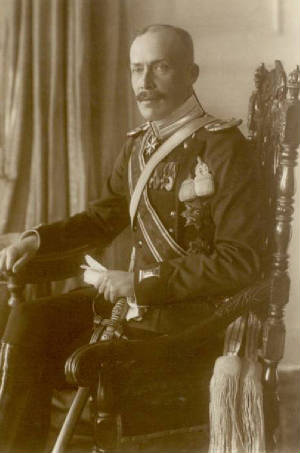
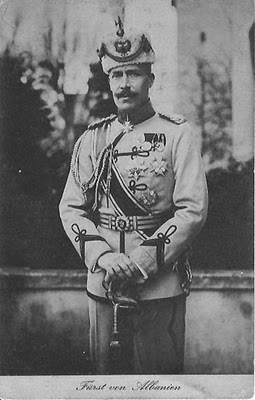
Prince William of Wied, Prince of Albania (Wilhelm Friedrich Heinrich) (26 March 1876 – 18 April 1945) reigned briefly as the sovereign of Albania from 7 March 1914 to 3 September 1914 when he left for exile. His reign officially came to an end on 31 January 1925 when the country was declared a republic. Outside the country and in diplomatic correspondence, he was styled “The Sovereign Prince”, but in Albania he was referred to as mbret, or king. He was also styled Skanderbeg II, in homage to Skanderbeg, the national hero. Born in Neuwied, he was the third son of William (Wilhelm in German), 5th Prince of Wied (Prinz zu Wied in German)(brother of Queen Elisabeth of Romania), and his wife Princess Marie of the Netherlands (sister of Queen Louise of Sweden).

His paternal grandparents were Hermann, Prince of Wied, and Marie Wilhelmine Friederike Elisabeth of Nassau-Weilburg. Marie was a daughter of Wilhelm, Duke of Nassau and his first wife Charlotte Louise of Saxe-Altenburg. Charlotte was a daughter of Frederick, Duke of Saxe Altenburg and Duchess Charlotte Georgine of Mecklenburg-Strelitz. His maternal grandparents were Prince Frederik of the Netherlands and Princess Louise of Prussia. Louise was a daughter of Frederick William III of Prussia and Louise of Mecklenburg-Strelitz. Prince William served as a Prussian cavalry officer before becoming a captain in the German General Staff in 1911.
prince_William_of_Wied.jpg

Prince William’s aunt Queen Elisabeth of Romania, on learning that the Great Powerswere looking for a prince to rule over Albania, asked Take Ionescu to attempt to persuade the great powers to appoint her nephew to the post. Eventually the European Great Powers- Austria-Hungary, the United Kingdom of Great Britain and Ireland, the French Third Republic, the German Empire, the Russian Empire and the Kingdom of Italy selected William, a member of the German princely house of Wied, to rule over newly-independent Albania. The announcement was made in November 1913 and the decision was accepted by Ismail Qemali, the head of the provisional government. The offer of the Albanian throne was first made to him in the spring of 1913 but he turned it down. Despite rejecting the offer, the Austrians put pressure on Prince William in an attempt to change his mind.

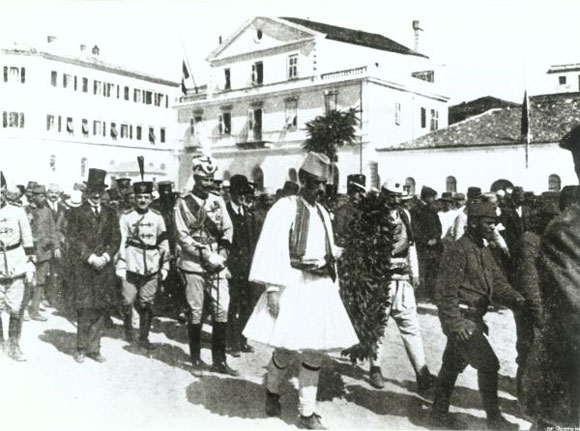
He let the Great Powers know on 7 February 1914 that he would accept the throne. On 21 February 1914 a delegation of Albanian notables made a formal request, which he accepted thereby becoming By the grace of the powers and the will of the people the Prince (Mbret) of Albania. One month after accepting the throne on 7 March, he arrived in his provisional capital of Durrës and started to organise his government, appointing Turhan Pasha Përmeti to form the first Albanian cabinet. This firt cabinet was dominated by members of nobility (prince Essad pacha Toptani defence and foreign affairs, prince George Adamidi bey Frachery finances, prince Aziz pacha Vrioni agriculture).
Prince_Wied_in_Durres.jpg

His brief reign proved a turbulent one. Immediately following his arrival revolts broke out in central Albania against his Chief Minister, Essad Pasha, and against foreign domination. Greece encouraged the formation of “provisional government of North Epirus”. Although an agreement was made to grant extra rights to the Greek minority, the Hellenic Army occupied Southern Albania excluding Berat and Korçë. William’s position was also undermined by own officials, notably Essad Pasha himself, who accepted money from Italy to finance a revolt and to stage a coup against William. Pasha was arrested on 19 May 1914 and tried for treason and sentenced to death. Only the intervention of Italy saved his life and he escaped to Italy in exile. The outbreak of World War I presented more problems for Prince William as Austria-Hungary demanded that he send Albanian soldiers to fight alongside them. When he refused, citing the neutrality of Albania in the Treaty of London, the remuneration that he had been receiving was cut off.

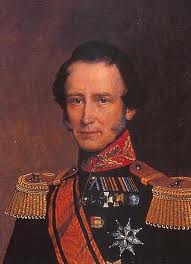
With Albania in a state of civil war since July 1914, Greece occupying the south of the country, the great powers at war with one another, his regime collapsed, and so Prince William left the country on 3 September 1914 originally heading to Venice. Despite leaving Albania he did so insisting that he remained head of state. Although several of the factions competing for power in postwar Albania billed themselves as regencies for William, once central authority was definitively restored in 1924 the country was declared a republic on 31 January 1925, officially ending his reign. With the monarchy in Albania set to be restored with President Ahmet Zogu becoming king, Prince William reaffirmed his claim to the throne announcing he still claimed the throne for himself and his heirs. Prince William died in Predeal, near Sinaia, in Romania leaving his son Hereditary Prince Carol Victor as heir to his Albanian claims. He was buried in the Lutheran church in Bucharest.
princefrederickofwied.jpg

The Titles and Styles of the Princely House

The members of this family bear the title Prince or Princess zu Wied together with the formal appellation of His or Her Serene Highness.
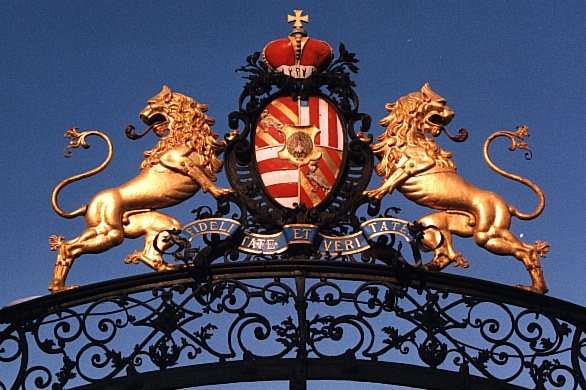
wied.jpg

The Genealogy of The Princely House

JOHANN FRIEDRICH ALEXANDER, cr 1784 Fürst zu Wied (18 Nov 1706-7 Aug 1791); m.2 Jan 1739 Karoline Bggfn von Kirchberg (19 Oct 1720-19 Jan 1795)

  • 1a) Sophia Karolina (16 Apr 1740-1 Oct 1742)
  • 2a) Fst FRIEDRICH KARL zu Wied-Neuwied (25 Dec 1741-1 Mar 1809); m.26 Jan 1766 Marie Luise Wilhelmine Gfn zu Sayn-Wittgenstein-Berleburg (13 May 1747-15 Nov 1823)
  • 1b) Klemens Karl Friedrich Ludwig Wilhelm (21 Dec 1769-2 Apr 1800)
  • 2b) Maria Karoline Christiana (1 Mar 1771-14 Feb 1803)
  • 3b) Luise Philippine Charlotte (11 Mar 1773-18 Apr 1864)
  • 4b) Christian Friedrich (8 Mar 1775-k.a.27 Jul 1800)
  • 5b) Antoinette Charlotte Viktoria (11 Oct 1776-26 Oct 1777)
  • 6b) Fst JOHANN KARL AUGUST zu Wied (26 May 1779-24 Apr 1836); m. Braunfels 11 Jun 1812 Pss Sophie Auguste zu Solms-Braunfels (Braunfels 24 Feb 1796-23 Jan 1855)
  • 1c) Luitgarde (4 Mar 1813-9 Jun 1870); m.11 Sep 1832 Otto Gf zu Solms-Laubach (d.1872)
  • 2c) Wilhelm HERMANN Karl Fst zu Wied (Neuwied 22 May 1814-Neuwied 5 Mar 1864); m. Biebrich 20 Jun 1842 Marie Pss of Nassau-Weilburg (Biebrich 29 Jan 1825-Neuwied 24 Mar 1902)
  • 1d) Pauline Elisabeth Ottilie Luise (Neuwied 29 Dec 1843-Bucharest 3 Mar 1916); m. Neuwied 15 Nov 1869 Karl Pr von Hohenzollern, who in 1866 became reigning prince of Romania and in 1881 became King Carol I of Romania (Schloß Sigmaringen 27 Apr 1839-Bucharest 10 Oct 1914)
  • 2d) WILHELM Adolph Maximilian Carl Fst zu Wied (Neuwied 22 Aug 1845-Neuwied 22 Oct 1907); m. Wassenaar 18 Jul 1871 Marie Pss of the Netherlands (Paauw 5 Jul 1841-Neuwied 22 Jun 1910)
  • 1e) Wilhelm FRIEDRICH Hermann Otto Karl Fst zu Wied (Neuwied 27 Jun 1872-Neuwied 18 Jun 1945); m. Stuttgart 29 Oct 1898 Pauline Pss of Württemberg (Stuttgart 29 Dec 1877-Ludwigsburg 7 May 1965)
  • 1f) Hermann Wilhelm Friedrich Erbpr zu Wied (Potsdam 18 Aug 1899-k.a. Rezeszow, Poland 5 Nov 1941); m. Neuwied 29 Apr 1930 Maria Antonia Gfn zu Stolberg-Wernigerode (Várpalota 6 Feb 1909-Dierdorf 24 Jan 2003)
  • 1g) FRIEDRICH WILHELM Heinrich Konstantin Fst zu Wied (Stuttgart 2 Jun 1931-Salmon Arm, British Columbia 28 Aug 2000); m.1st Arolsen (civ) 31 Aug 1958 (rel) 9 Sep 1958 (div 1962) Guda Pss zu Waldeck und Pyrmont (b. Arolsen 22 Aug 1939); m.2d (civ) Neuwied 14 Jul 1967 (rel) Runkel 15 Jul 1967 Sophie Charlotte Pss zu Stolberg-Stolberg (b. Nordhausen 4 Oct 1943)
  • 1h) Johann Friedrich Alexander Hermann Josias Wilhelm, renounced rights as first-born son 4 Oct 2000 (b. Neuwied 29 Sep 1960)
  • 2h) Friedrich August Maximilian Wilhelm CARL Fst zu Wied (b. Neuwied 27 Oct 1961); m. Birstein 25 Apr 1998 Isabelle Pss von Isenburg (b. Frankfurt 26 Apr 1973)
  • 1i) Franz Alexander Friedrich Wilhelm Maximilian (b. Neuwied 10 Aug 1999)
  • 2i) Franz Alexander Heinrich Konstantin Friedrich-Wilhelm (b. Neuwied 12 Jun 2001)
  • 3i) Marie Elisabeth (b.and d. Neuwied 29 Mar 2003)
  • 4i) Anastasia Isabelle Luise (b. Neuwied 2 Nov 2004)
  • 3h) Christina Elisabeth Sophie Wilhelmine Friederike (b. Neuwied 9 Jun 1970); m. Neuwied 8 Jun 1996 Wolf-Eckart Frhr von Gemmingen-Hornberg (b. Bamberg 21 Oct 1959)

  • 4h) Wolff-Heinrich Friedrich Wilhelm Ello (b. Neuwied 12 Feb 1979)
  • 2g) Metfried Alexander Wilhelm Friedrich (b. Stuttgart 25 Apr 1935); m.(civ) Andernach 12 Feb 1968 (rel) Neuwied 14 Feb 1968 Felicitas Frn von der Pahlen (b. Linnich 31 Dec 1948)
  • 1h) Friedrich Christian Hermann Wilhelm Alexis (b. Waldbröl 5 Aug 1968); m. Runkel 28 Jun 2002 (rel) 29 Jun 2002 Sibylle Garbe (b. Freiburg 29 Jun 1972)
  • 1i) Ferdinand Constantin Georg Friedrich Wilhelm (b. Frankfurt 9 Oct 2003)
  • 2i) Friedrich Conrad Leopold Günter Wilhelm (b. Frankfurt 5 Jan 2006)
  • 3i) Friedrich Carl Metfried Alexander Wilhelm (b. Frankfurt 20 May 2007)
  • 4i) Friedrich Christian Franz Gustav Wilhelm Ulrich (b. Gelnhausen 17 Sep 2010)
  • 2h) Magnus Alexander Wilhelm Friedrich (b. Waldbröl 6 Jun 1972); m. Munich 23 Sep 2005 (rel) Runkel 2 Oct 2005 Marie-Therese Schroth (b. Exeter 8 Feb 1977)
  • 1i) Sidonie Eva Katharina Marie-Therese (b. Munich 28 Dec 2008)
  • 3g) Wilhelmine Friederike Elisabeth Henriette Anastasia Osterlind (b. Stuttgart 8 Apr 1939); m. Neuwied 7 Sep 1964 Werner von Klitzing (b. Hannover 3 Aug 1934)
  • 2f) Dietrich Wilhelm Friedrich Karl Paul (Potsdam 30 Oct 1901-Ludwigsburg 8 Jan 1976); m. Berlin 8 Jul 1928 Julie Gfn Grote (Berlin 9 Oct 1902-Ludwigsburg 17 Feb 1988)

  • 1g) Wilhelm Friedrich Otto Hermann Maximilian (Hannover 30 May 1929-Agatharied-Hausham 5 Jun 2008)
  • 2g) Wilhelm Friedrich Ulrich (Stuttgart 12 Jun 1931-Rottach-Egern 12 Sep 2010); m. Munich 2 Dec 1968 Ilke Fischer (b. Bonn 9 Dec 1936)
  • 1h) Wilhelm Friedrich Ulrich (b. Munich 26 Jun 1970); m. Birmingham 1 Jul 2000 Clarissa Elizabeth Makepeace-Massingham (b. Evesham 8 Jul 1971)
  • 1i) Wilhelmn Friedrich Ulrich Maximilian Georg (b. London 9 May 2001)
  • 2i) George Edward August Wilhelm (b. London 7 Mar 2004)
  • 3i) Philipp Ulrich Edward Albert Wilhelm (b.3 Jun 2010)
  • 2h) Wilhelmine Friederike Pauline Elisabeth Marie (b. Munich 27 Dec 1973); m. Altshausen 11 Nov 1993 (rel) 12 Nov 1993 Friedrich, Duke of Württemberg (b. Friedrichshafen 1 Jun 1961)
  • 3g) Wilhelm (Stuttgart 24 Aug 1936-Stuttgart 24 Apr 1937)

  • 4g) Wilhelm Friedrich Dietrich Ludwig-Eugen (Stuttgart 27 Aug 1938-Munich 11 May 2001); m. Munich (civ) 30 May 1966 (rel) 8 Jun 1966 Helga Gemeinert (Sorau, Niederlausitz 7 May 1941-Munich 11 Dec 2004)
  • 1h) Wilhelm Friedrich Dietrich Ludwig Karl Edzard (b. Munich 16 Jan 1968)

  • 2e) Wilhelm Alexander Friedrich Karl Hermann (Neuwied 28 May 1874-Neuwied 15 Jan 1877)
  • 3e) Wilhelm, elected Prince of Albania in 1914, deposed 7 months later; see Albania
  • 4e) Wilhelm Friedrich Adolf Hermann Viktor (Neuwied 7 Dec 1877-Moosburg 1 Mar 1946); m. Schloß Wildenfels 6 Jun 1912 Gisela Gfn zu Solms-Wildenfels (Wildenfels 30 Dec 1891-Oberammergau 20 Aug 1976)
  • 1f) Marie Elisabeth Charlotte Sophie Anna Pauline Luise Solveig (Oslo 14 Mar 1913-Augsburg 30 Mar 1985)

  • 2f) Benigna-Viktoria Ingeborg Anna Wilhelmine (Oslo 23 Jul 1918-Oberammergau 16 Jan 1972); m. Berlin 19 Dec 1939 Ernst Hartmann Frhr von Schlotheim (Wiesbaden 27 Dec 1914-Wiesbaden 31 Oct 1952)
  • 5e) Wilhelmine Friederike Auguste Alexandrine Marie Elisabeth Luise (Neuwied 24 Oct 1880-Mon Repos 29 Aug 1965)
  • 6e) Elisabeth (Neuwied 28 Jan 1883-Neuwied 14 Nov 1938)
  • 3d) Otto (22 Nov 1850-Neuwied 18 Feb 1862)
  • 3c) Thekla (19 Jul 1817-10 Jan 1867)

  • 4c) Otto (30 Sep 1818-19 May 1835)
  • 7b) Ludwig Georg Karl (31 Dec 1780-14 Nov 1781)

  • 8b) Heinrich Viktor (7 Nov 1783-k.a.28 Jan 1812)
  • 9b) Maximilian Alexander Philipp (23 Sep 1782-3 Feb 1867)
  • 10b) Karl Emil Friedrich Heinrich (20 Aug 1785-4 Oct 1864)
  • 3a) Alexander August (18 Mar 1747-27 Apr 1750)
We use cookies to personalise content and ads, to provide social media features and to analyse our traffic. We also share information about your use of our site with our social media, advertising and analytics partners. View more
Cookies settings
Accept
Decline
Privacy & Cookie policy
Privacy & Cookies policy
Cookie name Active

Privacy and Cookie Policy Last updated: 11 August 2026

Neue Gotha respects your privacy and is committed to handling personal data lawfully, fairly, and transparently. This Privacy and Cookie Policy explains who is responsible for personal data, what information we process, why we process it, how long we retain it, who may receive it, and the rights available to individuals under the General Data Protection Regulation (EU) 2016/679 (“GDPR”) and applicable national data-protection and electronic-communications law.

1. Who is responsible for your personal data?

The controller responsible for the processing described in this policy is:

  • Legal name: Neue Gotha Historical Register gUG
  • Trading or project name: Neue Gotha
  • Postal address: Musterstraße 12, 10115 Berlin, Germany
  • Email: editor@neuegotha.de
  • EU/EEA representative: Not applicable (the controller is established in Germany).
  • Data Protection Officer: No Data Protection Officer has been appointed. Privacy enquiries are handled through editor@neuegotha.de.

Questions about this policy or requests concerning personal data may be sent to the email or postal address above.

2. Scope of this policy

This policy applies to personal data processed through https://neuegotha.com, correspondence with the Neue Gotha editorial office, material submitted for editorial consideration, and editorial or archival records concerning identifiable living individuals.

It does not govern independent third-party websites or services linked from this website. Those providers are responsible for their own privacy practices.

3. Personal data we process and why

Processing activity Personal data Purpose Legal basis Retention
Website delivery, logging, and security IP address; date and time of access; requested page or file; referring page; browser, operating-system, and device information; error and security-event data Deliver the website, maintain availability, diagnose faults, prevent abuse, and protect the website and its users Article 6(1)(f) GDPR — our legitimate interests in operating a secure and reliable website. Where processing is required by law, Article 6(1)(c) GDPR may also apply. Routine access and error logs are retained for 14 days. Records isolated for investigation of a suspected security incident may be retained for up to 90 days after the incident is resolved, or longer where required for legal claims.
Editorial correspondence and enquiries Name, contact details, message content, correspondence history, and any documents or other information voluntarily provided Respond to enquiries, assess corrections or submissions, maintain editorial records, and protect legal rights Article 6(1)(f) GDPR — our legitimate interests in conducting editorial work and responding to correspondence; Article 6(1)(b) GDPR where processing is necessary to take steps at an individual’s request before entering into a contract; Article 6(1)(c) GDPR where retention or disclosure is legally required Correspondence is ordinarily retained for 24 months after the matter closes. Material required to document an editorial decision, resolve a dispute, meet a legal obligation, or establish, exercise, or defend a legal claim may be retained for the applicable limitation period.
Editorial, genealogical, and archival records Names; titles and styles; dates and places associated with public or genealogical events; family relationships; jurisdictions, offices, and public roles; images; biographical information; source and citation information; and correspondence relating to accuracy or provenance Research, document, preserve, verify, correct, and publish material concerning dynastic, genealogical, heraldic, and institutional history Article 6(1)(f) GDPR — our legitimate interests and those of readers, researchers, and institutions in maintaining an accurate historical and genealogical reference work, subject to a documented necessity and balancing assessment. Applicable national rules implementing Article 85 GDPR concerning freedom of expression and information may also apply. For as long as the information remains relevant to the legitimate editorial or archival purpose, subject to accuracy review, correction, restriction, erasure, and applicable archiving or legal requirements
Cookie-consent and language preferences Consent choice, language preference, cookie identifiers, and related technical information Remember privacy choices, demonstrate consent where required, and provide the language selected by the visitor Article 6(1)(f) GDPR for strictly necessary preference and consent-management functions; Article 6(1)(a) GDPR for optional storage, access, or associated processing based on consent As stated in the cookie table below
Optional external services IP address, page URL, device and browser information, language choice, and service-interaction data, depending on the provider Provide optional translation, embedded content, analytics, or similar features actually enabled on the website Article 6(1)(a) GDPR — consent. Non-essential services remain disabled until consent is given. As described for each service and by the relevant provider

We do not use personal data for solely automated decisions that produce legal effects or similarly significant effects concerning individuals.

4. Editorial and archival information obtained from other sources

Neue Gotha is an editorial and historical reference project. Some information in the register may concern identifiable living individuals and may not have been collected directly from those individuals.

Depending on the record, information may be obtained from official gazettes and public registers; archives and libraries; published books and scholarly works; institutional publications; reputable news sources; publicly accessible websites; submissions from the individual concerned or their authorised representative; family representatives; and other documented sources.

The categories of information may include the categories listed under “Editorial, genealogical, and archival records” above. The material may be made available to website visitors and may be indexed by search engines. Neue Gotha seeks to use relevant, proportionate, and appropriately sourced information and to distinguish documented fact from uncertainty or editorial interpretation.

Individuals may contact the editorial office to request access, correction, contextualisation, restriction, or erasure. Requests are assessed under the GDPR and applicable national law, taking into account accuracy, source integrity, the public interest, freedom of expression and information, archival considerations, and the rights and freedoms of other people. No provision of this policy removes a right granted by applicable law.

Neue Gotha does not intentionally publish special-category personal data or information concerning criminal convictions about living individuals unless a specific lawful basis and any additional legal condition have been identified and documented.

5. Cookies and similar technologies

Cookies are small text files stored on, or read from, a visitor’s device. Similar technologies may perform comparable functions. Some are strictly necessary for a website or a service expressly requested by the visitor. Others, including many analytics, advertising, social-media, translation, or embedded-content technologies, require prior consent under applicable EU electronic-communications rules.

Neue Gotha does not place or access non-essential cookies, or activate non-essential external services, before valid consent has been given. Visitors may accept or reject optional purposes separately and may withdraw consent at any time by selecting the permanently available “Cookie settings” control. Withdrawing consent does not affect processing that was lawful before withdrawal. Strictly necessary technologies cannot be disabled through the consent tool, but they may be controlled through browser settings where technically possible.

The following table reflects the technologies currently deployed on the website. It is updated whenever a plugin, host, analytics tool, embedded service, or cookie configuration changes.

Name Provider Purpose Category Duration Third-party access
_scc_session Neue Gotha / managed hosting and site-control provider Maintains a short-lived session for website security and site-control functions Strictly necessary Browser session The contracted hosting or site-control provider may access the identifier when providing technical support
_tccl_visit Neue Gotha / managed website-analytics provider Distinguishes a single website visit and reduces duplicate counting within the same session Analytics — disabled until consent 30 minutes Yes; the contracted analytics provider processes the identifier on Neue Gotha’s behalf
_tccl_visitor Neue Gotha / managed website-analytics provider Assigns a pseudonymous visitor identifier used to produce aggregated website-usage statistics Analytics — disabled until consent 12 months Yes; the contracted analytics provider processes the identifier on Neue Gotha’s behalf
googtrans Neue Gotha / Google Translate Stores or applies the visitor’s language selection for the translation feature Functional — disabled until consent 12 months Google may receive technical and service-interaction data when Google Translate is activated
ng_gt_default_applied Neue Gotha / website translation plugin Records whether the website’s default translation setting has been applied Functional — disabled until consent 24 hours No direct vendor access is assumed; Google may receive data if activation causes Google Translate to load
eu_cookies_bar_consent Neue Gotha / locally hosted EU Cookies Bar plugin Stores the visitor’s cookie choices and prevents the banner from being shown unnecessarily Strictly necessary 6 months No, provided the consent plugin remains locally hosted and does not transmit consent records to its developer
wordpress_test_cookie Neue Gotha / WordPress Checks whether the browser supports cookies when an authorised user visits the sign-in page Strictly necessary Browser session No; the cookie is processed by Neue Gotha and its contracted host

Authorised editorial users may receive WordPress authentication, security, or preference cookies when they sign in. wordpress_logged_in_[hash] maintains an authenticated session for up to two weeks when “Remember Me” is selected; wordpress_sec_[hash] protects administrative access for the session; and wp-settings-[user_id] stores an editor’s interface preferences for up to one year. These internal cookies are processed solely for editorial access and site administration.

6. Google Translate, web fonts, and other external content

Where enabled with the visitor’s consent, Neue Gotha may use Google Translate to provide machine-generated translations. Activating the service may cause the visitor’s browser to connect to Google and disclose technical information such as the IP address, requested page URL, browser or device information, and language or service-interaction data. Machine translations may contain errors and do not replace the original editorial text.

Website fonts are hosted locally by Neue Gotha and do not require a connection to Google. Google Translate remains an optional external service that is activated only after the visitor provides consent.

Information about Google’s processing is available in the Google Privacy Policy and Google’s explanation of how it uses information from sites and applications that use its services.

Embedded material from another website may allow that provider to process personal data as if the visitor had visited the provider directly. Non-essential embeds remain blocked until consent is obtained. Each enabled provider is identified in this policy and in the consent interface.

7. Recipients of personal data

Personal data may be disclosed only where necessary to:

  • hosting, content-delivery, backup, website-maintenance, email, security, and consent-management providers acting under contract;
  • translation, analytics, media, or other external-service providers selected by the visitor through the consent interface;
  • professional advisers, insurers, auditors, or other specialists where necessary to protect legal or operational interests;
  • courts, regulators, law-enforcement bodies, or public authorities where disclosure is required or permitted by law; and
  • the public and search engines where personal data form part of a lawfully published editorial or archival record.

8. International data transfers

Some service providers may process personal data outside the European Economic Area. Where the GDPR restricts such a transfer, Neue Gotha relies on an applicable European Commission adequacy decision or appropriate safeguards under Article 46 GDPR, such as the European Commission’s Standard Contractual Clauses, together with supplementary measures where required.

Cloudflare and Google may transfer limited technical information to recipients in the United States. Where the recipient is validly certified, the transfer is based on the European Commission’s adequacy decision for the EU–US Data Privacy Framework. Where that mechanism is unavailable or does not cover a transfer, the relevant provider’s European Commission Standard Contractual Clauses and supplementary technical and organisational measures are used. Information about the applicable safeguards, including how to obtain a copy, may be requested from editor@neuegotha.de.

9. How long we retain personal data

We retain personal data only for as long as necessary for the purposes described in this policy, including security, editorial integrity, source verification, dispute resolution, and compliance with legal obligations. The specific periods or criteria are stated in the processing and cookie tables above.

When a retention period ends, information is deleted or anonymised unless continued retention is required by law, is necessary for legal claims, or is justified by a documented editorial or archival purpose. Encrypted rolling backups are retained for 35 days and are then overwritten automatically, unless a backup has been isolated for incident recovery or a legal hold.

10. Security

Neue Gotha uses appropriate technical and organisational measures designed to protect personal data against accidental or unlawful destruction, loss, alteration, unauthorised disclosure, or access. No method of internet transmission or electronic storage is completely secure, and absolute security cannot be guaranteed.

11. Your data-protection rights

Subject to the conditions and limitations in the GDPR and applicable national law, an individual may have the right to:

  • obtain confirmation as to whether personal data concerning them are processed and request access to those data;
  • request correction of inaccurate or incomplete personal data;
  • request erasure of personal data;
  • request restriction of processing;
  • object, on grounds relating to their particular situation, to processing based on legitimate interests;
  • receive personal data they provided in a structured, commonly used, machine-readable format and transmit those data to another controller where the right to portability applies;
  • withdraw consent at any time, without affecting the lawfulness of processing carried out before withdrawal; and
  • lodge a complaint with a competent data-protection supervisory authority.

To exercise a right, contact editor@neuegotha.de. Please identify the information or record concerned and the nature of the request. We may request information reasonably necessary to verify identity and protect personal data from unauthorised disclosure. Requests are normally answered within one month, subject to any extension permitted by law.

Where a request concerns published editorial or archival content, applicable rights may be limited where necessary and proportionate to reconcile data protection with freedom of expression and information or other rights recognised by law. Each request will be assessed individually.

12. Complaints

We encourage individuals to contact us first so that we can try to resolve a concern. Individuals also have the right to complain to the supervisory authority in the EU or EEA country of their habitual residence, place of work, or the place of the alleged infringement.

For this Berlin-based controller the supervisory authority is the Berliner Beauftragte für Datenschutz und Informationsfreiheit, Alt-Moabit 59–61, 10555 Berlin, Germany; telephone +49 30 13889-0; email mailbox@datenschutz-berlin.de; website https://www.datenschutz-berlin.de/.

13. Children

The website is intended as a general historical and reference resource and is not directed specifically at children. We do not knowingly request personal data directly from children for an online service requiring parental consent. If you believe a child has provided personal data inappropriately, please contact us.

14. Changes to this policy

We may update this policy when our processing activities, service providers, technologies, or legal obligations change. The current version will be published on this page with a revised “Last updated” date. Where required, we will provide additional notice or request renewed consent before introducing a new processing purpose.

Decline All
Save settings Accept All
Cookies settings