Formerly Sovereign House

House of Metternich-Winneburg

Mediatized House of Metternich-Winneburg

Jurisdiction
International
Dynasty
House of Metternich-Winneburg
Entry type
House
Editorial status
Reviewed - Verified
Thumbnail for version as of 15:16, 7 August 2011
Metternich-Winneburg.jpg

Mediatized House of Metternich House of Metternich-Winneburg

The House of Metternich is a German noble house originating in Rhineland. The most prominent member of the House of Metternich was Klemens von Metternich, who was the dominant figure at the Congress of Vienna (1814-1815).

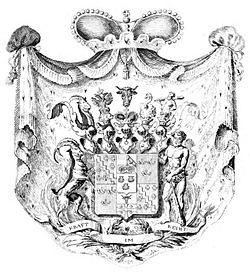
Metternich-Winneburg-wappen.jpg

Background of the House of Metternich

The House of Metternich originated as a cadet branch of the rulers of Hemmerich (which today is a district of Bornheim, near Bonn). The head of the family rose to have the position of hereditary chamberlain of the Archbishop of Cologne. This branch of the family drew its name from the village of Metternich in Weilerswist beginning in the 13th century.

By the 16th century, the family had seven distinct branches:

  • Metternich-Burscheid
  • Metternich-Winneburg
  • Metternich-Chursdorf
  • a branch in Lorraine
  • a branch in the Duchy of Jülich
  • a second branch in the Duchy of Jülich

Metternich-Chursdorf

A second line of the family, founded by Johann Reinhard Freiherr von Metternich, came to rule Chursdorf. This branch of the family converted to the Protestant faith. Johann Reinhard Freiherr von Metternich’s son Ernst von Metternich, made a Graf in 1697, was a soldier in the service of Frederick I of Prussia and a member of the privy council of Brandenburg-Prussia. Ernst von Metternich was involved in the diplomacy that saw Frederick I granted the title King in Prussia, in Prussia’s acquisition of Neuchâtel, and in the negotiating of the Treaty of Utrecht in 1713. Ernst von Metternich’s brother was a member of the privy council of the Principality of Ansbach and in 1726 became Chancellor of Schwarzburg. He was also an author on questions of theosophy and alchemy.

Metternich-Winneburg-Beilstein

Lothar von Metternich (1551-1623) – Archbishop of Trier

Klemens von Metternich (1773-1859)

Princess Pauline von Metternich (1836-1921)

In 1635, the family of Archbishop of Trier Lothar Johann Reinhard von Metternich (1515-1623) acquired the County of Beilstein and began styling themselves Freiherren von Metternich-Winneburg zu Beilstein. Their title was upgraded to Graf in 1679. Lothar Johann Reinhard von Metternich’s nephews, Karl von Metternich and Emmerich von Metternich, were opposed to the policies of Archbishop of Trier Philipp Christoph von Sötern.

In 1623-30, the Imperial Quartermaster General, Lothar von Metternich and his brother Wilhelm purchased the lordships of Lázně Kynžvart and the village of Metternich near Koblenz. Wilhelm’s eldest son Karl Heinrich von Metternich-Winneburg was Archbishop of Mainz and Bishop of Worms in 1679. The younger son, Philip Emmerich von Metternich (d. 1698), was raised to the rank of Graf. The last Count of Metternich-Winneburg was Franz Georg Carl Joseph Johann Nepomuk von Metternich-Winneburg, who lost the County to France by the 1801 Treaty of Lunéville. In compensation, Francis II, Holy Roman Emperor gave him the secularized Ochsenhausen Abbey and raised him to the rank of Fürst.

His son, Klemens von Metternich worked in the service of the Austrian Empire; he was a major diplomat at the Congress of Vienna and was Minister-President of Austria from 1821 to 1848. He acquired Schloss Johannisberg in the Rheingau.

His son, Richard von Metternich was married to his niece, Princess Pauline von Metternich (Pauline was the daughter of Klemens’ half-sister Leonore).

Richard and Pauline von Metternich had three daughters, but no sons, so upon the death of Richard, the title of Fürst passed to Richard’s half-brother Paul von Metternich (1834-1906). The title then passed to his son, Klemens Wenzel von Metternich (1869-1930). His son, Paul Alfons von Metternich-Winneburg (1917-1992) was the president of ADAC. In 1992, the title of Fürst passed to Franz Albrecht Metternich-Sándor (1920-2009), whose mother was a descendant of Klemens von Metternich and who had been adopted by his aunt Clementine von Metternich-Sándor (1870-1963). Franz Albrecht Metternich-Sándor the son of Victor III, Duke of Ratibor and Prince of Corvey, and also inherited his father’s title. Franz Albrecht’s eldest son is Viktor Metternich-Sándor (b. 1964), who has headed the House of Metternich since his father’s death.

Elevations of Rank

  • Freiherr – granted to Wolfgang Heinrich von Metternich on April 14, 1664
  • Graf – granted to Philipp Emmerich Freiherr von Metternich-Winneburg on March 20, 1667
  • Graf – granted to Ernst Freiherr von Metternich-Chursdorf on May 28, 1696
  • Fürst – granted to Franz Georg Carl Joseph Johann Nepomuk von Metternich-Winneburg on June 30, 1803
  • Extension of Austrian hereditary princedom to descendants of Franz Georg Carl Joseph Johann Nepomuk von Metternich-Winneburg – granted on October 20, 1813
  • Duke of the Kingdom of Naples – granted to Klemens von Metternich on August 1, 1818

Prominent Members of the House of Metternich

  • Lothar Johann Reinhard von Metternich (1551-1623), Archbishop and Elector of Trier
  • Johann Reinhard Freiherr von Metternich, Protestant administrator of the pin Halberstadt.
  • Johann Burchard von Metternich († 1637), canon of Trier, Bamberg and Münster, provost of Mainz, Magdeburg and administrator of Halberstadt and provost of St. Bartholomew in Frankfurt am Main
  • Karl von Metternich († 1635), canon of Trier, Liège, Eichstätt and Augsburg, archdeacon of St. Kastor in carding and provost of Aachen Cathedral
  • Emmerich von Metternich († 1653), Canon in Trier, Worms, and Paderborn and provost in Trier
  • Lothar von Metternich († 1663), Imperial Chamberlain, Privy Councillor, Colonel and Quartermaster General
  • Wilhelm von Metternich († 1652), of imperial court and council of war
  • Heinrich von Metternich zu Brohl († 1654), first minister later soldier, governor of the occupied lower Palatinate of Bavaria and Major General
  • Lothar Friedrich von Metternich-Burscheid (1617-1675), Archbishop of Mainz
  • Karl Heinrich von Metternich-Winneburg (1622-1679), Archbishop of Mainz
  • Ernst von Metternich (1656-1727), Prussian diplomat
  • Wolfgang von Metternich († 1731), diplomat, civil servant and alchemical writer
  • Franz Georg Karl von Metternich (1746-1818), politician
  • Klemens von Metternich (1773-1859), Austrian diplomat and politician
  • Richard von Metternich (1829-1895), Austrian politician and diplomat
  • Princess Pauline von Metternich (1836-1921), founder of a literary salon in Vienna
  • Tatiana von Metternich-Winneburg (1915-2006), patron
  • Paul Alfons von Metternich-Winneburg (de) (1917-1992)
  • Franz-Albrecht Metternich-Sándor (1920-2009), head of the ducal line Ratibor-Corvey, princely house of Hohenlohe-Schillingsfürst
  • Viktor Metternich-Sándor, born 1964, since 2009 head of the ducal line Ratibor-Corvey princely house of Hohenlohe-Schillingsfürst
  • Reinhard Carl Johann von Metternich-Runge, born 1965, Philanthropist and Human Rights Activist
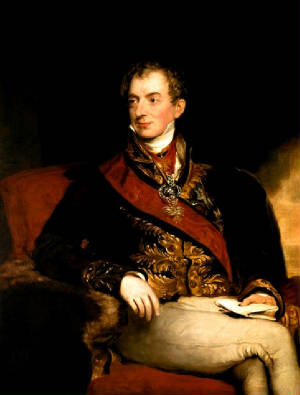
Prince_Metternich_by_Lawrence.jpeg

Klemens von Metternich

Prince Klemens Wenzel von Metternich (full name German: Klemens Wenzel Nepomuk Lothar, Fürst von Metternich-Winneburg zu Beilstein, anglicised as Clement Wenceslas Lothar von Metternich-Winneburg-Beilstein; 15 May 1773 – 11 June 1859) was a German-born Austrian politician and statesman and one of the most important diplomats of his era, serving as the Foreign Minister of the Holy Roman Empire and its successor state, the Austrian Empire, from 1809 until the liberal revolutions of 1848 forced his resignation. One of his first tasks was to engineer a détente with France that included the marriage of Napoleon to the Austrian Arch-Duchess Marie Louise. Soon after, however, he engineered Austria’s entry into the War of the Sixth Coalition on the Allied side, signed the Treaty of Fontainebleu that sent Napoleon into exile and led the Austrian delegation at the Congress of Vienna which divided post-Napoleonic Europe between the major powers. In recognition of his service to the Austrian Empire he was raised to the title of Prince in October 1813. Under his guidance, the “Metternich system” of international congresses continued for another decade as Austria aligned herself with Russia and, to a lesser extent, Prussia. This marked the high point of Austria’s diplomatic importance, and thereafter Metternich slowly slipped back into the periphery of international diplomacy. At home, Metternich also held the post of Chancellor of State from 1821 until 1848, under both Francis II of Austria and his son Ferdinand I of Austria. After a brief period of exile in London, Brighton and Brussels that lasted until 1851, he returned once more to the Viennese court, this time to offer only advice to Ferdinand’s successor, Franz Josef. Having outlived his generation of politicians, Metternich died at the age of 86 in 1859.
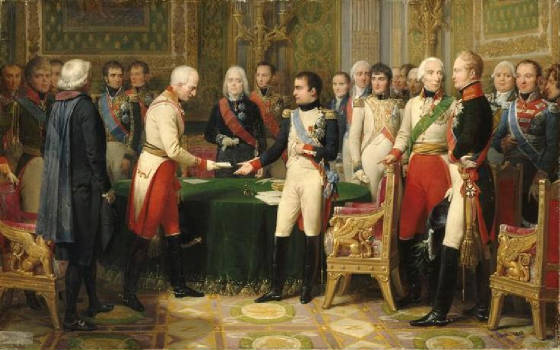
Entrevue_Erfurt_by_Nicolas_Grosse.jpg

Born into the House of Metternich in 1773 as the son of a diplomat, Metternich received a good education at the universities of Strasbourg and Mainz. He also helped during the coronation of Francis II in 1792 and that of his predecessor, Leopold II, in 1790. After a brief trip to England, Metternich was named as the Austrian ambassador to the Netherlands; a short-lived post, since the country was brought under French control the next year. He married his first wife, Eleonore von Kaunitz, in 1795 and it did much to catapult him into Viennese society. Despite having numerous affairs, he was devastated by her death in 1825. He would later remarry, wedding Baroness Antoinette Leykam in 1827 and, after her death in 1829, Countess Melanie Zichy-Ferraris in 1831. She would also predecease him by five years. Before taking office as Foreign Minister, Metternich held numerous smaller posts, including ambassadorial roles in the Kingdom of Saxony, the Kingdom of Prussia and Napoleonic France. One of Metternich’s sons, Richard von Metternich, was also a successful diplomat; many of Metternich’s twelve other acknowledged children predeceased him. A traditional conservative, Metternich was keen to maintain the balance of power, in particular by resisting Russian territorial ambitions in Central Europe and over the lands of the Ottoman Empire. He disliked liberalism and worked to prevent the breakup of the Austrian empire; for example, by forcibly crushing nationalist revolts in Austrian north Italy and the German states. At home, he pursued a similar policy, using censorship and a wide ranging spy network to dampen down unrest.
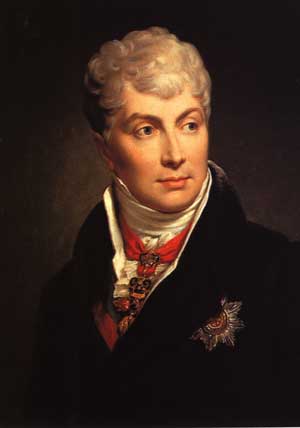
Graf_Clemens_Metternich.jpg

Metternich has both been praised and heavily criticised for the policies he pursued. His supporters point out that he presided over the “Age of Metternich”, when international diplomacy helped prevent major wars in Europe. His qualities as a diplomat have also been commended; some add that his achievements were all the better given the weakness of his negotiating position. His decision to oppose Russian imperialism is also seen as a good one. His detractors describe him as a bore who stuck to ill-thought out conservative principles only out of vanity and a sense of infallibility. They argue that he could have done much more in terms of securing Austria’s future; instead, his 1817 proposals for administrative reform were largely rejected and, by opposing German nationalism, they find him responsible for ensuring it would be Prussia and not Austria that united it. Other historians have argued that in fact he had far less power than this view suggests, and that his policies were only accepted when they agreed with the existing view of the Habsburg monarchy that ruled Austria.
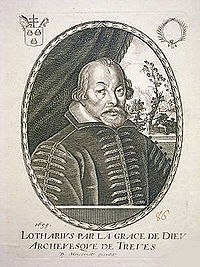
Lothar_von_Metternich.jpg

The Titles and Styles of the Princely House

The members of this family bore the titles of Prince or Princess von Metternich-Winneburg together with the formal appellation of His or Her Serene Highness
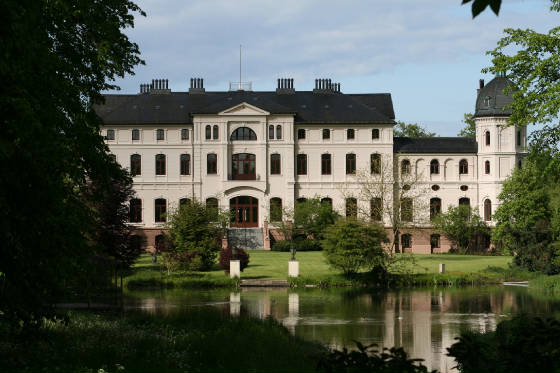
vonMetternich.jpg

The Genealogy of The Princely House

Wilhelm, cr 1635 Frhr von Metternich, von Winneburg und Beilstein (d.1652); m.1st 5 Jun 1610 Anna Ursula von Hattstein; m.2d 12 May 1619 Anna Eleonora Brömser von Rüdesheim (test 1658) [by 1st m.]:

  • 1a) Johann Ludwig (d.aged 20)
  • 2a) Lothar Friedrich, a canon in Mainz and Trier (1627)
  • [by 2d m.]:
  • 3a) Karl Heinrich, Elector of Mainz, Pr-Bp of Worms 1679 (15 Jul 1622-26 Sep 1679)

  • 4a) Philipp Emmerich cr 1679 Gf von Metternich-Winneburg und Beilstein, d.6 Mar 1698; m.1st 14 Feb 1652 Marie Elisabeth Magdalena Frn Waldbott von Bassenheim (d.1685); m.2d Anna Theresia Cukr von Damfeld (d.1713); all issue by 1st m.
  • 1b) Franz Ferdinand (1653-14/15 Jun 1719); m.1683 Juliane Eleonore Gfn von Leiningen-Westerburg (14 Dec 1667-Dec 1742)
  • 1c) Philipp Adolf (d.1693)

  • 2c) Franz Philipp Emmerich
  • 3c) Dietrich Philipp Adolf (1686-19 Dec 1739); m.21 Sep 1707 Marie Franziska Frn Schenk von Schmittburg (d.23/27 Nov 1723)
  • 1d) Franz Ludwig (9 Feb 1719-4 Jun 1778)
  • 2d) Johann Hugo Franz (28 Sep 1710-24 Mar 1750); m.1st 28 Apr 1745 Klara Luise Elisabeth Frn von Kesselstatt (18 Nov 1726-26 May 1746); m.2d 15 Oct 1747 Maria Theresia Gfn von Hoensbroech (bap 7 Mar 1728-11 Aug 1800)
  • 1e) FRANZ GEORG Karl Joseph Johann Nepomuck Graf von Metternich-Winneburg, cr 1803 Fst von Metternich-Winneburg und Ochsenhausen (Koblenz 9 Mar 1746-Vienna 11 Aug 1818); m. Freiburg 9 Jan 1771 Maria Beatrix Aloysia Gfn von Kageneck (Freiburg 8 Dec 1755-Vienna 23 Nov 1828)
  • 1f) Kunigunde Walpurga Pauline, cr Pss 1817 (Koblenz 29 Nov 1771-Vienna-Hietzing 23 Jun 1855); m. Marseilles 23 Feb 1817 Duke Ferdinand of Württemberg (Treptow 22 Oct 1763-Wiesbaden 20 Jan 1834)
  • 2f) CLEMENS Wenceslaus Nepomuck Lothar, Fürst von Metternich-Winneburg, Chancellor of Austria, cr Duca di Portella in the Kingdom of the Two Sicilies, etc (Koblenz 15 May 1773-Vienna 11 Jun 1859); m.1st Austerlitz 27 Sep 1795 Marie Eleonore Pss von Kaunitz-Rietberg (Vienna 1 Oct 1775-Paris 19 Mar 1825); m.2d Schloß Hetzendorf 5 Feb 1827 Maria Antonia Frn von Leykam, cr 1827 Gfn v. Beylstein (Naples 15 Aug 1806-Königswart, Bohemia 17 Jan 1829); m.3d Vienna 30 Jan 1831 Melanie Gfn Zichy (Vienna 28 Jan 1805-Vienna 3 Mar 1854)
  • 1g) Maria Leopoldina (17 Jan 1797-Baden bei Wien 24 Jul 1820); m. Vienna 15 Sep 1817 Joseph Gf Esterhazy von Galantha (24 Nov 1791-Vienna 12 May 1847)
  • 2g) Franz (21 Feb 1798-3 Dec 1799)
  • 3g) Clemens Eduard (10 Jul 1799-15 Jul 1799)
  • 4g) Viktor (12 Jan 1803-30 Nov 1829)
  • 1h) [by Claire de Maillé] Roger Armand Victor Maurice Frhr von Aldenburg (21 Oct 1827-Vienna 14 Oct 1906)
  • 5g) Clementine (30 Aug 1804-6 May 1820)
  • 6g) Leontine (18 Jun 1811-6 Nov 1861); m.8 Feb 1835 Moritz Gf Sándor von Szlavnicza (d.23 Feb 1878)
  • 7g) Hermine (1 Sep 1815-Dec 1890)
  • 8g) RICHARD Clemens Joseph Lothar Hermann, Fst von Metternich-Winneburg, etc (Vienna 7 Jan 1829-Vienna 1 Mar 1895); m. Vienna 30 Jun 1856 his niece, Pauline Gfn Sándor von Szlavnicza (Vienna 26 Mar 1836-Vienna 28 Sep 1921)
  • 1h) Sophie (Dresden 17 May 1857-Vienna 11 Jan 1941); m. Vienna 24 Apr 1878 Albrecht Fst zu Oettingen-Oettingen und Oettingen-Spielberg (d.1916); her grandson, Franz Albrecht, Duke of Ratibor u. Corvey, was adopted 1926/7 by her sister, Klementine, and took the additional surname “Metternich-Sándor”
  • 2h) Antoinette (20 Apr 1862-5 Aug 1890); m.11 Jul 1885 Georg Gf von Waldstein-Wartenberg (d.1890)
  • 3h) Klementine Pss von Metternich-Sándor (Bougival 27 Jun 1870-Corvey 25 Oct 1963)
  • 9g) Melanie (Vienna 27 Feb 1832-Vienna 16 Nov 1919); m. Vienna 20 Nov 1853 Joseph Gf Zichy de Zich et Vásonykeö (9 Jul 1814-Vienna 14 Jan 1897)
  • 10g) Clemens (21 Apr 1833-10 Jun 1833)
  • 11g) PAUL Clemens Lothar, Fst von Metternich-Winneburg, etc (Vienna 14 Oct 1834-Vienna 6 Feb 1906); m. Carlburg 9 May 1868 Melanie Gfn Zichy de Zich et Vásonykeö (Carlburg 16 Aug 1843-Schloß Johannisburg 3 Aug 1925)
  • 1h) KLEMENS-WENZEL, Fst von Metternich-Winneburg, etc (Vienna 9 Feb 1869-Munich 13 May 1930); m. Madrid 4 Oct 1905 Isabel de Silva y Carvajal (Madrid 3 May 1880-Madrid 8 Feb 1980)
  • 1i) PAUL ALFONS, Fst von Metternich-Winneburg, etc (Vienna 26 May 1917-1992); m. Berlin 6 Sep 1941 Tatiana Pss Wassiltschikow (St. Petersburg 1 Jan 1915-Schloß Johannisberg 26 Jul 2006)
  • 2h) Emilie (24 Feb 1873-20 Jan 1884)
  • 3h) Pauline (Preßburg 6 Jan 1880-Bullachberg bei Füssen 19 May 1960); m. Vienna 5 Feb 1906 Maximilian Theodor Pr von Thurn und Taxis (Mentone 8 Mar 1876-Schloß Plass 3 Oct 1939)
  • 12g) Maria (23 Mar 1836-12 Jun 1836)
  • 13g) Lothar (12 Sep 1837-2 Oct 1904); m.1st 21 Apr 1868 Karoline Reitter (d.21 Sep 1899); m.2d 5 Jun 1900 Franziska Gfn Mittrowsky von Mittrowitz (10 Nov 1846-19 Mar 1918)
  • 3f) Joseph Lothar Clemens (14 Nov 1774-9 Dec 1830); m. Juliane Franziska Pss Sulkowska (5 Mar 1776-18 Apr 1839)
  • 4f) Ludwig (14 Jan 1777-2 Mar 1778)
  • 2e) Franz Erwein Georg Arnold (10 Feb 1749-29 Jan 1752)
  • 3e) Johann Nepomuck Franz Willibald (15 Feb 1750-17 Jan 1753)
  • 3d) Eleonore Juliane, a nun (5 Sep 1708-19 Mar 1770)
  • 4d) Sophie, d.1739
  • 4c) Emmerich Karl Anton (28 Apr 1697-5 Jul 1765); m.19 Dec 1719 Eleonora Antonia Gfn Butler von Clonebough (23 May 1698-1762)
  • 1d) Johann Franz Emmerich Theodor Joseph (10 Feb 1724-d.by 1791)
  • 2d) Karl Anton Kasimir (16 Sep 1726- )
  • 3d) Johann Franz Kasimir Heinrich (15 Jul 1729-ca 1786)
  • 4d) Franziska Antoinette Anna Susanna 26 Sep 1722- ); m.23 Nov 1753 Johann Friedrich Frhr von Gellhorn
  • 5d) Katharina Eva Anna (19 Mar 1732-1781); m. Johann Albert Frhr von Gabelkoven
  • 6d) Corona Antonie Eleonore Ursula Josepha, a nun in Prague (13 Jun 1736- )
  • 5c) Johanna Sophie (d.1756)
  • 6c) Sophie Eleonore Maria Anna (d.1754; m. N Frhr Mulz von Waldau
  • 7c) Johanna Elisabeth (d.5 Jan 1758); m.8 Jan 1721 Barthold Heinrich von Lützow (d.11 Jul 1730)
  • 2b) Johann Philipp Karl (d.6 Apr 1709); m. Maria Anna Frn von Bissingen (d.10 Aug 1704)
  • 3b) Leopold (d. Turin 1689)
  • 4b) Maria Eleonore; m.1st Anton Friedrich Gf von Paysberg; m.2d Bernhard von Unruhe
  • 5a) Kasimir Ferdinand
  • 6a) Anna Margareta, cr 1679 Gfn v. Metternich-Winneburg-Beilstein (d.1700); m.28 Sep 1653 Franz Frhr von Sickingen (d.1715)
  • 7a) Anna Magdalena, cr 1679 Gfn v. Metternich-Winneburg-Beilstein (d.19 Jan 1693); m.1652 Johann Lothar Frhr Waldbott von Bassenheim (d.21 Feb 1667)
We use cookies to personalise content and ads, to provide social media features and to analyse our traffic. We also share information about your use of our site with our social media, advertising and analytics partners. View more
Cookies settings
Accept
Decline
Privacy & Cookie policy
Privacy & Cookies policy
Cookie name Active

Privacy and Cookie Policy Last updated: 11 August 2026

Neue Gotha respects your privacy and is committed to handling personal data lawfully, fairly, and transparently. This Privacy and Cookie Policy explains who is responsible for personal data, what information we process, why we process it, how long we retain it, who may receive it, and the rights available to individuals under the General Data Protection Regulation (EU) 2016/679 (“GDPR”) and applicable national data-protection and electronic-communications law.

1. Who is responsible for your personal data?

The controller responsible for the processing described in this policy is:

  • Legal name: Neue Gotha Historical Register gUG
  • Trading or project name: Neue Gotha
  • Postal address: Musterstraße 12, 10115 Berlin, Germany
  • Email: editor@neuegotha.de
  • EU/EEA representative: Not applicable (the controller is established in Germany).
  • Data Protection Officer: No Data Protection Officer has been appointed. Privacy enquiries are handled through editor@neuegotha.de.

Questions about this policy or requests concerning personal data may be sent to the email or postal address above.

2. Scope of this policy

This policy applies to personal data processed through https://neuegotha.com, correspondence with the Neue Gotha editorial office, material submitted for editorial consideration, and editorial or archival records concerning identifiable living individuals.

It does not govern independent third-party websites or services linked from this website. Those providers are responsible for their own privacy practices.

3. Personal data we process and why

Processing activity Personal data Purpose Legal basis Retention
Website delivery, logging, and security IP address; date and time of access; requested page or file; referring page; browser, operating-system, and device information; error and security-event data Deliver the website, maintain availability, diagnose faults, prevent abuse, and protect the website and its users Article 6(1)(f) GDPR — our legitimate interests in operating a secure and reliable website. Where processing is required by law, Article 6(1)(c) GDPR may also apply. Routine access and error logs are retained for 14 days. Records isolated for investigation of a suspected security incident may be retained for up to 90 days after the incident is resolved, or longer where required for legal claims.
Editorial correspondence and enquiries Name, contact details, message content, correspondence history, and any documents or other information voluntarily provided Respond to enquiries, assess corrections or submissions, maintain editorial records, and protect legal rights Article 6(1)(f) GDPR — our legitimate interests in conducting editorial work and responding to correspondence; Article 6(1)(b) GDPR where processing is necessary to take steps at an individual’s request before entering into a contract; Article 6(1)(c) GDPR where retention or disclosure is legally required Correspondence is ordinarily retained for 24 months after the matter closes. Material required to document an editorial decision, resolve a dispute, meet a legal obligation, or establish, exercise, or defend a legal claim may be retained for the applicable limitation period.
Editorial, genealogical, and archival records Names; titles and styles; dates and places associated with public or genealogical events; family relationships; jurisdictions, offices, and public roles; images; biographical information; source and citation information; and correspondence relating to accuracy or provenance Research, document, preserve, verify, correct, and publish material concerning dynastic, genealogical, heraldic, and institutional history Article 6(1)(f) GDPR — our legitimate interests and those of readers, researchers, and institutions in maintaining an accurate historical and genealogical reference work, subject to a documented necessity and balancing assessment. Applicable national rules implementing Article 85 GDPR concerning freedom of expression and information may also apply. For as long as the information remains relevant to the legitimate editorial or archival purpose, subject to accuracy review, correction, restriction, erasure, and applicable archiving or legal requirements
Cookie-consent and language preferences Consent choice, language preference, cookie identifiers, and related technical information Remember privacy choices, demonstrate consent where required, and provide the language selected by the visitor Article 6(1)(f) GDPR for strictly necessary preference and consent-management functions; Article 6(1)(a) GDPR for optional storage, access, or associated processing based on consent As stated in the cookie table below
Optional external services IP address, page URL, device and browser information, language choice, and service-interaction data, depending on the provider Provide optional translation, embedded content, analytics, or similar features actually enabled on the website Article 6(1)(a) GDPR — consent. Non-essential services remain disabled until consent is given. As described for each service and by the relevant provider

We do not use personal data for solely automated decisions that produce legal effects or similarly significant effects concerning individuals.

4. Editorial and archival information obtained from other sources

Neue Gotha is an editorial and historical reference project. Some information in the register may concern identifiable living individuals and may not have been collected directly from those individuals.

Depending on the record, information may be obtained from official gazettes and public registers; archives and libraries; published books and scholarly works; institutional publications; reputable news sources; publicly accessible websites; submissions from the individual concerned or their authorised representative; family representatives; and other documented sources.

The categories of information may include the categories listed under “Editorial, genealogical, and archival records” above. The material may be made available to website visitors and may be indexed by search engines. Neue Gotha seeks to use relevant, proportionate, and appropriately sourced information and to distinguish documented fact from uncertainty or editorial interpretation.

Individuals may contact the editorial office to request access, correction, contextualisation, restriction, or erasure. Requests are assessed under the GDPR and applicable national law, taking into account accuracy, source integrity, the public interest, freedom of expression and information, archival considerations, and the rights and freedoms of other people. No provision of this policy removes a right granted by applicable law.

Neue Gotha does not intentionally publish special-category personal data or information concerning criminal convictions about living individuals unless a specific lawful basis and any additional legal condition have been identified and documented.

5. Cookies and similar technologies

Cookies are small text files stored on, or read from, a visitor’s device. Similar technologies may perform comparable functions. Some are strictly necessary for a website or a service expressly requested by the visitor. Others, including many analytics, advertising, social-media, translation, or embedded-content technologies, require prior consent under applicable EU electronic-communications rules.

Neue Gotha does not place or access non-essential cookies, or activate non-essential external services, before valid consent has been given. Visitors may accept or reject optional purposes separately and may withdraw consent at any time by selecting the permanently available “Cookie settings” control. Withdrawing consent does not affect processing that was lawful before withdrawal. Strictly necessary technologies cannot be disabled through the consent tool, but they may be controlled through browser settings where technically possible.

The following table reflects the technologies currently deployed on the website. It is updated whenever a plugin, host, analytics tool, embedded service, or cookie configuration changes.

Name Provider Purpose Category Duration Third-party access
_scc_session Neue Gotha / managed hosting and site-control provider Maintains a short-lived session for website security and site-control functions Strictly necessary Browser session The contracted hosting or site-control provider may access the identifier when providing technical support
_tccl_visit Neue Gotha / managed website-analytics provider Distinguishes a single website visit and reduces duplicate counting within the same session Analytics — disabled until consent 30 minutes Yes; the contracted analytics provider processes the identifier on Neue Gotha’s behalf
_tccl_visitor Neue Gotha / managed website-analytics provider Assigns a pseudonymous visitor identifier used to produce aggregated website-usage statistics Analytics — disabled until consent 12 months Yes; the contracted analytics provider processes the identifier on Neue Gotha’s behalf
googtrans Neue Gotha / Google Translate Stores or applies the visitor’s language selection for the translation feature Functional — disabled until consent 12 months Google may receive technical and service-interaction data when Google Translate is activated
ng_gt_default_applied Neue Gotha / website translation plugin Records whether the website’s default translation setting has been applied Functional — disabled until consent 24 hours No direct vendor access is assumed; Google may receive data if activation causes Google Translate to load
eu_cookies_bar_consent Neue Gotha / locally hosted EU Cookies Bar plugin Stores the visitor’s cookie choices and prevents the banner from being shown unnecessarily Strictly necessary 6 months No, provided the consent plugin remains locally hosted and does not transmit consent records to its developer
wordpress_test_cookie Neue Gotha / WordPress Checks whether the browser supports cookies when an authorised user visits the sign-in page Strictly necessary Browser session No; the cookie is processed by Neue Gotha and its contracted host

Authorised editorial users may receive WordPress authentication, security, or preference cookies when they sign in. wordpress_logged_in_[hash] maintains an authenticated session for up to two weeks when “Remember Me” is selected; wordpress_sec_[hash] protects administrative access for the session; and wp-settings-[user_id] stores an editor’s interface preferences for up to one year. These internal cookies are processed solely for editorial access and site administration.

6. Google Translate, web fonts, and other external content

Where enabled with the visitor’s consent, Neue Gotha may use Google Translate to provide machine-generated translations. Activating the service may cause the visitor’s browser to connect to Google and disclose technical information such as the IP address, requested page URL, browser or device information, and language or service-interaction data. Machine translations may contain errors and do not replace the original editorial text.

Website fonts are hosted locally by Neue Gotha and do not require a connection to Google. Google Translate remains an optional external service that is activated only after the visitor provides consent.

Information about Google’s processing is available in the Google Privacy Policy and Google’s explanation of how it uses information from sites and applications that use its services.

Embedded material from another website may allow that provider to process personal data as if the visitor had visited the provider directly. Non-essential embeds remain blocked until consent is obtained. Each enabled provider is identified in this policy and in the consent interface.

7. Recipients of personal data

Personal data may be disclosed only where necessary to:

  • hosting, content-delivery, backup, website-maintenance, email, security, and consent-management providers acting under contract;
  • translation, analytics, media, or other external-service providers selected by the visitor through the consent interface;
  • professional advisers, insurers, auditors, or other specialists where necessary to protect legal or operational interests;
  • courts, regulators, law-enforcement bodies, or public authorities where disclosure is required or permitted by law; and
  • the public and search engines where personal data form part of a lawfully published editorial or archival record.

8. International data transfers

Some service providers may process personal data outside the European Economic Area. Where the GDPR restricts such a transfer, Neue Gotha relies on an applicable European Commission adequacy decision or appropriate safeguards under Article 46 GDPR, such as the European Commission’s Standard Contractual Clauses, together with supplementary measures where required.

Cloudflare and Google may transfer limited technical information to recipients in the United States. Where the recipient is validly certified, the transfer is based on the European Commission’s adequacy decision for the EU–US Data Privacy Framework. Where that mechanism is unavailable or does not cover a transfer, the relevant provider’s European Commission Standard Contractual Clauses and supplementary technical and organisational measures are used. Information about the applicable safeguards, including how to obtain a copy, may be requested from editor@neuegotha.de.

9. How long we retain personal data

We retain personal data only for as long as necessary for the purposes described in this policy, including security, editorial integrity, source verification, dispute resolution, and compliance with legal obligations. The specific periods or criteria are stated in the processing and cookie tables above.

When a retention period ends, information is deleted or anonymised unless continued retention is required by law, is necessary for legal claims, or is justified by a documented editorial or archival purpose. Encrypted rolling backups are retained for 35 days and are then overwritten automatically, unless a backup has been isolated for incident recovery or a legal hold.

10. Security

Neue Gotha uses appropriate technical and organisational measures designed to protect personal data against accidental or unlawful destruction, loss, alteration, unauthorised disclosure, or access. No method of internet transmission or electronic storage is completely secure, and absolute security cannot be guaranteed.

11. Your data-protection rights

Subject to the conditions and limitations in the GDPR and applicable national law, an individual may have the right to:

  • obtain confirmation as to whether personal data concerning them are processed and request access to those data;
  • request correction of inaccurate or incomplete personal data;
  • request erasure of personal data;
  • request restriction of processing;
  • object, on grounds relating to their particular situation, to processing based on legitimate interests;
  • receive personal data they provided in a structured, commonly used, machine-readable format and transmit those data to another controller where the right to portability applies;
  • withdraw consent at any time, without affecting the lawfulness of processing carried out before withdrawal; and
  • lodge a complaint with a competent data-protection supervisory authority.

To exercise a right, contact editor@neuegotha.de. Please identify the information or record concerned and the nature of the request. We may request information reasonably necessary to verify identity and protect personal data from unauthorised disclosure. Requests are normally answered within one month, subject to any extension permitted by law.

Where a request concerns published editorial or archival content, applicable rights may be limited where necessary and proportionate to reconcile data protection with freedom of expression and information or other rights recognised by law. Each request will be assessed individually.

12. Complaints

We encourage individuals to contact us first so that we can try to resolve a concern. Individuals also have the right to complain to the supervisory authority in the EU or EEA country of their habitual residence, place of work, or the place of the alleged infringement.

For this Berlin-based controller the supervisory authority is the Berliner Beauftragte für Datenschutz und Informationsfreiheit, Alt-Moabit 59–61, 10555 Berlin, Germany; telephone +49 30 13889-0; email mailbox@datenschutz-berlin.de; website https://www.datenschutz-berlin.de/.

13. Children

The website is intended as a general historical and reference resource and is not directed specifically at children. We do not knowingly request personal data directly from children for an online service requiring parental consent. If you believe a child has provided personal data inappropriately, please contact us.

14. Changes to this policy

We may update this policy when our processing activities, service providers, technologies, or legal obligations change. The current version will be published on this page with a revised “Last updated” date. Where required, we will provide additional notice or request renewed consent before introducing a new processing purpose.

Decline All
Save settings Accept All
Cookies settings