Formerly Sovereign House
Kingdom of Albania – House of Wied – House of Zogu
Kingdom of Albania – House of Weid and House of Zogu – The Albanian Kingdom (Gheg Albanian: Mbretnija Shqiptare, Standard Albanian: Mbretëria Shqiptare)
- Jurisdiction
- Albania
- Dynasty
- House of Wied / House of Zogu
- Entry type
- House
- Editorial status
- Reviewed - Verified
Mbretnija Shqiptare
The Albanian Kingdom (Gheg Albanian: Mbretnija Shqiptare, Standard Albanian:
Mbretëria Shqiptare) was the constitutional monarchal rule in Albania between 1928 and 1939. Albania was declared a monarchy by the Constituent Assembly, and Zog I was crowned king.
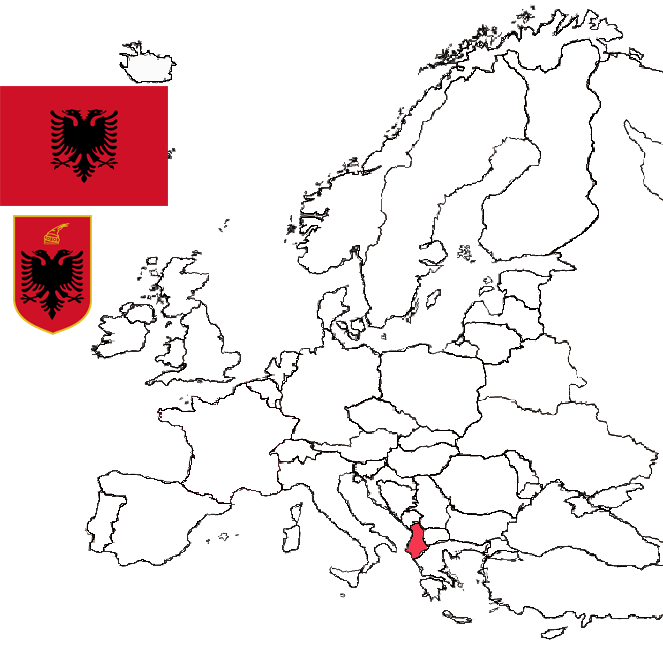
The kingdom was a restoration of the royal identity surviving from Scanderbeg’s reign in the 15th century. It also ensured the permanence of democracy and order in Albania, which had just regained independence from the Ottoman Empire in 1912, The kingdom was supported by Italy and the two countries maintained close relations until Italy’s sudden invasion of the country in 1939.
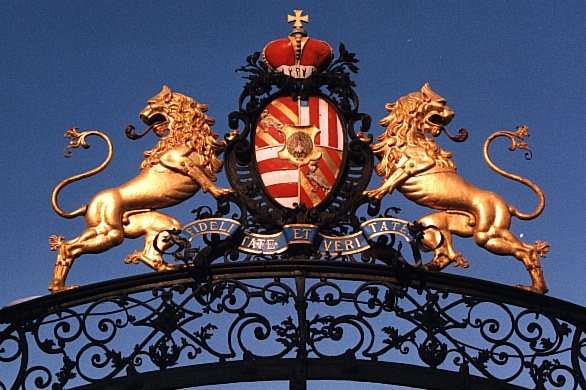
The Princely House of Wied
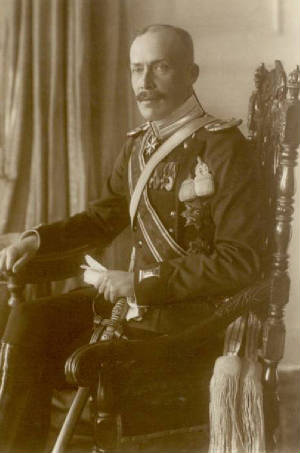
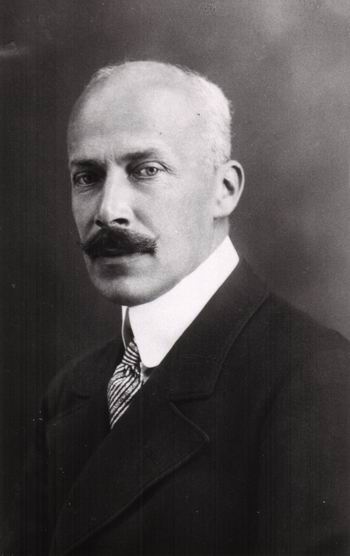
- Prince William of Wied, Prince of Albania (Wilhelm Friedrich Heinrich) (26
- March 1876 – 18 April 1945) reigned briefly as sovereign of Albania from 7 March
- 1914 to 3 September 1914 when he left for exile. His reign officially came to an end
- on 31 January 1925 when the country was declared a republic. Outside the country
- and in diplomatic correspondence, he was styled “sovereign prince”, but in Albania
- he was referred to as mbret, or king. He was also styled Skanderbeg II, in homage
- to Skanderbeg, the national hero. Born in Neuwied, he was the third son of
- William (Wilhelm in German), 5th Prince of Wied (Prinz zu Wied in German)
- (brother of Queen Elisabeth of Romania), and his wife Princess Marie
- of the Netherlands (sister of Queen Louise of Sweden).
- His paternal grandparents were Hermann, Prince of Wied, and Marie Wilhelmine
- Friederike Elisabeth of Nassau-Weilburg. Marie was a daughter of Wilhelm, Duke
- of Nassau and his first wife Charlotte Louise of Saxe-Altenburg. Charlotte was a
- daughter of Frederick, Duke of Saxe-Altenburg and Duchess Charlotte Georgine
- of Mecklenburg-Strelitz. His maternal grandparents were Prince Frederik of the
- Netherlands and Princess Louise of Prussia. Louise was a daughter of Frederick
- William III of Prussia and Louise of Mecklenburg-Strelitz. Prince William served
- as a Prussian cavalry officer before becoming a captain in the German General
- Staff in 1911.
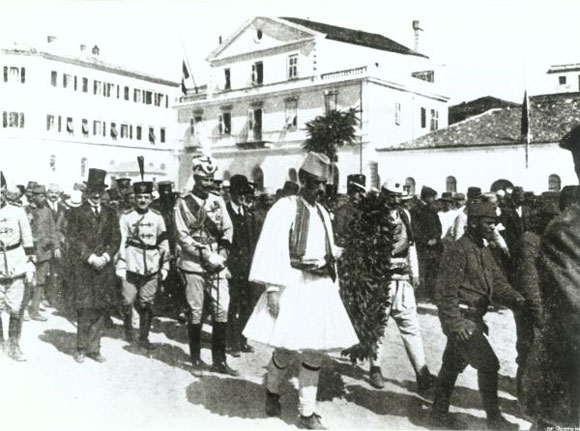
- Prince William’s aunt Queen Elisabeth of Romania, on learning that the Great Powers
- were looking for a prince to rule over Albania, asked Take Ionescu to attempt to
- persuade the great powers to appoint her nephew to the post. Eventually the European
- Great Powers, Austria-Hungary, the United Kingdom of Great Britain and Ireland, the
- French Third Republic, the German Empire, the Russian Empire and the Kingdom of
- Italy selected William, a member of the German princely house of Wied, to rule over
- newly-independent Albania. The announcement was made in November 1913 and the
- decision was accepted by Ismail Qemali, the head of the provisional government.
- The offer of the Albanian throne was first made to him in the spring of 1913 but
- he turned it down. Despite rejecting the offer, the Austrians put pressure on
- Prince William in an attemptto change his mind.
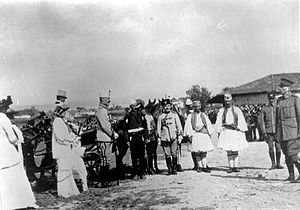
- He let the Great Powers know on 7 February 1914 that he would accept the throne.
- On 21 February 1914 a delegation of Albanian notables made a formal request,
- which he accepted thereby becoming By the grace of the powers and the will of
- the people the Prince (Mbret) of Albania. One month after accepting the throne
- on 7 March, he arrived in his provisional capital of Durrës and started to
- organise his government, appointing Turhan Pasha Përmeti to form the first
- Albanian cabinet. This firt cabinet was dominated by members of nobility
- (prince Essad pacha Toptani defence and foreign affairs, prince George
- Adamidi bey Frachery finances, prince Aziz pacha Vrioni agriculture).
- His brief reign proved a turbulent one. Immediately following his arrival revolts
- broke out in central Albania against his Chief Minister, Essad Pasha, and against
- foreign domination. Greece encouraged the formation of “provisional government of
- North Epirus”. Although an agreement was made to grant extra rights to the Greek
- minority, the Hellenic Army occupied Southern Albania excluding Berat and Korçë.
- William’s position was also undermined by own officials, notably Essad Pasha
- himself, who accepted money from Italy to finance a revolt and to stage a coup
- against William. Pasha was arrested on 19 May 1914 and tried for treason and
- sentenced to death. Only the intervention of Italy saved his life and he escaped
- to Italy in exile. The outbreak of World War I presented more problems for Prince
- William as Austria-Hungary demanded that he send Albanian soldiers to fight
- alongside them. When he refused, citing the neutrality of Albania in the
- Treaty of London, the remuneration that he had been receiving was cut off.
- With Albania in a state of civil war since July 1914, Greece occupying the south
- of the country, the great powers at war with one another, his regime collapsed,
- and so Prince William left the country on 3 September 1914 originally heading to
- Venice. Despite leaving Albania he did so insisting that he remained head of state.
- Although several of the factions competing for power in postwar Albania billed
- themselves as regencies for William, once central authority was definitively
- restored in 1924 the country was declared a republic on 31 January 1925, officially
- ending his reign. With the monarchy in Albania set to be restored with President
- Ahmet Zogu becoming king, Prince William reaffirmed his claim to the throne
- announcing he still claimed the throne for himself and his heirs. Prince William died
- in Predeal, near Sinaia, in Romania leaving his son Hereditary Prince Carol Victor
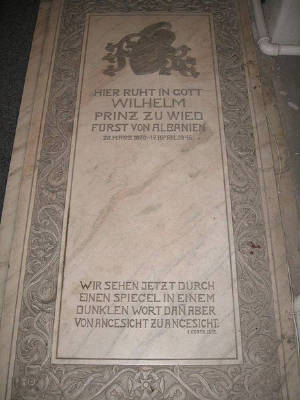
- as heir to his Albanian claims. He was buried in the Lutheran church in Bucharest.
The Family Titles and Styles of the House of Wied
The members of this family bore the titles of Prince or Princess of Albania and Prince or Princess zu Wied together with the formal appellation of His or Her Highness. The title and style used for the Prince in Albanian was Mbret (King or Emperor) and Madheri (Majesty) as used by the Ottoman Empire.
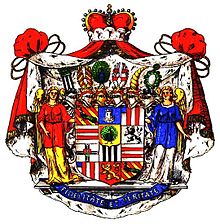
The Genealogy of the Princely House of Wied
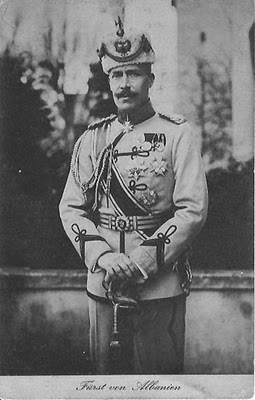
- H.H. Prince William of Wied, Prince of Albania (German: Wilhelm Friedrich
- Heinrich; Albanian: Princ Vidi) (26 March 1876 – 18 April 1945) reigned briefly
- as sovereign of Principality of Albania as Vidi I from 7 March 1914 to 3 September
- 1914 when he left for exile. His reign officially came to an end on 31 January
- 1925 when the country was declared a Albanian Republic. Outside the country and
- in diplomatic correspondence, he was styled “sovereign prince”, but in Albania he
- was referred to as mbret, or king. He was also styled Skanderbeg II, in homage
- to Skanderbeg, the national hero
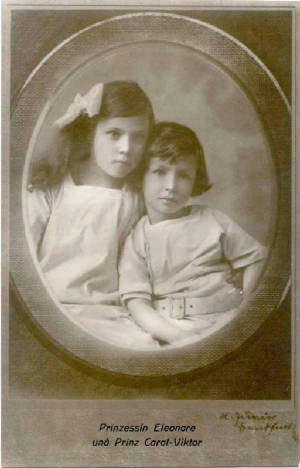
- 1) H.H. Prince Carol Victor, Hereditary Prince of Albania (19 May 1913 – 8 December
- 1973) was the only son of William, Prince of Albania and briefly heir to the Principality
- of Albania. He held the title of Hereditary Prince of Albania. Carol Victor was
- born on 19 May 1913 in Potsdam, Kingdom of Prussia as Prince Charles Victor of
- Wied (German: Karl Viktor Prinz zu Wied). He was the second child and only son
- of Prince William Frederick of Wied (1876-1945), son of William, Prince of Wied
- and Princess Marie of the Netherlands, and his wife, Princess Sophie of Schönburg
- -Waldenburg (1885-1936), daughter of Victor, Hereditary Prince of Schönburg
- -Waldenburg and his wife Princess Lucia of Sayn-Wittgenstein-Berleburg.
- Through her maternal grandmother was related with the Dutch Royal Family.
- His great-grandparents were King William I of the Netherlands and King
- Frederick William III of Prussia.
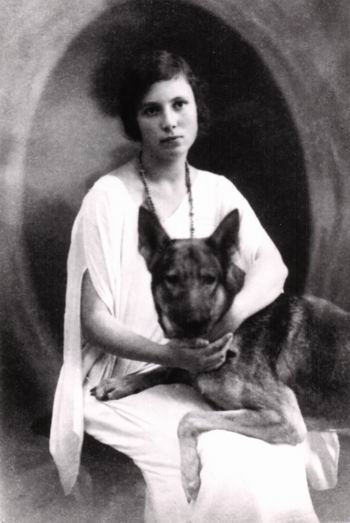
1) H.H. Princess Maria Eleanora, Princess of Albania (Prinkësh i Shquipëria). b. at Potsdam, Prussia, 19o9 February 1909, She d.s.p. in a Communist internment camp at Miercurea Ciuc, Rumania, 29th September 1956.
The Royal Albanian House of Zogu
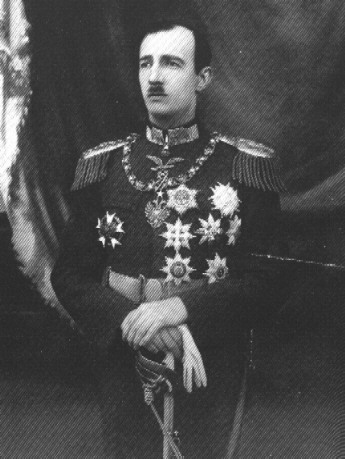
- The House of Zogu is a European dynasty founded by Zogu Pasha who migrated
- to Mati, Albania in the late 15th century and was then appointed Governor of Mati
- by the Ottoman Sultan, with the position of Governor then becoming hereditary
- among the Zogu clan. The ancestral home of the Zogus was Castle Burgajet. The most
- famous member of the dynasty is Zog I, Skanderbeg III, who in 1928 was proclaimed
- King of the Albanians and ruled until he was deposed by Victor Emmanuel III of
- Italy and the Italian invasion in 1939. Victor Emmanuel subsequently assumed the
- Albanian throne. The current head of the dynasty is King Zog’s son
- Leka, Crown Prince of Albania, known as King Leka.
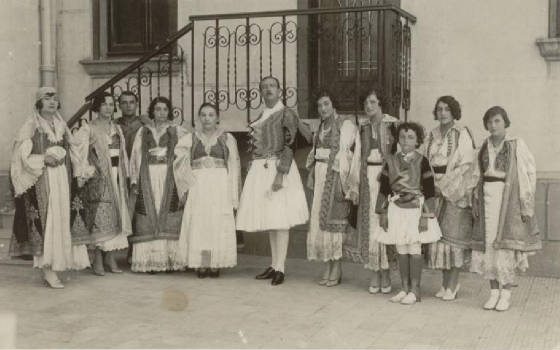
Albanian Royal Family Titles and Styles
- The Albanian Sovereign bears the Titles of Mbret i Shqiptarëvet, King of the
- Sons of the Eagle King of the Albanians with the formal appellation of His
- Majesty. The Heir Apparent bears the Titles of Princ i Shqiptarëve, Trashëgimtar,
- Crown Prince of Albania with the formal appellation of His Royal Highness.
- The Sons of the Albanian Sovereign and male descendants in the male line
- bear the Titles of Princ i Shqiptarë, Prince of Albania with the formal appellation
- of His Royal Highness. The Daughters of the Albanian Sovereign, and female
- descendants in the male line, bear the Titles of Princësh i Shqiptarë, Princess
- of Albania with the formal appellation of Her Royal Highness.
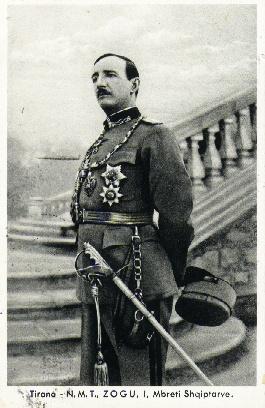
The Genealogy of the Royal House of Albania
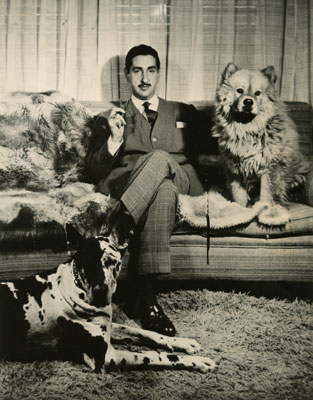
Amet Bej Zogu became ruler of Albania after the First World War, and on 1
- September 1928 was proclaimed “King of the Albanians”. He ruled until the
- Italian invasion in April 1939. When he became king he granted royal rank to
- his mother and siblings. The siblings were accorded the style “Highness”. The
- issue of the king were accorded the style “Royal Highness”. The titles of the
- issue of Zog’s siblings is unclear, but they seem to be “Prince (or Princess) Zogu”
- Xhemal Zogu Pasha, Hereditary Governor of Mati, b. Burgajet ca 1860, d. Mati 1911
- (1904?). He m.1st at Mati in 1880 Melek Zogu (Burgajet 18__-Burgajet 1884);
- m.2d at Mati 1891 Sadijé Toptani, who was accorded the title “Queen
Mother of the Albanians” in 1928 (28 Aug 1876-Tirana 25 Nov 1934)
- 1a) Pr Xhelal Bey Zogu (Burgajet 14 May 1881-Istanbul 26 Feb 1944); m.1st
- Burgajet 1908 (div 1912) Ruhijé Doshishti (Dibra 9 Mar 1881-Cannes 6 Dec 1956);
- m.2d Burel 1931 Ikbal Pekkini (b.at Pekkini, d. Burel 3 May 1932); m.3d Burel
- 2 Aug 1932 (div 1933) Faika Minxhalliu (Delvine 1897-Kruja 9 Dec 1935); m.
- 1b) Said (b.and d. Burgajet 1909)
- 2b) Malika (b.and d. Burgajet 1911)
- 3b) [Pss] Elvira, b. Burel 3 May 1932; m. Alexandria, Egypt 10 Jun 1955
- 4b) [Pr] Skender, b. Davos 3 Jun 1933; m. Compiègne 10 Nov 1962 Jacqueline
- 1c) [Pss] Virginie Alexandra Geraldine, b. Compiègne 25 Jan 1963; m. St. Jean-
- 5b) [Pss] Melita, b. Burel 18 Jun 1934; m. Alexandria 22 Feb
- 6b) [Pss] Vera, b. Durazzo 3 Feb 1936; m.1st Cairo 24 Dec 1955 (div 1961) Essawi
- 7b) [Pr] Mirgin, b. Durazzo 3 Sep 1937; m. Cannes 23 Nov 1959
- 1c) [Pr] Alexandre, b. Paris 10 Jan
- 1d) Erina (b.1994)
- 2d) Anna (b.1995)
- 3d) Flora (b.1996)
- 8b) [Pr] Genc (Tirana 3 Nov
- 2a) Pss Adilé (Mati 25 Feb 1894-Paris 1966);
- m. Emin Agolli Doshishti (1890-1938)
4th Burel May 1933 Hyrijet Allaj (Elbasan 1916-Alexandria 17 Oct 1993)
(sep 1986) Ibrahim Hadidi (b. Alexandria 9 Oct 1934)
Cosme (Bucquy, Pas de Calais 7 Aug 1932-Senlis 14 Dec 2001)
de-Luz 6 Jun 1987 Raphael de Urresti (b. St. Jean-de-Luz 18 Oct 1959)
1958 Abdel Aziz Khadr (Alexandria 20 Oct 1927-2002)
Khadr (b. Mahallah, Egypt 12 Jan 1936); m.2d Cairo 1970 Nasser El Gueneyni
Maryse Alexandrine Juliette Ferrando (b. Cannes 17 Jan 1934)
1963; m. Emmanuelle Munoz
2c) [Pr] Michel, b. Cannes 16 Sep 1966
1938-Istanbul 17 Apr 1944)
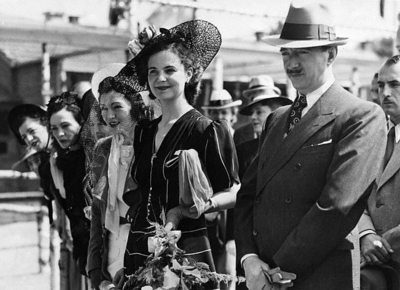
3a) H.M. Zog I, King of the Albanians, Skanderbeg III of the Albanians (Albanian:
Nalt Madhnija e Tij Zogu I, Mbreti i Shqiptarëvet, IPA: [ˈzɔɡu]; 8 October 1895 – 9 April 1961), born Ahmet Muhtar Bej Zogolli, was King of Albania from 1928 to 1939. He was previously Prime Minister of Albania (1922-1924) and President of Albania (1925-1928).
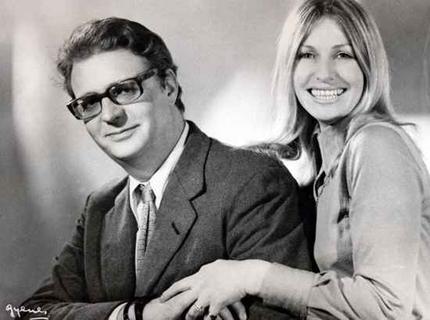
- 1b) H.M. Leka I, King of the Albanians Leka, b. 5 April 1939 – 30 November 2011),
- was the only son of King Zog I of the Albanians and his queen, born Countess
- Géraldine Apponyi de Nagyappony. He was called Crown Prince Skander at birth.
- Leka was pretender to the Albanian throne and was referred to as King Leka I
- by Albanian monarchists.

- 1c) HRH Crown Prince Leka of the Albanians (Leka Anwar Zog Reza Baudouin
- Msiziwe Zogu, born 26 March 1982) is the only child of the late King Leka I of
- Albania, and the late Susan Cullen-Ward. Prince Leka is an official at the Albanian
- Ministry of Interior and in the past has served at the Albanian Ministry of Foreign
- Affairs. The prince is referred by some Albanian monarchists as King Leka II,
- since the death of his father, who was known as Leka I as King of the Albanians.
- In May 2010, the Prince was engaged to Elia Zaharia, an Albanian actress and singer.
- On 30 November 2011, he succeeded as head of the House of Zogu, titular King of
- the Albanians, and 3rd Sovereign Head of the Order of Besa and
- of the Order of Skanderbeg, upon the death of his father.
- 4a) Pss Nafijé (Mati 12 Sep 1900-Egypt 21 Mar 1955); m.1922 Ceno
- Bey Kriziu (Kosova 1887-assasinated at Prague 14 Oct 1927)
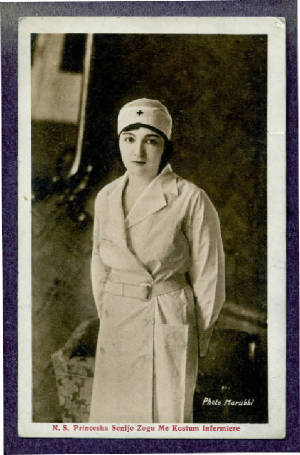
5a) Pss Senijé (Mati 15 Nov 1908-Cannes 15 Apr 1969); m. Tirana 12 Jan 1936 (div 1949) Pr Mehmen Abid of Turkey (Yildiz 17 Sep 1905-Paris 8 Dec 1973)
6a) Pss Myzejen (Mati 10 Nov 1909-Cannes 10 Apr 1969)
7a) Pss Ruhijé (Mati 23 Dec 1910-Cairo 31 Jan 1948)
8a) Pss Maxhidé (Mati 8 Oct 1911-Cannes 12 Oct 1969)
Line of Succession to the Albanian Throne
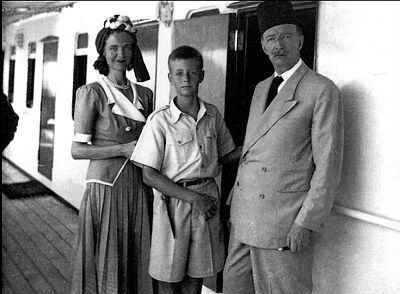
The Albanian monarchy was overthrown in 1939 when King Zog fled the country following an invasion by Mussolini’s Italy. The pretender and head of the House of Zogu since the deaths of both King Zog in 1961 and Zog’s son King Leka I, in 2011, is HRH Prince Leka II of Albania (b. 1982), following this the line of succession is unclear, however, if Prince Leka II dies without issue it is expected he shall appoint a cousin of his father’s to become head of the House of Zogu and, therefore, claimant to the Throne.